
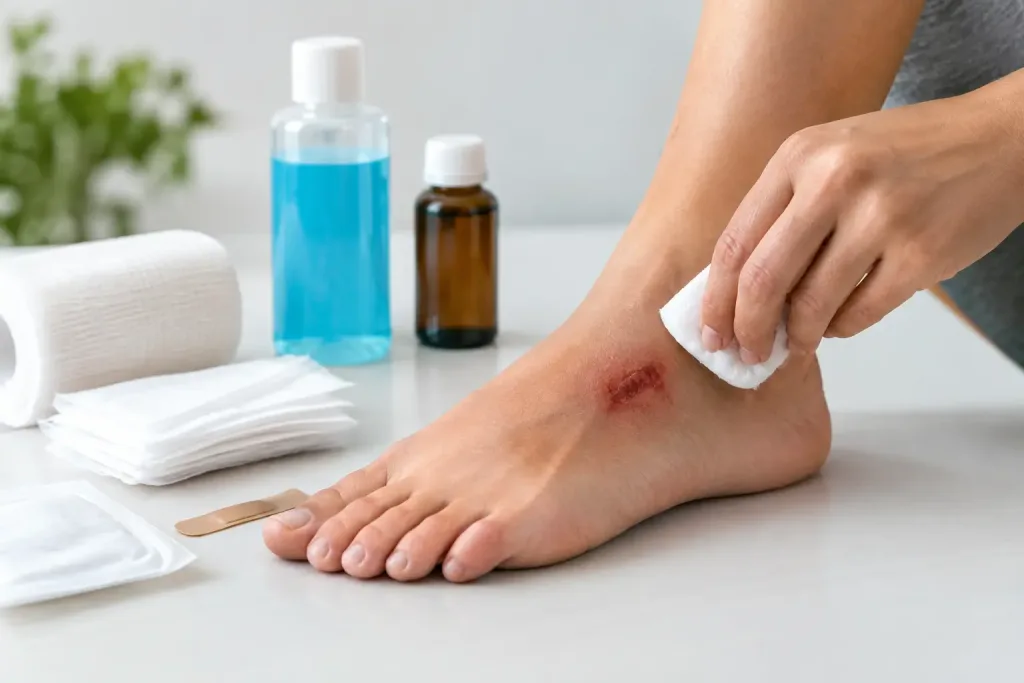
A small blister from a new shoe, a crack in dry heel skin, or a nick while trimming a toenail can seem minor. Yet for someone with diabetes, reduced circulation, neuropathy, or limited mobility, that small opening can become a difficult wound surprisingly quickly. The conversation around wound dressings versus antiseptics often treats them as interchangeable, but they do very different jobs – and using the wrong approach can delay healing or irritate vulnerable tissue.
Wound dressings and antiseptics have different roles
A wound dressing is the material placed over a wound to protect it and support the healing environment. Depending on the wound, a dressing may absorb drainage, maintain appropriate moisture, protect fragile new skin, reduce friction, or help keep outside contaminants away. The best dressing is not always the thickest or most absorbent one. It needs to match the wound’s depth, drainage level, location, and the condition of the surrounding skin.
An antiseptic is a substance intended to reduce microorganisms on living tissue. Some are useful in specific clinical situations, particularly when a wound has a high bacterial burden or signs suggest infection may be developing. Antiseptics are not, however, a substitute for a suitable dressing, pressure relief, circulation support, or professional assessment.
This distinction matters because healing needs more than a clean surface. Cells must rebuild tissue, blood must deliver oxygen and nutrients, and the wound must be protected from repeated rubbing, pressure, moisture damage, and contamination.
Wound dressings versus antiseptics: which comes first?
For a simple, fresh cut in an otherwise healthy person, gentle cleaning with clean running water or saline, followed by a clean protective dressing, is often appropriate first aid. Harsh products repeatedly applied inside an uncomplicated wound may damage healthy cells as well as bacteria. Products such as alcohol or hydrogen peroxide can sting, dry tissue, and interfere with the healing environment when used routinely.
That does not mean antiseptics are never appropriate. A clinician may select an antiseptic dressing or wound-cleansing product for a limited period when the wound characteristics call for it. The choice depends on factors such as odour, drainage, slough, surrounding redness, infection risk, and whether the person has diabetes, vascular disease, or a weakened immune system.
The practical question is not simply, “Which product heals wounds?” It is, “What is preventing this particular wound from healing?” For a foot wound, the answer may be pressure from footwear, loss of sensation, swelling, poor arterial circulation, venous disease, or difficulty reaching the area safely. No antiseptic can correct those underlying barriers on its own.
A dressing should match the wound, not the medicine cabinet
A dry, superficial skin tear may need a gentle non-adherent covering that will not pull away fragile skin at the next change. A draining wound may need more absorbency to protect the surrounding skin from becoming waterlogged. A wound on the bottom of the foot may also require offloading – reducing the pressure placed on it with footwear changes, padding, or another clinical strategy.
Some dressings are designed to support moisture balance, while others manage heavier drainage or provide antimicrobial support when clinically indicated. More product is not necessarily better. An overly occlusive dressing on a heavily draining wound can trap excess moisture, while a dressing that dries out a low-drainage wound can stick and cause trauma when removed.
For leg wounds, compression may be part of the treatment plan when swelling or venous circulation problems are involved. However, compression should only be used after appropriate vascular assessment. If arterial circulation is reduced, applying compression without guidance can be unsafe.
Why foot and lower-leg wounds need early attention
Feet are exposed to pressure every time we stand and walk. This creates a unique challenge: a wound may be covered properly at home but still reopen because it is being compressed thousands of times a day. When neuropathy is present, a person may not feel the pain that would normally signal them to rest, change footwear, or seek help.
Diabetes can further slow healing through changes in circulation, immune response, and sensation. Poor circulation from peripheral arterial disease can reduce the oxygen supply needed for repair. Swelling in the lower legs can stretch skin, increase leakage, and make wounds more difficult to close. These are reasons to take a new foot or leg wound seriously, even if it does not look dramatic.
Seek prompt professional assessment if a wound is not improving within a few days, keeps reopening, or occurs on a foot with reduced sensation or known circulation concerns. Same-day medical attention is particularly important if you notice:
- increasing redness, warmth, swelling, pain, or drainage
- pus, a strong or unusual odour, or darkening skin
- red streaking, fever, chills, or feeling generally unwell
- a wound that is deep, caused by a puncture, or exposes tissue beneath the skin
For a person living with diabetes, a new ulcer, blister, cut, or unexplained area of redness on the foot deserves early assessment. Waiting for pain is not a safe strategy when sensation is reduced.
Safe early care while arranging assessment
If a wound is minor and there are no urgent warning signs, begin with careful basics. Wash your hands, rinse the area gently with clean water or saline, and pat the surrounding skin dry. Cover the wound with a clean, non-stick dressing and avoid footwear or activities that rub against it.
Avoid cutting away dead skin, attempting to drain blisters, digging into a wound, or using strong chemicals repeatedly in an effort to “kill everything.” These actions can enlarge the injury and create more opportunity for infection. Do not use adhesive dressings on fragile skin if removal is likely to cause tearing.
Check the wound at least daily, preferably in good lighting. If vision, mobility, memory, or hand strength makes this difficult, involve a family member, caregiver, or foot-care professional. A mirror can help inspect the soles of the feet, but hands-on assessment is often safer when a wound is present.
What a professional wound assessment can uncover
A wound assessment looks beyond the visible break in the skin. A qualified practitioner can measure the wound, assess the colour and condition of the tissue, monitor drainage, check the surrounding skin, and identify whether pressure or friction is contributing. They may also assess pulses, temperature changes, swelling, sensation, footwear, and the person’s ability to manage dressing changes safely.
Treatment may involve careful cleansing, appropriate debridement of non-viable tissue when indicated, a dressing plan, pressure relief, and regular monitoring. If infection or reduced circulation is suspected, referral for medical investigation may be necessary. The plan should be adjusted as the wound changes, not left unchanged simply because the package says a dressing is advanced or antimicrobial.
At Feet & Life in Barrie, wound and foot-care support is approached with mobility and long-term prevention in mind. Protecting a wound matters, but so does addressing the pressure, circulation, skin changes, or self-care barriers that allowed it to develop.
A dressing can protect healing tissue, and an antiseptic can have a place in selected cases. The most helpful next step is recognizing when a wound needs more than either one: timely, individualized care that helps keep you comfortable, mobile, and safely on your feet.