Why toenail infections are hard to clear
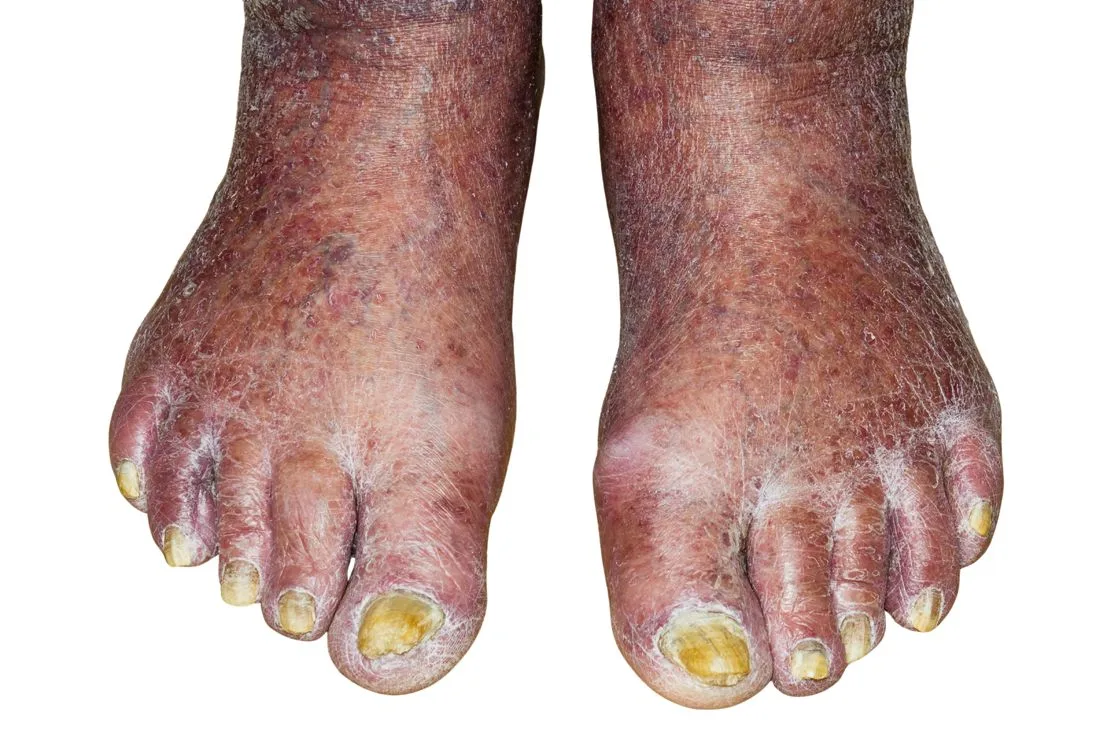
Toenail infections are contagious, easily picked up and difficult to eliminate. The microbes live in the nail plate and feed on keratin made deep below the nail bed in the germinal matrix, where medications have trouble reaching.
Your feet have about 250,000 sweat glands and can produce up to 500 mL of moisture a day. In warm socks and winter boots that makes a warm, moist, dark environment these microbes love. Home remedies or prescriptions alone often don’t work, and an untreated infection can spread to other nails and skin.
FungalBacterialMoldYeastViralParasitic
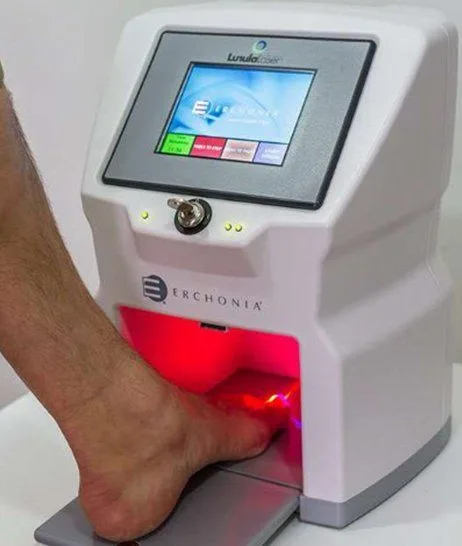
Lunula laser technology
The Lunula Laser is a low-level (cold) laser that produces non-thermal, painless light. Instead of heat, it uses photobiomodulation: red, blue and pink light first increases circulation to the nail matrix and bed, then targets the microbes feeding on the keratin.
- Assessment and plan of care. Your Reg. PodOrtho® Foot Specialist assesses your feet and designs a personalised plan.
- Weekly laser sessions. Research shows one treatment a week for 5–8 weeks produces the best results. Some nails need more.
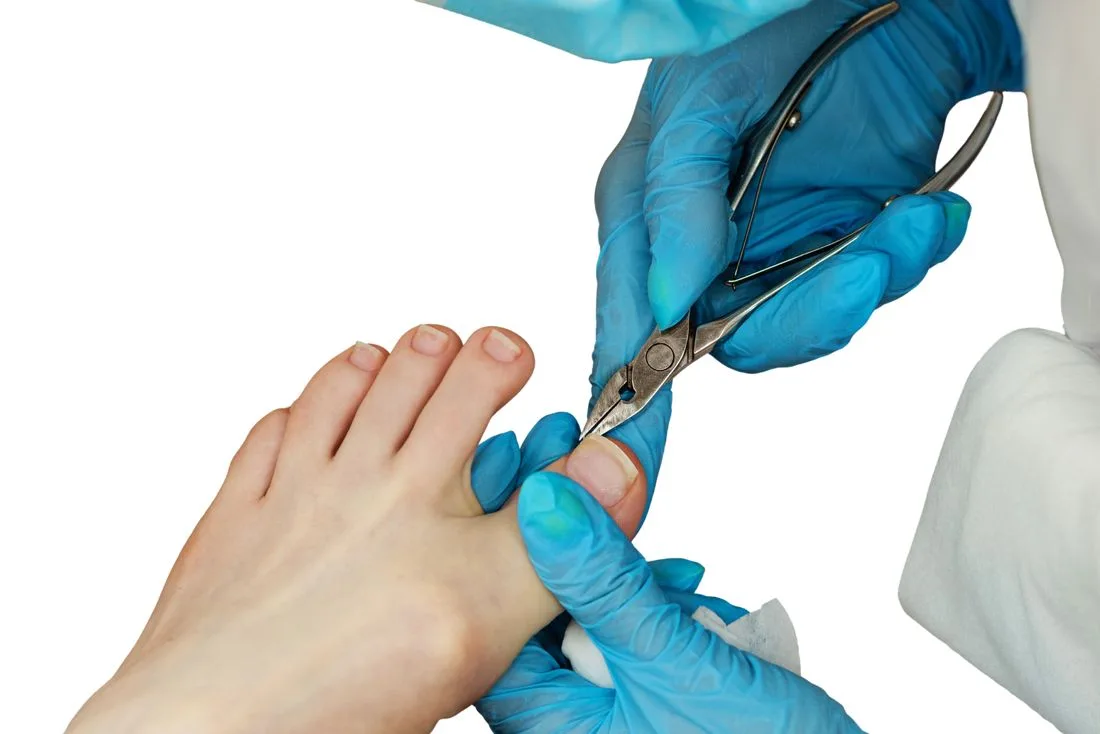
- Nail debridement. Gentle nail reduction at your first and fourth or fifth visit, with a progress check.
- Follow-up. A visit six weeks after your last treatment to check on new, clear growth.
Home care kit
Our toenail infection kit includes non-toxic topical sprays with antimicrobial, anti-viral, anti-mold and anti-parasitic properties, applied to the nail, socks and linens to prevent re-infection. A diet guide is also available, since high-sugar foods can feed the microbes.
Ingrown toenails
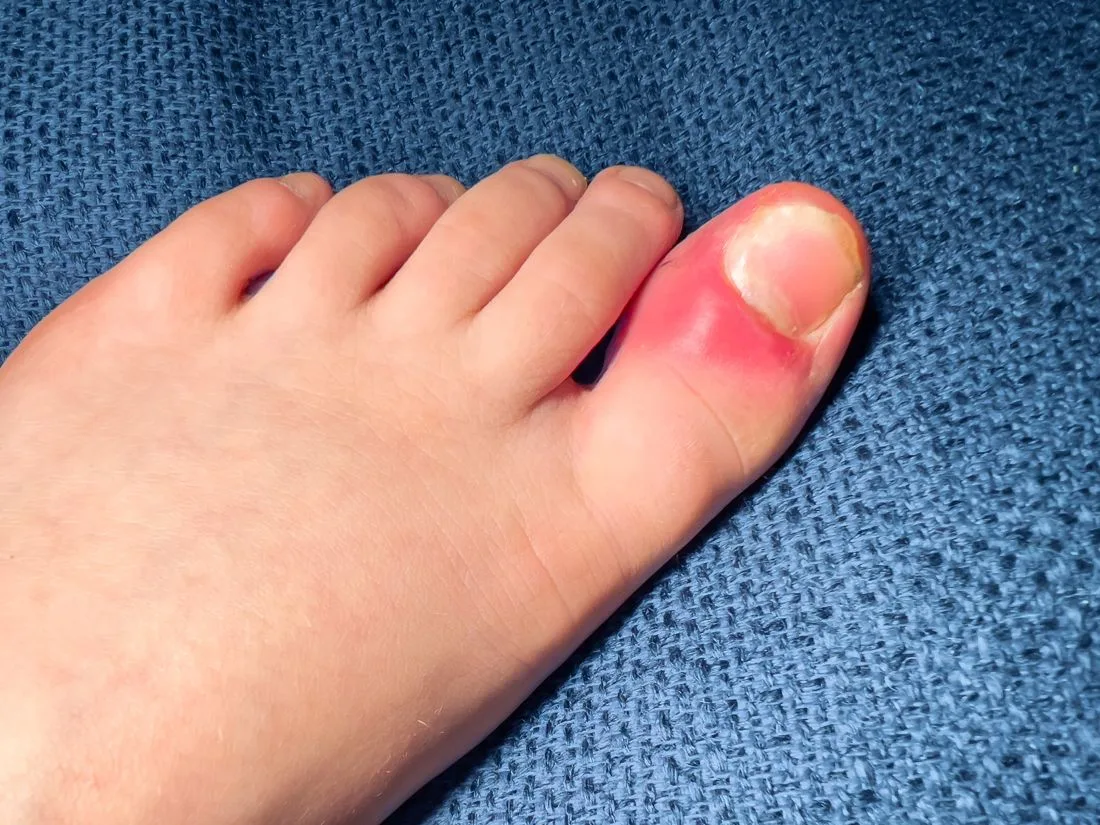
An ingrown toenail (onychocryptosis) happens when a small spike of nail (a spicule) pierces the skin at the side of the nail. The body treats it like a splinter, which causes inflammation and raises the risk of infection.
- Improper nail trimming
- Trauma to the nail bed
- Shoes too tight or too loose
- Poorly fitting socks or compression wear
- Curved or involuted nails
- Genetics
Your visit starts with a look at your footwear and hosiery. Shoes that are too long let the foot slide forward and knock the toes; tight shoes push the nail into the skin.
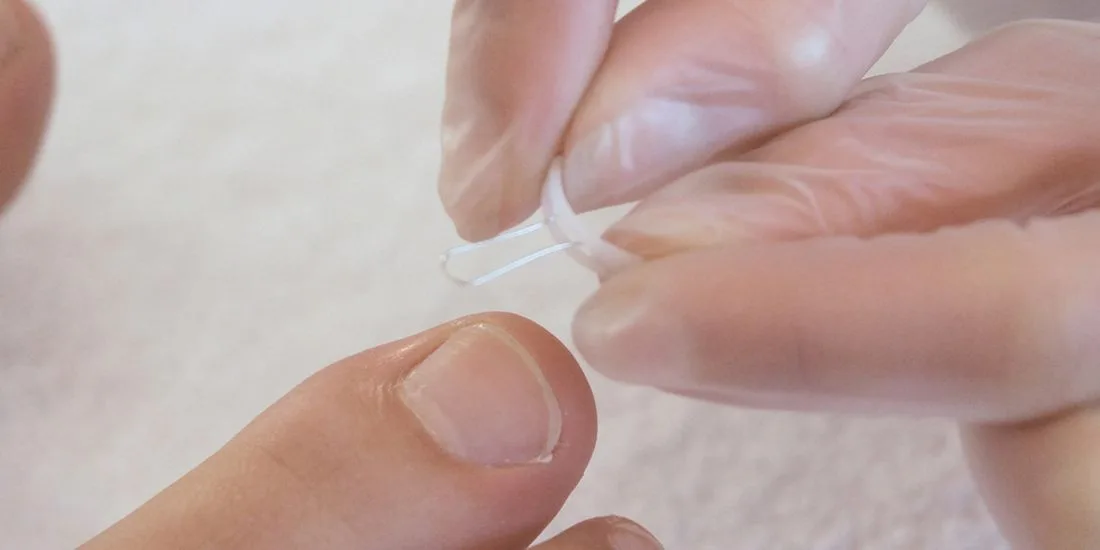
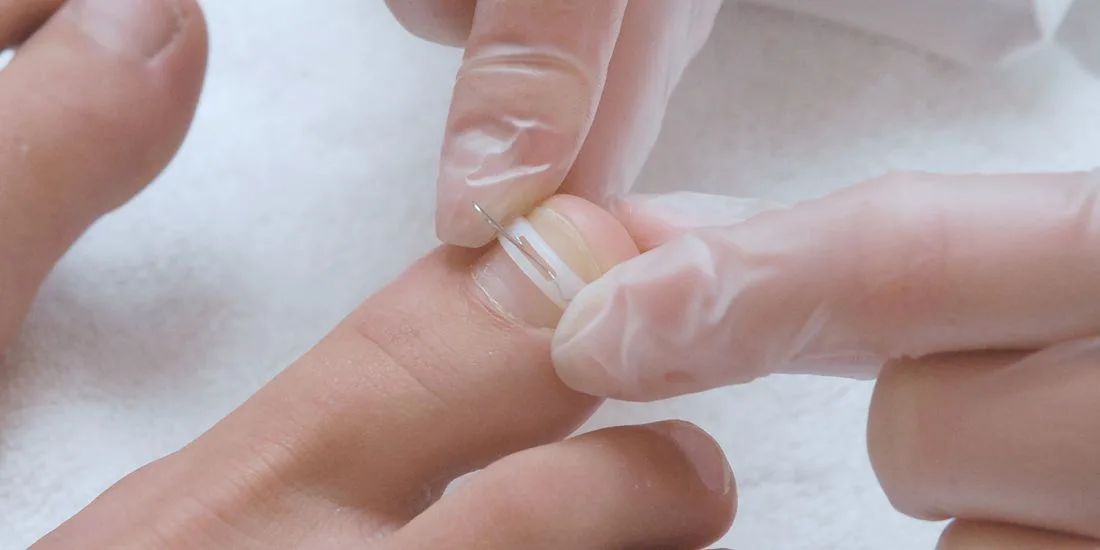
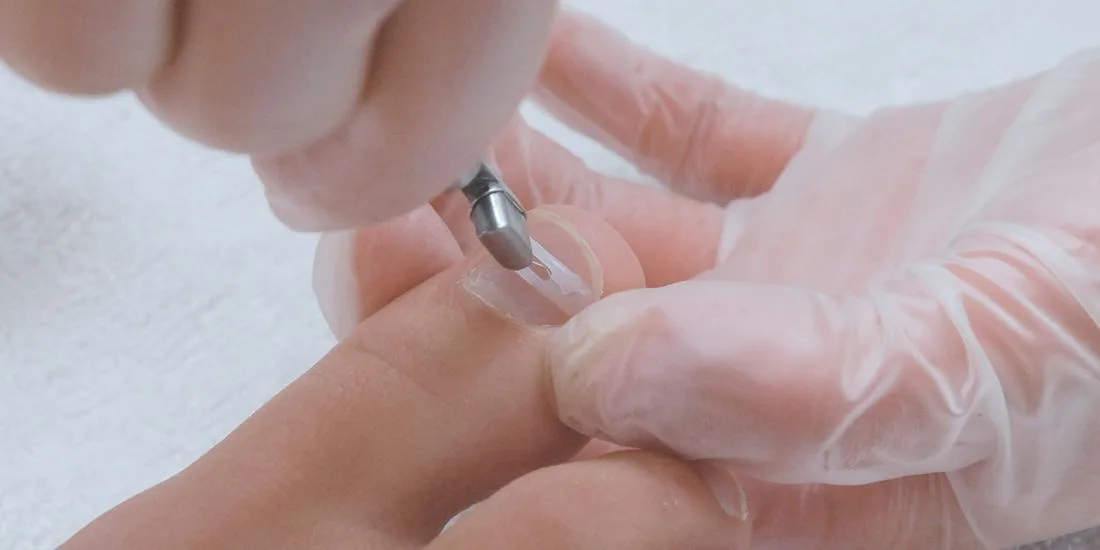
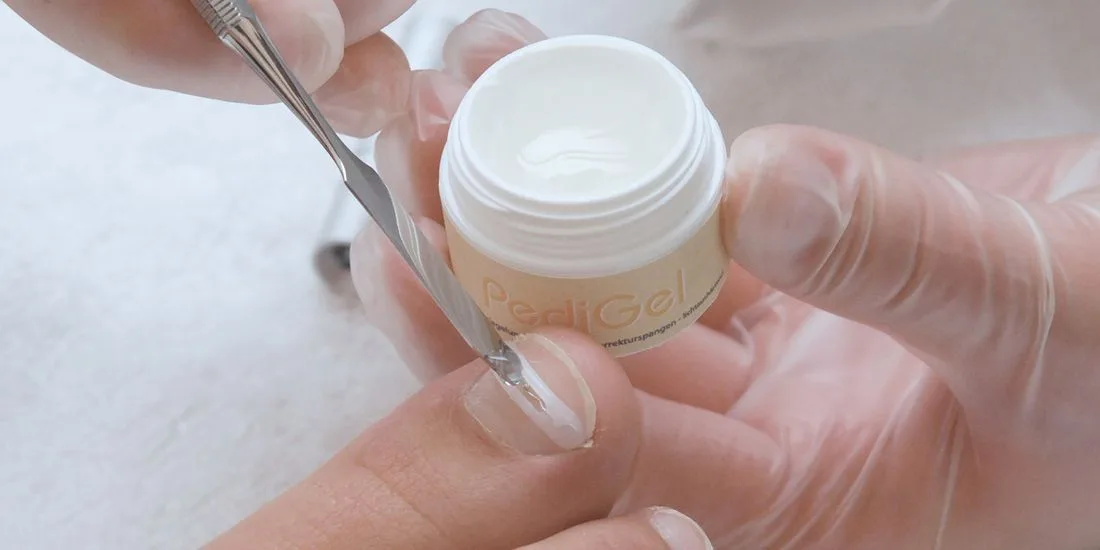
Nail bracing
Nail bracing is a safe, simple and affordable option that avoids surgery. It needs no anesthetic and no recovery time, has been used worldwide for 29 years, and is well suited to high-risk clients such as people with diabetes.
Aftercare: the brace stays on for 4–6 weeks. Reduce activity for two weeks, wear open-toed shoes until infection and moisture settle, and avoid soaking (baths, hot tubs, pools).
Anti-microbial diet tips
From the Canadian Foot Care Association guide: limit high-sugar fruit to one or two pieces a day, avoid sweets and gluten while treating an infection, and cut back on yeast-containing foods such as processed meats, dairy and sugary condiments.