A bunion may begin as a small bump beside the big toe, but the changes behind it can affect far more than the appearance of your foot. As the joint shifts, shoes can become painful, walking may feel less stable, and pressure can build on nearby toes and skin. If you are asking when should bunions be assessed, the best answer is usually before pain, skin damage, or loss of mobility becomes part of daily life.
A professional assessment does not automatically mean surgery. In many cases, early care focuses on reducing pressure, improving footwear choices, supporting foot mechanics, and protecting the skin. The right plan depends on your symptoms, activity level, health history, circulation, and how the bunion is changing over time.
What a bunion is and why it can progress
A bunion, also called hallux valgus, develops when the big toe gradually angles toward the second toe. The joint at the base of the big toe becomes more prominent, creating the familiar bump along the inside of the foot. It is not simply an extra piece of bone. It is a joint alignment issue that can involve ligaments, tendons, foot shape, footwear pressure, and the way forces move through the foot when you walk.
Some people have a family tendency toward bunions or a foot structure that makes them more likely. Arthritis, previous injury, flexible joints, and years of wearing narrow or pointed footwear can also contribute. For others, the bump changes very slowly and causes little trouble. For others, it can become painful surprisingly quickly, especially when work, exercise, or standing places repeated stress on the area.
The size of a bunion does not always match the level of discomfort. A small bunion can be quite painful if it rubs against a shoe, while a more visible one may be manageable for years. That is why symptoms, skin condition, mobility, and risk factors matter more than appearance alone.
When should bunions be assessed by a professional?
Arrange an assessment when a bunion is causing recurring pain, changing how you walk, limiting footwear, or creating pressure on the skin. You do not need to wait until you can no longer fit into shoes or take part in the activities you enjoy.
Pain around the big-toe joint is a clear reason to seek care, particularly if it returns after walking, standing, exercising, or wearing regular shoes. Swelling, redness, tenderness, or a burning sensation may indicate that the joint and surrounding soft tissues are being irritated. A clinician can help distinguish bunion-related pressure from arthritis, bursitis, tendon irritation, gout, or another source of forefoot pain.
Assessment is also worthwhile if the big toe is beginning to overlap or push against the second toe. This can lead to corns, calluses, nail problems, or painful pressure on the ball of the foot. As one area of the foot becomes uncomfortable, many people unconsciously shift their weight elsewhere. Over time, this compensation can contribute to arch pain, knee discomfort, hip pain, or reduced balance.
If footwear has become a daily negotiation, do not dismiss it as a minor inconvenience. Repeated rubbing against the bump can cause skin breakdown, blisters, or bursitis. Wider shoes may relieve pressure, but they do not address every underlying issue. An assessment can clarify whether footwear changes, padding, orthotic support, toe spacers, or other conservative measures are likely to help.
Red flags that need prompt attention
A bunion should be assessed promptly if the skin is damaged or there are signs of infection. This is especially true when healing may be slower because of diabetes, neuropathy, circulation concerns, or immune suppression.
Seek timely medical or foot-care support if you notice:
- An open area, blister, crack, ulcer, or bleeding skin over or near the bunion.
- Increasing warmth, redness, swelling, drainage, odour, or throbbing pain.
- Sudden severe pain, particularly if the joint is hot and difficult to move.
- New numbness, colour changes in the toes, or a foot that feels unusually cold.
These symptoms do not always mean a serious complication is present, but they should not be managed by trimming skin, popping blisters, or trying to force the toe back into position at home. Protect the area from friction and arrange professional guidance.
Why diabetes, neuropathy, and circulation change the timeline
For someone with diabetes, reduced sensation, poor circulation, or a history of foot wounds, a bunion deserves earlier attention. Neuropathy can reduce the ability to feel rubbing, heat, or injury. A shoe may be causing significant pressure before it becomes painful. Reduced circulation can also slow healing, making a small blister or crack more consequential.
Older adults and people with arthritis, vision limitations, stroke-related weakness, or reduced mobility may also find it difficult to inspect their feet or safely manage nails and hard skin around a bunion. In these situations, routine foot assessments are part of prevention. The goal is not only to ease discomfort but to identify pressure points before they lead to wounds, infection, or a loss of confidence while walking.
If you have diabetes, inspect your feet daily where possible. Look for redness, swelling, broken skin, drainage, changes in colour, or areas where shoes are leaving marks. If reaching or seeing your feet is difficult, ask a family member, caregiver, or foot-care professional for support.
What happens during a bunion assessment
A thorough assessment starts with your experience. You may be asked when the bump first appeared, what activities aggravate it, whether pain is changing, what shoes you wear most often, and whether you have conditions such as diabetes, arthritis, neuropathy, or circulation concerns.
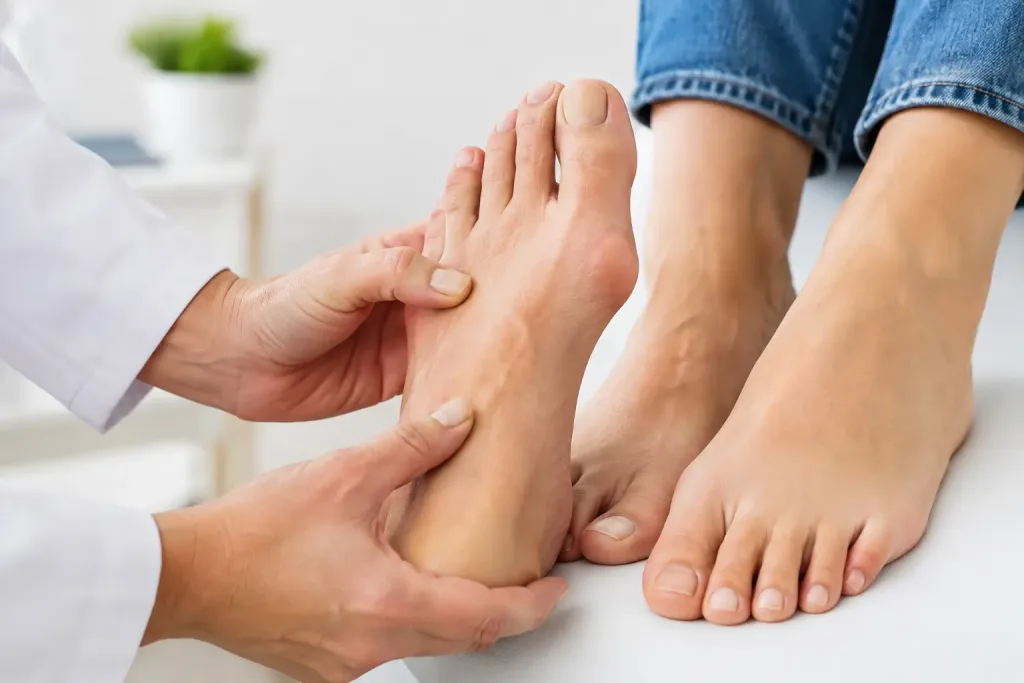
The clinician will examine the alignment of the big toe and forefoot, the joint’s movement, areas of tenderness, skin condition, calluses, nail changes, and signs of rubbing. They may also assess how you stand and walk. This helps identify whether the bunion is part of a broader biomechanical pattern, such as a collapsing arch, uneven weight distribution, limited joint movement, or instability.
Your footwear should be part of the conversation. Shoes that are too narrow, shallow, stiff in the wrong place, or worn unevenly can intensify pressure. However, footwear is rarely the only factor. A personalized plan considers the demands of your work, exercise, balance, foot shape, and comfort goals.
Conservative care can make a meaningful difference
Bunions do not usually reverse without surgical correction, but symptoms can often be managed effectively. Early conservative care may slow the cycle of friction and compensation that makes walking more difficult.
Depending on your needs, care may include footwear guidance, protective padding, regular callus management, strategies to reduce irritation, and custom orthotics to support foot mechanics and redistribute pressure. Orthotics are not a cure for every bunion, and they are not appropriate in every case. They can be helpful when foot posture, uneven loading, or pain through the arch and forefoot is contributing to symptoms.
Toe spacers or splints may offer temporary comfort for some people, particularly in shoes with sufficient room. They should not cause numbness, rubbing, or increased pain. Avoid aggressively stretching, taping, or forcing the toe into a new position without professional advice, especially if you have reduced sensation or fragile skin.
Maintaining mobility matters as well. Gentle movement, a gradual approach to activity, and shoes suited to your daily demands can help you stay active without repeatedly inflaming the joint. If pain is persistent or the deformity is progressing despite conservative care, your provider may recommend further medical evaluation, including imaging or discussion with a surgical specialist.
Do not wait for a bunion to stop you from moving
Many people adapt around a bunion for years by buying larger shoes, avoiding walks, or accepting pain as part of aging. That adjustment can quietly reduce independence and quality of life. The earlier pressure patterns and skin concerns are identified, the more options there are to protect comfort and keep you moving safely.
At Feet & Life in Barrie, a foot assessment can look beyond the bump itself to consider skin integrity, circulation, sensation, footwear, gait, and the demands of your daily routine. If a bunion is affecting your comfort, balance, or confidence on your feet, booking an appointment is a practical step toward protecting the foundation of your mobility.