
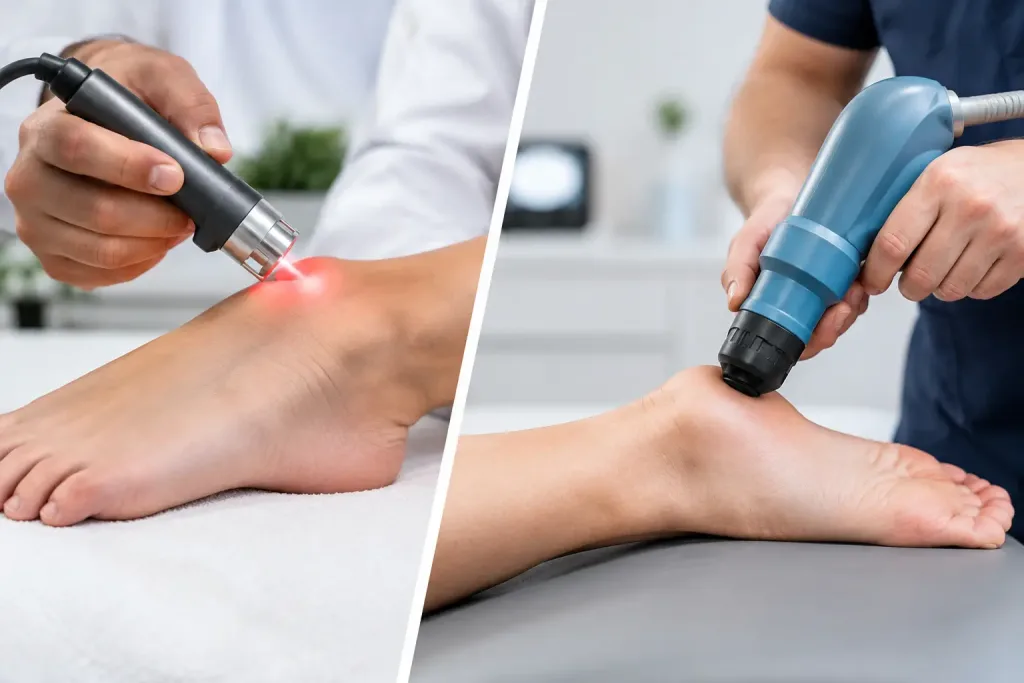
A painful first step out of bed, an Achilles tendon that will not settle after activity, or heel pain that makes a work shift feel much longer can all limit more than exercise. They can change how safely and confidently you move. When comparing laser versus shockwave therapy, the right choice is not simply about choosing the newest device. It depends on the tissue involved, how long symptoms have been present, your health history, and the treatment goal.
Both treatments may be used as part of a conservative plan for certain foot and lower-limb concerns. They work differently, feel different during an appointment, and are suited to different circumstances. A clinical assessment helps determine whether either option is appropriate – and whether footwear changes, orthotics, stretching, strength work, wound care, or medical follow-up should come first.
What low-level laser therapy does
Low-level laser therapy, sometimes called photobiomodulation, uses specific wavelengths of light delivered to targeted tissue. Unlike surgical lasers, it does not cut, burn, or remove tissue. The aim is to support cellular activity in a way that may help reduce pain and inflammation and encourage the body’s normal healing processes.
The treatment is generally painless. A clinician moves the laser applicator over the affected area, such as the plantar fascia, heel, Achilles tendon, ankle, or another area of lower-limb discomfort. Some people notice gentle warmth, while others feel very little during the session.
Laser therapy may be considered for conditions involving irritated or slow-to-recover soft tissue, including plantar fasciitis, tendon irritation, certain sprains, arthritic discomfort, and muscle pain. It can also have a role in carefully managed healing plans where tissue support is a priority. Results vary. A recent injury, a longstanding overuse problem, and pain caused by poor footwear or nerve irritation will not respond in the same way.
For people with diabetes, neuropathy, reduced circulation, or a history of wounds, laser treatment requires thoughtful clinical screening. Foot pain or skin changes should never be assumed to be routine inflammation. Loss of sensation, colour changes, swelling, heat, drainage, or a break in the skin may need prompt medical foot assessment instead of, or before, an adjunctive therapy.
What shockwave therapy does
Shockwave therapy uses acoustic pressure waves rather than light. These waves are directed into a specific area of painful tissue. In musculoskeletal care, the goal is often to stimulate a biological response in chronic, stubborn tendon or fascia problems, while also influencing pain signalling.
Shockwave treatment is commonly discussed for persistent plantar fasciitis and some forms of Achilles tendinopathy. It is usually considered when symptoms have continued despite sensible first-line care, such as activity modification, supportive footwear, stretching, and a properly targeted rehabilitation plan.
The session can be uncomfortable, particularly when the tissue is very tender. The intensity can often be adjusted, and treatment should remain within a tolerable range. It is also common to have temporary soreness after an appointment. This does not automatically mean damage has occurred, but it is one reason people need clear guidance about activity and recovery between sessions.
Shockwave is not designed to be a quick fix for every sore foot. If the source of pain is a stress fracture, nerve compression, inflammatory arthritis, infection, an ulcer, or poor circulation, shockwave may be inappropriate or may delay the care that is actually needed.
Laser versus shockwave therapy: the practical differences
The most useful comparison is not which treatment is “better.” It is which approach best matches the diagnosis and stage of recovery.
Low-level laser therapy is typically gentler and painless. It may suit people who need a lower-intensity treatment experience, who have broad areas of soft-tissue discomfort, or who are following a plan focused on calming irritation and supporting recovery. It is often delivered over a series of appointments because tissue healing and pain reduction are gradual processes.
Shockwave therapy is more targeted and more mechanically stimulating. It may be better suited to certain chronic tendon or fascia conditions that have not improved with basic conservative care. It can be more uncomfortable during treatment and may not be the first option for someone with a new injury, high tissue sensitivity, or health factors that require added caution.
Neither treatment corrects the daily forces that may have contributed to the problem. For example, plantar heel pain may be linked to limited ankle movement, prolonged standing, worn-out shoes, a sudden jump in running volume, or inadequate arch support. Achilles pain can be influenced by calf weakness, training load, footwear, and how the foot moves during walking. Without addressing these contributors, pain can return even if treatment provides short-term relief.
Why an assessment matters before treatment
Foot and lower-limb pain can look deceptively similar. Heel pain may be plantar fasciitis, but it can also relate to a nerve issue, a stress injury, fat pad irritation, arthritis, or referred pain from higher in the leg. Swelling around the ankle can occur after a sprain, but it may also relate to circulation concerns, infection, or systemic health issues.
An appropriate assessment considers where the pain is, what triggers it, how long it has been present, your walking pattern, footwear, range of motion, and relevant medical conditions. For older adults and people with diabetes, neuropathy, vascular concerns, or reduced mobility, skin integrity and circulation are equally important parts of that conversation.
At Feet & Life, treatment planning is guided by the person in front of us, not by a one-size-fits-all protocol. A therapy may be recommended as one part of care, alongside foot-care support, pressure management, custom orthotics, compression guidance where appropriate, or referral for further assessment.
When laser or shockwave therapy may not be appropriate
There are situations where treatment should be postponed, modified, or avoided. An open wound, suspected infection, unexplained swelling, acute fracture, blood clot concerns, active cancer in the treatment area, or significant circulation changes all require professional review. Shockwave therapy may also be unsuitable for some people using certain medications or living with specific medical conditions.
Pregnancy, implanted devices, changes in sensation, and anticoagulant use should also be discussed during intake. This is not meant to be alarming. It is how safe care is provided. The more complete the health history, the more confidently a clinician can tailor treatment or recommend a different path.
Seek timely assessment for a foot that becomes red, hot, increasingly swollen, numb, blue or pale, or painful without a clear reason. If you have diabetes, do not wait on a blister, crack, cut, drainage, or colour change. Early attention can protect healing, mobility, and independence.
Getting more from treatment
The best outcomes usually come from combining therapy with practical changes that reduce repeated strain. Depending on the concern, this may include adjusting activity temporarily, wearing supportive shoes, using a prescribed orthotic, improving calf and foot strength, or following a measured stretching program.
Progress is not always linear. Chronic tendon and fascia pain may take several weeks to respond, especially when symptoms have been present for months. The aim is not to push through escalating pain. It is to restore comfortable, reliable movement while respecting how the tissue is healing.
If foot or lower-limb pain is changing the way you walk, limiting work, disrupting sleep, or making you less active, booking an assessment is a practical next step. The right treatment is the one that supports safer movement today while protecting your feet for the life you want to keep living.