A sock that feels tight is not automatically a compression sock, and stronger is not always better. Knowing how to choose compression socks starts with understanding why your legs feel heavy, swollen, achy, or tired in the first place. The right pair can support circulation and comfort. The wrong pair, particularly when arterial circulation is reduced or sensation is impaired, can create pressure problems that deserve attention.
Compression therapy is often helpful for people who stand all day, travel frequently, have mild varicose veins, experience lower-leg swelling, or are recovering from certain procedures. It can also be part of a clinical plan for venous insufficiency, lymphedema, wound care, and ongoing lower-limb health. The key is matching the garment to your body, health history, and daily routine.
Start with the reason you need compression socks
Compression socks apply graduated pressure: they are firmest at the ankle and gradually less tight farther up the leg. This encourages blood and fluid to move upward rather than pooling around the feet and ankles. That is why they may reduce swelling, leg fatigue, and the heavy feeling that develops after long periods of sitting or standing.
For an otherwise healthy adult with mild end-of-day ankle swelling or tired legs, an over-the-counter pair may be a reasonable place to start. The decision changes when swelling is persistent, appears suddenly, affects only one leg, or comes with pain, warmth, redness, shortness of breath, or chest pain. Those symptoms need prompt medical assessment rather than a new pair of socks.
It also matters whether your concern is venous circulation, arterial circulation, nerve sensation, or fluid retention. Compression can be beneficial for venous problems, but it may not be appropriate for significant peripheral arterial disease. If blood flow into the feet is already reduced, external pressure can further compromise tissue health.
Choose the right compression level
Compression is measured in millimetres of mercury, written as mmHg. A higher number means firmer pressure, not necessarily a better outcome. The appropriate level depends on your symptoms, diagnosis, skin condition, and ability to put the socks on and take them off safely.
Mild compression: about 15-20 mmHg
Mild compression is often used for prevention and everyday comfort. It may suit people who work on their feet, sit for extended periods, travel by car or plane, exercise, or notice mild lower-leg fatigue and minor swelling by the end of the day. It can be a practical option when there is no known circulation disorder and no concerning symptoms.
Moderate compression: about 20-30 mmHg
Moderate compression may be recommended for more noticeable swelling, varicose veins, chronic venous insufficiency, or after certain vein treatments. It is commonly used under professional guidance because fit becomes more important as pressure increases. A sock that bunches, rolls at the top, or digs into the skin can act like a tourniquet rather than providing smooth graduated support.
Firm compression: 30 mmHg and above
Firm compression is generally used for diagnosed conditions such as significant venous disease, lymphedema, or some wound-management plans. It should be selected with a qualified healthcare professional. Higher compression can be difficult to apply, especially for people with arthritis, hand weakness, limited mobility, or back pain. A garment only works if it can be worn consistently and safely.
Measure, do not guess
Sizing varies between manufacturers. A medium in one brand can fit very differently from a medium in another, so shoe size alone is not enough. Most compression socks require an ankle measurement and calf circumference. Knee-high styles also use lower-leg length, measured from the floor to the bend behind the knee.
Measure first thing in the morning, before swelling builds through the day. Stand or sit with your foot flat on the floor, use a flexible tape measure, and record measurements exactly as instructed by the manufacturer. If one leg is more swollen than the other, measure both legs. Never assume one size will fit each side equally well.
A properly fitted sock should feel snug and supportive without numbness, tingling, pain, cold toes, discolouration, or deep indentations. It should lie flat against the skin. Wrinkles concentrate pressure, while a rolled cuff can restrict circulation at the top of the sock.
Select the length that supports the affected area
Knee-high compression socks are the most common option and are often sufficient for ankle swelling, lower-leg aching, and many venous concerns. They are easier to apply than longer garments and work well for daily standing, travel, and activity.
Thigh-high stockings or pantyhose styles may be recommended when swelling or venous concerns extend above the knee. They offer a larger area of support but can be harder to keep in position and may be less comfortable for some people. The right length is not about coverage alone. It should reflect where fluid collects, where symptoms occur, and what you can realistically wear every day.
Open-toe styles can be useful for people who prefer more room around their toes, have sensitive toes, or want to wear sandals. Closed-toe styles provide a more traditional sock feel and may be warmer in Canadian winters. Neither is universally better. Comfort, skin condition, footwear, and toe shape all matter.
Consider fabric, routine, and footwear
Compression garments are available in lightweight synthetics, cotton blends, wool blends, and sport-focused fabrics. A breathable material may help if you tend to perspire, while a padded sole can improve comfort for active workdays. For people with sensitive skin, fragile skin, or a history of irritation, fabric choice and careful skin monitoring are especially important.
Think about when you will wear them. Most people put compression socks on in the morning before getting out of bed or soon after, when swelling is lowest. They are usually removed at bedtime unless a clinician has given different instructions. If you need them for work, make sure the thickness works with your shoes and does not create rubbing at the heel, toes, or ankle.
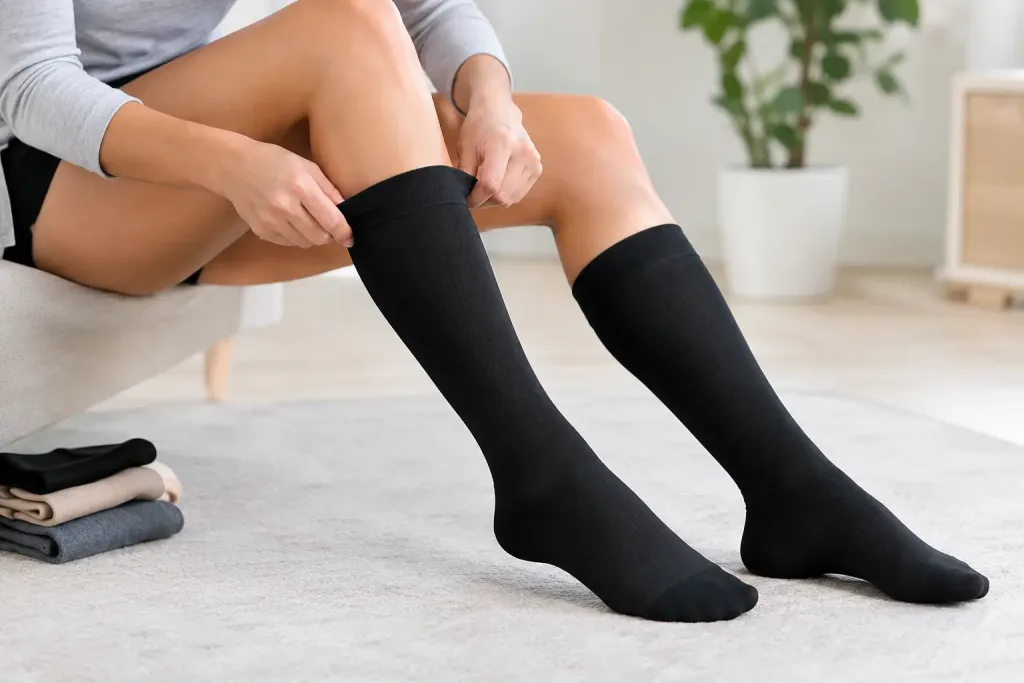
Application can be a real barrier. Turn the sock inside out to the heel, place it over the foot, position the heel correctly, then gradually unroll it up the leg. Do not pull forcefully from the top edge. Donning gloves or a stocking aid can make the process safer and easier, particularly for people with reduced hand strength or limited flexibility.
When to speak with a foot-care or healthcare professional first
Compression should not be a trial-and-error solution when there are health risks affecting the feet and lower legs. Seek individualized advice before using compression if you have diabetes with neuropathy, reduced sensation, known peripheral arterial disease, a history of ulcers, heart failure, significant kidney disease, fragile skin, active infection, or wounds.
People living with diabetes may not feel a sock that is too tight, folded, or rubbing against the skin. Neuropathy can hide early injury, while reduced circulation can delay healing. Regularly check your feet and lower legs for redness, blisters, pressure marks, colour changes, drainage, or skin breakdown. If vision or mobility makes self-checks difficult, involve a family member, caregiver, or foot-care professional.
A clinician can assess pulses, skin temperature, swelling pattern, sensation, mobility, and any areas of pressure before recommending a compression level. This is particularly valuable when swelling has changed recently or when you have multiple conditions that affect circulation and healing.
Give your legs a better starting point each morning
The best compression sock is the one that supports your circulation without creating new pressure concerns and that you can wear correctly on a consistent basis. If your legs are swelling regularly, your skin is changing, or you are unsure which pressure level is safe, a professional lower-limb assessment can replace guesswork with a plan that protects comfort, mobility, and independence.