
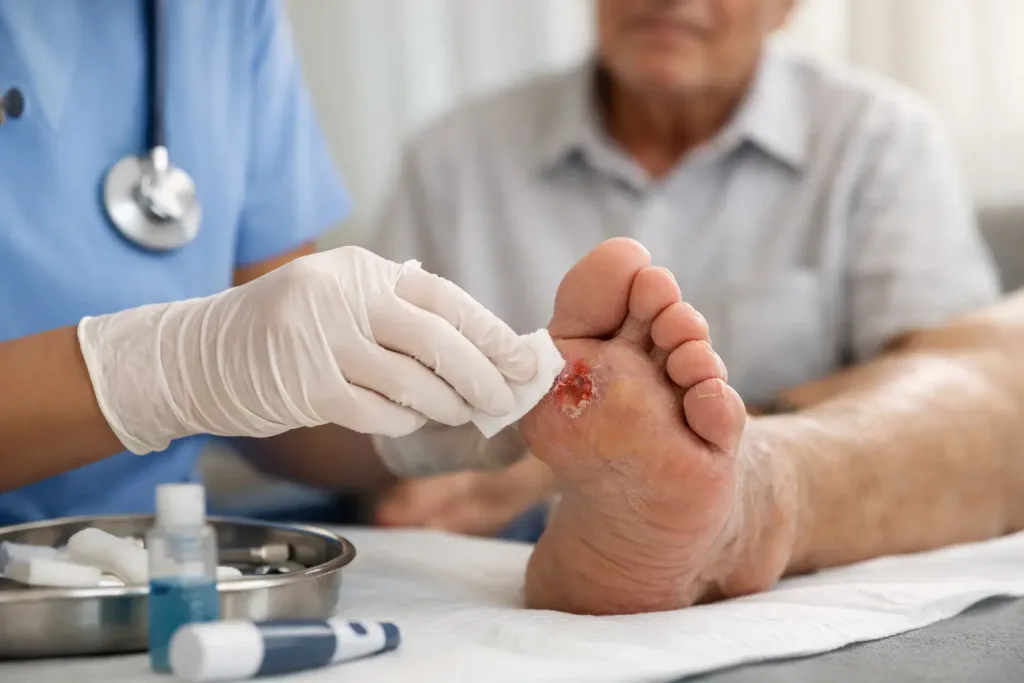
A blister under the ball of the foot can seem minor, especially when it does not hurt. For a person living with diabetes, reduced sensation and circulation can allow that small area to worsen before it is noticed. This diabetic wound healing example shows why early assessment, pressure relief, and consistent care matter as much as the dressing placed on the wound.
A diabetic wound healing example: from blister to closure
Consider an older adult with type 2 diabetes who notices moisture on their sock after a long day in a newer pair of shoes. They have peripheral neuropathy, meaning the protective feeling in their feet is reduced. Because there is little pain, they continue walking on the area for several days.
At an assessment, the skin beneath the first metatarsal head – the area just behind the big toe – has opened into a small ulcer. It is shallow, with a pink wound bed and a rim of thick callus. There is no fever, spreading redness, or obvious drainage, but the wound is not simply left to heal on its own. The location matters: every step places pressure on the same spot, repeatedly disrupting the fragile new tissue trying to form.
The care plan begins by carefully removing surrounding callus, measuring and documenting the wound, checking the skin temperature and colour, and assessing circulation and sensation. The clinician selects a dressing that supports a clean, appropriately moist healing environment. Just as importantly, they address the cause. The patient is advised to reduce pressure on the area with appropriate offloading, which may involve a modified shoe, padding, an orthotic adjustment, or a temporary device depending on the wound and the person’s mobility.
Over the next two weeks, the wound becomes smaller. The edges begin to draw in and healthy granulation tissue fills the base. At each visit, the clinician checks for increased drainage, odour, tenderness, undermining, skin breakdown, or changes in circulation. Blood glucose management, adequate protein and fluid intake, and daily foot checks support the local treatment, but none replaces pressure relief.
By week four or six, if the wound has continued to reduce in size and there are no signs of infection or poor blood supply, the skin may close. Closure is a positive milestone, not the end of care. The skin is still vulnerable, and the original pressure point remains. Ongoing footwear review, callus management, regular foot care, and a plan for preventing recurrence help protect the result.
Why diabetic wounds can heal slowly
Diabetes does not mean every cut or blister will become serious. However, it can create several barriers to healing at the same time. High or fluctuating blood glucose can affect immune function and the body’s ability to repair tissue. Peripheral neuropathy can make friction, heat, pressure, or a puncture injury difficult to feel. Peripheral arterial disease can reduce the oxygen-rich blood needed for healing.
These issues often overlap. A person may have a wound they cannot feel, continue walking on it, and have less circulation available to repair it. Vision changes, limited flexibility, arthritis, stroke-related weakness, or difficulty reaching the feet can make daily inspection harder as well. This is why a wound’s appearance alone does not tell the whole story.
A wound may look dry and small but still be at risk if it is surrounded by callus, located over a bony prominence, or showing no improvement. Conversely, a wound that appears more moist is not automatically infected. Dressing selection and treatment depend on the amount of drainage, tissue type, depth, circulation, pressure, and whether infection is suspected. Individual assessment is essential.
Healing needs more than a dressing
Dressings protect the wound and can help manage moisture, but they are one part of a broader plan. Debridement, when clinically appropriate, removes non-viable tissue or callus that can hold bacteria and place added pressure on the wound edge. Offloading reduces repetitive trauma. Circulation assessment identifies whether arterial or venous concerns may be slowing progress.
For some wounds, compression therapy may be considered when swelling or venous disease is involved, but only after a qualified assessment confirms it is safe. Compression is not appropriate for every person, particularly when significant arterial disease is present. This is a useful example of why home treatment should not be based on a photo, a previous dressing, or advice intended for someone else.
Signs that need prompt medical attention
A diabetic foot wound should be assessed promptly, even when it seems painless. Contact a healthcare professional urgently if there is spreading redness, warmth, swelling, pus-like drainage, a new or worsening odour, black or grey tissue, red streaking, or a sudden increase in blood glucose without a clear reason.
Seek urgent medical care immediately for fever, chills, confusion, rapidly progressing redness, severe swelling, a foot that becomes cold or blue, or a deep wound where bone, tendon, or other structures may be visible. Infection in a diabetic foot can progress quickly. Waiting to see whether it settles over a weekend can create avoidable risk.
Do not cut corns or calluses, drain blisters, use medicated corn removers, or apply harsh chemicals to a diabetic foot wound unless a qualified clinician has instructed you to do so. These approaches can damage healthy skin or conceal a worsening problem. Avoid walking barefoot, including indoors, while a wound is present.
What a practical wound-care plan looks like
A good plan is realistic enough to follow at home and specific enough to identify when care needs to change. It starts with clear instructions on keeping the dressing clean and dry, when it should be changed, and what changes should prompt a call. It also includes a safe strategy for bathing, footwear, movement, and follow-up appointments.
Daily checks are especially valuable for people with neuropathy. Look at the tops, soles, heels, and spaces between the toes. A hand mirror can help, or a family member or caregiver can assist when vision or mobility is limited. Watch for redness, cracks, blisters, drainage on socks, swelling, colour changes, or areas that feel unusually warm.
Footwear should have enough depth and width to avoid rubbing, with room for any prescribed accommodation. The right choice depends on the person’s foot shape, wound location, swelling, gait, and activity level. A shoe that feels comfortable while sitting may still create harmful pressure after several hours of walking.
Blood glucose, nutrition, sleep, smoking status, and medication routines also influence healing. No single food, cream, or supplement can overcome ongoing pressure, infection, or poor blood flow. The goal is to support the whole person while treating the wound itself.
After the skin closes: preventing the next wound
Recurrence prevention begins before the wound is fully closed. If the original cause was pressure beneath the forefoot, the answer may include custom orthotics, footwear changes, regular callus care, or adjustments to walking activity. If swelling contributed to rubbing, the plan may focus on circulation, compression when appropriate, and shoe fit throughout the day.
Regular professional foot care is particularly helpful for people who cannot safely trim nails, see the bottoms of their feet, or manage thick callus on their own. At Feet & Life in Barrie, wound and diabetic foot care can be coordinated with footwear, orthotic, circulation, and ongoing preventive support so the plan reflects your mobility and health needs.
A small wound deserves timely attention because protecting a foot protects far more than skin. It supports confidence at home, safer movement, independence, and the everyday activities that help life feel like your own.