
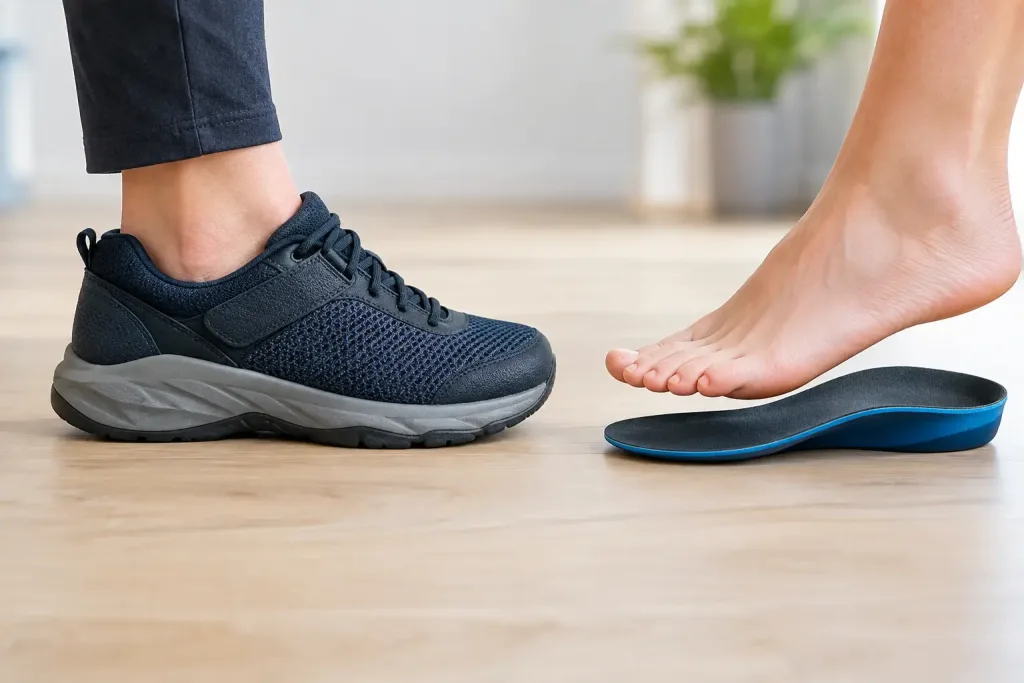
A shoe that feels comfortable in the store can still create enough pressure to damage a vulnerable foot over a full day. For people living with diabetes, the question of diabetic shoes versus orthotics is not simply about comfort or appearance. It is about protecting skin, managing pressure, supporting safe movement, and reducing the chance that a small irritation becomes a wound.
Diabetic footwear and custom orthotics can work very well together, but they do different jobs. The right choice depends on sensation in your feet, circulation, foot shape, gait, swelling, current skin condition, and whether you have had ulcers or amputations in the past. A clinical assessment can identify risks that are easy to miss at home, particularly when neuropathy has reduced your ability to feel pain or rubbing.
Diabetic Shoes Versus Orthotics: The Key Difference
Diabetic shoes are designed to create a safer environment around the foot. They are typically deeper and wider than standard shoes, with a roomy toe box, soft interior lining, fewer seams, adjustable closures, and enough depth to accommodate an insole or orthotic. Their main purpose is to reduce friction, avoid pressure on toes and bony areas, and give the foot stable protection throughout the day.
Orthotics are inserts placed inside footwear. A custom orthotic is made to support and redistribute load beneath your foot based on your individual structure and movement pattern. It may help reduce excessive pressure under the heel, ball of the foot, arch, or a prominent area caused by a bunion, hammertoe, high arch, flat foot, arthritis, or altered gait.
Put simply, diabetic shoes protect the foot from the outside and provide room for safe accommodation. Orthotics manage how forces travel through the foot inside the shoe. One is not automatically better than the other. In many cases, an orthotic needs a properly fitted diabetic shoe to work safely and comfortably.
Why Foot Pressure Matters More With Diabetes
Diabetes can affect the feet in several ways. Peripheral neuropathy may reduce feeling, so a blister, tight seam, pebble in a shoe, or area of rubbing may go unnoticed. Reduced circulation can slow healing. Changes in foot shape, limited joint mobility, calluses, and dry or fragile skin can further raise the risk of breakdown.
Pain is usually the body’s early warning signal. When sensation is reduced, that signal may be quiet or absent. This is why a person may continue walking on an irritated area until it becomes a blister, open sore, or infected wound.
Footwear cannot correct every diabetes-related risk, but it is a meaningful part of prevention. Properly selected shoes and orthotics aim to lower focal pressure and shear, which is the rubbing force that can damage skin. They also help improve stability for people who feel unsteady due to neuropathy, weakness, arthritis, or changes in mobility.
When diabetic shoes may be the priority
Diabetic shoes are often the first concern when the foot needs more space, protection, or stability. They may be especially useful if you have swollen feet or ankles, corns, calluses, toe deformities, bunions, thickened nails, sensitive skin, or difficulty finding standard shoes that do not rub.
They can also be appropriate for people with a history of diabetic foot ulcers, previous amputation, Charcot foot changes, or significant loss of sensation. In these situations, the shoe itself must be assessed carefully. A narrow toe box or shallow shoe can compress the foot or make an otherwise helpful orthotic unsafe to wear.
A diabetic shoe should feel secure without being tight. There should be adequate length in front of the longest toe, enough width across the forefoot, and sufficient depth above the toes and over the top of the foot. Adjustable fastening matters because swelling can change over the course of a day.
When custom orthotics may add more value
Custom orthotics may be particularly helpful when pressure is concentrated in one area or when biomechanics contribute to recurring pain, calluses, or skin stress. For example, someone who rolls inward excessively while walking may place repeated strain on the arch, heel, or forefoot. Someone with a high arch may load the heel and ball of the foot more intensely. A custom device can help spread that load more evenly.
For a person with diabetes, the goal is not necessarily to make the foot feel more rigidly supported. The goal is to create supportive contact without creating a new pressure point. Materials, contours, cushioning, and modifications should be selected with skin integrity and sensation in mind.
Store-bought inserts can provide cushioning for some people, but they do not account for individual pressure patterns, deformities, or diabetic risk factors. They may also flatten, shift, or take up too much room inside a shoe. If you have neuropathy, poor circulation, recurrent calluses, a wound history, or visible changes in foot shape, it is wiser to have inserts and footwear professionally assessed rather than relying on trial and error.
The Best Answer Is Often Both
A custom orthotic placed in a shoe that is too tight can increase pressure across the top of the foot or crowd the toes. On the other hand, a roomy diabetic shoe without the right insole may not sufficiently address high-pressure areas under the foot. This is why footwear should be considered as a system.
The combination may include a diabetic shoe, a custom orthotic, and, where needed, additional offloading modifications. Offloading means moving pressure away from a vulnerable area. This could involve targeted padding, an accommodation for a prominent bone, a rocker sole, or a more specialized device when a wound is present. The best solution is always based on the condition of the foot, not a one-size-fits-all label.
There are trade-offs. A highly cushioned shoe may feel pleasant but offer less stability for someone with balance concerns. A firmer orthotic may control motion well but require careful adjustment for a person with delicate skin or reduced sensation. A clinician can help balance cushioning, support, fit, and safety.
Signs Your Current Footwear Needs Attention
Do not wait for severe pain to reassess your shoes or orthotics. With diabetes, new pressure marks and changes in the skin matter. Check both feet daily, including the soles and between the toes. If you cannot see the bottom of your feet easily, use a mirror or ask for help.
Arrange professional assessment promptly if you notice redness that does not fade, blisters, cracks, bleeding, calluses that keep returning in the same spot, swelling, warmth, drainage, colour changes, or a shoe that suddenly feels different. An open wound, spreading redness, fever, blackened tissue, or new severe swelling requires urgent medical attention.
Orthotics also need follow-up. Your feet, activity level, weight, swelling, and medical condition can change over time. An insert that fit well two years ago may no longer match your needs, especially if it has compressed or if the shoe around it has stretched and lost support.
What a Professional Footwear Assessment Should Consider
A proper assessment is more than measuring shoe size. It should include a review of diabetes history, sensation, circulation concerns, skin condition, nail health, gait, balance, range of motion, foot shape, current footwear, and any history of wounds or amputations. Your practitioner should also examine how the orthotic sits inside the shoe and how your foot responds while walking.
At Feet & Life, diabetic foot care is approached as part of protecting independence and long-term mobility. Recommendations can be tailored to whether you need preventive support, help with pain and calluses, protection after a wound, or a safer way to stay active at work and at home.
If you live with diabetes, treat a new rubbing spot or recurring callus as useful information from your feet, even when it does not hurt. The safest next step is often a timely assessment that helps you keep moving with comfort, confidence, and the protection your feet deserve.