
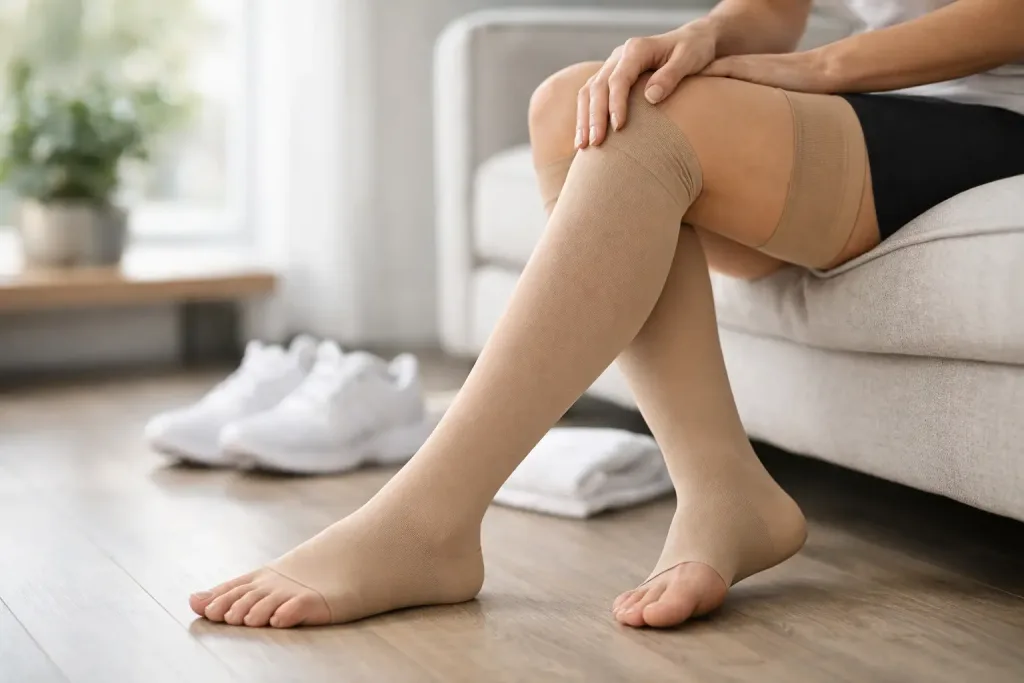
A pair of compression stockings can look simple, but the right pair can make a meaningful difference to how your legs feel by the end of the day. For people managing swelling, aching, varicose veins, long shifts on their feet, reduced mobility, or recovery from a procedure, compression is not simply about comfort. It is a practical tool that may support circulation, protect skin integrity, and help preserve the confidence to keep moving.
The key is matching the stocking, compression level, fit, and wearing routine to the person. Compression that is poorly fitted or used without appropriate assessment can be uncomfortable and, in some cases, unsafe.
How compression stockings support lower-leg health
Veins in the legs work against gravity to return blood to the heart. Small valves inside the veins help keep blood moving upward. When those valves are weakened, when calf muscles are less active, or when someone spends long periods sitting or standing, fluid and blood can collect in the lower legs.
This can contribute to ankle swelling, heaviness, tired or aching legs, visible varicose veins, skin changes, and a feeling that shoes become tighter as the day goes on. For some people, persistent venous swelling can also increase the risk of fragile skin, wounds, and delayed healing.
Compression stockings apply graduated pressure, meaning they are usually firmer at the ankle and gradually less firm higher up the leg. This gentle external support can help reduce the diameter of superficial veins, encourage fluid to move out of the lower leg, and support the calf-muscle pump during walking. They do not cure vein disease, but they can be an important part of managing symptoms and reducing strain on vulnerable tissues.
Compression is often recommended for people with venous insufficiency, varicose veins, mild to moderate edema, or legs that ache after prolonged standing. It may also be useful during travel, after certain procedures, and for active adults whose work keeps them on their feet. The reason for the swelling matters, however. Not all swelling is caused by vein problems.
Choosing compression stockings is not one-size-fits-all
Stockings come in different lengths, materials, styles, and pressure ranges. A knee-high style is commonly used for lower-leg swelling and venous concerns, while thigh-high or pantyhose styles may be advised when swelling or vein issues extend above the knee. Open-toe styles can work well with certain footwear or toe sensitivities, while closed-toe options may feel more familiar for daily wear.
Pressure is commonly measured in millimetres of mercury, or mmHg. Lower levels may be suitable for mild tiredness or occasional swelling. Higher levels are typically used for diagnosed venous disease, more significant edema, or post-treatment care. Higher compression is not automatically better. The most helpful level is one that addresses the clinical concern while remaining safe, tolerable, and realistic to wear consistently.
A proper fitting involves more than choosing a shoe size. Measurements are generally taken at specific points around the ankle, calf, and sometimes thigh, often when swelling is at its lowest. Stockings that are too loose may slide, bunch, or provide little benefit. Stockings that are too tight can pinch, create pressure areas, cause numbness, or leave painful marks.
At Feet & Life, a compression assessment can help identify whether compression therapy is appropriate and which style and level may best support your circulation, comfort, mobility, and skin health.
When professional guidance matters most
Anyone with diabetes, neuropathy, reduced sensation, a history of ulcers, fragile skin, significant arthritis, limited hand strength, or vision changes should not be left to guess at compression. These factors can make it harder to notice a pressure injury, put stockings on safely, or recognize when fit has changed.
Professional assessment is especially important if you have known peripheral arterial disease or symptoms that may suggest reduced arterial blood flow. Pain in the calves when walking that improves with rest, cold feet, pale or bluish toes, weak pulses, or wounds that are slow to heal all require clinical attention. Compression may be inappropriate or need to be modified when arterial circulation is reduced.
People with heart failure, kidney disease, sudden unexplained swelling, or a recent blood clot also need medical direction before starting compression. A stocking should never be used to self-manage a new, one-sided swollen leg, particularly if the area is painful, warm, red, or associated with shortness of breath or chest pain. These symptoms require urgent medical assessment.
How to wear compression stockings comfortably
Most people find compression stockings easiest to put on first thing in the morning, before fluid has had time to build up in the legs. Skin should be clean and fully dry. Avoid applying heavy lotion immediately before putting them on, as this can make the fabric difficult to position and may affect the skin if the stocking folds.
Turn the stocking inside out to the heel, place the foot in carefully, position the heel correctly, then gradually unroll the fabric up the leg. Do not pull hard from the top band. Smooth the material as you go so there are no wrinkles, twists, or tight folds behind the knee or at the ankle. Gloves, donning aids, and stocking applicators can make a major difference for people with arthritis, back pain, reduced balance, or limited grip strength.
The stocking should feel supportive, not painful. A light indentation at the top can be normal, but deep grooves, tingling, numbness, colour changes in the toes, new pain, or skin irritation are signs to remove it and seek advice. Re-check the fit if your weight, swelling pattern, mobility, or health status changes.
Washing stockings according to their care instructions helps preserve their elasticity. Because compression fibres gradually wear out, even well-cared-for garments will eventually lose their intended support. If a stocking is slipping, bunching, becoming easier to pull on than usual, or no longer providing the same relief, it may be time for replacement and reassessment.
Compression works best alongside movement and skin care
Compression can support the work your body is already doing, but it cannot replace movement. Walking, ankle pumps, calf raises, and changing position regularly can activate the calf muscles that help return blood from the legs. If you sit for long periods, try not to remain still for hours. If your work requires standing, brief walking breaks and supportive footwear can reduce daily strain.
Skin care is equally important when swelling is present. Inspect the lower legs and feet daily for redness, cracks, blisters, weeping areas, bruising, or changes in colour. Moisturize dry skin, but keep lotion away from between the toes unless specifically advised. Swollen, dry, or fragile skin is more vulnerable to breakdown, especially for people living with diabetes or reduced sensation.
Compression may feel like a small routine, yet consistency often determines whether it helps. Some people wear stockings only on long travel days or demanding workdays. Others benefit from daily use as part of ongoing venous and edema management. The right schedule depends on your symptoms, diagnosis, skin condition, and clinician’s direction.
When leg symptoms should not wait
Book a clinical assessment if swelling is persistent, worsening, affecting one leg more than the other, or accompanied by skin changes. New brownish discolouration around the ankles, itching, hardening skin, recurrent cellulitis, fluid leakage, or a sore that does not heal can point to advancing venous disease and should be addressed early.
For people who value independence, leg comfort is about far more than getting through the day without aching. It is about safely walking to the store, staying active with family, managing work demands, and protecting the skin and circulation that support lifelong mobility. Well-fitted compression, used as part of a personalized care plan, can be a steady source of support from the ground up.