
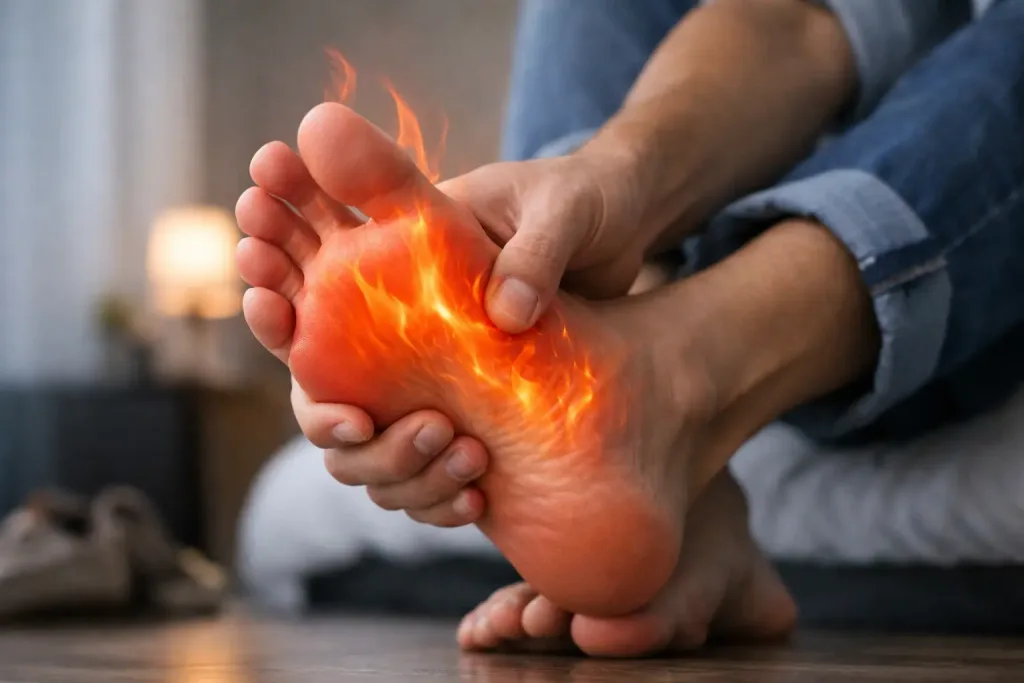
A burning sensation in your feet can make a short walk feel exhausting and disturb sleep when you need rest most. Burning feet causes are not always obvious, but the symptom deserves attention – especially if you have diabetes, reduced circulation, numbness, or changes to your skin. The right next step depends on what else is happening in your feet and lower legs.
For some people, burning begins after a long shift in tight shoes. For others, it feels like heat, tingling, pins and needles, or sharp pain that becomes worse in the evening. While cooling your feet may bring short-term comfort, ongoing burning is a signal to look beyond the symptom and identify the contributing cause.
Burning Feet Causes Often Start With Nerves
Peripheral neuropathy is one of the most common reasons for persistent burning feet. Neuropathy occurs when nerves that carry messages between the feet and brain become damaged or do not function as they should. The sensation may be burning, electric, prickling, numb, painful, or oddly sensitive to touch. Some people feel pain from bed sheets resting on their toes, while others do not feel a blister or cut at all.
Diabetes is a leading cause of peripheral neuropathy. Over time, elevated blood glucose can affect small nerves and blood vessels, reducing sensation and the body’s ability to heal. This is why diabetic foot care is about more than nail trimming or comfort. A small injury that goes unnoticed can become an ulcer or infection, particularly when circulation is also reduced.
Neuropathy may also be associated with vitamin B12 deficiency, thyroid conditions, kidney disease, alcohol use, certain medications, previous chemotherapy, and nerve compression. Sometimes, a complete medical review is needed to determine the cause. Burning in both feet that is gradually becoming more frequent should not be dismissed as a normal part of aging.
Nerve pain does not always mean numb feet
It can seem contradictory to have burning pain and reduced sensation at the same time, but both can occur with neuropathy. Damaged nerves can send exaggerated pain signals while failing to detect pressure, heat, or injury accurately. This combination raises the risk of skin breakdown because a person may continue walking on a sore spot without realizing how much pressure is being applied.
Circulation Problems Can Cause Heat and Discomfort
Healthy circulation delivers oxygen and nutrients to the tissues of the feet and helps support healing. When arterial circulation is reduced, feet may feel painful with activity, cold, numb, pale, or slow to heal. Burning can occur, particularly at rest or overnight, although it is only one possible symptom. Peripheral arterial disease is more common in people with diabetes, high blood pressure, high cholesterol, a smoking history, or kidney disease.
Venous circulation concerns are different. Veins return blood to the heart, and when that return is less efficient, fluid may collect in the lower legs and feet. Swelling, aching, heaviness, skin discolouration, and warmth are common. Compression therapy may help some people with venous concerns, but it is not appropriate for everyone. Arterial circulation should be considered before compression is selected, particularly if you have diabetes or known vascular disease.
One foot that suddenly becomes hot, swollen, red, and painful requires prompt assessment. This may be related to infection, injury, gout, a clot, or, in a person with neuropathy, Charcot foot changes. Do not assume it is simply overuse.
Footwear, Pressure, and Biomechanics Matter
Long days on your feet can expose problems that are less noticeable at rest. Shoes that are narrow through the toe box, too shallow over the top of the foot, worn out, or poorly sized can compress nerves and increase friction. Heat and moisture trapped in footwear can add to the discomfort.
Foot structure and movement patterns also matter. Flat feet, high arches, limited ankle movement, arthritis, past injuries, and altered walking after a stroke or surgery can change where pressure lands. Repeated pressure under the forefoot, around a bunion, or along the arch can irritate tissues and nerves. In these cases, supportive footwear, padding, custom orthotics, and a treatment plan that addresses gait may provide more lasting relief than repeatedly changing shoes.
Active adults may notice burning after running, court sports, or prolonged standing. The cause may be as straightforward as an overloaded foot, but it may also involve a stress injury, nerve irritation, or poor shoe fit. Pain that persists after rest, recurs with the same activity, or changes your gait should be assessed before you push through it.
Skin Conditions and Infections Can Feel Like Burning
Athlete’s foot is a fungal skin infection that often causes itching, peeling, cracking, redness, and burning, particularly between the toes or along the soles. It thrives in warm, damp environments such as sweaty socks and enclosed shoes. Untreated fungal infection can create breaks in the skin, which are more concerning for people with diabetes, poor circulation, or reduced sensation.
Other skin conditions, including eczema, contact dermatitis, and psoriasis, can also cause burning or irritation. A new cream, laundry product, insole material, or shoe lining may trigger contact dermatitis. If the skin is red, blistered, cracked, draining, or increasingly painful, professional assessment can help distinguish irritation from infection and guide safe treatment.
Toenail fungus does not usually cause burning on its own, but thickened nails can press on surrounding skin or make footwear uncomfortable. Attempting to cut thick, curved, or ingrown nails without proper vision, mobility, or sensation can lead to accidental injury. This is one situation where routine professional foot care can protect skin integrity.
When Burning Feet Need Urgent Attention
Burning that is mild and brief after a demanding day may settle with rest and better footwear. However, contact a healthcare professional promptly if burning is new, worsening, persistent, or accompanied by changes in sensation or skin condition.
Seek urgent medical assessment for:
- a foot that is suddenly red, hot, swollen, painful, or difficult to bear weight on
- an open sore, blister, crack, drainage, foul odour, or skin that is turning dark or blue
- fever, chills, spreading redness, or red streaking from the foot or leg
- a new foot wound if you have diabetes, neuropathy, poor circulation, or a history of ulcers
These signs may indicate infection, significant inflammation, impaired circulation, or another condition that needs timely treatment. Early care can prevent a small concern from becoming a prolonged wound, hospitalization, or loss of mobility.
What You Can Do While You Arrange Care
Start with a careful daily look at both feet, including the soles, heels, and spaces between the toes. If reaching or seeing your feet is difficult, use a mirror or ask a trusted family member or caregiver for help. Look for redness, pressure marks, cracks, blisters, swelling, drainage, or changes in shape.
Choose clean, dry socks and shoes with enough width and depth for your toes. Avoid walking barefoot, even at home, if you have diabetes or reduced sensation. Do not use heating pads or hot water bottles on numb feet, as burns can happen before you recognize the temperature is too high. Likewise, avoid using chemical corn removers or cutting calluses yourself.
Keep skin moisturized if it is dry, but avoid applying lotion between the toes, where excess moisture can contribute to skin breakdown. If you suspect athlete’s foot, keep feet dry and seek advice on appropriate treatment rather than covering the symptoms with heavily scented products.
A foot assessment can look at more than the immediate burning. At Feet & Life in Barrie, care can include a review of skin integrity, pressure areas, footwear, circulation concerns, nail and fungal changes, and the effect of diabetes or mobility limitations. When needed, treatment can be coordinated with your primary care provider or other members of your healthcare team.
Your feet support every errand, visit, workout, and independent step. If burning is changing how you walk, sleep, or trust your footing, arranging an assessment early is a practical way to protect comfort and mobility.