A bunion can make an ordinary shoe feel like a source of constant irritation. The aching may begin after a long day on your feet, then progress to soreness during short walks, difficulty finding comfortable footwear, or pain that changes how you move. Effective bunion pain relief is not only about calming a sore joint. It is about reducing pressure, supporting safer movement, and protecting the mobility that supports independence and quality of life.
What Is Causing the Pain From a Bunion?
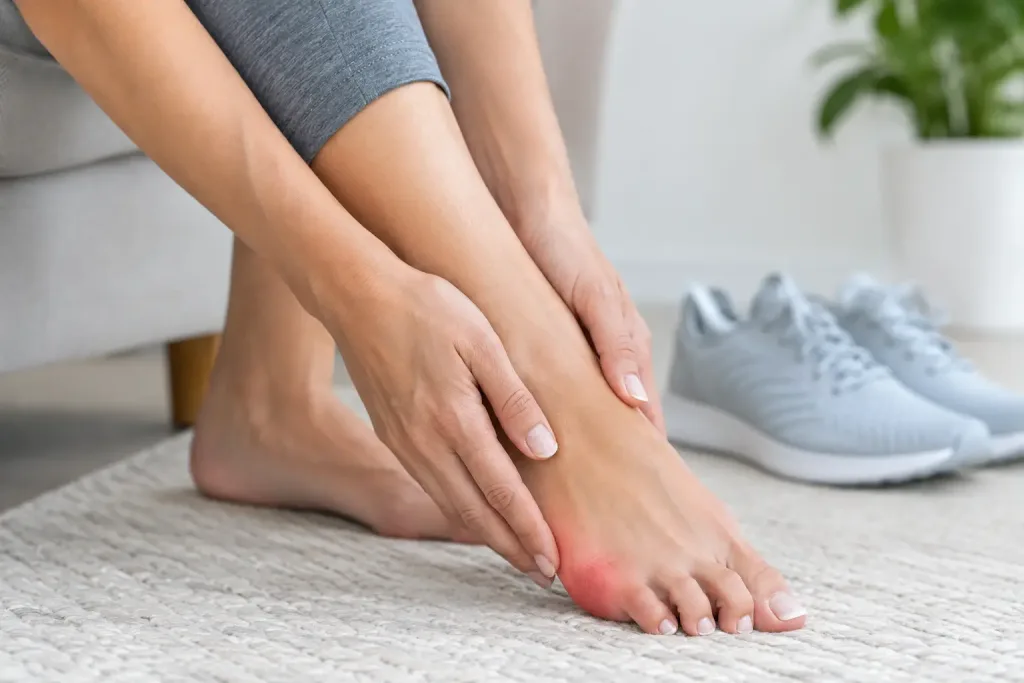
A bunion is a bony prominence at the base of the big toe. It develops when the big toe gradually shifts toward the second toe and the joint at its base moves outward. This is not simply a surface bump. It is a change in joint alignment that can affect how the foot bears weight with every step.
Pain commonly comes from friction between the bunion and the inside of a shoe, inflammation around the joint, or pressure beneath the forefoot as the foot compensates for the altered position of the big toe. The area may look red, swollen, or callused. Some people also develop corns between the first and second toes, pain in the ball of the foot, or discomfort in the smaller toes as they take on more work.
Foot shape and family history can contribute, but footwear still matters. Narrow, pointed shoes and high heels can compress the toes and aggravate an existing bunion. Arthritis, ligament laxity, prior foot injury, and the biomechanics of how you walk can also play a role. For this reason, the best approach depends on what is driving the pressure and pain for you.
Bunion Pain Relief Starts With Reducing Pressure
When a bunion is irritated, the first goal is to create more room around the joint. Choose shoes with a wide, deep toe box so the front of the shoe does not press against the bump or force the toes together. The shoe should feel comfortable when you first try it on. Do not rely on a stiff shoe to stretch enough over time.
A low, stable heel and a supportive sole can reduce strain through the forefoot. If you need dress shoes for work or an event, consider limiting the time spent in narrow or heeled styles and changing into more supportive footwear when possible. Fit matters more than shoe size alone. One foot may be slightly wider or longer than the other, especially later in the day when swelling is more noticeable.
At home, short periods of rest and a cold pack wrapped in a thin towel may help settle temporary soreness and swelling. Avoid applying ice directly to the skin, particularly if you have diabetes, reduced circulation, neuropathy, or impaired sensation. In these circumstances, it is safer to ask a healthcare professional before using heat or cold therapies on your feet.
Over-the-counter pain medication may be appropriate for some people, but it is not the right choice for everyone. Existing kidney disease, stomach concerns, heart conditions, blood thinners, allergies, and other medications can affect which options are safe. A pharmacist, nurse practitioner, physician, or other qualified clinician can provide guidance based on your health history.
Pads, Toe Spacers, and Sleeves Can Help – With Limits
Soft bunion pads or gel sleeves can reduce rubbing inside a shoe. A toe spacer may feel helpful when the big toe presses against the second toe. These products can improve comfort, but they do not reverse the underlying bony alignment.
They must also fit correctly. A pad that bunches, shifts, or makes the shoe tighter can increase friction rather than relieve it. If you have reduced sensation, poor circulation, diabetes, fragile skin, or a history of foot wounds, avoid using adhesive pads or self-treating painful skin without professional advice. A small pressure point can become a skin breakdown before it becomes painful enough to notice.
How Orthotics May Support Bunion Pain Relief
Bunions are not caused by one single walking pattern, and orthotics do not make the bony prominence disappear. However, properly selected or custom orthotics may help improve how force is distributed through the foot. This can reduce excess pressure on the bunion joint, ball of the foot, arch, knees, hips, or lower back when biomechanics are contributing to symptoms.
The right device depends on your footwear, activity level, foot shape, range of motion, and other conditions such as arthritis or diabetes. A runner with forefoot pain may need a different solution than an older adult who feels unsteady in everyday shoes. An assessment is more useful than choosing an insert based only on what looks comfortable on a store shelf.
Supportive footwear and orthotics are often most effective when used together. An orthotic cannot work as intended if it is squeezed into a shoe with a narrow toe box or an unstable heel. Small changes in fit can make a meaningful difference to daily comfort.
Keep the Joint Moving Without Forcing It
Gentle movement can help maintain mobility around the big toe and ankle, especially when stiffness encourages you to walk differently. Simple range-of-motion exercises, such as slowly moving the big toe within a comfortable range, may be useful for some people. Calf and ankle flexibility can also affect how pressure moves through the forefoot during walking.
The key is not to force the toe into a painful position. Aggressive stretching will not straighten a bunion and may flare an irritated joint. If your pain is persistent, a clinician can assess whether guided exercises, footwear changes, orthotics, or another treatment approach is appropriate.
When Bunion Pain Needs Professional Assessment
It is time to arrange an assessment when pain limits walking, affects your work, wakes you at night, or keeps returning despite shoe changes. Early care can often reduce irritation before compensating movements create pain elsewhere in the foot, ankle, knee, hip, or back.
A foot-care professional can examine the skin, footwear wear pattern, joint movement, circulation, sensation, and areas of pressure. This assessment helps distinguish bunion discomfort from other causes of pain, including arthritis, bursitis, nerve irritation, stress injury, or a painful callus beneath the forefoot. Treatment may include conservative foot care, footwear recommendations, pressure management, custom orthotics, and referrals when further medical investigation is needed.
Surgery is sometimes considered for severe pain or significant functional limitation when conservative care is no longer enough. It is a personal medical decision that should be discussed with a qualified surgical provider. The size of the bunion alone does not determine whether surgery is necessary. Symptoms, activity needs, joint condition, overall health, recovery demands, and personal goals all matter.
Do Not Ignore Skin Changes or Sudden Symptoms
For people living with diabetes, peripheral neuropathy, poor circulation, or reduced vision, a bunion deserves regular attention even when it is not painful. Numbness can mask rubbing and skin injury. Check your feet daily, including the sides of the big toe joint and between the toes, or ask for help if you cannot safely inspect them yourself.
Seek prompt medical attention for spreading redness, warmth, drainage, an open area, fever, sudden severe pain, a blue or pale toe, or swelling that is rapidly worsening. These symptoms may indicate infection, circulation concerns, gout, or another condition that needs timely evaluation.
At Feet & Life in Barrie, bunion concerns can be assessed within the broader picture of your foot health, mobility, circulation, skin integrity, and daily routines. The aim is not to hand you a one-size-fits-all product. It is to identify the pressures affecting your feet and build a practical plan that helps you move with greater comfort and confidence.
Your feet carry you through errands, work, family time, and the activities that make life feel like your own. If a bunion is changing the way you walk, addressing it early can help protect those everyday moments before pain becomes the thing that decides where you can go.