A thickened nail that catches on a sock, a hard spot under the forefoot, or dry skin around the heel can seem like small problems – until walking becomes painful or a minor break in the skin does not heal. Professional footcare vs home care is not an either-or decision for most people. Daily care at home is a valuable part of staying comfortable, while clinical assessment becomes essential when risks, symptoms, or physical limitations make self-treatment unsafe.
Your feet carry you through work, errands, exercise, family life, and recovery from illness. Looking after them early can help protect mobility and independence, particularly when diabetes, poor circulation, neuropathy, arthritis, or reduced vision are part of the picture.
Professional Footcare vs Home Care: The Main Difference
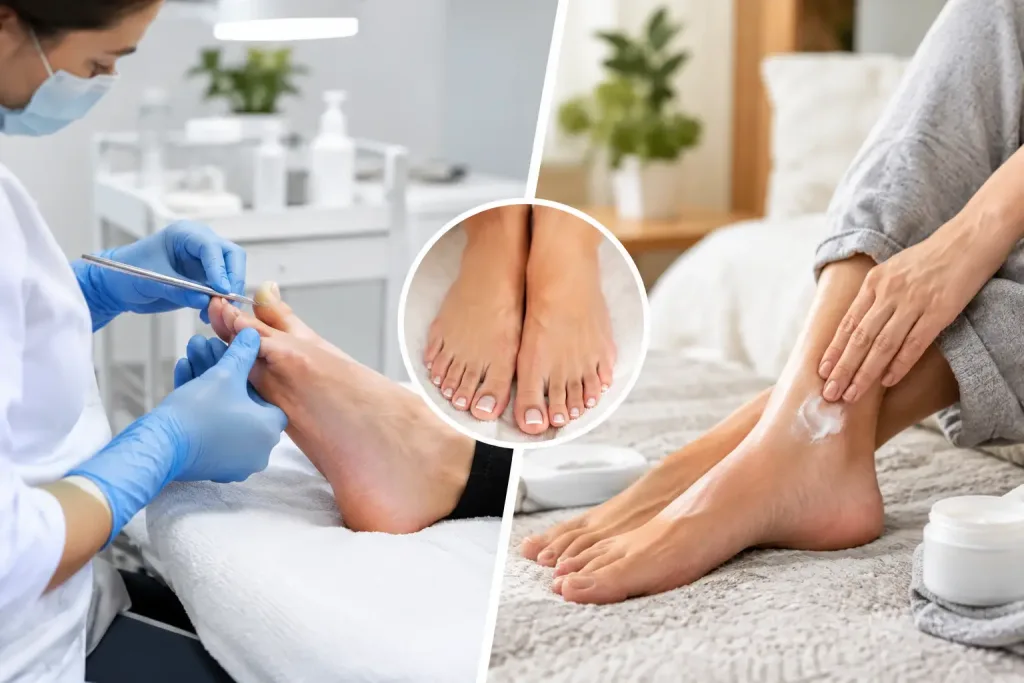
Home care focuses on routine maintenance and observation. It includes washing and drying the feet well, moisturizing dry skin, wearing properly fitted footwear, checking for changes, and trimming nails only when this can be done safely. These habits reduce avoidable irritation and make it easier to notice a concern before it becomes more serious.
Professional foot care goes further. A trained practitioner can assess the skin, nails, circulation, sensation, pressure areas, gait, footwear, and lower-limb concerns that may be contributing to discomfort. Treatment is performed with clinical instruments and infection-control practices, but the greatest value is often the assessment behind the treatment. A corn may be caused by footwear pressure, altered walking mechanics, or a toe deformity. A recurring cracked heel may reflect dry skin, swelling, diabetes, or a fungal concern. Treating the visible issue without addressing the cause can mean it returns.
For someone with healthy sensation, good circulation, and no pain, home care may cover much of what is needed between routine appointments. For someone with a medical condition or a history of wounds, the threshold for seeking professional support should be much lower.
What Is Usually Safe to Manage at Home?
A simple routine can make a meaningful difference. Wash feet daily in lukewarm water, dry carefully between the toes, and apply moisturizer to dry skin on the tops and bottoms of the feet. Avoid putting cream between the toes, where excess moisture can encourage skin breakdown or fungal growth.
Check both feet every day, including the soles, heels, and between the toes. A hand mirror can help if bending is difficult. Look for redness, swelling, blisters, cracks, peeling skin, drainage, colour changes, pressure marks, or nails that have become thick, loose, or discoloured. Choose clean, dry socks and shoes with enough depth and width that toes are not crowded.
If you can clearly see and reach your feet, have normal feeling in them, and your nails are not thick or curved into the skin, careful straight-across nail trimming may be appropriate. Do not cut too close to the skin or dig into the corners. File sharp edges gently instead.
Home care should be gentle. It is not the place for bathroom surgery. Avoid cutting corns or calluses with blades, using strong chemical corn removers, or attempting to drain blisters. These approaches can create an opening in the skin, particularly when sensation is reduced and an injury is not immediately felt.
When Home Care Is No Longer Enough
Pain is one clear reason to arrange an assessment, but it is not the only one. Neuropathy can reduce feeling, so a significant problem may be painless. If you notice a wound, open crack, drainage, spreading redness, warmth, swelling, new odour, or a sudden change in skin colour, seek prompt professional guidance. Rapidly increasing redness, fever, severe pain, a black or blue toe, or a wound that appears infected requires urgent medical attention.
Persistent nail changes also deserve more than repeated trimming at home. Thick, yellow, brittle, lifted, or painful nails may be related to fungal infection, trauma, pressure, or another nail condition. Effective treatment starts with identifying the likely cause. Simply covering a discoloured nail or thinning it aggressively can delay appropriate care and may damage surrounding skin.
Calluses and corns are another common example. They are often the body’s response to repeated friction or pressure. Removing the buildup may bring temporary relief, but a professional can also look at shoe fit, foot shape, pressure distribution, and walking patterns. Orthotic support, footwear advice, offloading, or treatment for lower-limb pain may be needed to reduce recurrence.
Higher-risk feet need a clinical plan
People living with diabetes should not wait for a painful problem before seeking foot care. Diabetes can affect nerves, circulation, skin integrity, and healing. A small cut, blister, or pressure area can progress quickly when it goes unnoticed or receives less blood flow. Regular professional assessment helps identify changes early and provides a safer option for nail and callus care.
The same caution applies to people with peripheral neuropathy, poor circulation, a history of ulcers, kidney disease, immune suppression, or previous amputation. Older adults and people living with arthritis, stroke-related limitations, dementia, vision changes, or reduced flexibility may also find self-care difficult or unsafe. Needing help to reach your feet is not a failure of independence. It is a sensible reason to choose care that prevents an avoidable injury.
Clinical Care Is About More Than Nails
A professional foot-care appointment may include safe reduction of thickened nails and callused skin, skin and nail assessment, education about daily care, and recommendations tailored to your health history. If a concern involves circulation, swelling, pain, biomechanics, wounds, or infection risk, the next step may include compression therapy, custom orthotics, wound management, fungal nail treatment, or a referral pathway that fits the clinical picture.
This individualized approach matters for active adults as well. Heel pain after standing through long shifts, aching arches during walks, or recurring shin and tendon discomfort are not always solved by a new pair of shoes. The foot, ankle, knee, and lower leg work as a connected system. A practitioner can assess how load moves through the body and help identify whether pressure, footwear, muscle tightness, injury, or alignment is contributing to the problem.
Professional care is not intended to replace healthy home habits. The best results usually come from both. Clinical treatment can address issues that require trained assessment, while consistent daily observation helps catch new changes between visits.
Choosing the Right Level of Care
Consider home care as your daily baseline and professional foot care as preventive support, not just a response to a crisis. If your feet are healthy and you can safely care for them, maintain your routine and pay attention to changes. If you are uncertain about a spot, cannot trim your nails safely, have recurring discomfort, or live with a condition that raises your risk, it is better to ask early than to wait.
For long-term-care residents, ongoing nursing foot care can be especially protective. Regular visits provide a consistent opportunity to monitor skin integrity, manage nail and callus concerns, and identify changes that may otherwise be missed when mobility or communication is limited.
At Feet & Life, care begins with the person, not just the symptom. Whether you need routine maintenance, support for diabetic foot health, or help understanding why pain keeps returning, an appointment can provide a clear, practical plan for safer movement and greater comfort.
Your feet do not need to be in crisis to deserve attention. A small concern addressed early may help you keep walking with confidence, comfort, and the freedom to stay engaged in the life you value.