A shoe that feels tolerable for a quick trip to the store can become painful after an hour of walking, standing, or cooking. This arthritis footwear guide is designed to help you recognize what supportive footwear should do for painful, stiff, or swollen feet – and when a professional assessment may be the safer next step.
Arthritis can affect the small joints of the toes, the ball of the foot, the midfoot, ankle, knee, hip, or spine. When one area hurts, people often change the way they walk without realizing it. That altered gait can place extra pressure on other joints, create corns or calluses, aggravate heel pain, and increase the risk of instability or falls. The right footwear cannot cure arthritis, but it can reduce unnecessary stress and make daily movement more manageable.
Why arthritis changes what your shoes need to do
Arthritic joints may be painful, inflamed, stiff, unstable, or visibly changed in shape. Some people notice their feet are most difficult to move first thing in the morning. Others find that swelling builds through the day, making shoes feel tight by afternoon. Rheumatoid arthritis, osteoarthritis, gout, and post-injury arthritis can each affect the feet differently, so there is no single “arthritis shoe” that suits everyone.
A helpful shoe provides a stable base, protects sensitive areas, and allows your foot to move without forcing painful joints to work harder. It should also accommodate normal changes in foot volume. If you have diabetes, neuropathy, poor circulation, or a history of wounds, these details become even more significant. Pressure, rubbing, or a small area of skin breakdown may not be felt clearly and can progress before it is noticed.
The goal is not simply a softer shoe. Very soft, unsupportive footwear can allow the foot to roll or twist more than it should, particularly when joints are weak or painful. Comfort and stability need to work together.
Arthritis footwear guide: features worth looking for
Start with the fit. There should be about a thumb-width of space between your longest toe and the end of the shoe, while the heel should sit securely without slipping. Many adults buy shoes based on the size they wore years ago, even though arthritis, swelling, bunions, hammertoes, and changes in the arch can alter foot shape over time. Have both feet measured while standing, ideally later in the day when swelling is more likely to be present.
A wide, deep toe box is often one of the most useful features. It gives toes room to lie naturally rather than being compressed together. This can reduce irritation over bunions, claw toes, corns, and prominent joints. Pointed toe boxes and shallow slip-on shoes commonly create pressure exactly where an arthritic foot needs space.
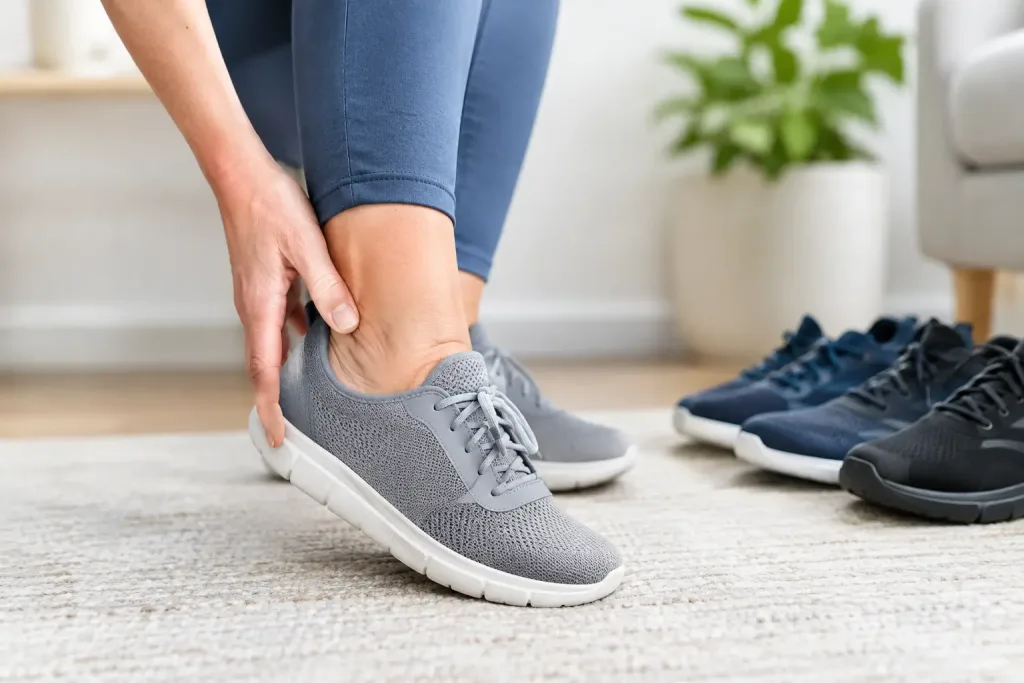
Look for a firm heel counter – the structured material around the back of the shoe. When you gently squeeze it, it should resist collapsing. A stable heel counter helps control excessive side-to-side motion and can make walking feel more secure. The sole should bend mainly near the ball of the foot, not fold easily through the middle. Excessively flexible shoes may place extra demand on sore midfoot joints.
Cushioning also matters, especially if arthritis has changed how you absorb impact. A cushioned midsole can lessen the force travelling through the heel, forefoot, knees, and hips. However, the shoe should not feel so tall, rounded, or unstable that it affects your balance. If you have had falls, feel unsteady, or use a cane or walker, choose a lower, stable sole and ask for individual guidance before switching to a highly curved or rocker-style shoe.
Adjustable closures such as laces, Velcro-style straps, or other fastening systems are practical when swelling varies. They allow you to secure the foot without overtightening the forefoot. Slip-on footwear may be convenient when hands are painful or mobility is limited, but it should still hold the heel well enough to prevent your foot from sliding inside the shoe.
When a rocker sole may help
A rocker sole has a curved base that helps the body move forward with less bending through certain foot joints. For some people with pain in the big toe joint, forefoot, or midfoot, it can reduce discomfort during push-off. It may also be useful when ankle motion is limited.
The trade-off is balance. A rocker sole changes how your foot contacts the ground and may feel unfamiliar, particularly on uneven pavement, stairs, or icy Ontario winter surfaces. It is not automatically a better option for people with neuropathy, significant weakness, vertigo, or a recent history of falls. A foot-care professional can assess your gait and help determine whether this design is appropriate.
Do not overlook the inside of the shoe
The inside should be smooth, with minimal seams or rough edges that could rub against the toes or sides of the foot. Run your hand through the shoe before wearing it. Even a small raised seam can become a problem when sensation is reduced or when skin is fragile.
Remove the existing insole and check whether the shoe has enough depth for an orthotic or accommodative insert. If an orthotic makes the shoe too tight across the top of the foot or crowds the toes, the shoe is not deep enough. Do not solve this by wearing a larger size alone, since extra length can cause the foot to slide forward and create toe pressure.
Custom orthotics are not needed for every person with arthritis. Over-the-counter insoles may be enough for mild discomfort and can offer useful cushioning. However, custom orthotics may be considered when pain is linked to foot alignment, uneven pressure, recurring calluses, significant deformity, or lower-limb biomechanics. Their purpose is to redistribute pressure and support movement patterns, not to make a shoe feel artificially rigid.
Shoes to limit when joints are painful
The occasional dress shoe or sandal is a personal choice, but everyday footwear should not repeatedly aggravate symptoms. High heels shift pressure toward the forefoot and can strain the toes, knees, and lower back. Narrow shoes compress joints and skin. Thin-soled flats may offer little shock absorption, while loose slippers and flip-flops provide minimal stability and can increase tripping risk.
Barefoot walking may feel comfortable for some people at home, but it is not ideal for everyone. People with diabetes, neuropathy, circulation concerns, open skin, or impaired balance are generally safer in supportive indoor footwear with a closed toe and non-slip sole. Inspecting your feet daily is also wise, especially if you cannot reliably feel pressure or injury.
Make the transition gradually
Even a well-fitted shoe can feel different if you have worn flexible or unsupportive footwear for years. Begin by wearing new shoes for short periods indoors. Check your feet afterward for red marks, rubbing, blisters, or areas that remain red after 20 to 30 minutes. Increase wearing time gradually if the shoes remain comfortable.
Pain is useful information. If your joints, arches, calves, knees, or back become noticeably more painful after changing footwear, do not assume you simply need to “break them in.” The shoe may not match your needs, or an underlying issue may require assessment. Shoes should not need to cause ongoing pain before they become comfortable.
When professional foot care can help
An assessment is especially valuable if arthritis is accompanied by swelling, numbness, burning, recurrent corns or calluses, ingrown nails, skin changes, wounds, or difficulty reaching your feet safely. Persistent pain in one area can also signal a problem beyond routine arthritis, including tendon irritation, stress injury, infection, or altered circulation.
At Feet & Life, footwear can be considered as part of a broader plan that may include routine medical foot care, pressure management, orthotic support, circulation-focused care, and guidance for safer daily mobility. Bringing your most frequently worn shoes to an appointment can reveal wear patterns that are not obvious while you are walking.
Your feet carry you through work, errands, family time, and the routines that support independence. If shoes are limiting those moments, a careful fit assessment and earlier care can help you move with more comfort and confidence.