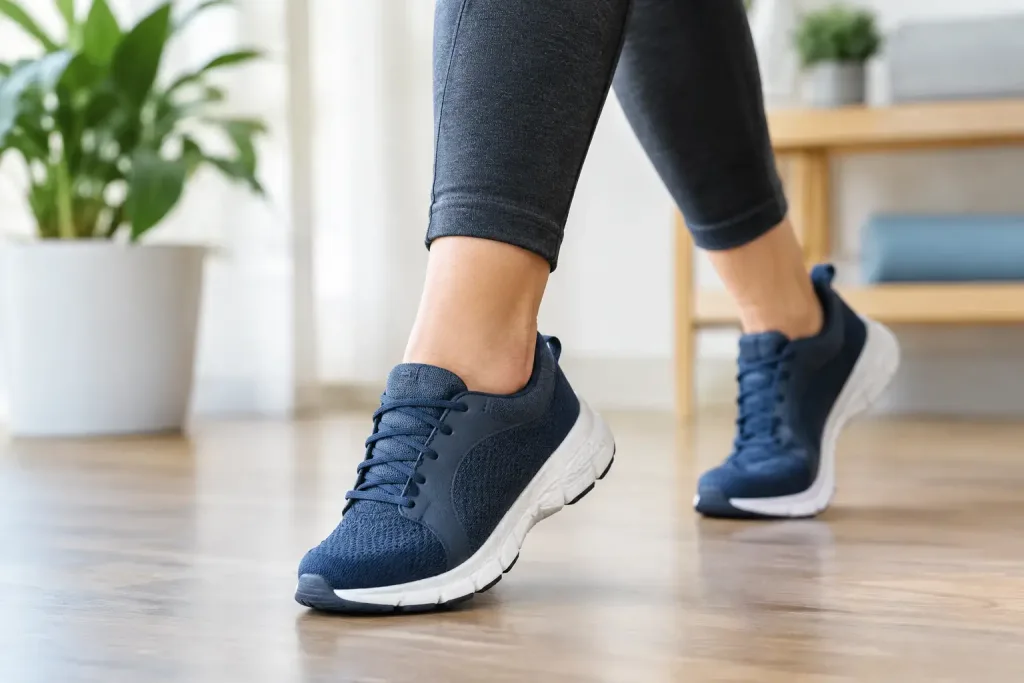
A loose slipper, worn-down running shoe, or sandal that shifts underfoot can turn an ordinary trip to the kitchen into a serious injury. The best fall prevention footwear is not necessarily the most expensive or the most heavily cushioned option. It is footwear that fits securely, supports natural movement, provides dependable traction, and works with the person’s specific balance, circulation, sensation, and mobility needs.
Falls can affect anyone, but the risk rises with age, reduced sensation from neuropathy, arthritis, diabetes, vision changes, muscle weakness, medication side effects, stroke-related limitations, and uneven walking patterns. Footwear is only one part of fall prevention, but it is a practical factor that can be assessed and improved right away.
Why footwear matters for fall prevention
Your feet are your first point of contact with the ground. When a shoe is unstable, too loose, too tight, poorly fitted, or lacking traction, the body must work harder to maintain balance. This can be especially challenging when reaction time, leg strength, joint range of motion, or feeling in the feet has changed.
A good shoe helps create a stable base. It should keep the foot properly positioned, reduce unnecessary slipping inside the shoe, and allow the wearer to feel confident during everyday tasks such as standing from a chair, walking on tile, stepping off a curb, or using stairs.
Footwear cannot correct every fall risk. A person who feels dizzy, has new weakness, is catching a toe while walking, or has frequent near-falls needs a broader assessment. Vision, medication, home hazards, pain, footwear wear patterns, circulation, and lower-limb strength can all contribute. Still, replacing unsafe shoes is often a meaningful first step.
Best fall prevention footwear features
The right footwear depends on the person, but certain features are consistently helpful for safer walking. Rather than relying on a brand name or a single style, examine how the shoe performs on the foot.
A secure heel and adjustable closure
A shoe should hold the heel in place. Backless slippers, flip-flops, loose mules, and shoes that slide at the heel require the toes to grip as the person walks. This can alter gait, increase fatigue, and make it easier to lose balance.
Look for a firm heel counter – the structured material around the back of the shoe – along with laces, Velcro-style straps, buckles, or another adjustable closure. Adjustable closures are particularly useful when swelling changes throughout the day or when arthritis makes fine hand movements difficult. The closure should be easy to manage without leaving the shoe loose.
A stable, low-profile sole
A shoe with a broad, stable base generally offers more security than one with a narrow heel or excessively curved sole. High heels and narrow footwear shift body weight forward and reduce stability. Very thick, soft soles can also be a problem for some people because they may reduce awareness of the ground or create an unstable feeling.
The goal is not a hard, flat shoe with no cushioning. A moderate sole that absorbs impact while remaining stable is often appropriate. The foot should not feel as though it is rocking, tipping, or sinking from side to side.
Reliable tread and slip resistance
Soles need enough tread to grip common surfaces, particularly smooth indoor flooring, wet entrances, packed snow, and pavement. Check the bottom of shoes regularly. If the tread has become smooth, compressed, cracked, or unevenly worn, the shoe may no longer provide the traction it once did.
Slip-resistant footwear can be valuable for people who walk on wet floors, work in kitchens or healthcare settings, or frequently move between outdoor and indoor surfaces. However, tread alone does not make a shoe safe. A slip-resistant sole cannot compensate for a poor fit or a shoe that is difficult to control.
Enough room in the toe box
The toe box should allow toes to lie flat and move naturally without rubbing against the front or sides. Shoes that are too narrow can cause corns, calluses, blisters, ingrown nails, and pressure areas. For someone with diabetes, neuropathy, poor circulation, or a history of wounds, these seemingly small areas of friction can become much more serious.
At the same time, a shoe that is too large can be just as unsafe. The foot may slide forward, the heel may lift, and the toes may curl to keep the shoe on. There should be a small amount of space at the end of the longest toe, but not enough room for the foot to move around freely.
Support that matches the person’s foot mechanics
Some people benefit from supportive footwear with a stable midsole and an insole that helps distribute pressure. Others need extra depth to accommodate swelling, toe deformities, braces, or custom orthotics. A removable insole can be useful if an orthotic is prescribed, but the shoe must still have sufficient depth once the orthotic is inside.
Support should never create painful pressure. A shoe that feels supportive to one person may aggravate bunions, hammertoes, heel pain, arthritis, or nerve sensitivity in another. Comfort is not a luxury feature. It is part of safe, sustainable footwear use.
Common footwear choices that can increase risk
Indoor footwear deserves as much attention as outdoor shoes. Many falls occur at home, often during quick trips to the bathroom, kitchen, or front door. Worn slippers and loose house shoes are frequent concerns because they may lack a secure heel, tread, and reliable fit.
Shoes with curled edges, uneven soles, broken fasteners, or visible leaning to one side should be replaced. Uneven wear can reflect changes in gait, leg alignment, or pain avoidance, so it is worth having it assessed rather than simply buying the same style again.
Bare feet and socks on smooth flooring can also increase slipping risk. This is particularly relevant for people with neuropathy who may not notice a small object, wet patch, or change in floor level. If footwear is needed indoors, choose a fitted indoor shoe or slipper with a closed heel and non-slip sole rather than a loose slide.
How to choose and test footwear safely
Try shoes on later in the day, when feet may be more swollen. Wear the socks, compression garments, or orthotics normally used. Walk on a firm surface and pay attention to whether the heel lifts, the toes feel crowded, or the shoe bends in an odd place.
A shoe should bend near the ball of the foot, not fold through the middle. It should feel secure without creating pressure across the top of the foot or around the toes. If one foot is larger, fit the larger foot. Avoid assuming that your usual size is still correct, as foot shape and volume often change over time.
For people who have reduced sensation, do not rely on pain alone to judge fit. Check both feet daily for redness, rubbing, blisters, cuts, calluses, or areas of skin breakdown. A shoe can cause damage before it becomes painful when protective sensation is reduced.
When professional guidance is worthwhile
Professional footwear guidance is especially useful for anyone with diabetes, neuropathy, foot deformity, recurring calluses, chronic swelling, poor circulation, a previous ulcer, frequent falls, or a new change in walking. The right shoe may need to work alongside custom orthotics, compression therapy, wound protection, or treatment for pain and mobility limitations.
At Feet & Life, a foot and lower-limb assessment can help identify pressure points, gait concerns, footwear fit problems, and underlying conditions that may be affecting stability. This is not about finding a fashionable shoe at all costs. It is about protecting skin integrity, comfort, confidence, and independence.
If your shoes no longer feel stable, do not wait for a fall to make a change. Bring the pair you wear most often to an appointment, especially if you notice uneven wear, slipping, toe catching, or new foot pain. A safer step starts with footwear that truly supports the life you want to keep living.