A thick toenail can turn a simple shower into an uncomfortable task. When cleaning thick toenails becomes difficult, it is tempting to scrape, dig underneath, or cut aggressively to make the nail look better. Those approaches can damage the skin, create a wound, or introduce infection – particularly for people with diabetes, poor circulation, neuropathy, reduced vision, or limited mobility.
Thick nails are common, but they are not always just a cosmetic concern. Safe care starts with understanding what may be causing the change and recognizing when professional foot care is the better choice.
Why toenails become thick
Toenails naturally grow more slowly and may become harder with age, but significant thickening can have several causes. Fungal nail infection is one of the most common. The nail may become yellow, white, brown, brittle, crumbly, or separated from the nail bed. The debris beneath a thickened nail can make it harder to clean and can contribute to pressure inside footwear.
Repeated trauma also plays a role. Tight shoes, long periods of standing, running, dropped objects, or pressure from a toe deformity can injure the nail matrix, the area where the nail grows. Over time, the nail may become ridged, distorted, or unusually thick. Psoriasis, eczema, circulation concerns, and certain medications can also change the appearance and growth of nails.
This is why cleaning alone does not necessarily solve the problem. A nail that repeatedly thickens, changes colour, lifts from the skin, or causes pain deserves an assessment. The right treatment depends on whether the issue is fungal, mechanical, inflammatory, or related to another health condition.
Cleaning thick toenails safely at home
If you are generally healthy, can comfortably see and reach your feet, and do not have reduced sensation or circulation, gentle routine cleaning may be appropriate. The goal is not to make the nail perfectly thin in one session. It is to keep the toe clean, dry, and free of loose debris without injuring the skin.
Start by washing your feet in warm, not hot, water with mild soap. Avoid prolonged soaking, especially if your skin becomes soft, pale, or prone to cracking. Soaking can make surface debris easier to remove, but it does not treat fungus and may worsen skin problems if moisture remains trapped around the toes.
Dry your feet carefully, including between every toe. This small step matters because fungus and bacteria thrive in warm, damp spaces. Use a clean towel and pat rather than rub if the skin is fragile.
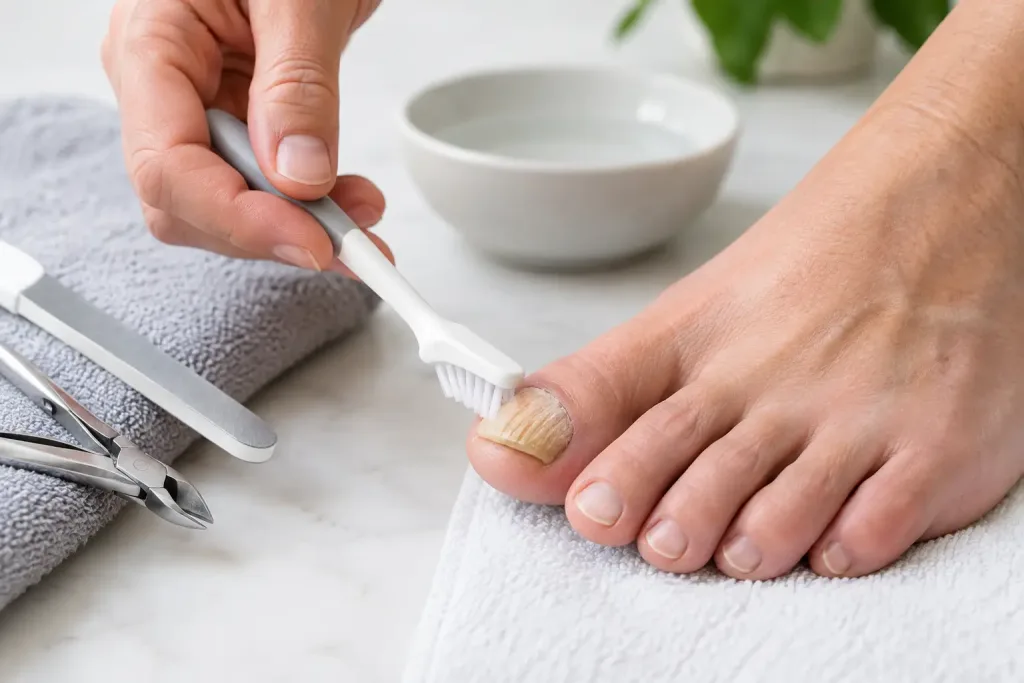
For gentle nail cleaning, keep the following on hand:
- A clean, soft nail brush
- A soft washcloth
- An orangewood stick or blunt, non-sharp nail-cleaning tool
- Clean socks and breathable footwear
Use the brush or washcloth over the nail surface and around the edges. If there is loose material beneath the free edge of the nail, use only light pressure with a blunt tool. Never force a tool deep under the nail, dig into the side grooves, or use scissors, a pin, knife, razor, or metal file to remove packed debris. If material is firmly attached, painful to touch, or has an odour, leave it alone and arrange professional care.
After cleaning, inspect the toe in good light. Look for redness, swelling, drainage, cracks in the skin, bleeding, a new dark area, or tenderness along the nail edge. A thick nail can press into the neighbouring toe or shoe without being obvious until skin damage has already started.
Cutting and filing require more caution
Thick toenails are difficult to trim because standard clippers may slip, crack the nail, or require too much force. Trying to cut through a very hard nail can cause a sudden break that tears living tissue. It may also leave a sharp corner that catches on socks or grows into the skin.
For a nail that is only mildly thickened, trim after washing and drying, when it is clean but not waterlogged. Cut straight across in small sections rather than taking one large cut. Leave the corners visible and avoid cutting down the sides. Then lightly smooth sharp edges with a clean emery board.
Do not attempt to thin a severely thickened nail with a coarse file, powered tool, or blade at home. Thinning needs to be gradual and controlled. Professional reduction can relieve pressure and discomfort while protecting the nail bed and surrounding skin. This is particularly valuable when shoes feel tight, walking hurts, or the nail catches on hosiery.
When home nail care is not safe
For some people, routine nail cleaning is not a do-it-yourself task. Diabetes, peripheral neuropathy, peripheral arterial disease, chronic swelling, anticoagulant medication, immune suppression, arthritis, stroke-related weakness, poor eyesight, and dementia can all make a minor nail injury more serious or harder to detect.
Neuropathy deserves particular attention. When feeling in the feet is reduced, you may not notice that a tool has scraped the skin or that a nail edge is pressing into a toe. Poor circulation can then slow healing. What begins as a tiny cut can progress to an infection or ulcer if it is not addressed early.
Book professional foot care rather than attempting home trimming if you have any of the following:
- Diabetes or known circulation problems
- Numbness, burning, tingling, or reduced feeling in the feet
- A nail that is very thick, curled, painful, or difficult to reach
- Redness, warmth, swelling, drainage, bleeding, or an unpleasant smell
- A suspected fungal nail infection that is spreading or not improving
- A dark streak, black area, or unexplained colour change in one nail
A sudden dark mark under a nail can result from trauma, but it should not automatically be assumed to be a bruise. Changes in nail colour or shape that do not grow out normally need clinical assessment.
Managing the cause, not just the buildup
Thick toenails often return when the contributing factor is not addressed. If fungus is suspected, treatment may involve nail reduction, topical therapies, footwear and sock guidance, and a plan to reduce moisture and reinfection. Treatment takes time because toenails grow slowly. Consistency matters more than harsh cleaning.
If pressure or repeated trauma is involved, shoe fit should be reviewed. A toe box that is too narrow or shallow can repeatedly press on the nail. For active adults, this may mean considering activity shoes, work boots, orthotics, or biomechanical factors that change how the toes load during walking and running.
Keeping shoes dry is also part of prevention. Rotate footwear so it can air out between uses, change socks when feet become damp, and choose socks that help manage moisture. Do not share nail tools, and clean personal tools after each use. If you visit a salon, be cautious about any service that cuts cuticles deeply or uses instruments aggressively around thick nails.
Professional care can make walking more comfortable
A nursing-informed foot-care appointment provides more than a nail trim. Thickened nails can be assessed for signs of fungal involvement, pressure, ingrowing edges, skin breakdown, and circulation concerns. The nail can be reduced safely using appropriate tools, helping decrease pain in footwear and lowering the chance of accidental injury from home cutting.
At Feet & Life in Barrie, care is individualized around the person, not just the nail. For someone living with diabetes or neuropathy, that may include regular monitoring and preventive maintenance. For someone whose thick nails are affecting work, exercise, or daily comfort, care may include guidance on footwear, foot mechanics, and a treatment plan suited to the underlying cause.
Your feet support your independence every day. If thick toenails are making cleaning, shoes, or walking difficult, choosing gentle care now and professional support when needed can protect both comfort and long-term foot health.