A thick toenail can turn a simple grooming task into an uncomfortable struggle. If you are wondering how to trim thick toenails, the safest answer starts with understanding why the nail has changed. Thick, hard, curved, yellowed, or brittle nails may result from age, repeated shoe pressure, injury, fungal infection, circulation changes, or health conditions that affect the feet.
For some people, careful home maintenance is appropriate. For others, especially those living with diabetes, neuropathy, poor circulation, reduced vision, arthritis, or limited mobility, attempting to cut a thick nail can cause a small injury with serious consequences. The goal is not simply to make the nails look neater. It is to protect the skin, reduce pressure, maintain comfort in footwear, and preserve safe mobility.
Why Toenails Become Thick and Difficult to Cut
Toenails commonly become thicker over time because nail growth slows and the nail plate becomes drier and denser. Repeated pressure from tight footwear, long periods of standing, running, or trauma to the toe can also change how a nail grows. A nail may become layered, ridged, curved, or difficult to trim evenly.
Fungal nail infection is another common cause. It may make the nail yellow, white, brown, crumbly, detached from the nail bed, or unusually thick. However, not every thick nail is fungal. Psoriasis, past injury, poor circulation, and certain medical conditions can produce similar changes. This is why persistent nail changes deserve assessment rather than self-diagnosis.
A thick nail can press against the top or end of a shoe, causing pain with walking. It may also catch on socks, split, or curve into the surrounding skin. When the nail is too difficult to manage safely, professional foot care can reduce thickness and pressure without damaging the skin beneath it.
When You Should Not Trim Thick Toenails Yourself
Home trimming is not the right choice when there is a higher risk of injury, infection, or delayed healing. Avoid cutting your own thick toenails if you have diabetes, peripheral neuropathy, peripheral arterial disease, poor circulation, a history of foot ulcers, or swelling that makes it difficult to see and reach your feet safely.
You should also seek professional help if you cannot feel your feet well, have reduced vision, take blood thinners, have severe arthritis or hand weakness, or have difficulty bending safely. A small nick from a nail clipper may go unnoticed in someone with neuropathy. If circulation is reduced, that same small wound may take longer to heal and can become an entry point for infection.
Do not attempt to cut a nail that is deeply curved into the skin, bleeding, loose after an injury, painful to touch, or surrounded by redness, warmth, drainage, or swelling. These symptoms may indicate an ingrown toenail, infection, or another condition that requires clinical care.
How to Trim Thick Toenails at Home Safely
If you have healthy sensation and circulation, can clearly see and reach your feet, and your nails are thick but not painful or infected, careful trimming may be possible. Give yourself time and good lighting. Never rush this task, especially after a long day when your hands may be less steady.
Start by washing your feet and drying them thoroughly, including between the toes. Some people find it easier to trim after a shower or a brief foot soak because the nails are softer. Keep the soak short, usually five to 10 minutes, and dry the feet completely afterward. People with diabetes, neuropathy, or circulation concerns should avoid soaking unless a qualified clinician has advised it, since prolonged moisture and hot water can damage vulnerable skin.
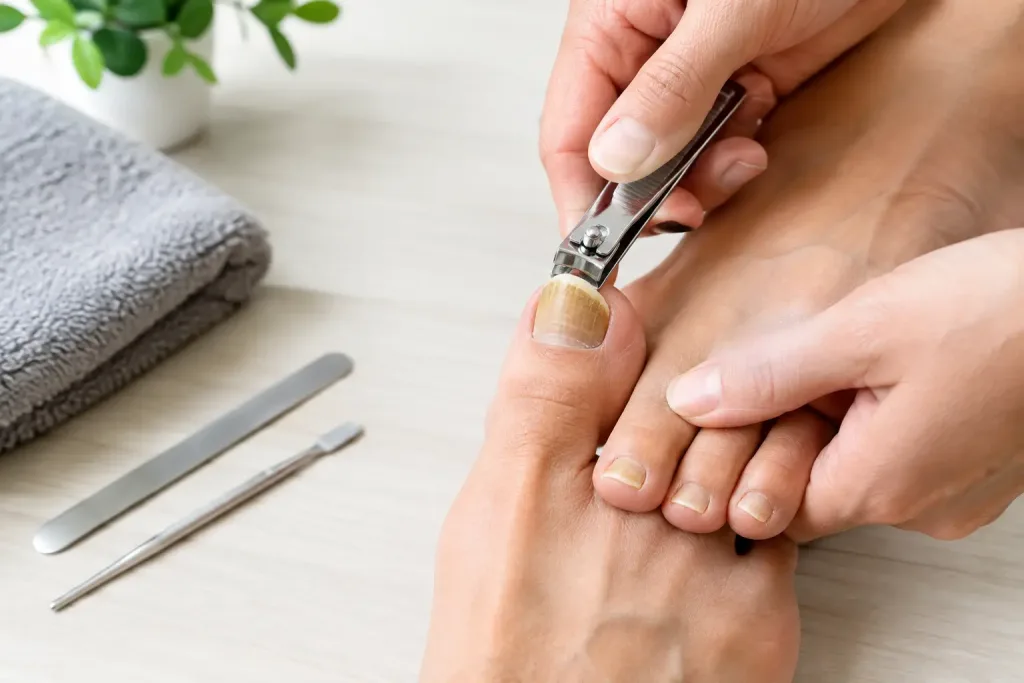
Use clean, sturdy toenail clippers or a heavy-duty nail nipper designed for thick nails. Ordinary fingernail clippers may slip, twist the nail, or require too much force. You will also need a nail file to smooth rough edges. Do not use scissors, knives, razor blades, or tools intended for cutting calluses.
For safer trimming:
- Cut one small section at a time rather than trying to remove the whole edge in one squeeze.
- Trim the nail mostly straight across, following its natural shape without cutting deeply into either corner.
- Leave a small amount of nail beyond the skin rather than cutting it extremely short.
- Use a file to smooth sharp corners and rough edges after cutting.
- Stop if the nail is painful, cracks, pulls away, or will not cut without significant force.
Thick nails often do not respond well to a single aggressive cut. It is safer to shorten them gradually over several sessions than to force the clipper through a hard, curved nail. Filing the top surface may reduce some thickness, but avoid excessive filing, heat-producing electric tools, or digging under the nail. The skin and nail bed underneath are easier to injure than they appear.
Avoid These Common Mistakes
Cutting nails too short is one of the most common causes of sore nail corners and ingrown nails. When the edge is cut deeply down the side, the surrounding skin can grow over the corner as the nail advances. This creates pressure, inflammation, and sometimes infection.
Another mistake is trying to remove thickened material from beneath the nail with a pointed tool. Thick debris may be associated with fungal infection or nail separation, but probing underneath can tear the skin or lift the nail further. It is better to have the nail assessed and reduced safely.
Do not use medicated corn removers, acid products, or harsh chemicals on skin around the nail unless they have been specifically recommended by a qualified foot-care professional. These products can burn healthy skin, particularly when sensation or circulation is impaired.
Finally, do not ignore a nail simply because it has been thick for years. Long-standing changes are common, but pain, worsening colour, dark streaks, drainage, or a sudden change in one nail should be assessed. Early attention can prevent a manageable issue from becoming a painful limitation on walking and footwear.
Thick Toenails and Possible Fungal Infection
A thick, discoloured nail is often assumed to be fungal, but visual appearance alone cannot confirm the cause. Fungal nails may become opaque, crumbly, yellow or brown, and can spread to other nails or the surrounding skin. They can also make trimming more difficult because the nail plate becomes dense and uneven.
Over-the-counter products may help in mild cases, but they often require consistent use for many months and may not penetrate a very thick nail effectively. Treatment depends on the cause, the number of nails involved, the condition of the surrounding skin, and your health history. Nail reduction, topical treatment, and other clinical options may be considered as part of an individualized plan.
Keeping feet dry, changing socks daily, wearing breathable footwear, and not sharing nail tools can help limit recurrence and spread. Clean clippers after each use, and avoid salon care that does not follow proper infection-control practices.
When Professional Foot Care Is the Safer Choice
Professional foot care is not just for emergencies. Routine care can be a practical form of prevention for people whose nails are difficult to manage or whose health conditions increase their risk. A trained practitioner can assess the nails, skin, circulation concerns, footwear pressure, and signs of infection while reducing thickened nails safely.
This support can be especially valuable for older adults, people recovering from stroke, those with arthritis, and anyone whose lower-limb limitations make self-care unsafe. Regular foot-care appointments can help prevent painful pressure, skin injury, ingrown nails, and avoidable changes in mobility.
At Feet & Life in Barrie, nursing-informed foot care is tailored to the individual, with attention to nail health, skin integrity, circulation, comfort, and the risks that may affect healing. If you have diabetes, neuropathy, recurring nail problems, or cannot safely trim your own nails, professional care offers reassurance as well as relief.
Your feet support every step of daily life. When thick toenails make walking, footwear, or self-care harder, choosing safe, timely support can help you stay comfortable, steady, and independent.