A toenail that presses into the surrounding skin can make a shoe, a bedsheet, or a short walk surprisingly painful. Effective ingrown toenail treatment is not simply about trimming the nail back. It is about relieving pressure safely, protecting the skin from infection, and addressing the reason the nail began growing into the toe in the first place.
Ingrown toenails most often affect the big toe, but any toenail can become painful when its edge curves or pushes into the nail fold. Early care can often prevent a small irritation from becoming a wound, infection, or recurring problem that limits mobility.
What an ingrown toenail looks and feels like
An ingrown toenail develops when the corner or side of a nail grows into, or puts damaging pressure on, the skin beside it. At first, the area may feel tender only when touched or when wearing closed footwear. As irritation continues, the skin may become red, swollen, warm, and increasingly painful.
Some people notice drainage, bleeding, or tissue that appears raised and moist beside the nail. These are signs that the toe needs prompt professional assessment, particularly when pain is worsening rather than improving.
It is easy to mistake a thick, curved, fungal, or damaged nail for a straightforward ingrown nail. Those conditions can occur together, and each can affect the right treatment approach. A careful assessment helps identify whether nail shape, pressure from footwear, trauma, skin changes, circulation, or infection is driving the problem.
Why ingrown toenails happen
Nail trimming is a common contributor. Cutting the nails too short, rounding deeply into the corners, or tearing off a rough edge can leave a sharp point that catches in the surrounding skin as the nail grows. Trying to dig out that corner at home can cause further injury and introduce bacteria.
Footwear also matters. Shoes with a narrow toe box, tight work boots, and footwear that presses repeatedly on the toes can push skin against the nail. This is particularly relevant for people who spend long hours standing, walking, running, or playing sports.
Other contributing factors include naturally curved nails, toe shape, repeated trauma, swelling in the feet, and reduced ability to perform safe foot care. Arthritis, reduced vision, limited hand mobility, stroke-related changes, and cognitive impairment can make routine nail trimming difficult. Thickened nails and changes related to fungal infection may also increase pressure at the nail edge.
When home care may be reasonable
If the toe is mildly tender, the skin is intact, and there is no drainage, significant swelling, or spreading redness, gentle care may help reduce irritation. Soaking the foot briefly in comfortably warm water, drying it carefully, and wearing roomier shoes can reduce pressure on the nail fold.
Keep the area clean and avoid cutting into the side of the nail. Do not use sharp tools, scissors, or tweezers to dig beneath the nail edge. Avoid placing cotton, dental floss, or other material under the nail if you cannot see or reach the area comfortably, as this can injure the skin or leave material behind.
A nail should generally be trimmed straight across, with corners that are not cut deeply away. However, once a nail has already entered the skin, further trimming is often not the solution. The goal is to prevent more pressure and seek care before inflammation progresses.
When professional ingrown toenail treatment is needed
Professional assessment is the safer choice when pain is persistent, the toe is red or swollen, there is drainage or bleeding, or the nail repeatedly becomes ingrown. Prompt care is especially important for anyone living with diabetes, peripheral neuropathy, poor circulation, immune suppression, or a history of foot ulcers.
Neuropathy can reduce the ability to feel pain, heat, or a developing wound. Poor circulation can delay healing and make it harder for the body to respond to infection. In these circumstances, a small break in the skin should never be treated as a minor inconvenience.
Seek urgent medical attention if redness is spreading beyond the toe, there is pus, fever, red streaking, severe swelling, a foul odour, or you feel unwell. These symptoms may indicate an infection requiring timely medical treatment.
What happens during a foot-care assessment
A trained foot-care professional will examine the nail, surrounding skin, circulation indicators, sensation, footwear pressure, and any signs of infection or tissue damage. The treatment plan is individualized because a painful nail in an active adult requires different considerations than a nail problem in someone with diabetes, limited mobility, or fragile skin.
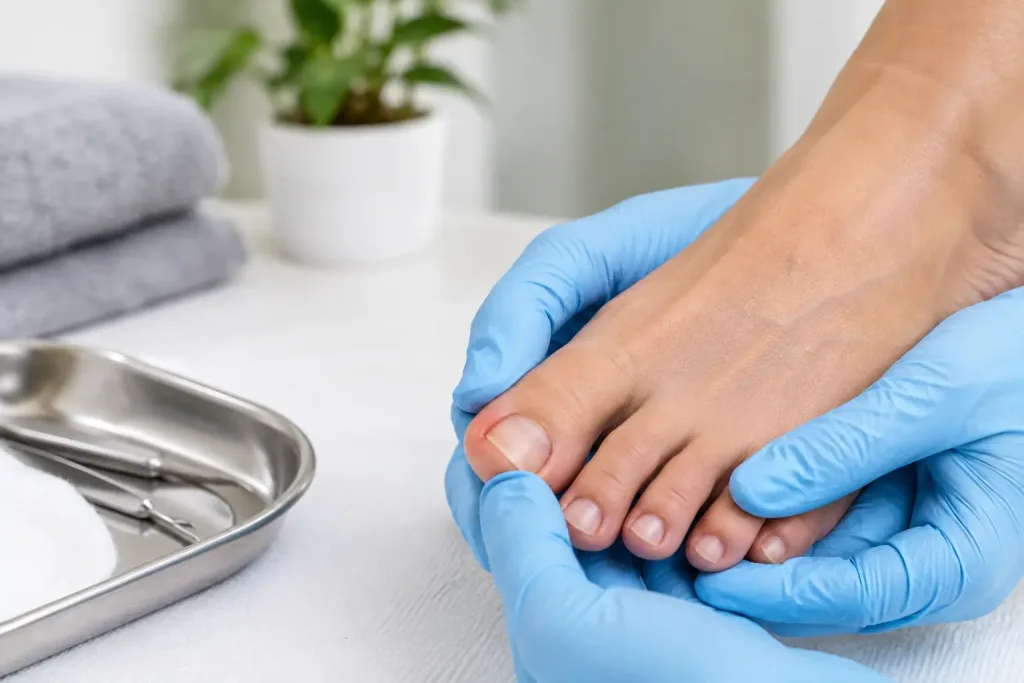
Conservative care may involve safely reducing the thickness or problematic edge of the nail, clearing debris where appropriate, relieving pressure, and protecting irritated skin. This is performed with sterile technique and tools designed for medical foot care. Many clients experience relief once the nail edge is no longer pressing into the tender area.
If the nail is severely curved, deeply embedded, repeatedly infected, or associated with significant tissue overgrowth, referral for a minor nail procedure may be appropriate. In some cases, a clinician removes part of the nail and may treat the nail root to reduce recurrence. The best option depends on the severity of the condition, your health history, healing ability, and how often the problem returns.
Preventing the next episode
Prevention is often less complicated than people expect, but consistency matters. Nails need to be kept at an appropriate length and trimmed in a way that respects their natural shape. Feet should be checked regularly, especially if sensation is reduced or bending to see the toes is difficult.
Choose shoes that allow the toes to sit without rubbing or compression. A properly fitting shoe has enough depth and width at the front that the nail folds are not squeezed together. If you wear safety footwear or athletic shoes for extended periods, fit should be reassessed when footwear becomes worn or when foot shape changes.
For recurring nail concerns, routine professional foot care can be an important part of prevention. Regular appointments allow nail thickness, curvature, skin integrity, and pressure points to be monitored before pain becomes a wound. This can be particularly valuable for older adults, people managing diabetes, and those who rely on family or care teams for foot care.
Protecting mobility starts with early care
An ingrown toenail can alter how you walk long before it appears serious. You may avoid putting weight through the toe, change your gait, or stop wearing supportive footwear because it hurts. Over time, that compensation can affect balance, comfort, and confidence with everyday movement.
At Feet & Life, care begins with understanding the condition of your nails, skin, circulation, and mobility needs rather than treating one painful corner in isolation. If a toenail is becoming tender, swollen, or difficult to manage safely, booking an assessment early can help protect your comfort, independence, and ability to keep moving.