
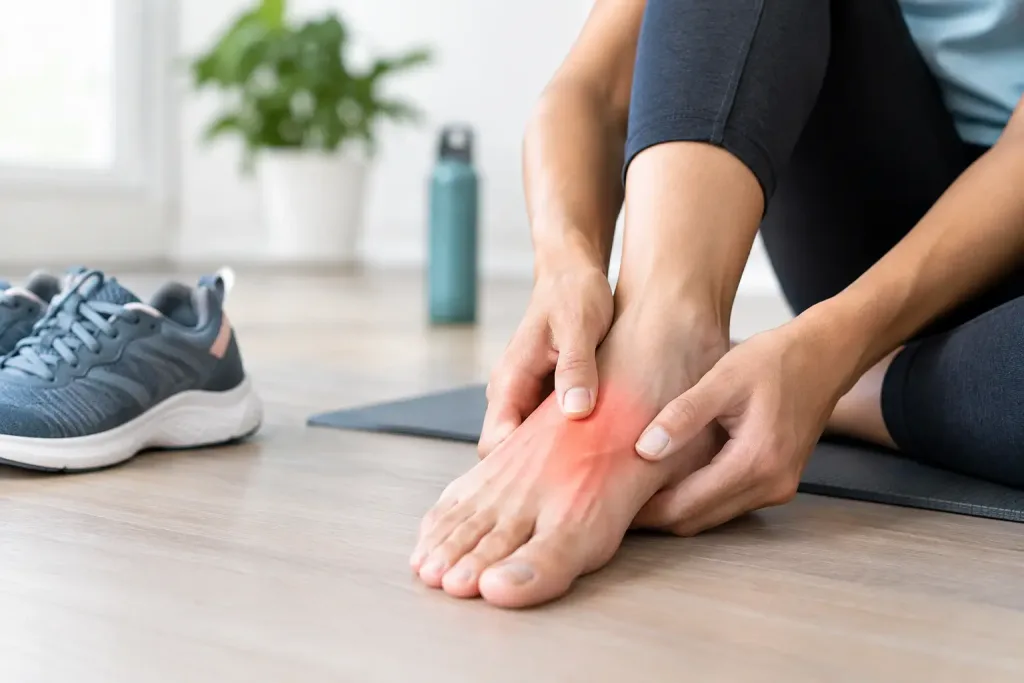
A sharp, burning, or bruised feeling under the ball of your foot can make an ordinary walk to the kitchen feel surprisingly difficult. If you are wondering how to relieve metatarsal pain, the most helpful first step is not simply pushing through it. Reducing pressure, identifying what is irritating the area, and addressing the cause early can protect your comfort and keep you moving safely.
Metatarsal pain, often called metatarsalgia, affects the front of the foot just behind the toes. It can develop after a long shift on hard floors, a change in exercise, poorly fitting shoes, or gradual changes in foot shape and mechanics. For some people, it is a temporary overload problem. For others, especially people with diabetes, neuropathy, arthritis, poor circulation, or reduced sensation, pain in this area deserves timely professional attention.
Why the Ball of the Foot Starts to Hurt
Your metatarsals are the long bones that connect the middle of your foot to your toes. Each time you walk, rise onto your toes, climb stairs, or run, they help transfer body weight through the forefoot. When one area takes more than its fair share of pressure, the soft tissue, joints, nerves, or bone can become irritated.
Common triggers include increased walking or running, standing for long hours, wearing narrow shoes or high heels, and shoes with thin or worn-out soles. A high arch, a prominent metatarsal head, bunions, hammertoes, tight calf muscles, and reduced cushioning in the forefoot can also shift pressure forward. Sometimes the issue is a callus that has formed over a pressure point. The thickened skin can feel like a pebble under the foot and may hide a deeper area of irritation.
Pain does not always come from simple overuse. A stress fracture, joint inflammation, a pinched nerve such as Morton’s neuroma, arthritis, tendon problems, or a skin wound can feel similar at first. That is why the location, quality, and timing of your pain matter.
How to Relieve Metatarsal Pain at Home
If the pain began after a clear increase in activity and there is no swelling, wound, numbness, or sudden injury, short-term self-care may help calm the area. Think of this as reducing load while the foot settles, not as a reason to ignore ongoing symptoms.
Reduce the pressure for a few days
Temporarily replace impact activities such as running, jumping, or long walks with lower-impact movement if it is comfortable for you. Cycling, swimming, or gentle mobility work may allow you to stay active without repeatedly loading the sore spot. If walking is painful enough to alter your gait, reduce your walking distance rather than limping through it. Limping can create new strain in the ankle, knee, hip, or back.
Cold can ease soreness after activity. Apply a cold pack wrapped in a thin towel for about 10 to 15 minutes at a time. Avoid placing ice directly on skin, particularly if you have reduced sensation, circulation concerns, or neuropathy. In those circumstances, a clinician can help you choose safer pain-relief measures.
Choose shoes that spread force across the foot
Footwear is often the most immediate place to make a useful change. Look for a shoe with a roomy toe box, stable heel, supportive midsole, and enough depth that your toes are not compressed. A sole with cushioning and a slight rocker shape can reduce how much the forefoot bends during push-off for some people.
Avoid shoes that are narrow at the front, heavily worn down, or flexible enough to twist easily through the middle. High heels place more body weight on the metatarsal heads, so they can aggravate pain even when worn only for part of the day. A supportive running shoe is not automatically the right answer either. The best choice depends on your foot shape, activity, balance, and where pressure is building.
Add cushioning or targeted support carefully
A soft forefoot pad or metatarsal pad may reduce pressure, but placement matters. The pad generally sits just behind the painful metatarsal heads, not directly under the tender spot. When correctly positioned, it helps spread the forefoot and redistribute force. When placed incorrectly, it can make pain worse.
An over-the-counter insole can be a reasonable short-term option for mild symptoms, especially if your current shoes have little cushioning. However, generic inserts cannot account for every foot shape, deformity, leg-length difference, or gait pattern. Persistent pain, recurrent callus buildup, or symptoms on one side of the foot often call for a professional assessment and possibly custom orthotics.
Ease tightness above the foot
Tight calves and limited ankle motion can force the forefoot to work harder during walking. Gentle calf stretches, performed without forcing pain, may help as part of a broader plan. Try standing with one foot behind the other, keeping the back heel on the floor and the knee straight, then holding a comfortable stretch. Repeating the stretch with the back knee slightly bent targets a different part of the calf.
This is not a quick fix for every case. If stretching produces forefoot pain, cramping, balance concerns, or worsening symptoms, stop and seek guidance. People with neurological conditions, recent injury, or significant mobility limitations may need adapted exercises.
Do Not Treat Calluses as a Cosmetic Problem
A callus under the ball of the foot is often a message from the body: too much pressure is repeatedly landing in one location. Filing it down may make the surface feel smoother, but it will not correct the reason it formed. Cutting calluses yourself with blades or sharp tools can lead to wounds and infection.
This is particularly risky for people living with diabetes, neuropathy, poor circulation, vision impairment, or limited hand mobility. A small cut can become difficult to heal, and a painful callus may mask skin breakdown underneath. Professional foot care can safely reduce hard skin while also assessing the pressure pattern that caused it.
When Metatarsal Pain Needs Prompt Assessment
Book an assessment if pain lasts longer than one to two weeks despite reducing activity and changing footwear, or if it returns repeatedly. Earlier care is sensible when pain affects your work, balance, sleep, or ability to walk normally. A foot-care professional can examine footwear wear patterns, joint movement, skin integrity, circulation, sensation, and how your foot loads during standing and walking.
Seek prompt medical attention for sudden severe pain, marked swelling or bruising, inability to bear weight, a visible change in foot shape, or pain after a fall or twist. These signs can indicate a fracture or more significant injury.
Also act quickly if you notice redness, warmth, drainage, an open area, discolouration, fever, or a rapidly worsening painful spot. For people with diabetes or reduced sensation, any blister, crack, callus with darkening underneath, or new area of pressure should be assessed early, even if it does not hurt. Neuropathy can reduce pain signals while tissue damage progresses.
A Personal Plan Protects Long-Term Mobility
The right treatment depends on what is driving the pressure. One person may need a change in shoe fit and a gradual return to walking. Another may benefit from callus care, padding, exercises, custom orthotics, or treatment for inflammation and circulation concerns. If a stress injury, nerve condition, or joint disorder is suspected, further medical investigation may be needed.
At Feet & Life, foot pain is approached with attention to both relief and prevention. Looking at the skin, structure, gait, footwear, circulation, and sensation helps identify practical changes that support safer movement, rather than repeatedly covering up the same sore area.
Your feet carry you through work, family life, errands, and the activities that make you feel like yourself. Giving forefoot pain early attention can help preserve not only comfort, but also confidence and independence with every step.