
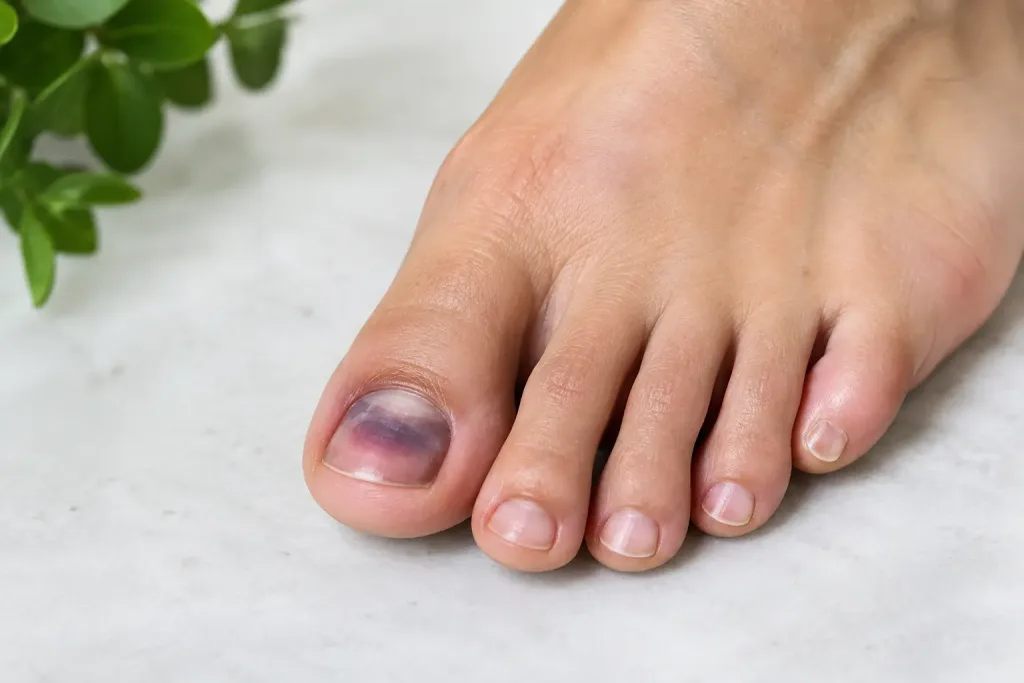
A toe that suddenly looks purple, blue-black, or deeply red deserves more than a quick glance. Purple toe causes can be as temporary as cold exposure or bruising, but they can also point to a circulation problem, infection, or tissue injury that needs prompt medical attention. The details matter: whether the toe is painful, cold, swollen, numb, warm, or changing colour quickly can help determine how urgently it should be assessed.
For people living with diabetes, neuropathy, vascular disease, or reduced mobility, colour changes should never be dismissed simply because the foot does not hurt. Loss of sensation can hide a serious problem until skin damage or infection has progressed.
Purple toe causes range from minor injury to reduced blood flow
Purple colouring occurs when blood collects under the skin, when oxygen delivery is reduced, or when inflammation changes the appearance of the tissue. A health professional will consider the toe’s temperature, pulse, sensation, skin condition, medical history, and the pattern of colour change rather than relying on colour alone.
Bruising after pressure or injury
A stubbed toe, dropped object, tight footwear, or repeated pressure during walking can break small blood vessels beneath the skin. The result may be a purple bruise on the toe, under the nail, or around a joint. Bruising is often tender and may be accompanied by swelling.
If the toe is crooked, severely painful, difficult to move, or unable to bear weight, a fracture is possible. A dark patch under the nail can also occur after trauma. Pressure from trapped blood may be very painful and should be assessed rather than punctured at home.
Cold exposure and vasospasm
Cold temperatures cause blood vessels in the feet and toes to narrow. Toes may look pale, bluish, or purple and feel cold, numb, or prickly. In many cases, colour returns gradually with gentle warming.
Some people have Raynaud’s phenomenon, in which cold or stress triggers more dramatic vessel narrowing. The toes may change from white to blue or purple, then become red and throbbing as circulation returns. Repeated episodes, skin sores, or symptoms that begin later in life warrant medical assessment to rule out an underlying circulation or autoimmune concern.
Avoid placing a very cold foot directly against a heater, heating pad, or hot water. This can burn numb skin or cause rapid discomfort. Instead, move indoors, remove wet footwear, use dry socks, and warm the foot gradually.
Poor arterial circulation
One of the more concerning purple toe causes is reduced arterial blood flow. Arteries carry oxygen-rich blood from the heart to the feet. When they are narrowed or blocked by peripheral artery disease, a clot, or a small cholesterol embolus, a toe may become blue or purple, cold, painful, numb, or unusually sensitive.
A sudden blue or purple toe without an obvious injury should be treated seriously, particularly if it is cold, increasingly painful, or accompanied by a weak or absent pulse in the foot. Skin may become shiny, thin, or slow to heal when circulation has been reduced over time. Smoking, diabetes, high blood pressure, high cholesterol, kidney disease, and a history of heart or vascular disease can all raise the risk.
This is not a concern to manage with massage, compression socks, or home remedies until circulation has been evaluated. If a toe becomes suddenly discoloured and cold, seek urgent medical care.
Venous congestion and swelling
Veins return blood from the legs to the heart. When blood pools in the lower legs because of chronic venous insufficiency, prolonged sitting, reduced mobility, or certain vein conditions, the feet and toes can appear dusky, reddish-purple, or blue. Swelling around the ankles, heaviness, aching, visible veins, and skin staining on the lower legs may occur as well.
Venous concerns and arterial concerns can look similar to the untrained eye, but their treatment is not the same. Compression therapy can be helpful for some people with venous disease, yet it may be unsafe when significant arterial circulation is impaired. This is why an individualized circulation assessment is essential before starting compression.
Infection, wounds, and inflammatory conditions
A purple toe can also develop when inflammation or infection affects the skin, nail, joint, or deeper tissues. Cellulitis may cause redness that deepens to a purplish colour, warmth, swelling, tenderness, and sometimes fever. An infected ingrown nail may create a painful, swollen area beside the nail. A wound, blister, or pressure area can darken when blood flow to the skin is compromised.
Gout can cause sudden, intense pain, swelling, heat, and red-purple discoloration, often at the big toe joint. Arthritis, chilblains after damp cold exposure, and some skin conditions can produce similar changes. The presence of warmth and pain does not automatically mean infection, but it should be assessed when symptoms are new, worsening, or paired with broken skin.
For a person with diabetes, even a small crack, blister, or colour change can become significant. High blood sugar, neuropathy, and reduced circulation can delay healing and raise the risk of ulcers and deeper infection.
When a purple toe needs urgent care
Do not wait for a routine appointment if the colour change is sudden, unexplained, or progressing. Seek urgent medical attention immediately if a purple or blue toe is cold, numb, severely painful, rapidly swelling, or associated with loss of movement. The same applies if the foot is pale or blue, there is a new open wound, black tissue, pus, fever, red streaking, or a general feeling of being unwell.
Prompt assessment is especially important for anyone with diabetes, known peripheral artery disease, a previous foot ulcer, neuropathy, immune suppression, or a history of blood clots. A toe can be at risk even when pain is minimal. Neuropathy may reduce warning sensations, while poor vision or limited mobility can make early changes difficult to notice.
If the discolouration followed a significant injury and the toe looks misshapen, cannot move normally, or has pain that is not settling, arrange timely evaluation for a possible fracture or nail-bed injury.
What to do while you arrange assessment
Remove tight shoes, socks, toe rings, or anything that may add pressure. Rest the foot and protect it from further injury. If trauma is the likely cause and the skin is intact, a wrapped cool pack may help with swelling for short periods. Do not apply ice directly to the skin, especially if sensation or circulation is reduced.
Take a clear photo of the toe in good light and note when the colour began, whether it is changing, and what happened beforehand. This information can help a clinician identify patterns. Avoid cutting the skin, draining a blister or nail, applying harsh products, or trying to improve a cold purple toe with vigorous rubbing.
People with diabetes should check both feet every day, including between the toes and around the nails. A mirror can help, and family support may be needed when vision, flexibility, or memory makes self-checks difficult. Clean, dry skin, properly fitted footwear, and early attention to pressure areas all help protect skin integrity.
Assessment protects mobility and independence
A thorough foot assessment can distinguish bruising from a circulation concern, identify pressure from footwear or foot mechanics, check skin and nail health, and guide the safest next step. Depending on the findings, care may include wound support, diabetic foot care, footwear changes, nail treatment, circulation referral, or a coordinated plan with the appropriate medical provider.
At Feet & Life in Barrie, foot and lower-limb concerns are approached with prevention in mind because comfort, safety, and independence often begin with noticing small changes early. If a toe has changed colour and you are unsure why, arrange an assessment promptly. A purple toe may be harmless after a bump, but when circulation or skin integrity is involved, early care can make a meaningful difference.