
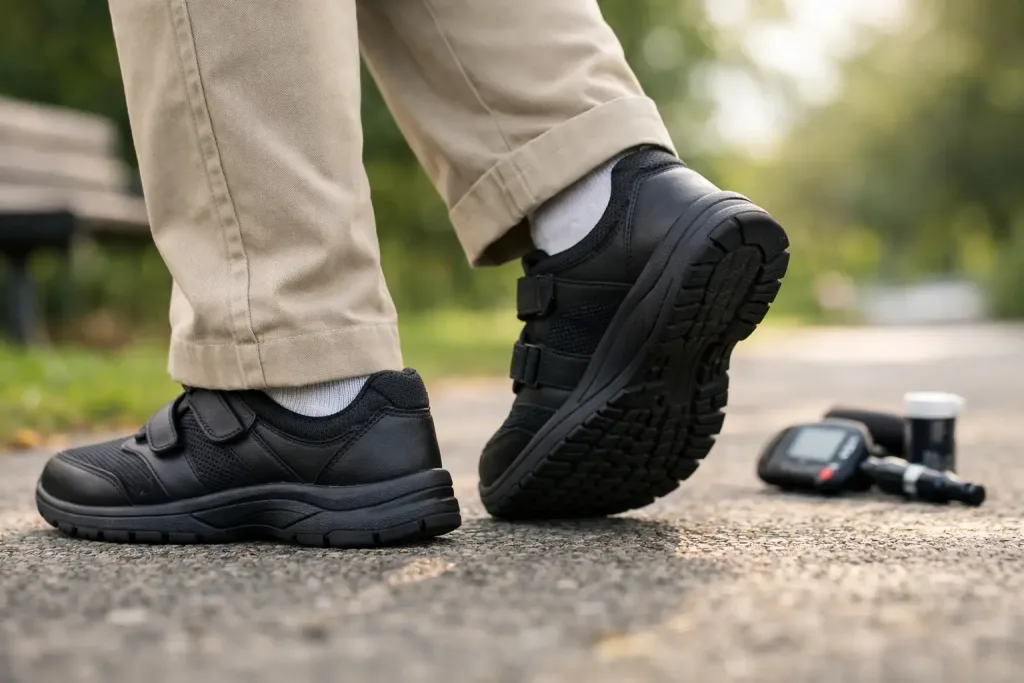
A shoe that feels merely “fine” can still create a pressure point, rub a toe, or hide a small injury until it becomes serious. The best diabetic footwear is not necessarily the softest or most expensive option. It is footwear that fits your foot shape, protects areas at risk, accommodates changes in swelling, and helps you walk with greater comfort and confidence.
For people living with diabetes, footwear is part of daily preventive care. Neuropathy can reduce the ability to feel pain, heat, or friction. Reduced circulation may slow healing. When these factors combine, a blister, crack in the skin, or cramped toe can progress more quickly than expected. Choosing shoes carefully helps protect mobility, independence, and skin integrity.
What Makes Diabetic Footwear Different?
Diabetic footwear is designed to reduce the common sources of foot injury: pressure, rubbing, shear, impact, and heat buildup. It may include therapeutic shoes, custom orthotics, diabetic socks, or custom-made footwear when a person has significant deformity, ulcer history, or unusual pressure patterns.
Not everyone with diabetes needs a medical-grade shoe. Someone with healthy skin, good sensation, stable circulation, and no foot deformities may do well in a properly fitted walking shoe with appropriate socks. However, a history of ulceration, neuropathy, calluses, corns, bunions, hammertoes, Charcot foot changes, amputation, or poor circulation calls for more individualized assessment.
The goal is not simply to find a roomier shoe. A shoe that is too loose can allow the foot to slide, creating friction and instability. A shoe that is too narrow compresses the toes and forefoot. The right fit holds the heel securely, gives the toes adequate space, and supports a natural, steady walking pattern.
Features to Look for in the Best Diabetic Footwear
The best diabetic footwear usually combines several protective features rather than relying on one label on the box. Look closely at the construction and fit, not only the marketing description.
- A wide, deep toe box gives toes room to lie naturally and accommodates mild swelling, bunions, hammertoes, or thicker diabetic socks without rubbing.
- A smooth interior helps reduce irritation. Check inside the shoe for prominent seams, rough stitching, folds, loose lining, or objects that could press against the skin.
- Adjustable closures such as laces, Velcro straps, or other secure fastenings help keep the foot from sliding forward. They also make it easier to adjust the fit if swelling changes during the day.
- A cushioned, stable sole absorbs some impact while providing a broad base underfoot. Extremely soft soles can feel comfortable initially but may not offer enough stability for everyone.
- A removable insole creates room for a prescribed orthotic or accommodative insert. This can be particularly valuable when pressure needs to be redistributed away from a callus, prominent bone, or previous wound site.
- A firm heel counter supports the back of the foot and can improve stability. This matters for people with balance changes, weakness, or a tendency to shuffle.
Shoes should also have enough depth through the top of the foot. This is often overlooked when someone has swelling, high arches, toe deformities, or a thick custom orthotic. If the upper presses down on the toes or instep, pressure can build even when the shoe seems wide enough.
Fit Matters More Than the Size on the Box
Feet can change over time, particularly with aging, weight changes, arthritis, swelling, diabetes-related complications, or reduced mobility. Do not assume your usual size is still correct. Both feet should be measured while standing, as one foot may be larger than the other. Fit the shoe to the larger foot.
Try footwear later in the day when feet may be more swollen. Wear the socks you plan to use regularly and test both shoes, not just one. There should be roughly a thumb-width of space between the longest toe and the end of the shoe, but toe room alone is not enough. Your heel should not lift excessively, your toes should not curl or press against the upper, and there should be no pinching across the ball of the foot.
Walk on a firm surface for a few minutes before deciding. Pay attention to rubbing, slipping, pressure over bunions, and whether the shoe changes your balance. If you have neuropathy, do not rely only on sensation. Remove the shoes and socks afterwards and inspect your feet for red marks, blisters, or areas that appear irritated.
A red area that does not fade shortly after removing a shoe is a warning sign. Stop wearing that footwear and have the area assessed, especially if the skin is broken, warm, swollen, or draining.
When Off-the-Shelf Shoes May Not Be Enough
Retail shoes can be suitable for many people, but they have limits. Custom orthotics or therapeutic footwear may be recommended when a foot has an unusual shape, repeated callus formation, painful pressure points, significant limb-length differences, prior ulceration, or diabetic neuropathy with loss of protective sensation.
An orthotic is not just an extra cushion. When properly assessed and prescribed, it can support foot mechanics and redistribute pressure from vulnerable areas. In some cases, accommodative materials are chosen to protect sensitive skin. In others, a more structured device may be used to improve alignment and reduce strain. The correct approach depends on your circulation, sensation, activity level, footwear needs, and medical history.
If you have had a foot ulcer, are currently treating a wound, or notice a new area of redness, swelling, drainage, blackened skin, or unexplained warmth, do not try to solve the problem with a new pair of shoes alone. Prompt medical foot assessment is needed. Footwear is an important preventive tool, but active wounds and infections require clinical care.
Do Not Forget Socks and Daily Habits
Shoes work best when paired with socks that protect the skin. Choose clean, moisture-wicking socks with minimal seams and without tight elastic bands that leave deep marks. Avoid wearing shoes barefoot, even at home, as a small object, splinter, or hot surface may not be felt if sensation is reduced.
Check the inside of every shoe before putting it on. A pebble, folded insole, or loose seam can cause damage over several hours of walking. Inspect the tops, soles, heels, and spaces between your toes each day. If seeing the bottom of your feet is difficult, use a mirror or ask a family member or care provider for help.
It is also wise to rotate shoes rather than wearing the same pair every day. This allows footwear to dry fully and gives you a chance to notice wear patterns. A sole that is unevenly worn, a flattened insole, or a collapsed heel may indicate that the shoe is no longer supporting you as intended.
Choosing Footwear for Your Everyday Life
The right shoe for a short walk may not be the right one for eight hours on a hard workplace floor, winter errands, or a formal event. If you spend long periods standing, prioritize cushioning, a stable sole, and enough width for end-of-day swelling. If balance is a concern, avoid loose slippers, high heels, backless shoes, and worn-out sandals that can increase the risk of falls.
In Canadian winters, choose boots with secure traction, a stable heel, and enough depth to accommodate warm socks without compressing the foot. Waterproof footwear can be helpful, but it should still allow moisture management. Damp skin is more vulnerable to breakdown, so dry shoes and socks promptly after snow or rain exposure.
At Feet & Life, diabetic foot care assessments can help identify changes in sensation, circulation, skin condition, foot shape, and pressure distribution before they become a larger problem. A clinician can also advise whether a properly fitted retail shoe is appropriate or whether custom support and more protective footwear would better serve your needs.
Your shoes should help you move through daily life without asking your feet to absorb avoidable stress. If you are unsure whether your current footwear is protecting you, a professional fit and foot assessment can turn an everyday purchase into a meaningful step toward safer mobility.