
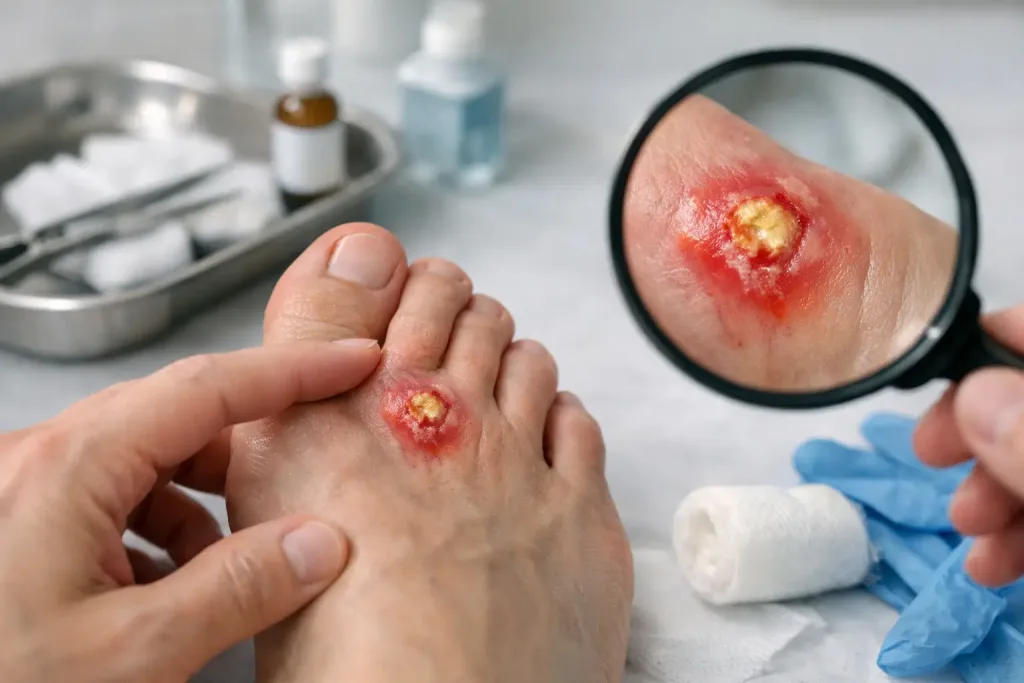
A small cut from a shoe, a cracked heel, or a blister that seemed harmless can become much more serious when healing stalls. Knowing how to recognize wound infection helps you act before pain, drainage, or skin damage threatens your comfort and mobility. This is especially true for wounds on the feet and lower legs, where diabetes, poor circulation, swelling, or reduced sensation can make problems harder to notice.
A wound does not need to look dramatic to need attention. Changes that develop over hours or days – particularly increasing redness, heat, swelling, drainage, odour, or pain – deserve a closer look and timely clinical advice.
How to recognize wound infection: watch for change, not one symptom
A healing wound may be mildly tender at first. It may have a small amount of clear or pale fluid, a light scab, and gradually improving redness immediately around the wound edge. Each day, it should generally look and feel more settled.
An infection often moves in the opposite direction. The area may become more painful, more swollen, warmer, or redder after it had started to improve. The wound itself may get larger, deeper, or wetter instead of closing. Looking at the wound regularly, in good light, makes it easier to recognize a concerning pattern.
Changes in the skin around the wound
Redness that spreads beyond the wound edge is a common warning sign. On lighter skin, this may be easy to see as a growing red or pink area. On darker skin, infection may appear as a deeper purple, grey, brown, or unusually dark patch, often with warmth, swelling, or tenderness.
Pay attention to whether the skin feels hot, tight, shiny, or increasingly swollen. New tenderness can be significant, but the absence of pain does not always mean a wound is safe. People with neuropathy may have reduced feeling in their feet and may not notice discomfort even when an infection is developing.
Drainage, odour, and changes in the wound bed
Cloudy, thick, yellow, green, grey, or bloody drainage can signal infection, particularly if there is more drainage than before. A strong or unpleasant odour is another reason to seek an assessment. Some wound dressings can have an odour when removed, so odour alone does not confirm infection, but it should not be ignored when paired with other changes.
The tissue inside a wound also matters. Healthy healing tissue is often moist and pink or red. Tissue that becomes black, grey, pale, increasingly soft, or has a new dark area may need prompt medical evaluation. Do not try to cut away dead skin, a callus, or discoloured tissue at home.
Symptoms affecting the whole body
A wound infection can progress beyond the skin. Fever, chills, nausea, unusual fatigue, confusion, dizziness, or feeling generally unwell alongside a wound are urgent concerns. Red streaks moving away from the wound, rapidly spreading redness, severe swelling, or pain that feels out of proportion to the wound also require same-day urgent medical care.
If a person has trouble breathing, chest pain, fainting, new confusion, severe weakness, or appears severely unwell, call 911 or seek emergency help immediately. These symptoms can indicate a serious infection or another medical emergency.
Why foot and lower-leg wounds need extra attention
Feet carry body weight, experience friction inside footwear, and are farther from the heart than other parts of the body. These factors can complicate healing. A wound under the ball of the foot, on a toe, or near the heel may be repeatedly pressured with every step, even when it appears small.
Diabetes is a major reason to take foot wounds seriously. High blood glucose can affect immune response and healing, while neuropathy can mask pain. Peripheral arterial disease and other circulation concerns may reduce the oxygen and nutrients a wound needs to repair. Venous insufficiency and leg swelling can also weaken skin and make lower-leg wounds more difficult to manage.
Older adults, people with arthritis or limited mobility, and those with vision changes may find it difficult to inspect the bottoms of their feet or apply dressings safely. A family member or caregiver can help with regular checks, but professional assessment is often the safer choice when a wound is present.
When to seek professional care for a wound
It depends on the wound, your health history, and how quickly symptoms are changing. In general, arrange prompt care if a wound is not clearly improving within a few days, keeps reopening, or shows any possible infection signs. A puncture wound, animal bite, burn, deep cut, wound caused by pressure, or wound with a foreign object may need earlier assessment even before infection is obvious.
For people living with diabetes, neuropathy, poor circulation, immune suppression, or a history of foot ulcers, a new foot wound should be assessed promptly. Waiting to see whether it becomes painful can be risky when feeling in the foot is reduced.
A clinician can assess the wound depth, circulation, pressure points, swelling, tissue condition, and infection risk. Treatment may include appropriate cleansing and dressings, pressure relief, compression when medically suitable, medication prescribed by the appropriate provider, and a plan to monitor healing. The goal is not simply to cover the wound, but to address why it developed and what may be preventing recovery.
What to do while you wait for care
Keep the wound clean and protected, but avoid aggressive home treatment. Gently rinse a minor wound with clean running water or saline if advised, pat the surrounding skin dry, and cover it with a clean dressing. Follow any wound-care instructions you have already been given.
Avoid soaking the foot, using hydrogen peroxide or alcohol repeatedly, applying unapproved creams, or picking at scabs and thick skin. These actions can irritate healthy tissue or hide changes that need assessment. Do not walk barefoot, and choose clean, roomy footwear that does not rub the affected area.
Reduce pressure on a foot wound as much as possible. This may mean limiting unnecessary walking and avoiding the shoes or activities that caused rubbing. However, do not use a compression wrap, off-loading device, or medicated product without guidance if you have circulation concerns, diabetes, or significant swelling.
If you can safely do so, take a clear photo each day in similar lighting or note the size of redness and drainage on a calendar. This can help you and your care provider identify whether the wound is improving or changing quickly.
Early assessment protects mobility and independence
Wound care is most effective when problems are identified early. A timely assessment can help prevent a simple skin break from becoming a larger ulcer, spreading infection, or prolonged period of reduced mobility. For someone who depends on walking for work, caregiving, recreation, or independent living, that protection matters.
At Feet & Life in Barrie, wound and foot-care support is approached with attention to skin integrity, circulation, pressure, footwear, and the health conditions that influence healing. Individualized care is particularly valuable for people managing diabetes, neuropathy, chronic swelling, or recurring foot wounds.
If a wound is changing rather than healing, trust that observation. Seeking care early is a practical act of prevention – one that can protect not only the wound, but also your confidence and freedom to keep moving.