
A thick toenail that catches on a sock, a small crack in a heel, or a new sore spot in a shoe can quickly change how an older adult walks. Foot care for seniors Barrie families can rely on is not simply about neat nails. It is preventive healthcare that protects comfort, balance, skin integrity and the confidence to keep moving independently.
As we age, reaching the feet, seeing small changes and safely using nail tools can become difficult. Arthritis, reduced hand strength, poor vision, stroke-related limitations and cognitive changes can all make routine self-care less safe. When diabetes, neuropathy or circulation concerns are also present, a minor issue may need professional attention well before it becomes painful.
Why senior foot health deserves early attention
Feet carry the body through every daily task, from getting out of bed to shopping, social visits and exercise. Yet they are often overlooked until pain interferes with walking. Older adults may also have thinner, drier skin, slower healing and changes in foot shape that make pressure points more likely.
Loss of sensation is particularly concerning. Peripheral neuropathy can reduce the ability to feel heat, friction, a pebble in a shoe or a developing blister. A person may continue walking on an injured area without realizing it. Poor arterial circulation can further limit the oxygen and nutrients needed for healing, while venous circulation concerns may contribute to swelling, heaviness and fragile skin around the lower legs and ankles.
These factors do not mean that every foot concern will become serious. They do mean that waiting for pain is not always a safe strategy. Regular assessment can identify pressure, skin changes and nail concerns early, when care is generally simpler and more comfortable.
Common foot concerns in older adults
Thickened, curved or fungal nails are among the most common reasons seniors seek care. Nails can become difficult to trim safely, especially when they are brittle, hard or pressing into the surrounding skin. Trying to cut them at an awkward angle can lead to a cut, ingrown edge or bleeding. Professional nail and skin care helps reduce this risk while keeping the feet more comfortable in footwear.
Corns and calluses are another frequent concern. They are often a sign of repeated friction or pressure, rather than a problem to simply shave away. A callus under the ball of the foot, for example, may relate to a change in gait, toe position, footwear fit or reduced cushioning beneath the foot. Treating the skin matters, but finding the source of pressure is what helps prevent it from returning.
Dry, cracked heels can also create an entry point for infection. Skin care, suitable footwear and timely treatment can make a significant difference. For people with diabetes or impaired circulation, it is particularly wise to have cracks, blisters, redness or drainage assessed promptly instead of attempting aggressive home treatment.
Foot pain is not always caused by the foot alone. Arthritis, tendon strain, plantar heel pain, altered gait and lower-limb alignment can all affect how weight moves through the legs. A personalized assessment may include discussion of footwear, mobility, swelling, circulation and whether custom orthotics or other support could help reduce mechanical stress.
Foot care for seniors in Barrie: what professional visits can include
Professional foot care should be tailored to the person, not delivered as a one-size-fits-all service. A thorough appointment begins with the concerns that matter most: pain, difficulty walking, recurring skin problems, swelling, diabetes history, previous wounds or changes noticed by a family member or caregiver.
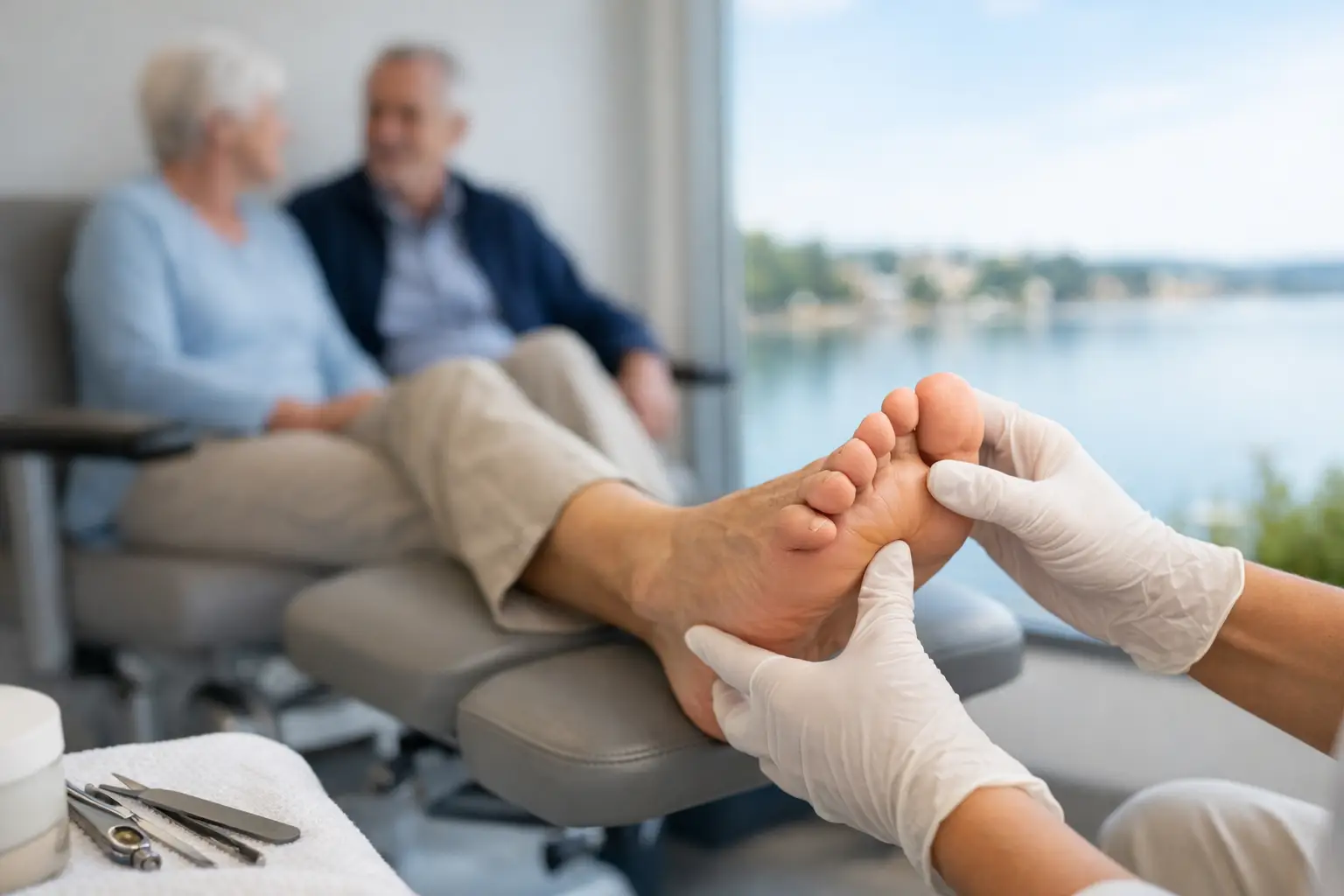
Care may include safe nail reduction and trimming, management of corns or calluses, attention to dry skin and assessment of suspicious areas. The practitioner can also look for signs that warrant medical follow-up, such as altered colour, temperature changes, reduced sensation, infection or a wound that is not progressing as expected.
For clients living with diabetes, preventive visits are especially valuable. Diabetes can affect sensation, circulation and healing, sometimes without obvious symptoms. Ongoing diabetic foot care supports regular inspection and reduces the chance that a hidden issue is missed between medical appointments.
The right visit frequency depends on the individual. Someone with healthy skin and nails who has difficulty reaching their feet may need routine maintenance every several weeks. Someone with neuropathy, recurring calluses, swelling or a history of ulceration may need closer monitoring. The goal is not to create unnecessary appointments. It is to establish care often enough to identify change before it limits mobility or threatens skin health.
Safe habits between appointments
Daily observation is one of the most effective forms of prevention. If bending or vision is difficult, a long-handled mirror, good lighting or help from a trusted caregiver can make checking the soles, heels and spaces between the toes more realistic. Look for changes rather than aiming for perfection: new redness, rubbing, swelling, cracks, blisters, cuts, drainage or unusual odour all deserve attention.
Wash and dry the feet carefully, particularly between the toes. Moisturizer can help protect dry skin on the tops and bottoms of the feet, but it should not be applied between toes, where excess moisture can encourage skin breakdown. Choose clean socks that fit without tight elastic bands, and change them when damp.
Footwear is protective equipment, not an afterthought. Shoes should have adequate depth, a stable sole and enough room for the toes without rubbing. Before putting shoes on, check inside for seams, worn areas or objects that could injure a numb foot. Slippers can be comfortable, but loose or backless styles may increase fall risk for some people. The best choice depends on balance, foot shape, indoor surfaces and individual mobility.
Avoid bathroom surgery. Cutting deeply into corners of nails, using sharp blades on calluses, or applying strong over-the-counter corn removers can damage healthy skin. This is especially risky for anyone with diabetes, neuropathy, fragile skin or circulation concerns.
When a foot problem should be assessed quickly
Contact a qualified healthcare professional promptly if there is a new wound, blister, redness that spreads, warmth, swelling, drainage, increasing pain or a nail area that appears infected. Seek urgent medical care for a foot that becomes cold, pale, blue or suddenly very painful, or for signs of a serious infection such as fever or red streaking.
The following changes should not be watched at home for days in a person with diabetes or known poor circulation:
- An open area, crack or sore that does not improve quickly
- A blackened, dark purple or unusually pale patch of skin
- New swelling in one foot or leg, particularly with pain or warmth
- A sudden change in sensation, including burning, numbness or inability to feel the foot
- A shoe-related pressure mark that remains after the shoe is removed
Early assessment does not always lead to intensive treatment. Often, it leads to reassurance, practical adjustments and a plan that prevents a small concern from becoming a wound, infection or fall risk.
Supporting independence at home and in long-term care
Family members and caregivers play a meaningful role in senior foot health. A gentle question about foot pain, shoes that feel tight or a reluctance to walk can reveal issues an older adult has been minimizing. Changes in walking speed, balance or activity may be linked to discomfort rather than simply “getting older.”
In long-term-care settings, scheduled foot-care maintenance offers an added layer of observation for residents who may not be able to report symptoms clearly or provide their own nail and skin care. Consistent care supports dignity as well as clinical prevention. Comfortable feet can make transfers, therapy, social participation and daily routines easier.
At Feet & Life, foot care is approached as part of the larger lower-limb picture. A sore toe, swollen ankle or recurring callus may need more than surface-level attention. Looking at skin health, circulation, sensation, footwear and biomechanics helps guide care that supports each client’s safety and mobility goals.
Aging does not have to mean accepting painful steps or avoiding the activities that bring connection and purpose. A planned foot-care appointment can be a practical act of prevention, helping an older adult stay steady, comfortable and ready for the next walk through the neighbourhood, visit with family or ordinary day at home.