
A stressful week often shows up in the body before we put words to it. Your shoulders stay lifted. Your jaw feels tight. Sleep becomes lighter, your feet ache after a long day, and even small tasks can feel harder than usual. Reflexology for stress relief offers a quiet, hands-on way to pause, settle into the body, and make space for recovery.
At Feet & Life, reflexology is approached as supportive wellness care, not a quick fix or a replacement for medical treatment. A personalized session can be a valuable part of a broader plan for comfort, rest, mobility, and well-being, particularly when life feels physically and mentally demanding.
What reflexology is and what it is not
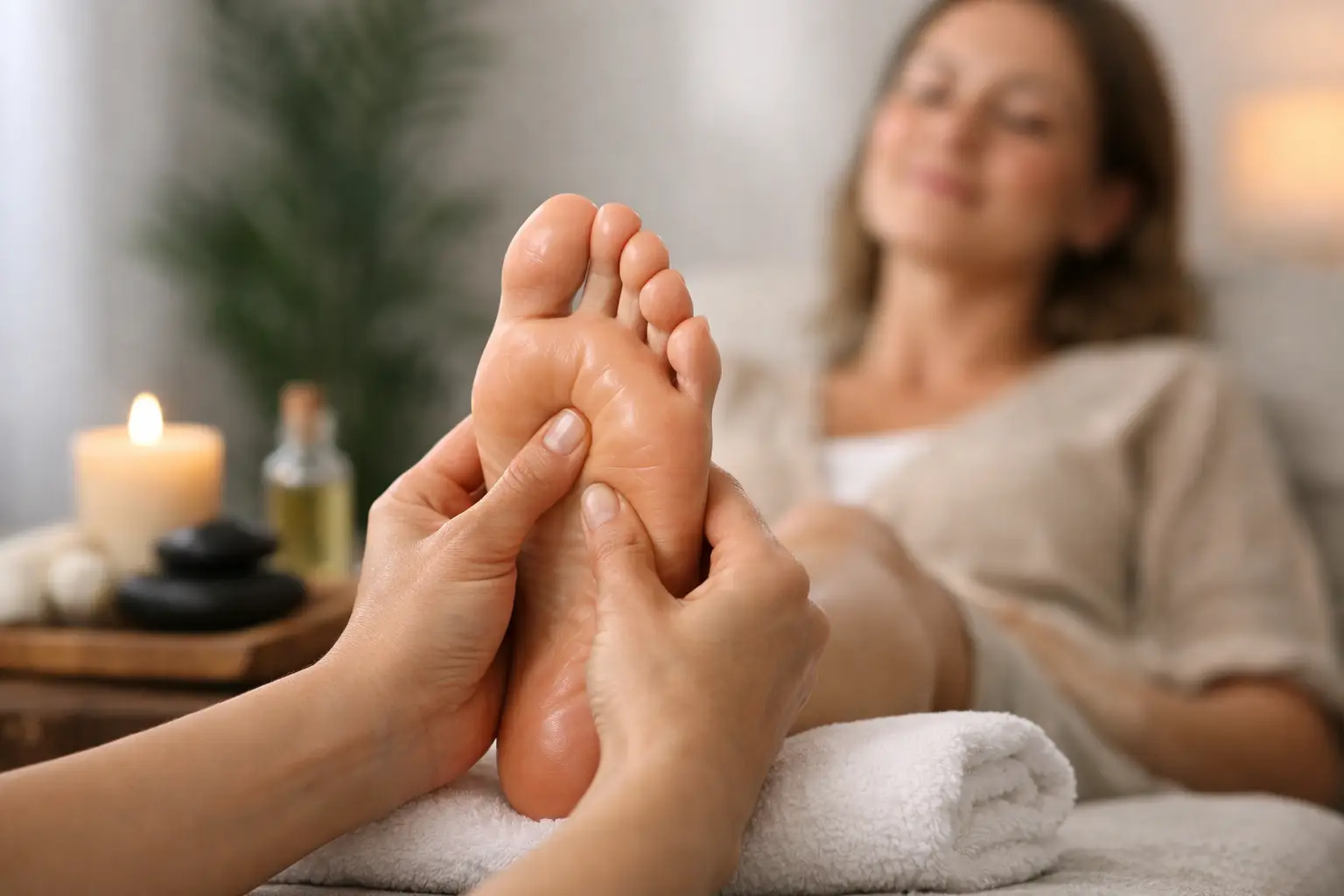
Reflexology is a complementary therapy involving measured pressure and massage techniques on specific areas of the feet. Reflexologists work from the principle that these areas correspond with different parts and systems of the body. Many clients describe the experience as deeply calming, grounding, and restorative.
The strongest and most reliable benefit is often the time it creates for rest. A session takes you out of the constant cycle of standing, working, caregiving, commuting, and responding to other people’s needs. Gentle, focused touch can help some people notice their breathing, release physical tension, and leave feeling more settled.
Research into reflexology and stress-related symptoms is still developing, and individual results vary. It should not be presented as a cure for anxiety, depression, insomnia, chronic pain, or medical conditions. It does not replace counselling, medication, primary care, or treatment for an underlying health concern. Its role is more practical: it may complement the care already supporting you and offer a comfortable, intentional opportunity to relax.
How reflexology for stress relief may help
Stress is not only a thought process. It can affect the whole body. Some people experience headaches, digestive discomfort, muscle tension, fatigue, restless sleep, or more awareness of aches in the feet and legs. Others feel drained but unable to fully relax.
A reflexology appointment provides a low-stimulation setting where the focus is simply on comfort. Slow, consistent pressure to the feet may encourage a sense of calm, while the seated or reclined position gives the body a break from load-bearing. For people who are on their feet all day, that change alone can feel meaningful.
There is also value in routine. Booking regular time for wellness can help clients recognize stress earlier rather than waiting until exhaustion, pain, or poor sleep becomes their normal. The best frequency depends on your goals, schedule, health history, and response to treatment. Some clients choose occasional sessions during demanding periods, while others include reflexology in an ongoing self-care plan.
It is reasonable to expect relaxation and foot comfort after a session. It is less helpful to expect every concern to disappear in one appointment. Stress has many causes, including workload, grief, caregiving, chronic pain, financial pressure, illness, and disrupted sleep. Reflexology can support the recovery side of the equation, but it cannot remove every source of strain.
What happens during a session
Your practitioner begins by learning what you hope to get from the appointment. You may discuss stress levels, sleep, foot sensitivity, mobility, medical conditions, medications, and any current pain. This conversation matters because safe, effective wellness care is never one-size-fits-all.
You will be comfortably positioned while your practitioner assesses the condition of the feet and applies techniques suited to your comfort level. Pressure should be purposeful, but it should not feel sharply painful. Let your practitioner know if an area feels too tender, if you are cold, if you need to reposition, or if you prefer lighter touch.
Some feet are sensitive because of long hours standing, arthritis, previous injury, poorly fitting footwear, or reduced circulation. Others have very little sensation due to neuropathy. These differences guide the treatment. A caring practitioner adjusts the approach rather than pushing through discomfort.
Afterward, many people feel calm or pleasantly tired. Drinking water, eating normally, and allowing a little quiet time afterward can help you notice how you feel. There is no need for a complicated detox routine. The most useful next step is usually simple: pay attention to your body, rest if you can, and maintain the healthy habits that support you between visits.
When foot health needs extra care
Reflexology can be adapted for many clients, but a professional health review is particularly important when there are risks affecting the feet or lower limbs. Diabetes, peripheral neuropathy, poor circulation, swelling, blood-clot history, anticoagulant medication, active cancer treatment, arthritis, stroke-related changes, or limited mobility may change what is appropriate.
If you have diabetes, do not assume that a relaxing foot treatment is automatically safe. Reduced sensation can make it harder to identify excessive pressure, a blister, skin breakdown, or an early infection. Circulation concerns can also affect healing. A practitioner with foot-care knowledge can assess the condition of your skin and nails, identify concerns that need clinical attention, and modify or postpone treatment when needed.
Reflexology should be delayed and medical advice sought if you have an open wound, ulcer, suspected infection, unexplained redness or warmth, sudden swelling, new severe pain, or a rapidly changing foot condition. These are not wellness concerns to massage away. Prompt assessment protects mobility and can prevent a small problem from becoming a serious one.
For older adults and people living with chronic conditions, the goal is not merely relaxation. It is safe comfort that respects skin integrity, circulation, balance, sensation, and independence. This is where an integrated clinic setting can make a real difference. Wellness support and preventative foot care can work alongside each other rather than existing in separate silos.
Making relaxation part of a realistic care plan
A reflexology session works best when it is paired with everyday habits that lower the physical load on the body. That may mean wearing supportive footwear, taking short movement breaks during a shift, elevating tired legs when recommended, following a compression plan prescribed for you, or protecting a consistent sleep routine.
If stress is contributing to clenching, shallow breathing, or a sense of constant urgency, give yourself a small transition between work and home. Even five minutes of quiet sitting, a short walk, or gentle ankle movements can signal that the day is changing. These practices are not dramatic, but consistency is often more helpful than an occasional large effort.
It is also worth looking at the source of physical discomfort. Foot pain, heel pain, leg heaviness, numbness, or unstable balance can make stress harder to manage because every step requires more effort. In those cases, reflexology may feel soothing, but assessment and treatment of the underlying issue remain essential. Orthotics, compression therapy, medical foot care, wound management, or targeted treatment for pain may be the more appropriate next step.
Choosing care that feels safe and personal
The right reflexology appointment should feel unhurried, respectful, and tailored to you. You should be able to share health information without judgment and ask clear questions about what the treatment can and cannot do. If your needs change from one visit to the next, the plan should change too.
For clients in Barrie, a reflexology visit at Feet & Life can be part of a broader conversation about foot comfort, circulation, mobility, and preventative wellness. That is especially valuable when stress is happening alongside tired legs, chronic conditions, or difficulty caring for your feet safely at home.
You do not have to wait for stress to become overwhelming before seeking support. A calm hour, skilled touch, and attention to the foundation that carries you every day can be a practical place to begin caring for yourself.