

That first step out of bed shouldn’t feel like walking on a sharp stone. If you’re searching for plantar fasciitis relief Barrie, you’ve likely realized that generic foam inserts and a new pair of walking shoes aren’t enough to stop the persistent, stabbing sensation in your heel. It’s frustrating to feel like a simple afternoon at Sunnidale Park or a walk along the waterfront is a physical challenge rather than a local joy. You shouldn’t have to guess which retail product might work when your mobility is at stake.
We understand that you’re looking for more than just a temporary fix; you’re looking to reclaim your quality of life and move with confidence again. This clinical guide outlines the professional path to lasting heel pain recovery through specialized assessments and custom-engineered orthotic solutions right here in Barrie. By reading on, you’ll gain a clear understanding of your specific foot biomechanics and learn how a practitioner-led approach can help you achieve the long-term mobility you deserve. We’ll examine why clinical intervention is the key to moving past the confusion of retail options and into a lifestyle free from chronic discomfort.
Key Takeaways
- Understand the physiological causes behind sharp morning heel pain and why the “first step” phenomenon occurs.
- Discover how a professional clinical assessment provides lasting plantar fasciitis relief Barrie by addressing the root cause of your biomechanical misalignment.
- Compare the functional benefits of custom-engineered orthotics against generic retail insoles to find a solution that fits your specific anatomy.
- Learn about our empathetic, nurse-led approach to non-invasive foot care that focuses on patient education and long-term wellness.
- Identify practical ways to integrate proactive foot health into your daily routine to maintain mobility and enjoy an active lifestyle in Simcoe County.
Understanding Plantar Fasciitis and Your Heel Pain
Plantar fasciitis is frequently misunderstood as a simple bruise or a minor strain, but it’s actually a complex inflammatory condition affecting the thick band of connective tissue known as the plantar fascia. This tissue runs along the bottom of your foot, bridging the calcaneus (heel bone) to your toes. For those seeking a deeper Understanding Plantar Fasciitis, it’s vital to recognize that while it begins as acute inflammation, it can progress into chronic degenerative changes if left unaddressed. Plantar fasciitis is a biomechanical strain that requires professional alignment to heal correctly.
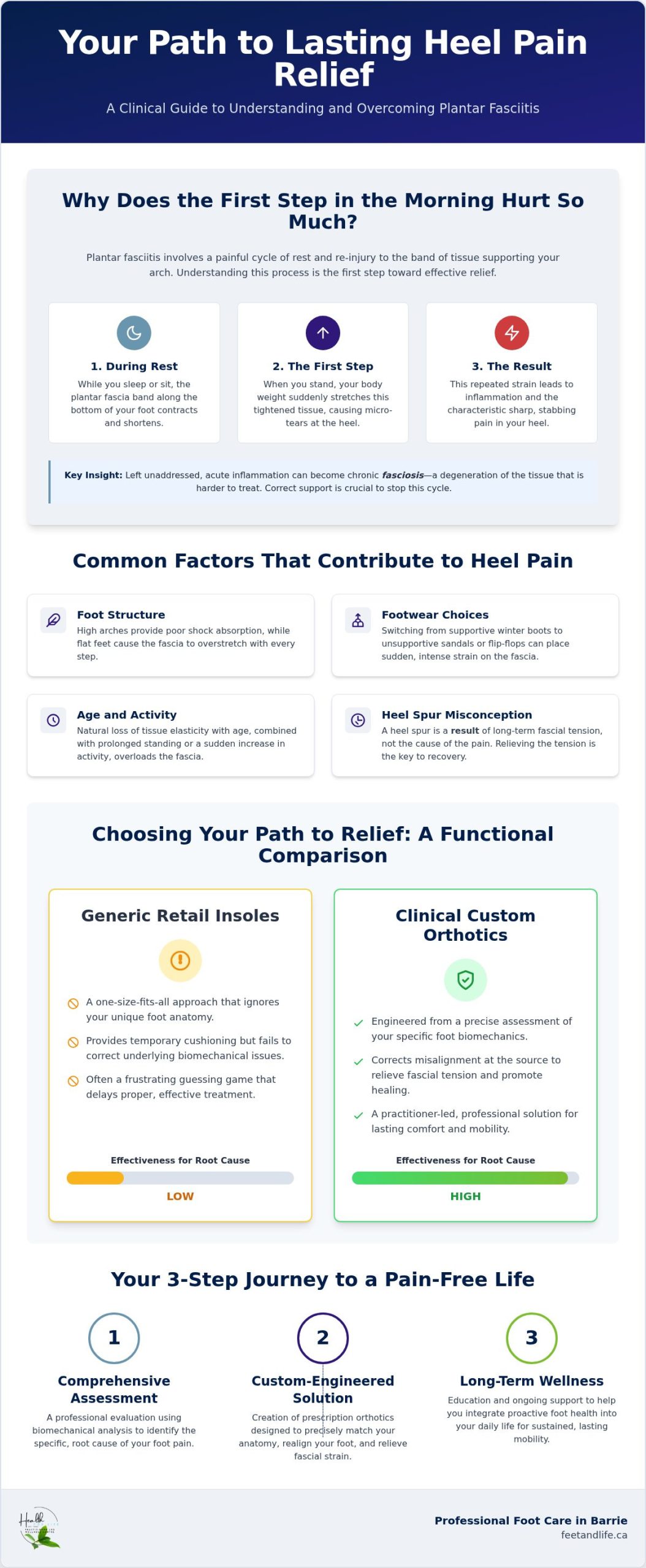
The “first step” phenomenon is perhaps the most distressing aspect of this condition. During sleep or long periods of rest, your feet often remain in a relaxed, pointed position, which allows the fascia to contract and shorten. When you stand up, your full body weight suddenly stretches this tightened tissue, causing micro-tears and intense, stabbing discomfort. This cycle of rest and re-injury is a primary reason why patients seek professional plantar fasciitis relief Barrie. Without intervention, the body may struggle to bridge the gap between temporary inflammation and long-term recovery.
It’s important to distinguish between simple inflammation and fasciosis. Inflammation is the body’s immediate response to stress, while fasciosis represents a more chronic state where the collagen within the fascia begins to degenerate. When the tissue loses its structural integrity, the pain becomes more persistent and harder to manage with rest alone. Professional clinical care focuses on halting this degeneration and supporting the tissue’s natural healing process through proper support.
Common Symptoms Experienced by Barrie Residents
Living in Simcoe County often involves an active lifestyle, making foot pain particularly disruptive. Residents often report specific symptoms that signal the need for a clinical assessment:
- A sharp, stabbing sensation localized near the inner edge of the heel or along the arch.
- Increased discomfort immediately after rising from a seated position or after standing for several hours.
- A dull, throbbing ache that persists after a day spent walking the trails at Sunnidale Park or along the Barrie waterfront.
- A noticeable limp or change in gait as you try to avoid putting pressure on the affected heel.
The Role of the Calcaneus and Heel Spurs
Many patients feel concerned when an imaging report mentions a heel spur, which is a bony protrusion on the calcaneus. However, it’s a common misconception that the spur itself is the primary cause of pain. In reality, heel spurs are often a secondary symptom of long-term fascial tension. When the plantar fascia is constantly pulled away from the bone, your body attempts to protect the area by depositing calcium at the attachment site to provide extra support.
We find that treating the fascia through biomechanical correction often resolves the pain associated with the spur entirely. Once the tension on the connective tissue is reduced, the bony deposit is no longer being “tugged” upon, allowing the surrounding nerves and soft tissues to settle. This is why our approach to plantar fasciitis relief Barrie focuses on the root cause of the strain rather than just the secondary bone growth.
Predisposing Factors and the Biomechanics of Foot Alignment
Foot pain doesn’t occur in a vacuum. It’s often the cumulative result of how your specific anatomy manages weight and movement. While anyone can develop this condition, certain anatomical traits make the fascia more vulnerable to micro-tearing. For example, individuals with high arches often have a rigid foot structure that fails to absorb shock efficiently. Conversely, those with flat feet experience excessive stretching of the fascia as the arch flattens during every step. These structural nuances are why seeking a professional perspective on Plantar Fasciitis Symptoms and Causes is so important for long-term recovery.
In Ontario, seasonal transitions play a significant role in lower limb health. We often see a spike in discomfort when residents switch from supportive, structured winter boots to unsupportive summer sandals or thin-soled flip-flops. This sudden loss of arch support places an immediate, heavy load on the fascia. When combined with the natural loss of tissue elasticity that occurs as we age, the risk of developing a chronic inflammatory cycle increases. Professional biomechanical assessments help identify these specific risks before they lead to permanent tissue damage.
Understanding Overpronation and Arch Collapse
Overpronation occurs when the foot rolls excessively inward during the gait cycle. This movement causes the arch to collapse, which effectively lengthens the foot and pulls the plantar fascia beyond its natural physiological limit. Imagine the mechanical stress placed on your lower limbs during a brisk walk along the pavement in downtown Barrie. Each step on such an unforgiving surface forces the fascia to act as a primary shock absorber; this is a role it isn’t designed to handle without proper alignment and support.
External Factors: Footwear and Surface Impact
The environment you move through matters as much as your anatomy. Walking on hard surfaces like concrete or asphalt without adequate cushioning creates a repetitive impact that travels directly into the heel bone. This is particularly dangerous for those starting new fitness routines or increasing their daily step count too quickly. To achieve lasting plantar fasciitis relief Barrie, your footwear must do more than just provide a soft cushion. It needs to organize the foot correctly for better stability. Proper alignment ensures that weight is distributed evenly across the entire foot rather than concentrating stress on the sensitive attachment point at the heel. Identifying these imbalances is a critical step toward a lifestyle free from persistent pain.
Custom Orthotics vs. Generic Insoles for Fasciitis Relief
When seeking plantar fasciitis relief Barrie, it’s common to start with the retail pharmacy aisle. The promise of an affordable, instant solution is appealing, but there’s a significant clinical distinction between a comfort accessory and a medical intervention. Retail insoles are designed for a “mass-market” foot, which doesn’t exist in clinical reality. Every individual possesses a unique combination of arch height, heel width, and gait patterns. A generic insert cannot account for these variances, often providing a false sense of security while the underlying biomechanical strain continues to worsen.
Custom-engineered orthotics are medical-grade devices specifically designed to manage the forces acting on your lower limbs. Unlike foam retail products that compress and lose their shape within weeks, professional orthotics utilize durable materials like high-density polypropylene or carbon fibre. These materials provide the structural rigidity necessary to control motion and redistribute pressure. While a soft store-bought pad might feel pleasant initially, it lacks the mechanical strength to halt the excessive inward rolling or arch collapse discussed in previous sections. True relief comes from structural correction, not just cushioning.
Why Store-Bought Options Often Fail
The primary reason generic insoles fail is the confusion between “softness” and “support.” Patients often assume that a softer surface will alleviate heel pain. However, a foot suffering from fascial strain requires stability to heal. If you place a collapsing arch onto a soft foam pad, the arch continues to collapse; it simply does so on a squishier surface. This lack of rigidity means the plantar fascia remains under constant tension. In some cases, an ill-fitting generic support can even shift pressure to other areas of the foot, potentially leading to secondary issues in the metatarsals or ankles.
The Clinical Advantage of Custom-Engineered Solutions
The clinical advantage begins with a thorough biomechanical assessment. This process allows us to realize the exact degree of correction required to neutralize your gait. Custom orthotics are engineered to organize the relationship between the heel and the metatarsals, ensuring that the fascia is not overstretched during the “toe-off” phase of your stride. This precision is what allows patients to return to their daily routines in Simcoe County with confidence. By integrating these devices into your lifestyle, you provide your feet with a consistent, corrective environment that promotes long-term tissue recovery and prevents the recurrence of stabbing heel pain.
Professional Clinical Assessment and Treatment Pathways in Barrie
Accessing specialized care for heel pain is more straightforward than many residents realize. In Ontario, a physician’s referral is not required to visit a foot specialist, meaning you can take the first step toward recovery as soon as symptoms appear. Choosing a professional consultation at a specialized clinic ensures that your pain is evaluated through a clinical lens rather than a retail one. Our approach to plantar fasciitis relief Barrie is rooted in an empathetic, nurse-led sensibility. We prioritize patient education and comfort, ensuring you understand the “why” behind your treatment plan before any intervention begins.
The path to healing focuses on non-invasive medical foot care. While invasive options exist elsewhere, most cases of fascial strain respond exceptionally well to conservative, practitioner-led strategies. By focusing on the structural integrity of the foot and the health of the soft tissues, we provide a stable environment for the body to repair itself. This methodical approach reduces the need for aggressive measures and focuses on sustainable, long-term health outcomes.
The Biomechanical Assessment Process
A thorough assessment is the foundation of effective care. We follow a structured process to ensure no detail of your foot health is overlooked:
- Step 1: Clinical History and Symptom Review. We begin by discussing your unique pain profile, including when the discomfort started and how it impacts your daily life in Simcoe County.
- Step 2: Gait Analysis. We observe how your feet move and align while you walk. This allows us to identify overpronation or arch collapse in real-time.
- Step 3: Physical Examination. We perform a hands-on evaluation of your foot structure, checking joint mobility and identifying specific pressure points or areas of inflammation.
- Step 4: Precision Measurements. If orthotics are required, we take detailed measurements to ensure your custom-engineered inserts provide the exact level of support your anatomy demands.
Conjunctive Non-Invasive Therapies
Clinical treatment often extends beyond the use of orthotics. Specialized stretching and strengthening exercises play a vital role in fascial recovery by improving the flexibility of the calf muscles and the strength of the intrinsic foot muscles. We also provide professional advice on footwear modification, helping you select shoes that complement your clinical treatments rather than working against them. Adhering to high medical foot care standards ensures that every aspect of your recovery is handled in a safe, effective, and professional environment. If you are ready to begin your recovery, you can book a biomechanical assessment to determine the best path forward for your specific needs.
Long-Term Mobility: Integrating Foot Care into Your Lifestyle
Achieving lasting plantar fasciitis relief Barrie is an investment in your overall quality of life. In a community as active as ours, the ability to walk the North Shore Trail or navigate the local farmers’ market without hesitation is essential for mental and physical wellness. Foot health is the foundation of your mobility; when your feet are properly supported, your entire body functions more efficiently. We view foot care not as a reactive measure to pain, but as a proactive component of a healthy, independent lifestyle.
It’s vital to recognize that foot issues rarely remain isolated. When you alter your gait to compensate for heel pain, you create a ripple effect through your kinetic chain. This misalignment often leads to secondary discomfort in the knees, hips, and lower back as these joints struggle to manage uneven weight distribution. By maintaining proper foot alignment through professional intervention, you protect your body’s structural integrity. This systemic approach to wellness is especially critical for residents managing existing health conditions, such as diabetes, where routine foot checks are a necessity for preventing complications and maintaining long-term health.
Preventing Recurrence of Plantar Fasciitis
Recovery is a journey that continues after your initial symptoms subside. The most effective way to prevent the return of stabbing heel pain is the consistent use of your custom-engineered orthotics. These devices provide the corrective environment your fascia needs to remain stress-free during daily activities. Beyond orthotics, routine foot health maintenance allows us to identify subtle biomechanical shifts before they escalate into painful conditions. As we age, our foot structure naturally changes and tissue elasticity decreases. Adapting your foot care routine to these physiological shifts is a key factor in preserving your independence and staying active within the Simcoe County community for years to come.
The Feet & Life / Health for Life Difference: Reassuring Clinical Care
At Feet & Life / Health for Life, we are committed to a steady, methodical, and thorough approach to patient care. We believe that a practitioner-led clinic should serve as a reliable community pillar, offering a “nursing” sensibility that combines medical expertise with genuine empathy. This dedicated focus on superior outcomes ensures that you aren’t just another appointment; you’re a patient whose quality of life matters to us. We take the time to listen to your concerns and provide clear, clinical guidance that empowers you to take control of your health. If you are ready to move past the frustration of chronic heel pain and return to the activities you love, we are here to guide you.
Book your biomechanical assessment at Feet & Life / Health for Life today and discover the professional path to lasting plantar fasciitis relief Barrie.
Reclaim Your Active Lifestyle in Barrie
Persistent heel pain doesn’t have to be a permanent part of your life in Simcoe County. As we’ve explored, achieving lasting plantar fasciitis relief Barrie requires moving beyond retail cushioning toward specialized clinical correction. By addressing the specific biomechanical triggers like overpronation and arch collapse, you can stop the cycle of inflammation and protect the structural integrity of your entire lower limb system. This professional intervention is the key to ensuring that every step you take is supported by science rather than guesswork.
At Feet & Life / Health for Life, we provide the practitioner-led expertise and custom-engineered solutions necessary to restore your mobility. Our empathetic, nurse-led approach ensures that your journey toward recovery is both informative and deeply reassuring. You deserve a clear, professional path back to the activities that define your lifestyle, from weekend walks to daily errands. Schedule Your Professional Foot Assessment at Feet & Life / Health for Life today to begin your recovery. We are dedicated to helping you move with confidence and ease once again.
Frequently Asked Questions
Do I need a doctor’s referral to seek plantar fasciitis relief in Barrie?
No, you don’t need a doctor’s referral to seek plantar fasciitis relief Barrie at our clinic. In Ontario, foot health practitioners are primary care providers for lower limb concerns, meaning you can book an assessment directly. This direct access allows for faster intervention and prevents the condition from progressing while waiting for external paperwork or general practitioner appointments.
How long does it take for custom orthotics to relieve my heel pain?
Most patients notice a significant improvement in comfort within the first two to four weeks of consistent wear. While the initial stabbing sensation often subsides quickly as the fascia is properly supported, the full physiological healing of the connective tissue can take several months. We monitor your progress through follow-up consultations to ensure your custom-engineered orthotics are effectively neutralizing your specific biomechanical strains.
Are custom orthotics for plantar fasciitis covered by my insurance in Ontario?
Custom orthotics are typically covered by most private extended health insurance plans in Ontario. While the Ontario Health Insurance Plan (OHIP) doesn’t cover these specialized medical devices, your employer-provided or individual health benefits often include a specific allowance for orthotic solutions. We recommend reviewing your policy’s requirements regarding the type of practitioner needed for the assessment and the documentation required for reimbursement.
Can I still exercise while being treated for plantar fasciitis?
You can continue to stay active, but it’s often necessary to modify your routine during the acute phase of healing. High-impact activities like running or jumping should be replaced with low-impact alternatives such as swimming or cycling until inflammation subsides. Maintaining movement is important for overall wellness, provided your feet are supported by proper footwear and your custom-engineered orthotics to prevent further micro-tearing.
What is the difference between a medical foot care clinic and a regular pedicure?
A medical foot care clinic operates under strict clinical standards and infection control protocols that far exceed those of a regular pedicure. Our practitioners are trained to manage complex conditions, including diabetic foot care and wound healing, using sterilized medical instruments. While a pedicure focuses on the aesthetic appearance of the feet, medical foot care prioritizes the physiological health, structural integrity, and long-term wellness of the lower limbs.
How do I know if my heel pain is plantar fasciitis or something else?
A professional clinical assessment is the only definitive way to confirm if your heel pain is caused by plantar fasciitis. While the “first step” morning pain is a hallmark symptom, other conditions like stress fractures, nerve entrapment, or fat pad atrophy can present with similar discomfort. Our biomechanical evaluation identifies the exact source of your pain through gait analysis and a physical examination of your foot’s joint mobility.
Will I need to wear custom orthotics in all my shoes?
Consistency is the key to recovery, so it’s highly recommended to wear your orthotics in any footwear you use for more than a few minutes. Moving the inserts between your work shoes, walking shoes, and even indoor slippers ensures your arch remains supported throughout the day. If you frequently switch between different styles of footwear, we can discuss specialized designs that accommodate various shoe depths and shapes.
What happens if I leave my plantar fasciitis untreated?
Leaving the condition untreated can lead to chronic pain and permanent changes in your gait. As you subconsciously alter how you walk to avoid heel discomfort, you place unnatural stress on your ankles, knees, hips, and lower back. Over time, this can result in secondary injuries and a significant reduction in your overall mobility, making it much harder to achieve plantar fasciitis relief Barrie later on.