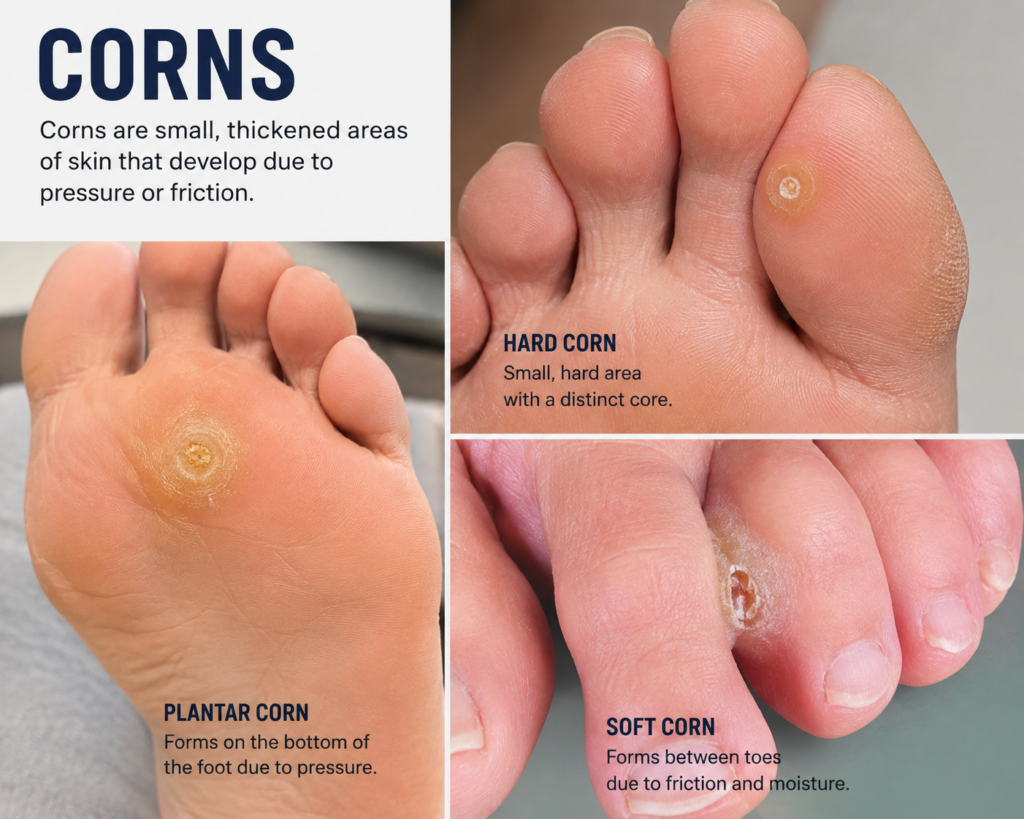
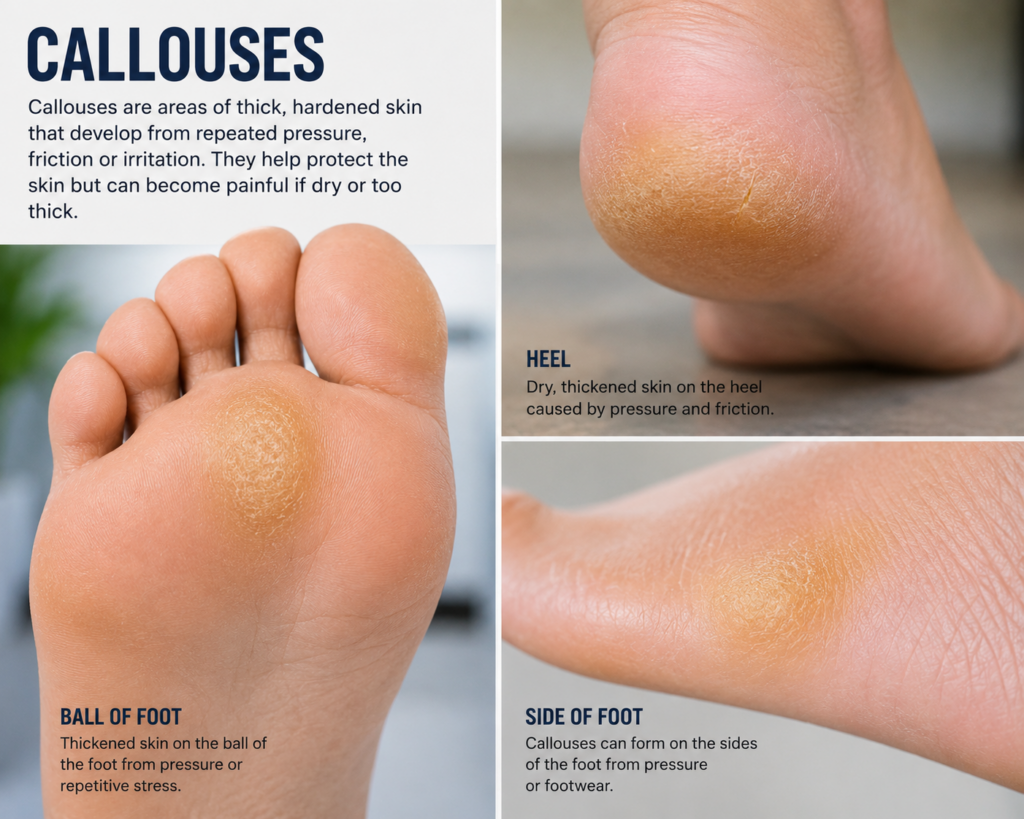
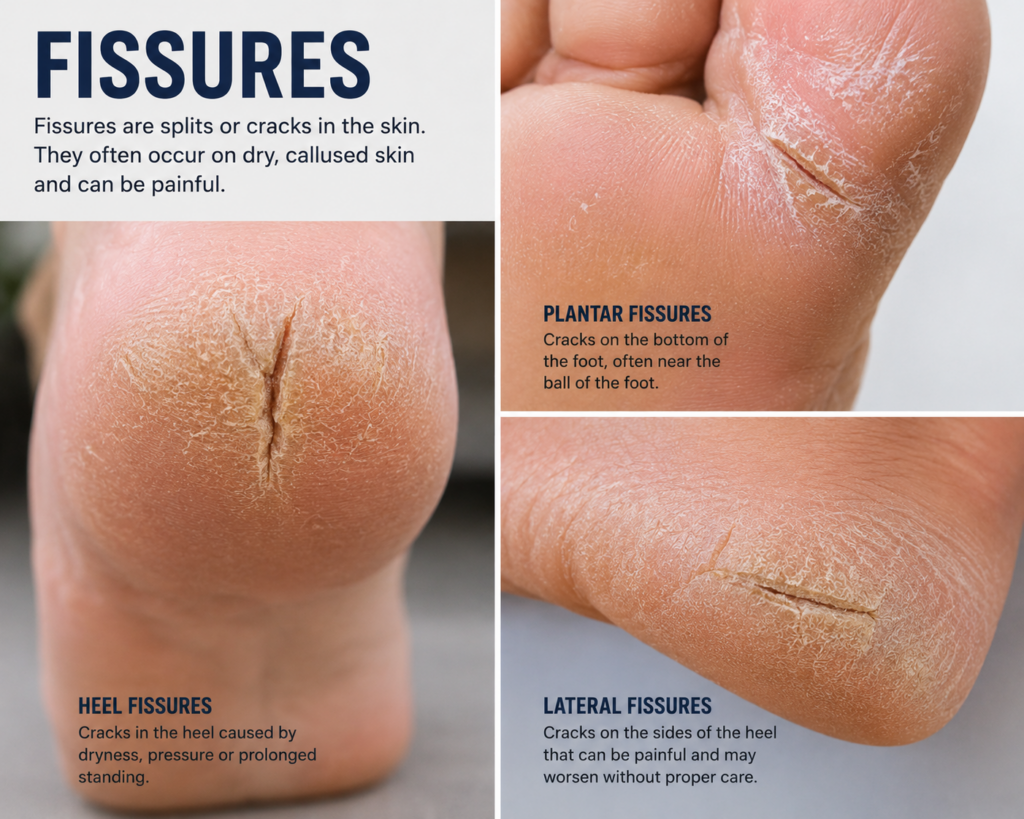
Soft tissues (skin) on your feet may develop hyperkeratotic conditions such as corns, callouses and/or fissures (cracks). These conditions are caused by various types of stressors.
Compressional Stress
where forces are equal and towards each other such as the weight of the body and the resistance of the ground causing compression.
Shearing Stress
is where forces are parallel and opposite, where one layer of tissue is forced over another. For example when the foot slides inside your shoe.
Tensile Stress
is when forces are pulled away from each other causing the skin to stretch and/or tear creating a crack (fissure).
Torsional Stress
is the twisting motion causing sheering or compressional stress causing cracks and/or callouses and corns.
Your Reg. Pod Fs. will make recommendations on appropriate footwear, offloading devices such as custom foot orthotics and or soft appliances to reduce reoccurrence.
PLAN OF CARE
Keratotic disorders require removal by your Registered PodOrtho Foot Specialist with instruments designed to comfortably remove the excess hyperkeratotic skin and/or the center neculous of a corn to eliminate pain and/or discomfort. Most of our clients will schedule regular maintenance treatments to ensure they avoid the pain and/or discomfort thus improving overall foot health and wellness.