Wound Care/Healing with LLLT/PBMT
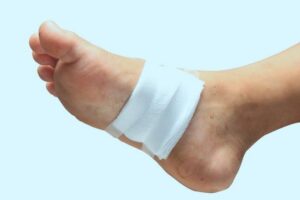
Wound care is a complex management system.
Many people may develop lower-limb and foot wounds throughout life. Certain conditions and hereditary factors can contribute to the risk of developing wounds.
This may include:
Autoimmune diseases, circulatory impairment, diabetes that can affect the sensory, autonomic and motor nerves in the lower extremities, causing loss of protective sensation, changes to bone placements, and a reduction in the function of organs which aid in improving skin integrity. This can create negative effects such as the inability notice when your feet are injured, changes to the shape of feet causing excessive pressure areas, and a decrease in the natural production of sweat glands that hydrate the tissues and skin, causing them to become dry and more likely to crack and form calluses. A small skin problem such as a callus, corn, fissure and blister has the potential to turn into a larger sore, referred to as a foot ulcer.
Due to a decrease in microvascular circulation related to excessive elevation of blood sugars in diabetics or those with peripheral vascular disease (PVD/PAD) have decreased poor ability for the bodies own natural antibodies to reach the affected area through blood circulation causing a potential infection to set in. Wounds will not heal if infected. Foot ulcers form most often on the pad (ball) of the foot or the bottom of the big toe and the heel and other other locations. Typically, over bony prominences and high areas of pressure. If toe deformities are present, such as hammer toes, claw toes, or bunions, the potential to develop a wound is possible if not offloaded and protected.
Our wound care nurses are specially trained to address all types of foot and lower limb wounds that include arterial, venous, diabetic and pressure ulcers. Wounds may be caused from underlying conditions such as diabetes, microvascular, lymphatic or nerve complications and pressures.
Our clinic utilizes adjunctive therapies such as photobiomodulation therapy that uses photons (light energy) from the visible and infrared spectrum that increases tissue healing and reduces pain and inflammation.
Light therapy heals wounds much faster than conventional public health treatments. Our clinic has saved many limbs and feet from amputations and known in our area to be the limb saving clinic by many referring doctors and various healthcare providers.
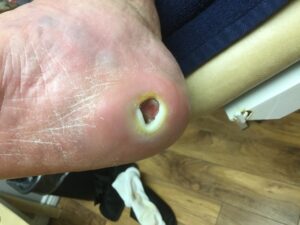
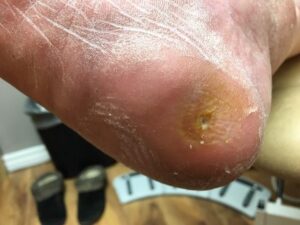
First Appointment includes:
- Risk Assessment to prevent further tissue breakdown
- Address immediate cause of the wound
- Identification of local concerns at the wound site
- Identification of Critical Colonization (infection)
- Check exudate levels and granulation tissue
Our Reg. PodOrtho Foot Specialists/Nurses deliver a Poly-therapeutic Approach for our clients.
A Typical Plan of Care (P.O.C.) includes the following:
- Wound cleansing/Irrigation
- Gentle painless conservative debridement
- Photobiomodulation Therapy (PBM)
- Application of wound care products
- Application of wound dressing
- Off-Loading Strategies/recommendations
- Solutions for pain management
- Nutritional and fluid intake consultations
- Healthy Lifestyle choices
- Referrals to other practitioners offering additional support
Should a wound be kept covered?
Many wounds benefit from an appropriate dressing that protects the area and supports a suitable healing environment. The type of dressing and how frequently it should be changed depend on the wound.
What are signs that a wound may be infected?
Contact a healthcare professional if you notice:
- Increasing redness or skin discolouration
- Increasing warmth or swelling
- Increasing pain or tenderness
- Pus or unusual drainage
- An unpleasant odour
- Red or dark streaking around the wound
- Fever or feeling generally unwell
Why are foot wounds especially important?
Foot wounds can be exposed to continued pressure from standing, walking, and footwear. Some people may also have reduced circulation or sensation, making an injury more difficult to notice and potentially delaying healing.
What can delay wound healing?
Healing can be affected by many factors, including repeated pressure or friction, infection, poor circulation, inadequate nutrition, and certain underlying medical conditions.