Ingrown Toenails/Thick Toenails (Onychocryptosis)(Onychogryphosis)
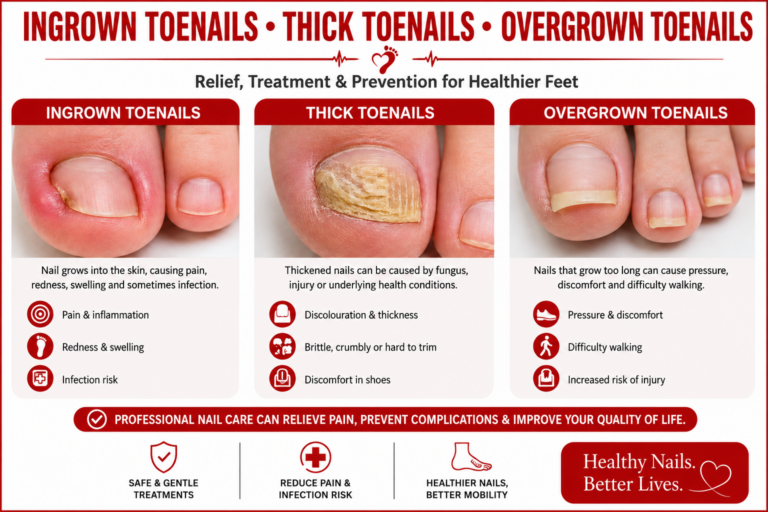
An ingrown toenail occurs typically due to excess pressure to the top of the nail which forces the nail into the lower soft tissues causing discomfort and pain with the potential to cause infections.
If I take antibiotics prescribed by my Primary Care Provider will that cure my ingrown toenail?
No, while antibiotics will help with a possible infection that is caused by the ingrown toenail it will not eliminate the problem which is the ingrown nail also known as a Spicula.
The spicula MUST be removed as this corrects the problem. In most cases, once the spicula is removed the infection will resolve.
Ingrown toenails may develop from ill-fitting footwear that may have narrow toe boxes or shoes that are too long causing the foot to slide in the shoe or too tight compressing the toes and/or trauma to the affected area. Thickened nails or nail infections may also cause excess pressure therefore it is important to seek the care of a PodOrtho Foot Specialist™ (PodFs), Our maintenance treatment is to identify if an ingrown nail is starting. Our PodOrtho Foot Specialist may also recommend the application of a nail brace (Orthonyxia) to prevent or remove an ingrown toenail painlessly and eliminate the need for invasive and expensive surgeries. Feet and Life use the Podofix™ system successfully for over 25 years.
There are three stages to an ingrown toenail the third stage being the most severe and uncomfortable. It is important to seek attention earlier rather than later.
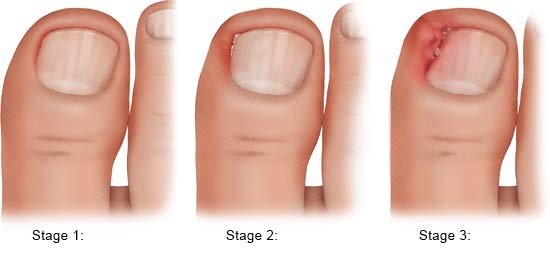
How do you know if you have an ingrown toenail?
- Discomfort and/or Painwhen wearing closed-toe footwear
- Discomfort and/or Painwhen walking, running, or jumping
- Rednessaround the nail
- Presenceof pus or blood
- Thickened skin build-up at the sides and ends of the nail
Podofix™ nail brace system is measured and applied to fit each nail’s unique shape. The brace is placed on top of the toenail and under a light so it adheres to the toenail plate.
Toenail bracing was conceived through the dental industry therefore it’s a similar concept as braces for teeth. The brace then gently lifts both lateral sides of the nail raising the spicula (ingrown nail) out of the space where it was growing in. When the brace is initially applied, our clients report feeling immediate relief. The toenail is encouraged to grow in a natural direction with the help of a reshaping process with less curvature performed by your PodOrtho Foot Specialists™. This correction effect is long-lasting however, wearing closed toed shoes may cause re-occurrence therefore our clients will periodically need to have their PodOrtho Foot Specialist™ maintain their nails on a regular basis and re-application of a brace may be required on occasion.
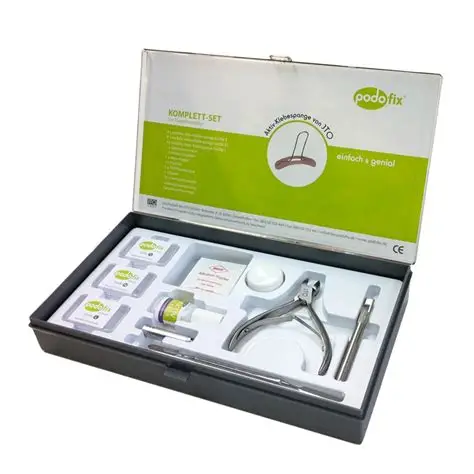
This cost-effective nail bracing system can be conveniently performed at Feet and Life with zero down time or healing required.
When possible, we book same-day appointments for urgent concerns to immediately fix your toenail issue.
Get rid of your ingrown toenails & book an appointment today with one of our PodOrtho™ Foot Specialists at Feet and Life.
What are the signs of an ingrown toenail?
You may notice pain or tenderness along the nail edge, redness, swelling or irritated skin. If infection develops, drainage or increasing warmth may occur.
Should I cut out an ingrown toenail myself?
Avoid digging into or cutting deeply down the sides of the nail. This can injure surrounding skin and may make the problem worse.
Will my ingrown toenail come back?
It can. Recurrence is ,ore likely when the nail is naturally curved or when contributing factors such as footwear, pressure or improper trimming continue.