
A sock that leaves a deep mark at the ankle, shoes that suddenly feel too tight, or legs that feel heavy by late afternoon can be more than an inconvenience. Compression therapy for swollen legs may help reduce fluid buildup and improve comfort, but the right approach starts with understanding why the swelling is happening.
Leg swelling, also called oedema, is common. It can occur after a long day on your feet, during travel, with pregnancy, or as part of an ongoing circulation concern. For many people, properly fitted compression is a useful part of care. For others, applying compression without an assessment could be uncomfortable or unsafe. The goal is not simply to make legs look less swollen. It is to protect skin health, mobility, comfort, and independence.
Why do legs become swollen?
Swelling develops when fluid collects in the tissues. Sometimes the cause is temporary, such as standing at work, sitting for a long drive, hot weather, or a minor injury. It may also be connected to venous insufficiency, where the veins in the legs have difficulty moving blood back toward the heart efficiently. This can lead to aching, heaviness, visible veins, ankle swelling, skin changes, and, over time, a higher risk of skin breakdown.
Other causes need careful medical consideration. Heart, kidney, or liver conditions can contribute to fluid retention. Some medications may cause swelling. Lymphedema can occur when the lymphatic system is not moving fluid effectively. Inflammation, arthritis, infection, and a blood clot are other possibilities.
The pattern matters. Swelling in both legs that builds during the day can be consistent with a venous issue, but it still deserves assessment when it is persistent. Sudden swelling in one leg, especially with pain, warmth, redness, tenderness, chest pain, or shortness of breath, requires urgent medical attention. Compression is not a substitute for ruling out a deep vein thrombosis or another serious condition.
How compression therapy for swollen legs works
Compression garments apply graduated pressure to the leg. The pressure is usually firmer at the ankle and gradually reduces farther up the leg. This supports the veins and calf muscles as they move blood and fluid upward instead of allowing it to pool around the ankles and lower legs.
When suited to the individual, compression can reduce the feeling of heaviness and fatigue, limit day-to-day swelling, and support skin integrity. It may also be recommended as part of a plan for chronic venous insufficiency, varicose veins, lymphedema management, recovery after certain procedures, or prevention of recurrent venous ulcers.
Compression is not a cure for every cause of oedema. Its benefit depends on the underlying condition, the level of pressure, the garment design, and whether it is worn consistently. Walking, ankle movement, hydration, medication review, weight management, and treating medical conditions may all be important parts of the plan.
Socks, stockings, wraps, and pneumatic devices
Compression is available in several forms. Knee-high socks are commonly used for ankle and lower-leg swelling and are often practical for daily wear. Thigh-high stockings or pantyhose may be appropriate when swelling extends above the knee, although they can be more challenging to put on and keep in place.
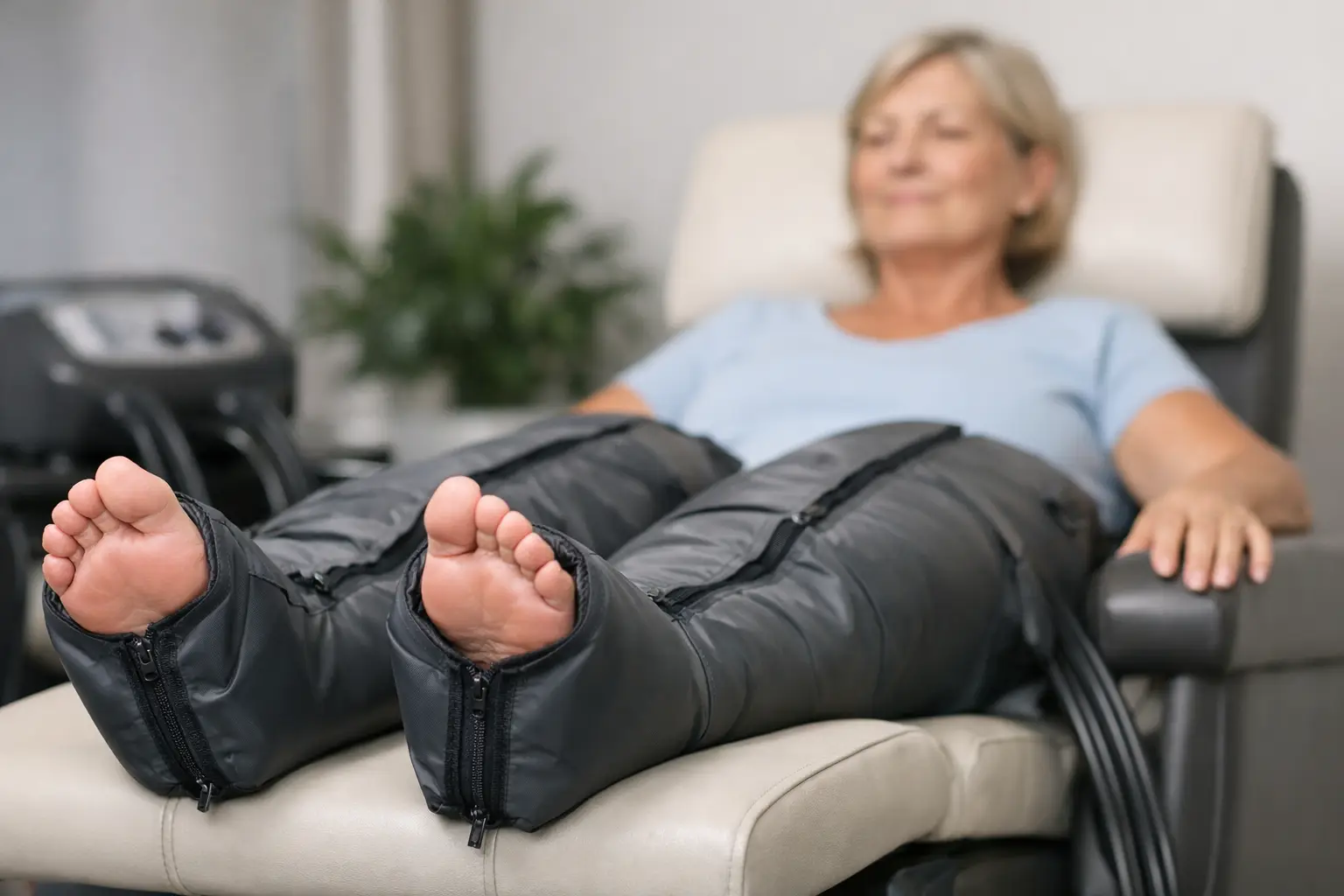
Adjustable compression wraps can be helpful for people whose leg size changes throughout the day or who have difficulty managing tight stockings. They can also be useful in more complex swelling management when prescribed and monitored. Intermittent pneumatic compression devices use air-filled sleeves that inflate and deflate in cycles. These are used in specific clinical situations and should be chosen with professional guidance.
A higher compression level is not automatically better. Too little pressure may not provide enough support, while too much pressure or an ill-fitting garment can cause pain, numbness, skin damage, or restricted blood flow. The best option is the one that meets your health needs and that you can use safely.
When assessment should come before compression
An assessment is particularly valuable if swelling is new, worsening, one-sided, painful, or accompanied by skin changes. People living with diabetes, neuropathy, peripheral arterial disease, heart failure, reduced kidney function, or a history of wounds should not guess at compression level or fit.
Peripheral arterial disease deserves special attention. Compression can be harmful when blood flow through the arteries is significantly reduced. Signs can include pain in the calves while walking, feet that feel unusually cold, pale or bluish skin, slow-healing wounds, or diminished pulses. A clinician may assess circulation before recommending compression, sometimes using an ankle-brachial pressure index or other vascular testing.
Neuropathy can make compression more complicated because reduced sensation may prevent a person from noticing pressure points, rubbing, or a developing blister. This is especially relevant for people with diabetes. Regular skin checks, proper sizing, and help with application can prevent small problems from becoming wounds or infections.
If there is active cellulitis, an open wound, marked pain, or rapidly changing swelling, speak with a healthcare professional promptly. Compression may still have a role in some wound and oedema care plans, but it needs to be coordinated with appropriate treatment and dressings.
Getting the fit and routine right
Effective compression should feel supportive, not painful. A garment that rolls at the top, bunches behind the knee, digs into the ankle, or creates numbness is not fitting correctly. Measurements should generally be taken early in the day, before swelling has reached its peak. They may include the ankle, calf, leg length, and sometimes the thigh, depending on the garment.
Put compression on in the morning, ideally before getting out of bed or soon after, when swelling is lowest. Smooth the fabric evenly from the toes upward. Do not fold or roll the top band down, as this can create a tight tourniquet effect. Remove the garment at night unless your healthcare provider has given different instructions.
For people with arthritis, reduced hand strength, back pain, vision changes, or stroke-related limitations, putting on compression can be the hardest part. Donning aids, rubber gloves for grip, open-toe styles, adjustable wraps, or assistance from a family member or care provider can make the routine safer and more realistic. A plan that is technically ideal but impossible to manage every morning will not deliver consistent benefit.
Wash garments according to their care instructions and allow them to dry fully between uses. Compression materials stretch and lose effectiveness over time, particularly when worn daily. Reassessment and replacement are often needed, especially if weight, mobility, health status, or leg size changes.
Support swelling with movement and skin care
Compression works best when the calf muscles are active. If you sit for long periods, gently point and flex your feet, circle the ankles, and take brief walking breaks when safe to do so. If standing is part of your workday, change position regularly and use short periods of walking rather than staying still in one place.
Elevating the legs can help some people, particularly after prolonged standing, but it should be comfortable and appropriate for your health condition. Avoid resting with pressure directly on fragile heels. Keep skin clean and moisturized with a fragrance-free product, but do not apply lotion between the toes, where excess moisture can contribute to skin problems.
Pay attention to changes. Increasing swelling, shiny or tight skin, leaking fluid, discolouration, itching, cracks, new wounds, or persistent pain are reasons to seek care. Early attention can help prevent ulcers, infection, and avoidable loss of mobility.
At Feet & Life, compression recommendations are approached as part of lower-limb health, not as a one-size-fits-all product choice. A thoughtful assessment can identify circulation concerns, skin risks, mobility barriers, and the level of support that fits your everyday life.
Comfortable legs can make it easier to walk, work, rest, and stay connected to the activities that matter to you. If swelling is becoming part of your routine, an individualized assessment can turn a frustrating daily symptom into a manageable care plan.