

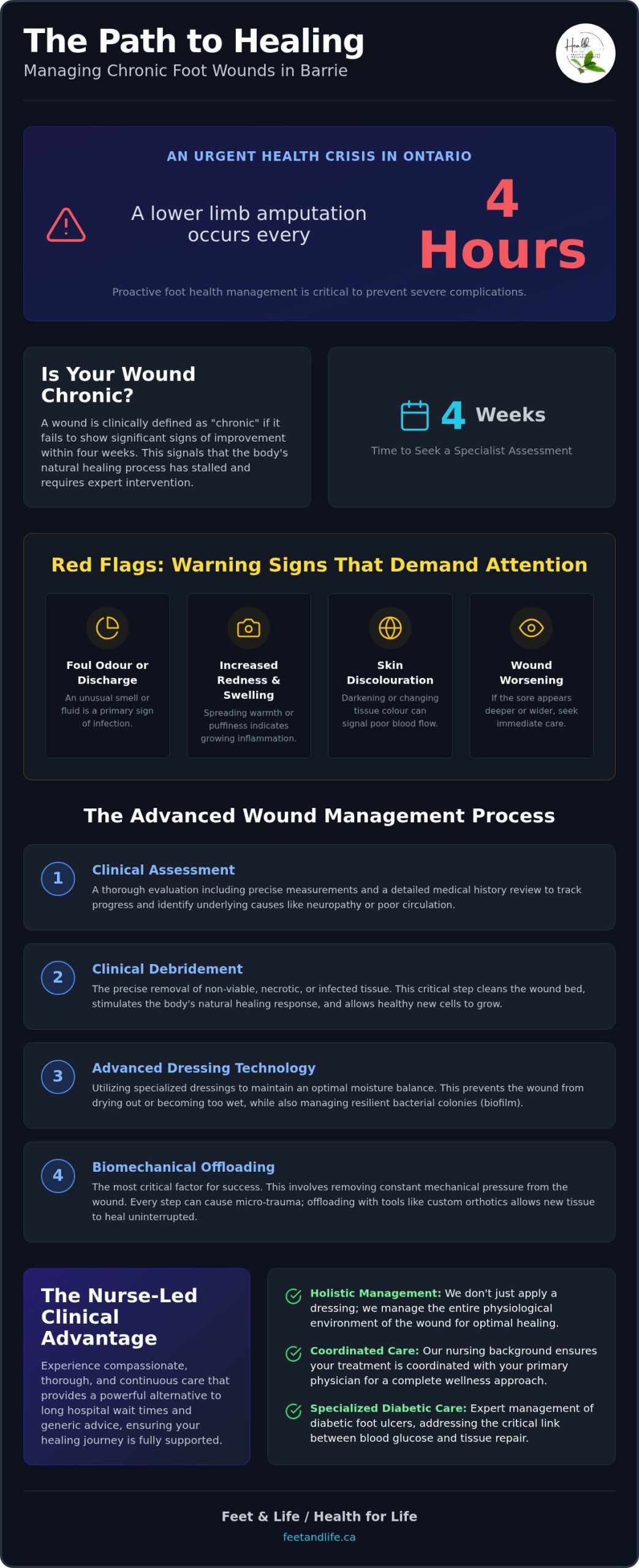
In Ontario, a lower limb amputation occurs every four hours, a statistic that underscores the critical nature of proactive foot health. If you’re managing a non-healing ulcer or a persistent sore, you already know the anxiety that comes with every dressing change. Finding a specialized foot wound clinic in Barrie shouldn’t feel like another hurdle in your recovery. You need a dedicated space where clinical expertise meets compassionate, nurse-led care to prevent complications before they escalate.
It’s exhausting to deal with the pain of limited mobility or the uncertainty of whether your wound is actually improving. We understand that hospital wait times are long and generic advice often leaves you feeling unsupported at home. This article explains how advanced wound management and specialized nursing care can stimulate visible healing within weeks. We’ll examine how our team identifies underlying causes like neuropathy and uses biomechanical offloading to help you regain your independence and peace of mind.
Key Takeaways
- Learn to identify chronic wounds and why any lesion failing to improve within four weeks requires an expert assessment at a foot wound clinic in Barrie.
- Understand how clinical debridement and advanced dressing technologies work together to remove non-viable tissue and stimulate faster healing.
- Discover the critical relationship between blood glucose levels and tissue repair, emphasizing the need for specialized care for diabetic foot ulcers.
- Gain insight into the diagnostic process, where precise measurements and medical history reviews help practitioners track your healing progress.
- Realize the advantages of nurse-led clinical care as a compassionate, thorough alternative to the long wait times often found in general hospital settings.
Understanding Chronic Foot Wounds and When to Visit a Barrie Clinic
A foot wound is clinically defined as chronic if it fails to show significant signs of improvement within four weeks of its initial appearance. Unlike a minor scrape that heals on its own, these persistent lesions require the structured intervention of a foot wound clinic Barrie residents can trust for long-term recovery. Chronic wounds often signal that the body’s natural repair mechanisms are stalled, usually due to underlying vascular issues or systemic health conditions.
One of the most concerning barriers to healing is neuropathy. This nerve damage effectively silences the body’s alarm system, making it impossible to feel the pain that usually accompanies an injury. You might walk on a small cut or blister for days without realizing it, allowing it to progress into a serious Diabetic foot ulcer. By the time the damage becomes visible, the risk of infection has increased substantially. Our clinic focuses on identifying these “silent” dangers early to prevent the escalation of tissue damage.
We manage a variety of lower limb concerns, including venous ulcers caused by poor circulation and pressure sores. It’s vital to monitor your feet daily and seek professional help if you notice any of these red flags:
- A foul odour or unusual discharge from the wound.
- Increasing redness, swelling, or warmth in the surrounding skin.
- Darkening of the tissue or skin discolouration.
- A wound that appears to be getting deeper or wider over time.
The Role of the Foot Care Nurse in Wound Healing
Nurse-led care provides a level of clinical continuity that standard foot care services cannot match. We don’t just apply a dressing; we manage the entire physiological environment of the wound. This involves performing debridement to remove dead tissue and monitoring for subtle signs of infection. If you’re searching for a diabetic wound care specialist in Barrie, our nursing background ensures your care is coordinated with your primary physician for a truly holistic approach to wellness.
Local Environmental Factors in Simcoe County
Barrie’s seasonal climate plays a significant role in skin health. Our damp, cold winters can lead to dry, cracked skin that serves as an entry point for bacteria, while humid summers can complicate moisture balance in existing wounds. Residents across the Barrie and Innisfil region need to be particularly mindful of footwear choices. Properly fitted shoes are essential for preventing the friction and pressure that lead to ulceration in high-risk feet. Accessing specialized care at a local foot wound clinic Barrie facility ensures you receive advice tailored to our specific regional environment.
Advanced Wound Management: Accelerating the Healing Process
Effective healing at a professional foot wound clinic Barrie residents rely on requires moving beyond basic first aid. We utilize a structured approach that addresses the biological barriers to recovery. One of the most critical steps in this process is clinical debridement. This involves the precise removal of non-viable, necrotic, or infected tissue from the wound bed. By clearing away this debris, we stimulate the body’s natural inflammatory response and create a clean environment where new, healthy cells can finally thrive.
Once the wound is prepared, selecting the appropriate environment is essential. We utilize Advanced wound healing products to maintain an optimal moisture balance. A wound that is too dry will stall, as cells cannot migrate across the surface, while a wound that is too wet leads to maceration, where the surrounding healthy skin breaks down. Our nursing team carefully monitors for signs of biofilm, which are resilient bacterial colonies that can prevent healing even when no obvious signs of infection are present.
The most significant secret to successful recovery is “offloading.” Even the most advanced clinical treatments will fail if the wound is subjected to constant mechanical pressure. Every step you take on an active ulcer causes microscopic trauma that destroys new tissue. We focus on removing this physical stress to allow the healing process to remain uninterrupted. If you are struggling with a persistent sore, our wound care services can provide the specialized relief your feet need to recover.
Custom Orthotics as a Wound Healing Tool
We often integrate custom orthotics in Barrie into our wound management plans. These are not just for comfort; they are precision-engineered medical devices designed to redistribute weight away from vulnerable areas. Through a detailed biomechanical assessment, we identify the specific high-pressure points that caused the initial skin breakdown. By using orthotic inserts to shift your weight, we ensure that the ulcerated area is protected during every stage of your recovery.
Fungal Laser Therapy and Skin Health
Maintaining the integrity of the surrounding skin is just as important as treating the wound itself. Fungal infections can weaken the skin barrier, making it brittle and prone to secondary ulcerations. For high-risk patients, we may recommend fungal nail laser treatment in Barrie. This non-invasive technology helps clear underlying infections that could otherwise lead to skin cracks or systemic complications, ensuring your overall foot health is fortified against future wounds.
Diabetic Foot Ulcers: Specialized Care for High-Risk Patients
Managing diabetes requires a high level of vigilance, especially when it comes to the health of your feet. Approximately 11% of Canadians have been diagnosed with diabetes, and for this population, a small blister can quickly escalate into a life-altering complication. Seeking a specialized diabetic wound care specialist in Barrie is essential because these wounds are biologically different from standard injuries. High blood glucose levels can stiffen the arteries and narrow the blood vessels, which directly impairs the body’s ability to deliver oxygen and nutrients to the site of an injury. This restricted flow stalls the tissue repair process and leaves the wound vulnerable to infection.
At our foot wound clinic Barrie facility, we prioritize preventative checks to stop minor issues from becoming major health crises. We teach patients and their families that daily foot inspections are the first line of defence. Using a mirror to check the soles of the feet or checking between the toes for moisture and redness can reveal early warning signs. We also focus on hygiene and skin integrity, ensuring that the skin remains supple enough to resist cracking but dry enough to prevent fungal growth.
Neuropathy and the Loss of Protective Sensation
Peripheral neuropathy is a common complication that effectively silences the body’s natural alarm system. When you lose protective sensation, you might not feel a stone in your shoe or a burn from hot water, leading to injuries that go unnoticed for days. We use clinical monofilament testing to precisely map areas of sensation loss. To stay safe, we recommend that patients with neuropathy never walk barefoot, even indoors, and always inspect the interior of their footwear for debris before putting them on.
Vascular Health and Circulation in the Lower Limbs
Healing cannot occur without a robust blood supply. During our clinical assessments, we evaluate the vascular health of your lower limbs to ensure the wound bed is properly nourished. If we detect signs of significant arterial insufficiency, such as skin that feels cold to the touch or a lack of pedal pulses, we coordinate with vascular specialists for further investigation. For patients with manageable circulatory issues, we provide guidance on non-invasive ways to support blood flow, such as gentle movement and proper limb positioning, to keep the recovery process moving forward.
What to Expect During Your Clinical Wound Assessment
Your first visit to our foot wound clinic Barrie facility is designed to be both thorough and transparent. We begin with an initial consultation that goes far beyond a simple visual inspection. Our practitioners conduct a deep dive into your medical history, examining factors like systemic health conditions, previous injuries, and your current activity levels. Understanding how your wound has progressed over time allows us to identify why the natural healing process has stalled and what specific interventions are required to restart it.
Precision is a cornerstone of our clinical approach. We utilize diagnostic measurement techniques to track wound size, depth, and the health of the wound bed with absolute accuracy. By recording these metrics at every visit, we can provide you with tangible evidence of recovery. Once the assessment is complete, we develop a structured treatment plan. This roadmap sets realistic goals and timelines for closure, ensuring you understand exactly what to expect during each stage of your journey toward health. If you are ready to begin this process, you can book your assessment today.
Empowerment is an essential part of our care model. Healing continues between clinic visits, so we provide comprehensive home care training. We ensure you or your family members feel confident managing dressing changes and recognize the subtle signs of improvement. This education reduces the risk of accidental setbacks and gives you the tools to take an active role in your own recovery.
A Compassionate Nursing Approach
We recognize that chronic wounds often bring a high level of anxiety, especially regarding the fear of infection or limited mobility. Our clinic is designed to be a calm, reassuring environment where your comfort is the priority. We take the time to listen to your concerns, ensuring your voice is heard throughout the process. By explaining every step of the treatment and addressing pain management directly, we help lower the stress often associated with clinical wound care.
Follow-Up and Ongoing Monitoring
Consistency is the most vital factor in successful wound management. We establish a regular schedule for clinical dressing changes and debridement to ensure the wound environment remains optimal. Our team is highly responsive; if the wound’s appearance changes, we adjust the treatment plan immediately to stay on track. As your tissue repairs and the wound closes, we transition your care toward long-term prevention. This often involves a medical foot health consultation in Barrie to establish a maintenance routine that keeps your feet resilient and healthy for years to come.
Why Choose Feet & Life for Wound Management in Barrie
Choosing the right provider for complex lower limb care is a decision that profoundly impacts your long-term mobility and quality of life. At Feet & Life, we’ve established a foot wound clinic Barrie residents can rely on for specialized, nurse-led interventions that prioritize clinical excellence. Our practice is rooted in non-invasive medical standards; we focus on stimulating the body’s natural healing abilities while avoiding the impersonal feel of a large institutional setting. We treat you as an individual with unique goals. Whether your priority is walking to the local park or simply managing daily life without the constant fear of infection, our care is tailored to your specific health needs.
Our clinical expertise extends across a wide spectrum of lower limb health. We provide essential foot care for seniors, helping our older community members in Simcoe County maintain their independence through meticulous skin and nail management. By addressing issues like fungal infections or callous buildup early, we prevent the skin breakdown that often leads to chronic ulceration. This proactive philosophy distinguishes our practitioner-led approach from reactive, emergency-based care. We believe that every patient deserves a dedicated guide who understands the intersection of medical necessity and personal wellness.
A Local Pillar of Foot Health
Located in the heart of the city, we serve as a central health resource for residents in Barrie, Innisfil, and Orillia. We’re proud to be a dedicated part of the local healthcare network, offering a professional yet welcoming atmosphere that prioritizes patient comfort. Our team is committed to helping you return to the regional activities you love. We realize that a chronic wound can feel like a barrier to your lifestyle, and we work methodically to remove that obstacle. Our clinic is designed to be accessible and supportive, ensuring that high-quality medical foot care is available right here in our community.
Booking Your Wound Care Appointment
Starting your recovery process is straightforward and stress-free. We don’t require a physician’s referral to begin your treatment, which means you can access expert management without the long wait times often associated with general hospitals. When you prepare for your initial consultation, please bring a current list of your medications and any details regarding previous wound treatments. This information is vital; it helps us build a comprehensive clinical picture from your very first visit. Taking this first step toward professional healing is the most effective way to improve your quality of life and protect your long-term health. Reach out to our team to schedule your assessment and begin your path to recovery today.
Regain Your Quality of Life Through Specialized Care
Managing a chronic foot wound requires a clinical strategy that addresses the biological barriers to recovery. By prioritizing professional debridement, moisture balance, and biomechanical offloading, you can move past the cycle of non-healing ulcers. Our nurse-led clinical expertise ensures that every assessment is performed with meticulous attention to medical standards. At our foot wound clinic Barrie residents find a dedicated partner in recovery who understands the complexities of diabetic neuropathy and vascular health.
We specialize in non-invasive wound management designed to restore your mobility and peace of mind. Serving Barrie and Simcoe County, we’re committed to providing a compassionate, thorough alternative to crowded hospital environments. You don’t have to navigate the fear of infection alone. Professional care is available to help you regain your independence and return to the activities you enjoy. Taking the first step toward clinical intervention is the most effective way to protect your long-term health.
Book Your Professional Wound Assessment at Feet & Life Today
Frequently Asked Questions
How do I know if my foot wound is infected and needs a clinic?
You should look for increased redness, warmth, swelling, or a foul odour around the site. If you notice pus or if the pain is worsening despite rest, these are clear indicators of infection. Fever or chills suggest the issue is becoming systemic. A specialized foot wound clinic Barrie facility can assess these symptoms using clinical standards to prevent the infection from spreading to the bone or bloodstream. Early intervention is essential for recovery.
Why is my diabetic foot ulcer not healing after several weeks?
High blood sugar levels often cause poor circulation and nerve damage, which prevents essential nutrients from reaching the wound site. This biological stall is common in diabetic patients because the body’s natural inflammatory response is impaired. Additionally, hidden pressure from walking can constantly re-injure the delicate new tissue. Professional management focuses on stabilizing these factors through clinical debridement and offloading techniques to restart the healing process effectively and safely.
Do I need a doctor’s referral to visit the foot wound clinic in Barrie?
No, you don’t need a physician’s referral to access our specialized services. You can book an appointment directly with our practitioners to begin your treatment plan. This direct access helps you avoid the long wait times often found in general hospital environments. While we don’t require a referral, we’re happy to coordinate your care with your primary care physician to ensure a holistic approach to your long-term health and wellness.
What is the best way to clean a foot wound at home before my appointment?
Gently flush the area with sterile saline or clean, lukewarm tap water to remove surface debris. Avoid using harsh chemicals like hydrogen peroxide or rubbing alcohol, as these can actually damage healthy cells and delay healing. Pat the surrounding skin dry with a clean cloth, but leave the wound bed itself moist. Cover the area with a clean, non-stick bandage until your clinical assessment to protect it from further contamination or friction.
Can custom orthotics really help a foot wound heal faster?
Yes, custom orthotics are a powerful tool for healing because they redistribute weight away from active ulcers. By shifting pressure to healthier parts of the foot, these devices allow the wound bed to repair itself without being crushed by the force of your steps. This process, known as offloading, is often the missing piece in chronic wound management. Our in-house assessments ensure your orthotics provide the precise support needed for your specific biomechanical needs.
Is wound care covered by my private health insurance in Ontario?
Many private health insurance plans in Ontario provide coverage for medical foot care and wound management services. While OHIP doesn’t typically cover routine care in private clinics, most extended health benefits through employers include these treatments. We recommend checking your specific policy details for “chiropody” or “nursing foot care” coverage. Our staff can provide the detailed receipts and documentation you’ll need to submit your claim for reimbursement after your clinical visit.
What happens if a foot wound is left untreated?
An untreated foot wound can lead to severe complications, including deep-tissue infections, cellulitis, or osteomyelitis. In high-risk patients, especially those with diabetes, a neglected sore can progress rapidly toward gangrene. This often results in the need for invasive interventions or even amputation. Seeking care at a foot wound clinic Barrie location early ensures that minor lesions are managed professionally before they become life-threatening or permanently affect your mobility and independence.
How often will I need to visit the clinic for wound management?
The frequency of your visits depends on the severity and type of the wound. Most patients require weekly or bi-weekly appointments during the initial stages of treatment to ensure proper debridement and dressing changes. As the wound shows visible signs of closure and stability, we may extend the time between visits. We constantly monitor your progress and adjust the schedule to match the biological needs of your healing tissue for the best outcome.