
A thickened toenail, a small crack in a heel, or a new area of redness may seem minor. For a long-term-care resident with diabetes, poor circulation, neuropathy, or limited mobility, those changes can become painful, infected, and much harder to treat. Long term care foot services provide regular clinical attention to concerns that residents may not see, feel, communicate, or safely manage on their own.
Foot health is closely tied to comfort, confidence, and independence. When feet hurt, walking becomes more difficult. When walking becomes difficult, a resident may move less, become less steady, and face a greater risk of falls and loss of mobility. Consistent professional foot care helps protect skin integrity, reduce avoidable discomfort, and identify concerns early, when treatment is often simpler.
Why long term care foot services matter
Residents in long-term care often have several factors that make routine foot care more complex. Arthritis can limit reach and hand strength. Vision changes may make it hard to notice a sore or safely trim nails. Dementia, stroke-related limitations, Parkinson’s disease, and reduced sensation can affect a person’s ability to communicate pain or complete self-care.
Diabetes and vascular disease add another layer of risk. Peripheral neuropathy can reduce feeling in the feet, meaning a resident may not notice pressure from a shoe, a cut from a nail edge, or a blister developing on the heel. Reduced circulation can slow healing and make infections more serious. A wound that begins as a small skin break can progress quickly if pressure, moisture, swelling, or infection are not addressed.
Regular foot care is not simply a matter of keeping nails neat. It is preventive clinical support. It creates opportunities to assess the condition of the skin, nails, circulation, sensation, swelling, footwear, and areas exposed to pressure. Just as importantly, it helps residents remain comfortable enough to participate in daily life.
What professional foot care includes
The right care plan depends on the resident’s health history, mobility, medication use, skin condition, and current risks. Some residents need routine maintenance; others require more frequent monitoring because of diabetes, previous wounds, severe nail changes, or compromised circulation.
Nail and skin care delivered safely
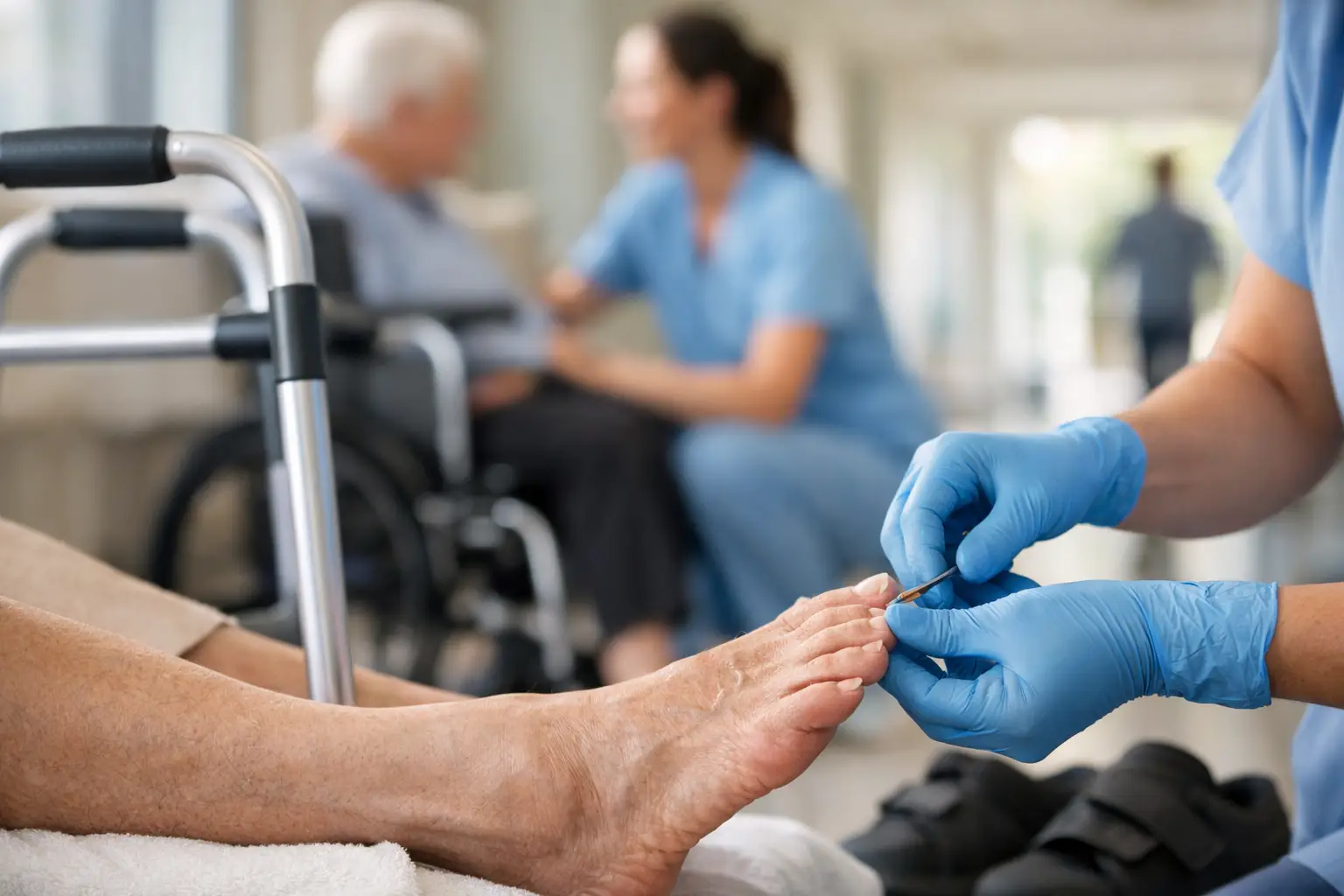
Thick, curved, fungal, or brittle nails can cause significant pain in footwear and may create pressure on neighbouring toes. Professional trimming and reduction can improve comfort while reducing the chance of accidental cuts from self-treatment. This is particularly valuable for residents taking blood thinners or living with diabetes, where even a small injury deserves careful attention.
Dry skin, calluses, corns, and cracked heels also need more than cosmetic attention. Thick callus can hide pressure beneath the skin, while deep heel fissures can create an entry point for bacteria. Care may include safe reduction of excessive hard skin, advice on appropriate moisturization, and strategies to reduce the pressure or friction causing the problem.
Assessment for wounds, infection, and circulation concerns
A foot-care appointment is an opportunity to look beyond the nail plate. Changes in colour, temperature, swelling, drainage, odour, new pain, or skin breakdown can signal a concern requiring prompt action. Even when a resident does not report pain, the clinician can look for signs that neuropathy or cognitive changes may be masking a problem.
Early identification matters because treatment pathways differ. A pressure-related sore needs pressure relief. A suspected fungal condition needs appropriate management. A wound with signs of infection may require timely medical assessment. Swelling may be related to venous circulation, heart health, medication, or inactivity, and should not be treated as a foot-care issue alone.
Support for footwear, pressure, and mobility
Shoes that are too tight, too loose, worn down, or difficult to put on can contribute to skin injury and instability. Foot shape can also change over time because of swelling, arthritis, bunions, toe deformities, or reduced muscle control. A practical footwear review can identify rubbing points, inadequate depth, poor support, or soles that increase fall risk.
For some residents, custom orthotics, accommodative devices, or compression therapy may be considered as part of a broader care plan. These options are not one-size-fits-all. Compression, for example, can support venous circulation and help manage certain types of swelling, but it must be selected carefully when arterial circulation is reduced. Clinical assessment comes before a product recommendation.
A proactive approach reduces avoidable setbacks
Waiting until a resident has severe pain is rarely the best plan. In long-term care, changes can occur between routine bathing, dressing, and mobility support. Staff members and family often notice clues first: reluctance to walk, a change in gait, refusal to wear shoes, repeated touching of a foot, or increased agitation during transfers.
These behaviours should be taken seriously, especially when a resident cannot clearly describe what is wrong. Foot pain can present as reduced participation, disturbed sleep, or a sudden decline in mobility rather than a direct complaint. Timely assessment can clarify whether the cause is a nail issue, a skin lesion, swelling, a wound, poorly fitting footwear, or a lower-limb condition needing further medical attention.
A proactive schedule also supports continuity. Tracking recurring pressure areas, nail changes, fungal concerns, and skin integrity over time makes it easier to spot meaningful changes. It allows care to be adjusted before a minor concern disrupts mobility or requires more intensive treatment.
When a resident needs more urgent attention
Routine care supports prevention, but certain changes should not wait for the next scheduled visit. New wounds, bleeding, spreading redness, warmth, pus or drainage, a foul odour, sudden swelling, a blackened area of skin, or a foot that becomes unusually cold or pale require prompt clinical attention.
The same is true when a resident with diabetes develops a blister, cut, ingrown nail, or unexplained change in skin colour. Diabetes-related foot complications can progress with little pain, particularly when neuropathy is present. Early assessment may help prevent an ulcer, infection, hospitalization, or more serious limb complication.
Families can also advocate by asking whether the resident’s feet are being checked regularly and whether there is a plan for managing known risks. This is not about adding unnecessary appointments. It is about matching care frequency to the individual’s health needs and protecting the ability to stand, transfer, and walk safely.
Building foot care into whole-person care
The strongest long-term-care approach connects foot care with nursing observation, mobility support, medical follow-up, nutrition, hydration, skin care, and fall prevention. A resident’s feet do not exist separately from their circulation, blood glucose management, medication profile, footwear, or daily activity level.
At Feet & Life, nursing-informed foot care focuses on both immediate comfort and the factors that can affect long-term lower-limb health. For long-term-care homes, ongoing professional visits can help create a dependable rhythm of assessment, maintenance, documentation, and early intervention for residents who need it most.
Comfortable feet may not sound like a major clinical outcome, but they can shape a resident’s entire day. Regular, individualized care helps make every step, transfer, and moment of movement feel safer and more possible.