
A small blister, crack in the heel, or spot of redness can become serious faster than many people expect when diabetes affects feeling and circulation in the feet. Diabetic foot ulcer prevention is not about being fearful of every mark. It is about noticing changes early, reducing pressure and friction, and getting skilled care before a minor concern becomes a wound that limits mobility.
For people living with diabetes, protecting the feet is part of protecting independence. Nerve damage can make an injury painless, while reduced blood flow can slow the body’s ability to heal. That combination is why a wound may progress without causing the discomfort that would normally prompt someone to seek help.
Why diabetic foot ulcers can develop quietly
A diabetic foot ulcer is an open sore, usually on the bottom of the foot, toes, heel, or side of the foot. It often begins where repeated pressure, rubbing, dry skin, or a small injury damages tissue. Shoes that fit poorly, a callus that builds up over a pressure point, or walking on an object inside a shoe can all create the first break in the skin.
Peripheral neuropathy is a major concern. It may cause numbness, tingling, burning, or altered sensation, but some people have very little warning at all. If you cannot reliably feel pain, heat, a rough seam, or a pebble in your shoe, your feet need a more deliberate daily care routine.
Circulation also matters. Diabetes can affect blood vessels, and some people have additional risk factors such as smoking, kidney disease, high blood pressure, or peripheral arterial disease. When blood flow is reduced, the skin and deeper tissues may not receive the oxygen and nutrients needed for efficient healing.
An ulcer is not simply a skin problem. Once the protective barrier is broken, bacteria can enter. Infection may spread into deeper tissue or bone, particularly if treatment is delayed. Early assessment is the safer, less disruptive path.
Daily diabetic foot ulcer prevention starts at home
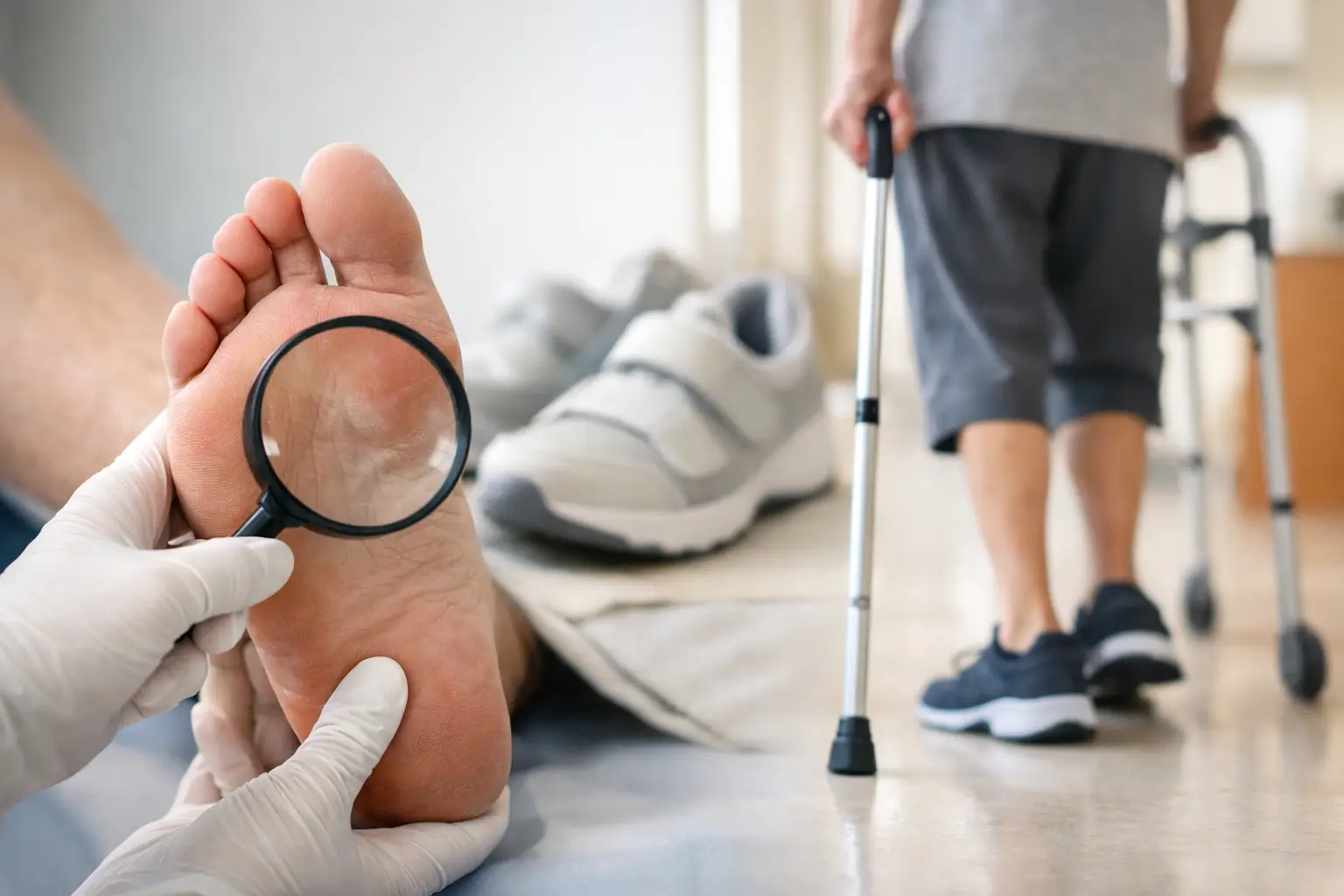
The most valuable habit is a daily foot check. Choose a consistent time, such as after bathing or before bed. Look at the tops, soles, heels, between the toes, and around the nails. A hand mirror can help with the bottom of the feet, or a family member or caregiver can assist if vision, balance, flexibility, or hand strength makes self-checks difficult.
Look for redness, swelling, cracks, blisters, cuts, drainage, discolouration, corns, calluses, or areas that feel warmer than the surrounding skin. Also pay attention to a new odour, dampness in a sock, or an unexplained mark on footwear. These details can be early signals of pressure or skin breakdown.
Wash feet daily with lukewarm water and mild soap, then dry carefully, especially between the toes. Test the water with an elbow or thermometer if sensation is reduced, since hot water can cause a burn without being felt. Moisturizer can help prevent dry, cracked skin, but it should not be applied between the toes, where excess moisture can encourage skin breakdown.
Avoid treating corns, calluses, ingrown nails, or thick nails with blades, sharp tools, or over-the-counter chemical products unless a qualified foot-care professional has specifically advised it. A small cut during self-treatment can become a significant concern when healing is impaired.
Footwear is part of treatment, not just comfort
Shoes should protect the foot without creating pressure points. Check inside every shoe before putting it on. Feel for seams, worn linings, loose insoles, or objects that could rub against the skin. Wear clean, dry socks without tight elastic bands or bulky seams, and avoid walking barefoot indoors or outdoors.
The right footwear varies from person to person. Someone with reduced sensation, foot deformity, recurring calluses, arthritis, or a previous ulcer may need more than a wider shoe. Custom orthotics, accommodative insoles, or specialized footwear may be recommended to redistribute pressure and support safer walking.
New shoes should be introduced gradually. A shoe that feels fine in the store can still create rubbing after several hours of walking or standing. Check your feet after wearing new footwear and stop using any pair that causes redness, tenderness, or skin changes.
Know when a callus is more than a callus
Calluses are often treated as a cosmetic issue, but in diabetic foot care they can be a warning sign. They commonly develop where the foot is carrying too much pressure. Underneath a thick callus, the skin can break down without being visible from the surface.
A clinician can safely reduce problematic callus buildup and assess why it is forming. The solution may involve footwear changes, orthotic support, gait adjustments, or regular maintenance. Removing the callus alone may offer temporary relief, but reducing the pressure that caused it is what helps protect the skin over time.
This is especially relevant for people with hammertoes, bunions, prominent joints, collapsed arches, limited ankle motion, or changes in walking after a stroke or injury. Biomechanics affect where pressure lands with every step. A personalized plan is often more effective than a one-size-fits-all shoe recommendation.
When to seek professional care quickly
Do not wait for a foot concern to become painful. Contact a qualified healthcare provider promptly if you notice a new wound, blister, crack, drainage, redness, swelling, black or blue discolouration, increased warmth, or a change in skin colour. A wound that is not improving within a day or two also deserves assessment, particularly if you have neuropathy or circulation concerns.
Seek urgent medical attention for fever, chills, spreading redness, pus, a foul odour, severe swelling, a rapidly changing wound, or a foot that becomes cold, pale, blue, or black. These can be signs of infection or impaired circulation that require timely medical treatment.
Regular professional foot care is also preventive care. During an assessment, a trained provider can check skin integrity, nail health, circulation indicators, sensation, pressure areas, footwear, and changes in foot shape. For people who cannot safely manage their own nails or daily foot checks, ongoing appointments can reduce the risk of accidental injury and missed warning signs.
Blood sugar, circulation, and healing work together
Foot care does not sit apart from diabetes management. Keeping blood glucose within the targets set by your healthcare team supports wound healing and may help reduce complications over time. Managing blood pressure and cholesterol, staying active within your abilities, eating regularly, and avoiding tobacco all contribute to vascular health.
Activity remains valuable, but it may need adjustment if there is an active wound, new redness, or a high-pressure area. Continuing to walk on an ulcer can deepen tissue damage, even when it does not hurt. In those situations, offloading pressure through appropriate footwear, padding, mobility modifications, or a clinician-directed device can be essential.
There is no single prevention routine that fits every person with diabetes. Someone with normal sensation and healthy circulation may need straightforward daily habits and annual foot screening. Someone with neuropathy, poor circulation, kidney disease, a foot deformity, or a history of ulceration needs closer monitoring and a more structured care plan.
A practical care plan for long-term protection
A useful plan is simple enough to follow consistently: inspect your feet each day, wear protective footwear, keep skin clean and moisturized appropriately, and arrange regular professional assessments based on your risk level. Keep a record of recurring trouble spots, the shoes that cause rubbing, and any changes in sensation. This information helps guide more personalized treatment.
At Feet & Life in Barrie, diabetic foot care can include professional nail and skin care, callus management, wound-focused support, footwear and orthotic guidance, and education shaped around your mobility, circulation, and ability to manage care safely at home. For family caregivers and long-term-care residents, consistent observation and timely reporting of changes are equally important parts of prevention.
Your feet carry you through ordinary routines that matter deeply: preparing meals, visiting friends, working, exercising, and staying connected to your community. A daily check and an early appointment for a small change can help keep those routines within reach.