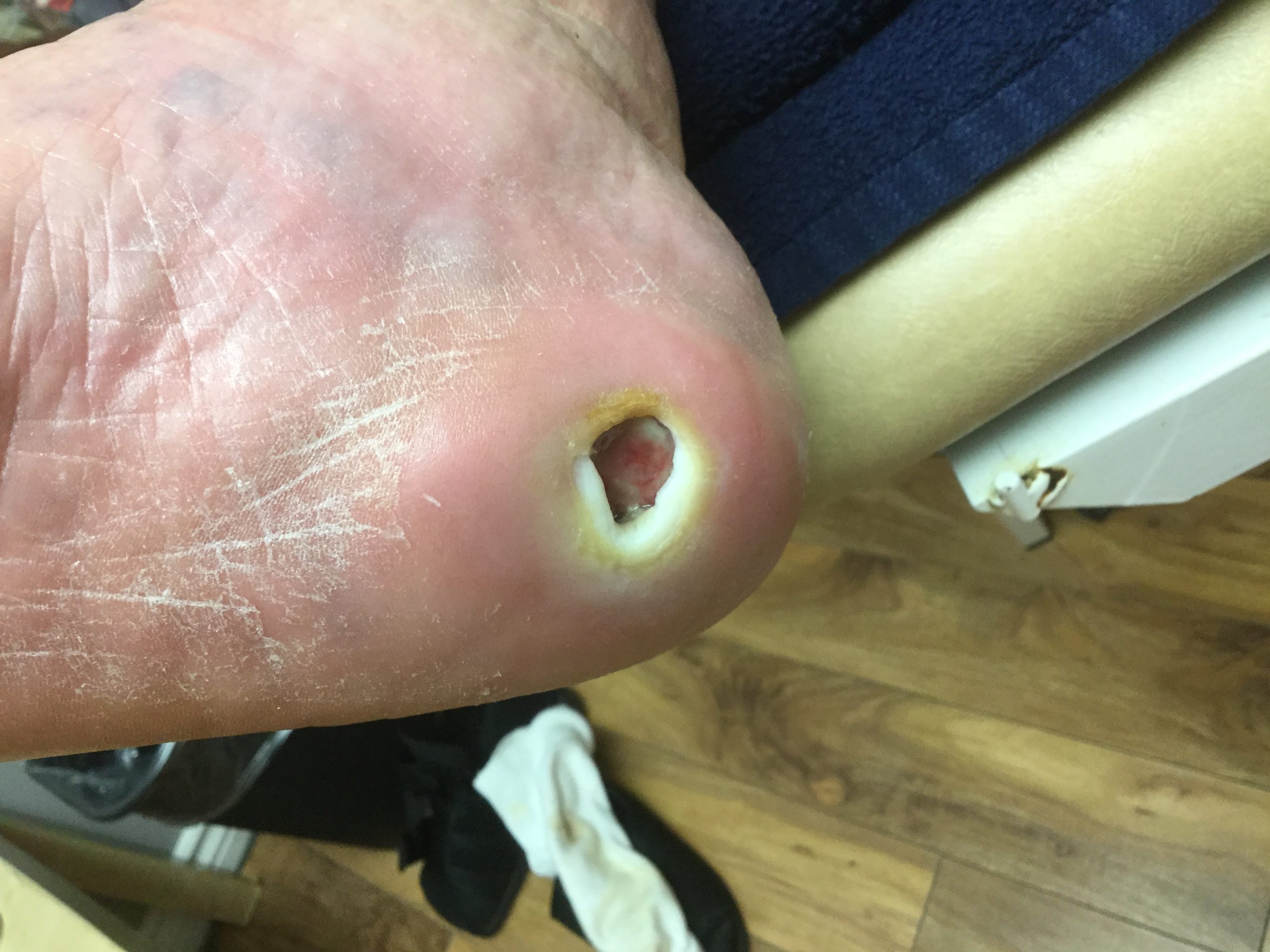
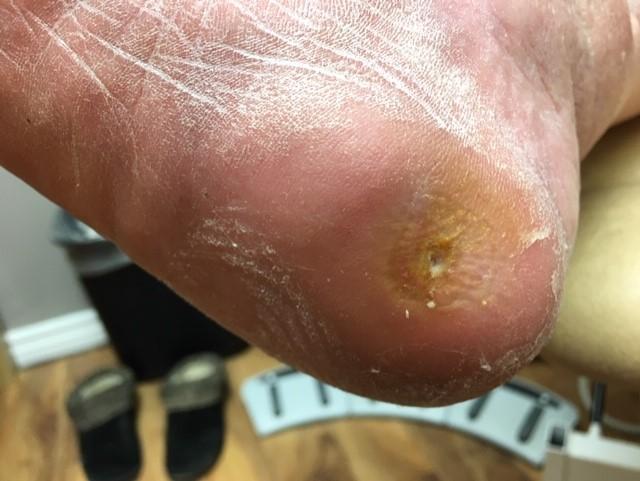
This may include: Autoimmune diseases, circulatory impairment, diabetes that can affect the sensory, autonomic and motor nerves in the lower extremities, causing loss of protective sensation, changes to bone placements, and a reduction in the function of organs which aid in improving skin integrity. This can create negative effects such as the inability notice when your feet are injured, changes to the shape of feet causing excessive pressure areas, and a decrease in the natural production of sweat glands that hydrate the tissues and skin, causing them to become dry and more likely to crack and form calluses. A small skin problem such as a callus, corn, fissure and blister has the potential to turn into a larger sore, referred to as a foot ulcer. Due to a decrease in microvascular circulation related to excessive elevation of blood sugars in diabetics or those with peripheral vascular disease (PVD/PAD) have decreased poor ability for the bodies own natural antibodies to reach the affected area through blood circulation causing a potential infection to set in. Wounds will not heal if infected. Foot ulcers form most often on the pad (ball) of the foot or the bottom of the big toe and the heel and other other locations. Typically, over bony prominences and high areas of pressure. If toe deformities are present, such as hammer toes, claw toes, or bunions, the potential to develop a wound is possible if not offloaded and protected.