

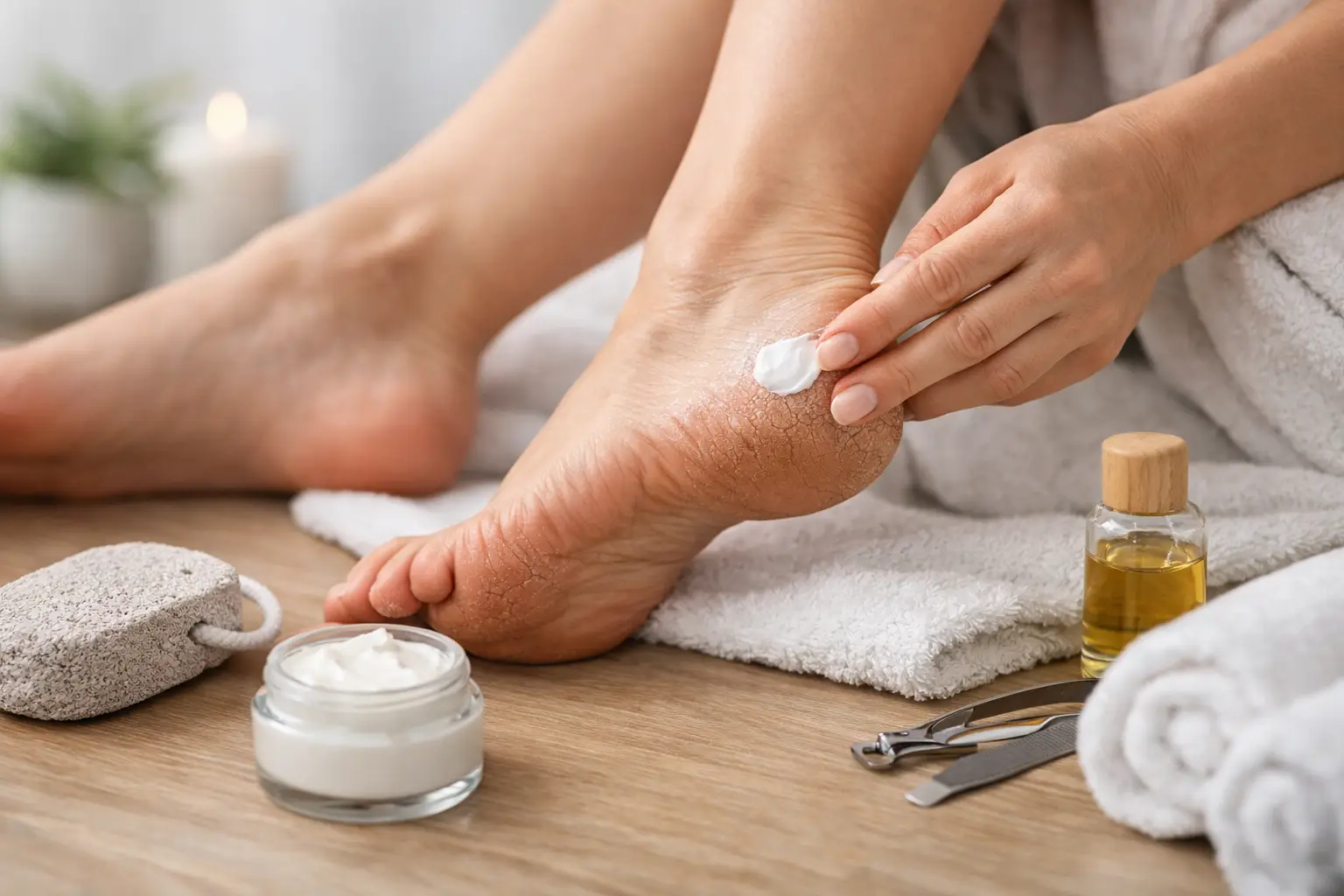
A heel crack can begin as a dry, rough edge that catches on socks. Left alone, it can deepen into a painful split that stings with every step, bleeds, or creates an opening for infection. Knowing how to treat cracked heels safely means softening and protecting the skin while paying attention to the health factors that can make healing slower.
For many people, dry heels are manageable with consistent care. For others – particularly those living with diabetes, neuropathy, poor circulation, swelling, arthritis, or limited mobility – a cracked heel needs professional attention early. Feet are the foundation of comfort and independence, and even a small skin break deserves respect.
Why heels crack in the first place
The skin around the heel is naturally thick because it absorbs pressure every time you stand and walk. When that skin becomes dry and loses flexibility, it cannot expand comfortably under body weight. Callus builds at the outer edge of the heel, then splits when pressure pulls the hardened skin apart.
Cold Canadian winters, dry indoor heat, open-back footwear, long showers, harsh soaps, and standing for long periods can all contribute. So can footwear that allows the heel to spread outward with each step. People who are active at work, carry extra weight, or spend many hours on hard surfaces often notice cracking more often.
There may also be an underlying health factor. Diabetes can affect skin hydration, sensation, circulation, and healing. Peripheral neuropathy may reduce the ability to feel a developing crack or minor injury. Leg swelling, venous circulation concerns, thyroid conditions, eczema, psoriasis, and fungal skin infections can also affect the skin’s integrity. Treating the visible crack without considering these contributors can lead to the same problem returning.
How to treat cracked heels with a safe routine
The most effective home approach is gentle, regular, and realistic. Trying to remove a thick callus all at once can cause injury, especially if the skin is already split.
Soften, then gently reduce thick skin
After a brief warm shower or foot soak, pat your feet dry thoroughly, including between the toes. If the heel skin is intact and you can safely feel and reach your feet, use a clean foot file or pumice stone with light pressure to reduce only the loose, hardened surface. Stop if there is pain, redness, bleeding, or tenderness.
Do not use razors, blades, corn cutters, or aggressive electric tools on your heels. These can remove healthy skin, create a wound, and increase infection risk. Avoid filing an open fissure. If you have diabetes, neuropathy, poor circulation, a history of foot ulcers, or impaired vision, skip home filing altogether and arrange professional foot care.
Moisturize with the right type of product
A light lotion may feel pleasant but is often not enough for deeply dry heel skin. Look for a foot cream formulated with urea, lactic acid, or other ingredients that soften thickened skin while supporting hydration. Apply it to the heels and dry areas of the foot after bathing and again before bed if needed.
At night, a richer heel balm or ointment can be especially helpful. Covering moisturized heels with clean cotton socks may reduce moisture loss and keep product off your bedding. Do not apply heavy creams between the toes, where trapped moisture can encourage skin breakdown or fungal growth.
Consistency matters more than using a large amount once. A daily routine for two to four weeks often produces better results than occasional intensive treatments.
Protect the crack while it heals
A shallow crack may improve with moisture and reduced pressure. If a fissure is painful, protect it from friction with a suitable heel sleeve, cushioned heel cup, or dressing recommended by a foot-care professional. The goal is to keep the skin edges from pulling apart when you walk.
Choose supportive, closed-back shoes with enough room at the heel. Footwear with a secure heel counter helps limit side-to-side spreading of the heel pad. Thin sandals, worn-out shoes, and backless slippers may aggravate cracking because they provide little cushioning or containment.
If your work keeps you on your feet all day, changing into supportive footwear indoors and taking brief sitting breaks can reduce repetitive heel pressure. This is not simply a comfort measure. Reducing pressure gives damaged skin a better chance to close.
Keep the surrounding skin healthy
Wash feet gently, dry them well, and inspect the heels daily. Look for new redness, warmth, drainage, swelling, odour, or a crack that is becoming deeper. If peeling, itching, or scaling extends across the sole or between the toes, a fungal skin infection may be involved. In that case, moisturizers alone may not resolve the problem and an appropriate treatment plan is needed.
Avoid walking barefoot, particularly outdoors or in communal pool and locker-room areas. A dry crack is vulnerable skin, and even a small cut or contaminant can complicate healing.
When home care is not enough
A heel fissure should be assessed promptly if it is deep, bleeding, draining fluid, increasingly painful, red, warm, swollen, or surrounded by discoloured skin. These can be signs of infection or tissue damage. Fever or feeling unwell alongside a foot wound requires urgent medical assessment.
People with diabetes should treat any crack, blister, cut, or colour change on the foot as a reason to contact a qualified healthcare provider. Reduced sensation can make a wound appear less serious than it is, while reduced circulation can delay healing. The same caution applies to people with peripheral arterial disease, neuropathy, immune suppression, kidney disease, or a previous ulcer or amputation.
It is also time for help when heel cracks keep returning despite good moisturizing and footwear. Persistent fissures can point to excessive callus, gait changes, foot structure, swelling, skin conditions, or shoes that are not properly supporting your feet. A professional assessment can identify what is driving the pressure rather than repeatedly treating the result.
What professional foot care can do
Professional foot care is not only for severe wounds. It can be a practical preventive step for anyone who cannot safely manage thick heel callus at home. A trained practitioner can reduce hard skin with sterile instruments, assess the depth and condition of fissures, and recommend safe products and protection based on your health history.
At Feet & Life in Barrie, care can also consider lower-limb circulation, swelling, footwear, mobility, and the impact of diabetes or neuropathy on skin health. For some clients, ongoing maintenance is the safest way to prevent painful cracking from progressing into an open wound. For others, custom orthotics, compression support, or guidance around footwear may reduce the heel pressure that keeps the problem returning.
Preventing cracked heels from coming back
Once your heels feel better, continue a simpler maintenance routine instead of waiting for dryness to return. Moisturize daily, gently manage callus only when it is safe to do so, and replace footwear that has lost its cushioning or structure. Well-fitting shoes should support the heel without rubbing, slipping, or allowing the foot to spread excessively over the edge of the sole.
Pay attention to changes that seem unrelated to your feet. New leg swelling, numbness, burning, changes in skin colour, or difficulty reaching your feet can all change the kind of care that is appropriate. A routine that was safe years ago may not be safe now.
Healthy heels are not about having perfectly smooth skin. They are about maintaining skin that is flexible, protected, and able to carry you comfortably through daily life. If a crack is painful, deep, recurring, or difficult to manage on your own, early foot-care support can protect both your mobility and your peace of mind.