
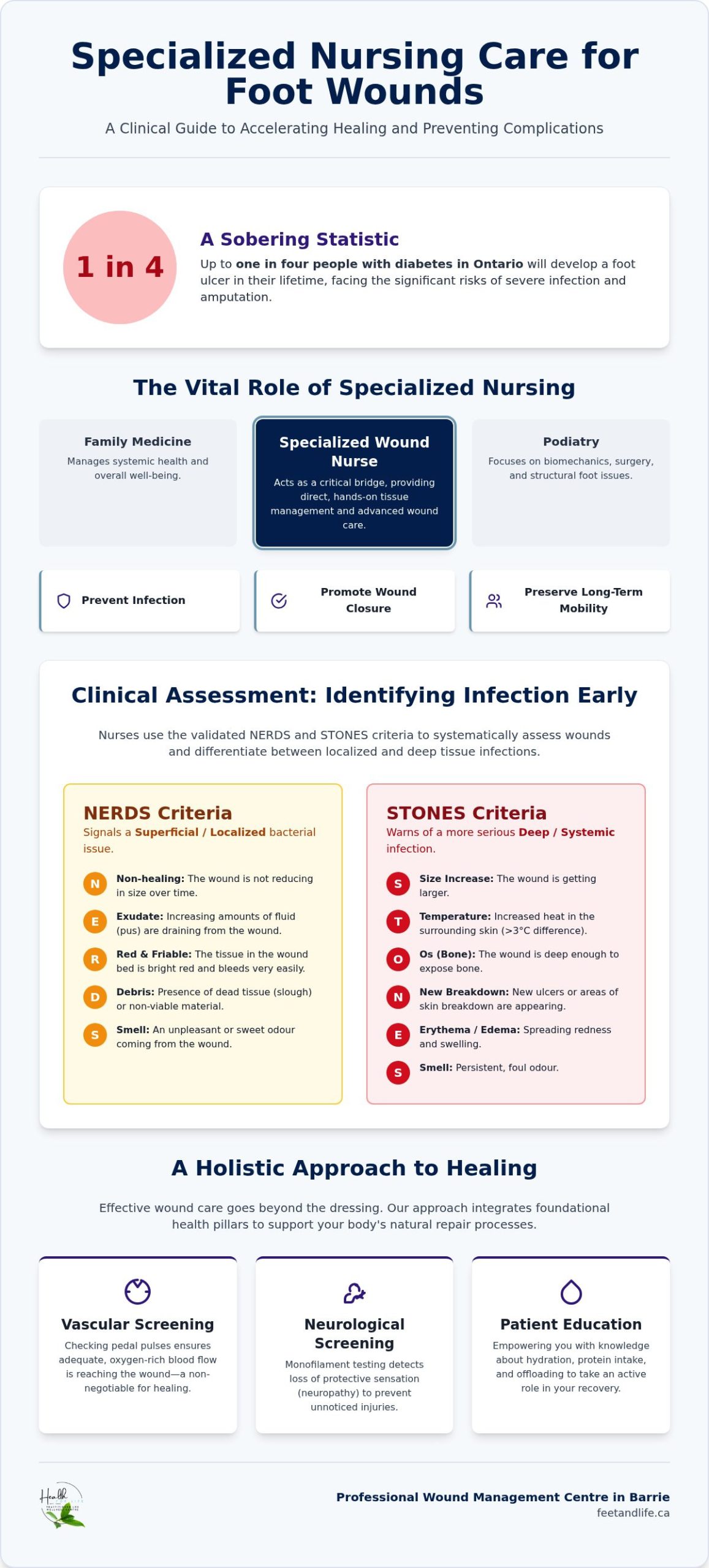
Did you know that up to one in four people living with diabetes in Ontario will develop a foot ulcer during their lifetime? It’s a sobering statistic that often brings a deep fear of severe infection or the life-altering risk of amputation. If you’re currently managing a chronic ulcer, you likely feel frustrated by slow healing and confused by the overwhelming variety of clinical dressings available. It’s exhausting to face a health challenge that threatens your mobility and your independence every single day.
Professional nursing care for foot wounds offers a reliable path forward by combining clinical expertise with a compassionate, patient-centred approach. This article will show you how specialized nursing interventions and meticulous wound management can accelerate the healing process and prevent the complications you fear most. We’ll explore the clinical stages of wound closure, identify the specific warning signs that require professional intervention, and help you find expert, nurse-led care right here in Barrie to support your long-term wellness.
Key Takeaways
- Understand why specialized nursing care for foot wounds is essential for managing complex circulation issues and providing a bridge between general medicine and advanced podiatry.
- Learn how clinicians use the systematic “NERDS and STONES” criteria to identify early signs of infection and prevent severe health complications.
- Discover the role of advanced interventions, such as conservative sharp debridement and exudate-based dressing selection, in accelerating the healing of chronic ulcers.
- Recognize how a holistic approach involving proper hydration, protein intake, and collaborative care with your medical team supports long-term tissue repair.
- Identify the benefits of seeking professional wound management in a sterile, nurse-led clinical centre conveniently located in Barrie.
Understanding the Role of Specialized Nursing in Foot Wound Care
Specialized nursing care for foot wounds acts as a vital bridge between general family medicine and podiatry. While a primary care physician manages systemic health and a podiatrist may focus on biomechanics or surgery, the specialized nurse occupies the critical space of direct, hands-on tissue management. In Ontario, this practice is strictly governed by the College of Nurses of Ontario (CNO) standards. These regulations ensure that every intervention, from cleaning a minor abrasion to managing a complex ulcer, follows rigorous evidence-based protocols. The primary objectives of this care are straightforward but essential: we aim to prevent life-threatening infections, promote complete wound closure, and preserve the patient’s long-term mobility.
Providing effective nursing care for foot wounds requires a deep understanding of how the lower limbs differ from the rest of the body. Wounds on the feet don’t heal as easily as those on the arm or torso because they are further from the heart and constantly subjected to the pressures of walking and standing. Professional management ensures that these unique factors don’t lead to the chronic, non-healing states that many patients fear.
Why Foot Wounds are Clinically Unique
Foot wounds present challenges that other areas of the body simply don’t face. Gravity is a constant adversary; it increases venous pressure in the legs and can make it harder for nutrient-rich blood to reach the extremities, which can slow the wound healing process significantly. Many patients also struggle with compromised peripheral circulation, particularly those living with diabetes or vascular disease. Unlike the outdated approach of “letting a wound breathe” or using dry bandages, modern nursing utilizes moist wound healing principles. This involves selecting advanced dressings that maintain a perfectly balanced environment, preventing the tissue from drying out while managing excess fluid (exudate). We frequently manage diabetic ulcers, venous stasis ulcers, and pressure-related wounds, each of which requires a distinct clinical strategy to resolve.
The Nurse-Patient Relationship in Chronic Care
Healing a chronic wound is often a journey rather than a quick fix. A caring nursing approach is a clinical tool that improves patient compliance and emotional well-being. When you feel heard and supported, you’re more likely to stay consistent with complex offloading instructions or necessary lifestyle adjustments. Regular monitoring by a specialized nurse allows for the detection of “silent” complications, such as subtle changes in skin temperature or a faint odour, before they escalate into an emergency. Education is also a core component of our care. By helping you understand the specific mechanics of your wound type, we empower you to take an active role in your recovery, turning a frightening medical situation into a manageable path toward wellness.
The Clinical Assessment: How Nurses Evaluate Lower Limb Ulcers
A professional assessment is far more than a visual inspection of a sore. In Barrie, our systematic approach to nursing care for foot wounds begins with a detailed clinical history followed by a physical examination of the entire lower limb. We utilize validated frameworks like the NERDS and STONES criteria to differentiate between superficial bacterial colonization and deep, systemic infections. NERDS (Non-healing, Exudate, Red-friable tissue, Debris, Smell) helps us identify localized issues, while STONES (Size increase, Temperature, Os/bone exposure, New breakdown, Erythema, Smell) alerts us to more serious, deep-seated infections that require immediate medical escalation.
To ensure we’re moving in the right direction, we document every visit using standardized tools and clinical photography. These visual records allow us to track precise measurements and tissue changes over time, providing objective proof of your healing journey. This meticulous attention to detail is a hallmark of professional nursing care for foot wounds.
Vascular and Neurological Screening
Determining whether a wound has the “potential to heal” is our first priority. We start by checking pedal pulses to ensure adequate blood flow is reaching the extremity. Without oxygenated blood, even the most advanced dressings will fail. We also perform Monofilament testing, where a small, flexible wire is pressed against specific points on the foot to screen for peripheral neuropathy. If you’ve lost protective sensation, you might not feel a new injury or the worsening of an existing ulcer. This clinical assessment of lower limb ulcers is the foundation of a safe care plan. If you are concerned about a persistent sore, a professional medical foot care assessment can provide the clarity you need to move forward.
Wound Bed Preparation and Analysis
Once we understand the vascular status, we analyze the wound bed itself. We look for healthy, pink granulation tissue, noting its colour and texture, or the presence of yellow slough and black necrotic tissue, which act as barriers to closure. We also examine the “periwound,” the skin surrounding the ulcer. Signs of maceration (soggy, white skin) indicate that moisture isn’t being managed correctly, while spreading redness may signal cellulitis. Our goal isn’t just to treat the “hole” in the foot but to address the underlying cause, whether it’s poor footwear, uncontrolled blood sugar, or venous insufficiency. We treat the whole person, ensuring that every factor affecting the skin’s integrity is recognized and addressed.
Evidence-Based Nursing Interventions for Faster Healing
Once a thorough clinical assessment is complete, the focus shifts to active management. Effective nursing care for foot wounds relies on a series of precise, evidence-based steps designed to transform a stalled, chronic ulcer into a healing one. This process isn’t about simply applying a bandage; it’s about altering the wound’s micro-environment to favour tissue regeneration. By utilizing evidence-based nursing interventions, we can significantly reduce the time a wound remains open, thereby lowering the risk of deep-tissue infection or bone involvement.
One of the most critical decisions a nurse makes involves dressing selection. We don’t use a “one-size-fits-all” approach. Instead, we select dressings based on the level of exudate (wound fluid). If a wound is too wet, the surrounding skin can become macerated and break down. If it’s too dry, the cells required for repair cannot migrate across the wound bed. We also incorporate antimicrobial dressings, such as those containing silver or medical-grade honey, to manage the bacterial load and prevent the formation of biofilms that often delay healing in chronic ulcers.
The Art of Clinical Debridement
A primary barrier to healing is the presence of non-viable tissue, such as slough or necrosis. This “dead” tissue acts as a physical shield for bacteria and prevents healthy new cells from closing the gap. Conservative sharp debridement is a specialized skill where a nurse uses sterile instruments to precisely remove this debris. This process essentially jumpstarts the body’s natural inflammatory response, moving a wound from a chronic, stagnant phase back into an acute, healing phase. While other methods like autolytic debridement (using the body’s own enzymes) or mechanical debridement have their place, nurse-led sharp debridement offers a level of speed and precision that is often necessary for complex foot ulcers. It’s a meticulous task that requires both clinical expertise and a gentle touch.
Offloading and Pressure Redistribution
Perhaps the most overlooked aspect of nursing care for foot wounds is the concept of offloading. You cannot expect a wound on the bottom of the foot to heal if it’s subjected to the full weight of your body with every step. It’s like trying to grow grass on a busy sidewalk; the constant friction and pressure simply won’t allow the delicate new tissue to survive. We prioritize pressure redistribution as a core component of our treatment plans. This often involves specific footwear modifications or the use of custom orthotics to shift weight away from the vulnerable area. By removing the mechanical stress from the ulcer site, we create the physical space necessary for the skin to knit back together. Without effective offloading, even the most expensive clinical dressings are unlikely to result in long-term closure.
Collaborative Care: Beyond the Dressing Change
Effective nursing care for foot wounds doesn’t happen in isolation. It’s a team-based discipline where the nurse acts as a central coordinator between the patient, their family physician, and vascular specialists. While we manage the physical wound bed, we also monitor the systemic factors that dictate whether tissue can actually repair itself. For instance, protein intake and adequate hydration are clinical requirements for collagen synthesis. Without these building blocks, the body cannot close a wound, regardless of how advanced the dressing is. Similarly, for our diabetic clients, blood glucose management is a primary focus. High blood sugar levels impair the function of white blood cells, which directly increases the risk of infection and stalls the healing process.
Knowing when to seek help is just as important as the treatment itself. We provide clear guidance on symptoms that require an urgent hospital visit. If you experience a sudden fever, chills, or if the redness around your wound begins to spread rapidly up the leg, immediate medical intervention is necessary. These are signs that a localized infection may be becoming systemic. This collaborative approach ensures that every aspect of your health is being monitored, reinforcing the effectiveness of nursing care for foot wounds.
Patient and Caregiver Education
We teach you to spot “red flag” symptoms early. A foul odour, an increase in deep-seated pain, or a change in the colour of the drainage are all signals to contact us immediately. Between visits, it’s vital to keep your clinical dressings dry and intact. Moisture from a shower or a leaky bandage can introduce bacteria into the wound bed. We also emphasize the importance of inspecting your healthy foot every single day. When one foot is compromised, the other often takes on extra stress, making it vulnerable to new pressure points and potential breakdown.
Managing Underlying Conditions
For those with venous leg ulcers, we may incorporate compression therapy to reduce swelling and improve blood return to the heart. We also coordinate with local Barrie pharmacies to ensure you have access to the specific wound supplies required for your home care. Finally, we discuss the impact of smoking on your recovery. Nicotine is a powerful vasoconstrictor that starves your feet of oxygen. Quitting is one of the most impactful steps you can take to improve your peripheral circulation. If you’re ready to start your recovery journey, you can book a consultation for specialized wound care to ensure your healing is on the right track.
Professional Wound Management at Feet & Life in Barrie
Feet & Life serves as a specialized clinical centre for residents in Simcoe County seeking advanced nursing care for foot wounds. Our clinic provides a sterile and professional environment designed to put you at ease while we address complex tissue issues. We understand that a non-healing ulcer is a source of significant stress; therefore, our clinical space is both high-tech and deeply reassuring. By integrating medical foot care with biomechanical support through custom orthotics, we address the root causes of pressure that often lead to chronic breakdown. This holistic view ensures that we aren’t just healing a single wound, but protecting the integrity of your feet for years to come.
Choosing a nurse-led facility for your recovery means you’re receiving care from practitioners who prioritize meticulousness and empathy. We focus on non-invasive wound management, utilizing the latest evidence-based protocols to ensure your safety and comfort. Whether you’re dealing with a new injury or a long-standing chronic ulcer, our goal is to provide the clinical expertise necessary to prevent complications and restore your quality of life. Our local presence in Barrie allows for the consistent, ongoing monitoring that is essential for successful wound closure.
Our Nursing Approach to Your Health
We operate under a “Health for Life” philosophy. This means our focus extends beyond the immediate closure of an ulcer to encompass your long-term wellness and mobility. Having a dedicated nurse-led team means you’ll work with practitioners who understand your medical history and specific health goals. We prioritize non-invasive, effective healing strategies that respect your body’s natural processes. This meticulous care is why so many patients trust us to manage their most challenging foot health concerns. By maintaining a stable, practitioner-led environment, we ensure that the nursing care for foot wounds you receive is consistent and tailored to your evolving needs.
Booking Your Assessment in Simcoe County
Starting your recovery journey is a straightforward process. A professional evaluation is the first step toward regaining your mobility and peace of mind. During your initial assessment, we’ll perform a comprehensive vascular and neurological screening to determine the best path forward. This visit is an opportunity for us to analyze your wound bed, discuss your clinical history, and develop a customized management plan. To make the most of your visit, please bring the following items:
- A current list of all medications and supplements
- The footwear you wear most frequently for work or daily activities
- Any previous wound care records or specialist reports if available
We are dedicated to providing a clear understanding of the healing process and identifying the specific interventions that will work for you. If you’re ready to take the next step toward healing, you can book your wound care assessment at Feet & Life today.
Take the Next Step Toward Lasting Healing
Managing a chronic ulcer requires more than just patience; it demands a clinical strategy that addresses everything from vascular health to biomechanical pressure. Professional nursing care for foot wounds provides this essential structure by combining advanced debridement techniques with meticulous monitoring and pressure redistribution. By focusing on the whole patient rather than just the visible injury, we can significantly reduce the risk of infection and help you maintain your independence.
At Feet & Life, we bring nurse-led clinical expertise directly to the Barrie community, specializing in the management of complex diabetic and chronic wounds. Our team is dedicated to providing the stable, authoritative care you need to navigate these health challenges with confidence. You don’t have to manage a slow-healing wound on your own. We invite you to book a professional wound assessment at our Barrie clinic to begin your journey toward recovery. Your mobility and long-term wellness are our highest priorities; let’s work together to restore your health.
Frequently Asked Questions
What are the first signs that a foot wound is becoming infected?
The most common early signs include a sudden increase in pain, a foul odour, or redness that begins to spread beyond the wound’s edges. You might also notice the area feels unusually warm to the touch or see a change in the colour and amount of fluid draining from the site. These symptoms suggest the bacterial load is increasing and requires immediate clinical attention.
How often should a nurse change the dressing on a foot ulcer?
Dressing changes are typically scheduled based on the amount of fluid, or exudate, the wound produces. While some highly absorbent dressings can remain in place for three to five days, wounds with heavy drainage may require daily attention to prevent skin maceration. Your nurse will determine the ideal frequency to maintain a balanced, moist environment that supports the healing process.
Can I shower with a foot wound dressing on?
It’s best to keep your clinical dressings completely dry unless your nurse has provided a specific waterproof cover. Standard bandages are not moisture-proof; getting them wet can trap bacteria against the skin and lead to infection. If your dressing accidentally becomes damp, it must be changed immediately to maintain a sterile environment.
Why is my diabetic foot wound taking so long to heal?
Diabetic wounds often stall due to a combination of high blood sugar levels, poor peripheral circulation, and nerve damage. Elevated glucose can impair your immune response, while reduced blood flow prevents oxygen and nutrients from reaching the tissue. Specialized nursing care for foot wounds addresses these barriers by managing the wound micro-environment and coordinating with your broader medical team.
Does OHIP cover nursing care for foot wounds at a private clinic?
While OHIP does not typically cover services at private medical foot care clinics, many patients utilize their extended health insurance plans to offset the cost. These services are often categorized under nursing or foot care in benefits packages. Additionally, some providers are registered with Veterans Affairs Canada (VAC) for eligible former service members.
What is debridement and is it painful?
Debridement is the clinical removal of dead or infected tissue to reveal healthy skin underneath. Because the tissue being removed is non-viable, the process is often painless; however, you may feel some pressure or mild discomfort if the surrounding skin is sensitive. This procedure is essential for jumpstarting the healing phase in chronic ulcers.
How do custom orthotics help a foot wound heal?
Custom orthotics facilitate healing by offloading the ulcer, which means they redistribute your body weight away from the injured area. By shifting pressure to healthy parts of the foot, these devices prevent the mechanical stress that often keeps a wound open. This is a critical intervention for preventing the recurrence of wounds on the soles of the feet.
When should I see a nurse instead of just using a bandage at home?
You should seek professional nursing care for foot wounds if a sore shows no signs of improvement after two weeks or if you have an underlying condition like diabetes. Home bandages cannot provide the debridement or specialized infection monitoring required for deep ulcers. Early intervention by a nurse is the most effective way to prevent severe complications like cellulitis or bone infection.