
Adults living with diabetes are 20 times more likely to require a lower-limb amputation compared to the general population. It’s a sobering statistic. This fact explains the deep anxiety you feel when a small scrape or blister remains unhealed for weeks. You’ve likely spent hours searching for reliable non-healing foot wound treatment Barrie, feeling overwhelmed by the fear of infection and the confusing array of clinical dressings. We understand that a wound that won’t close is more than a medical concern; it’s a constant weight on your peace of mind.
This guide demonstrates how specialized nursing interventions and professional wound management can change that trajectory. By focusing on the whole person rather than just the injury, clinical care accelerates healing times and prevents the recurrence of chronic ulcers. You’ll discover a clear, non-invasive treatment plan designed to restore your health and mobility. We’ll walk you through the methodical steps of expert wound care, ensuring you have the professional guidance needed to achieve a successful, lasting recovery.
Key Takeaways
- Learn how specialized nursing interventions like debridement and infection control provide the clinical foundation for healing and long-term mobility.
- Understand the critical role of “offloading” and precise wound measurements in creating the physical space necessary for a chronic ulcer to close.
- Discover why professional non-healing foot wound treatment Barrie offers a level of sterility and moisture management that standard home care cannot match.
- Identify the essential components of a successful healing plan, including regular monitoring of systemic markers to prevent serious complications.
- Explore how a nurse-led model of care prioritizes patient comfort and meticulous clinical standards to improve your overall quality of life.
What is Specialized Nursing Care for Foot Wounds?
Specialized nursing care for foot wounds is a dedicated clinical field that goes far beyond simple bandage changes. It’s a comprehensive practice focused on three core pillars: thorough assessment, precise debridement, and rigorous infection control. In Ontario, this care follows strict clinical standards to ensure patient safety and optimal recovery. Unlike general medical settings, a nursing-led approach prioritizes a “caring approach.” This means we focus on patient comfort and preserving long-term mobility. Our goal is to improve your quality of life while addressing the physical complexities of a Diabetic foot ulcer, venous stasis ulcers, or pressure sores.
Professional wound care nurses bring a unique perspective to the healing process. They don’t just see a hole in the skin; they see a complex biological challenge that requires a sterile environment and evidence-based interventions. By choosing professional non-healing foot wound treatment Barrie, you’re accessing a level of expertise that realizes the relationship between systemic health and local tissue repair. This methodical focus ensures that every treatment session moves you closer to closure and prevents the devastating complications often associated with chronic wounds.
The Difference Between Basic First Aid and Clinical Nursing
First aid is inherently reactive; it’s a temporary measure to protect a minor cut. In contrast, clinical nursing care is a proactive, structured healing plan designed specifically for tissue regeneration. Nurses are trained to monitor for subtle signs of systemic issues, such as poor circulation or fluctuating blood sugar levels, rather than just looking at surface-level skin changes. Clinical wound management is a multi-stage process involving sterilization and tissue optimization to create the perfect environment for healing. This level of expertise is essential when seeking effective non-healing foot wound treatment Barrie.
Who Benefits from Professional Wound Management?
Professional intervention is vital for several specific groups in our community. Individuals living with diabetes who have lost sensation due to peripheral neuropathy are at the highest risk because they may not feel a wound developing. Seniors in the Barrie area who struggle with limited mobility or poor circulation also require specialized attention to prevent minor injuries from escalating. Finally, anyone with a lower limb wound that hasn’t shown visible improvement in 14 days should seek professional help. Early intervention is the best way to avoid the fear of infection or the risk of amputation. Accessing professional care ensures that your recovery is managed by experts who understand the unique challenges of chronic wound care.
The Nursing Process: How We Assess and Treat Foot Ulcers
The nursing process is a deliberate, evidence-based cycle designed to move a wound from a state of stagnation to active healing. When residents seek non-healing foot wound treatment Barrie, they’re often surprised by the depth of the initial consultation. We don’t just look at the wound; we measure it to the millimetre, assessing its depth, width, and the health of the surrounding skin. This methodical documentation is essential. It allows us to track your progress with clinical precision, providing the necessary data for your medical records and any insurance claims through extended health benefits.
A critical, yet frequently overlooked, component of our treatment is “offloading.” This involves identifying and removing the physical pressure that caused the ulcer in the first place. Without removing this mechanical stress, the wound simply doesn’t have the physical space or environment to close. During each visit, we also perform rigorous infection screening. We look for subtle indicators of biofilm-a stubborn bacterial layer that stalls recovery. By identifying warmth, redness, or unusual odour early, we can implement treatment options for chronic wounds that disrupt these barriers before they lead to systemic complications. If you’re concerned about a wound that isn’t closing, our team at Feet & Life provides the structured assessment needed to get you back on track.
Clinical Assessment of Tissue Perfusion and Sensation
Healing requires oxygen, and oxygen requires blood flow. Our nurses meticulously check pulses and tissue perfusion to ensure your extremities are receiving the nutrients needed for repair. For our diabetic patients in Barrie, we utilize monofilament testing to assess nerve health. This tool helps us identify “silent” risks where a lack of sensation might lead to further injury. Realizing the exact extent of nerve damage is the first step in creating a safety plan that prevents future ulcers from forming.
Advanced Dressing Selection and Application
There’s no “one-size-fits-all” bandage in a professional clinical setting. We select dressings based on a concept called moisture balance. If a wound is too dry, the cells can’t migrate; if it’s too wet, the surrounding skin begins to break down, a process known as maceration. We utilize specialized antimicrobial dressings to manage exudate and prevent deep-seated infections. This tailored approach ensures that your dressing is working actively to promote tissue regeneration every hour of the day, providing a level of care that goes far beyond what is possible with over-the-counter supplies.
Why Advanced Nursing Care Outperforms Home Treatment
Many patients initially try to manage their injuries at home, believing that a standard adhesive bandage and over-the-counter ointment will suffice. However, a typical home bathroom cannot match the controlled, sterile environment of a professional clinic. When you seek non-healing foot wound treatment Barrie, you’re stepping into a space designed specifically to prevent cross-contamination. Home environments are often humid and contain household bacteria that can easily colonize a vulnerable wound bed, leading to setbacks that are difficult to reverse without clinical intervention.
A significant risk of home-based care is maceration. This occurs when an improper bandage traps too much moisture, causing the healthy skin around the wound to soften and break down. Professional nurses use advanced moisture-wicking materials that maintain the perfect “goldilocks” zone for healing; neither too wet nor too dry. Additionally, nurses are trained to perform conservative sharp debridement. This involves the precise removal of dead or devitalized tissue that otherwise acts as a food source for bacteria. Attempting to remove tissue at home is dangerous and can lead to immediate trauma or deep-seated infection.
Beyond the physical benefits, there’s a profound psychological relief that comes with professional care. The fear of a wound worsening or leading to surgery is a heavy burden to carry alone. Having an expert monitor your progress provides a sense of stability and confidence. You no longer have to guess if the redness is normal or if the healing has stalled. This professional oversight reduces anxiety and ensures that every change in the wound’s status is addressed with clinical expertise and a calm, nursing perspective.
The Dangers of Delayed Professional Intervention
A minor nick or a small blister can escalate with startling speed without proper nursing oversight. For individuals with compromised circulation, these small breaks in the skin are gateways for systemic issues. Research indicates that approximately 85% of diabetes-related amputations begin with a simple, preventable foot ulcer. This statistic highlights why waiting for a wound to “get better on its own” is a high-risk strategy. Timely non-healing foot wound treatment Barrie can interrupt this cycle before it reaches a crisis point that requires emergency hospitalization.
Accessing Specialized Tools and Materials
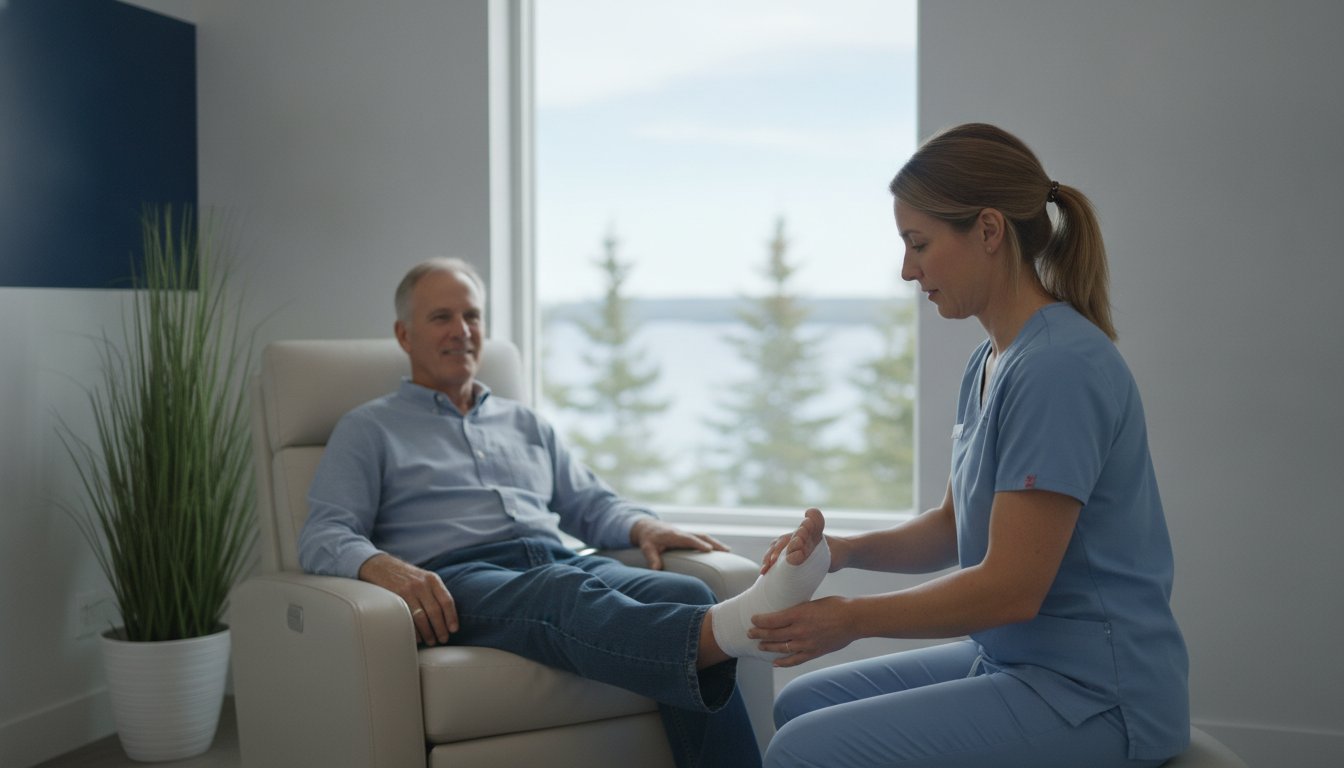
Clinical nursing provides access to medical-grade cleansers and specialized foams that aren’t available at your local pharmacy. These materials are designed to manage high levels of exudate while delivering antimicrobial protection directly to the tissue. Professional application techniques also ensure that dressings remain secure and functional during your daily movements. A nurse’s ability to organize and manage your follow-up schedule ensures the consistency required for successful tissue regeneration, which is the most critical factor in long-term healing.
4 Essential Components of a Successful Wound Healing Plan
A successful recovery requires more than just a single intervention; it necessitates a multi-faceted strategy tailored to your specific clinical needs. When we develop a plan for non-healing foot wound treatment Barrie, we focus on four primary pillars that ensure the wound environment remains optimal for regeneration. This methodical approach addresses both the surface of the injury and the underlying systemic factors that often stall progress in chronic cases.
- Step 1: Regular Debridement. We keep the wound bed “active” by removing barriers to growth, ensuring that healthy tissue has the space to expand.
- Step 2: Stringent Infection Control. We monitor systemic markers, including blood sugar levels, to ensure your body possesses the internal resources necessary to fight bacteria.
- Step 3: Effective Offloading. Using specialized footwear or orthotic adjustments, we redistribute weight away from the injury to prevent further trauma.
- Step 4: Patient Education. We empower you with knowledge regarding nutrition for collagen growth and the technical skills for performing daily foot checks safely.
This structured framework ensures that no aspect of your health is overlooked. By integrating these components, we create a stable environment where healing is not just possible, but expected. If you need a biomechanical assessment to support your recovery, explore our options for Custom Orthotics today.
The Role of Debridement in Chronic Wounds
Removing “slough” or dead tissue is a vital necessity for new skin cells to bridge the gap. Without this intervention, the wound remains in a dormant state, unable to progress through the natural stages of repair. Our foot care nurses use gentle, non-invasive methods to minimize discomfort while effectively clearing the wound bed. This clinical cleaning is fundamentally different from washing with soap and water. It’s a precise, sterile procedure that optimizes the tissue for the application of advanced dressings, ensuring every non-healing foot wound treatment Barrie session is productive.
Offloading: Taking the Pressure Off the Problem
Many patients don’t realize that their natural gait or standing posture might be the very thing preventing their wound from closing. Custom orthotics play a crucial role by redistributing body weight away from the ulcer site. Centring the foot correctly within the shoe is vital for patients in Barrie who wish to stay active while they heal. This intersection of wound care and biomechanical support allows the tissue to rest and regenerate without the constant friction of daily movement. It’s a proactive way to manage pressure and accelerate the path to full closure.
Personalized Wound Care at Feet & Life: Our Barrie Clinic
Feet & Life operates on a specialized nurse-led model that prioritizes clinical excellence alongside our “Health for Life” philosophy. We recognize that chronic injuries require more than just technical skill; they require a stable, supportive environment where patients feel heard. Finding reliable non-healing foot wound treatment Barrie shouldn’t be a source of additional stress. Our clinic is designed to be a calm, reassuring space where complex wound care is managed with meticulous attention to detail. We focus on the intersection of specialized health services and your overall quality of life, ensuring that every intervention is purposeful and patient-centered.
Our commitment to your recovery extends beyond our clinic walls. We actively collaborate with other healthcare providers across Simcoe County to ensure holistic support for our patients. Whether you’re managing diabetes with a family physician or coordinating with a vascular specialist, we maintain the professional communication necessary for a unified care plan. This collaborative approach ensures that systemic factors, such as blood sugar management or circulation issues, are addressed in tandem with our local wound treatments. We invite you to take the first step toward healing by scheduling a professional clinical assessment with our dedicated nursing team.
A Reassuring Approach to Lower Limb Health
Our practitioners realize the deep anxiety that often accompanies a wound that refuses to close. We offer steady, expert support to help you manage the emotional and physical burden of chronic foot ulcers. Our facility focuses strictly on non-invasive, specialized medical foot care rather than surgery. This specialized focus allows us to dedicate our full expertise to advanced wound management and preventative therapies. It’s this level of dedicated attention that leads patients from Collingwood, Orillia, and Midland to travel to our Barrie centre for their clinical needs. We provide a reliable community pillar for those who require high-quality, considered medical attention.
Booking Your Wound Assessment in Simcoe County
We’ve streamlined our process to make accessing care as simple as possible. You can book an appointment at our Barrie location directly, as a doctor’s referral is generally not required for private nursing foot care. To ensure your first consultation is as productive as possible, please bring a current list of your medications and the footwear you wear most frequently. We’ll conduct a thorough review of your medical history and a physical assessment of the wound site to develop your personalized healing plan. Don’t let a small injury become a life-altering complication. Book your professional nursing foot care assessment today and start your journey toward lasting recovery.
Taking Your First Step Toward Lasting Recovery
Professional wound management is a journey that requires meticulous attention and clinical expertise. By prioritizing specialized nursing interventions like debridement and offloading, you move beyond reactive first aid toward a structured, proactive healing plan. We’ve explored how a sterile clinical environment and expert assessment of tissue perfusion are vital for preventing complications like infection or amputation. Realizing that you don’t have to manage this high-risk condition alone provides both physical results and profound psychological relief.
At Feet & Life, we’ve spent over a decade serving Barrie and Simcoe County with nurse-led clinical expertise. We specialize in diabetic foot management and complex wound care, ensuring our community has access to the highest standards of non-invasive treatment. If you’re struggling with a wound that won’t close, seeking professional non-healing foot wound treatment Barrie is the most effective way to protect your long-term mobility and quality of life.
Schedule a Professional Wound Care Consultation in Barrie today. We’re here to guide you through every stage of the healing process with the dedicated, compassionate care you deserve. Your path to recovery starts with a single, expert assessment.
Frequently Asked Questions
How do I know if my foot wound needs professional nursing care?
You should seek professional care if a wound shows no visible improvement within 14 days or if you have an underlying condition like diabetes. Signs such as increased drainage, persistent redness, or a lack of new skin growth indicate that the wound has stalled. Professional intervention ensures that the injury is moved from a stagnant state back into an active healing phase through specialized clinical techniques.
Does a nurse-led foot care clinic provide the same treatment as a doctor?
Nurse-led clinics specialize in the physical management of the wound bed, including assessment, debridement, and advanced dressing applications. While a family doctor manages your systemic health and medications, a foot care nurse focuses on the localized environment of the injury. This specialized approach ensures that a caring approach is integrated with high-level clinical expertise to preserve your long-term mobility and quality of life.
What is the most common reason a foot wound refuses to heal?
The most common reason a foot wound refuses to heal is persistent pressure, often combined with poor circulation. When seeking non-healing foot wound treatment Barrie, patients often learn that offloading is the missing piece of their recovery. Without removing mechanical stress from the site, the tissue cannot regenerate, regardless of how many bandages are applied at home. This stagnation is why professional intervention is so vital.
How often will I need to visit the Barrie clinic for wound dressing changes?
Visit frequency varies based on the wound’s condition, but most patients require appointments one to three times per week during the initial phase. These visits allow our practitioners to monitor for infection, perform necessary debridement, and adjust dressing types as moisture levels change. Regular monitoring is the most effective way to ensure the healing plan remains on track for successful closure and prevents future recurrence.
Can custom orthotics help my foot wound heal faster?
Yes, custom orthotics are a critical component of a comprehensive healing plan because they redistribute weight away from the wound site. By correcting biomechanical imbalances, these devices provide the physical rest the tissue needs to repair itself. Integrating orthotic support with active wound care significantly reduces the risk of the ulcer recurring once it has finally closed, providing a long-term solution for your health.
Is nursing care for foot wounds covered by insurance in Ontario?
Private nursing care for foot wounds is generally not covered by OHIP in Ontario clinics. However, most residents find that these services are covered through their employer-provided extended health benefit plans. It’s always a good idea to check with your insurance provider to understand your specific coverage for specialized nursing services and medical foot care, as many plans realize the value of preventative clinical treatments.
What should I do if I suspect my foot wound is infected?
If you suspect an infection, you should seek a professional clinical assessment immediately to prevent the condition from escalating. Look for red flags such as increased warmth, spreading redness, unusual odour, or new pain at the site. Early intervention is the key to avoiding systemic complications or the need for emergency hospital care, especially for those living with chronic conditions that compromise the immune system.
What is the difference between a medical pedicure and clinical wound care?
Medical pedicures focus on the maintenance of healthy nails and the removal of non-pathological calluses or corns. Clinical wound care is a therapeutic intervention designed specifically to treat open lesions and chronic ulcers. While both occur in a sterile environment, wound care involves complex tissue management, infection monitoring, and specialized dressings to restore skin integrity and prevent the serious risks associated with non-healing injuries.