
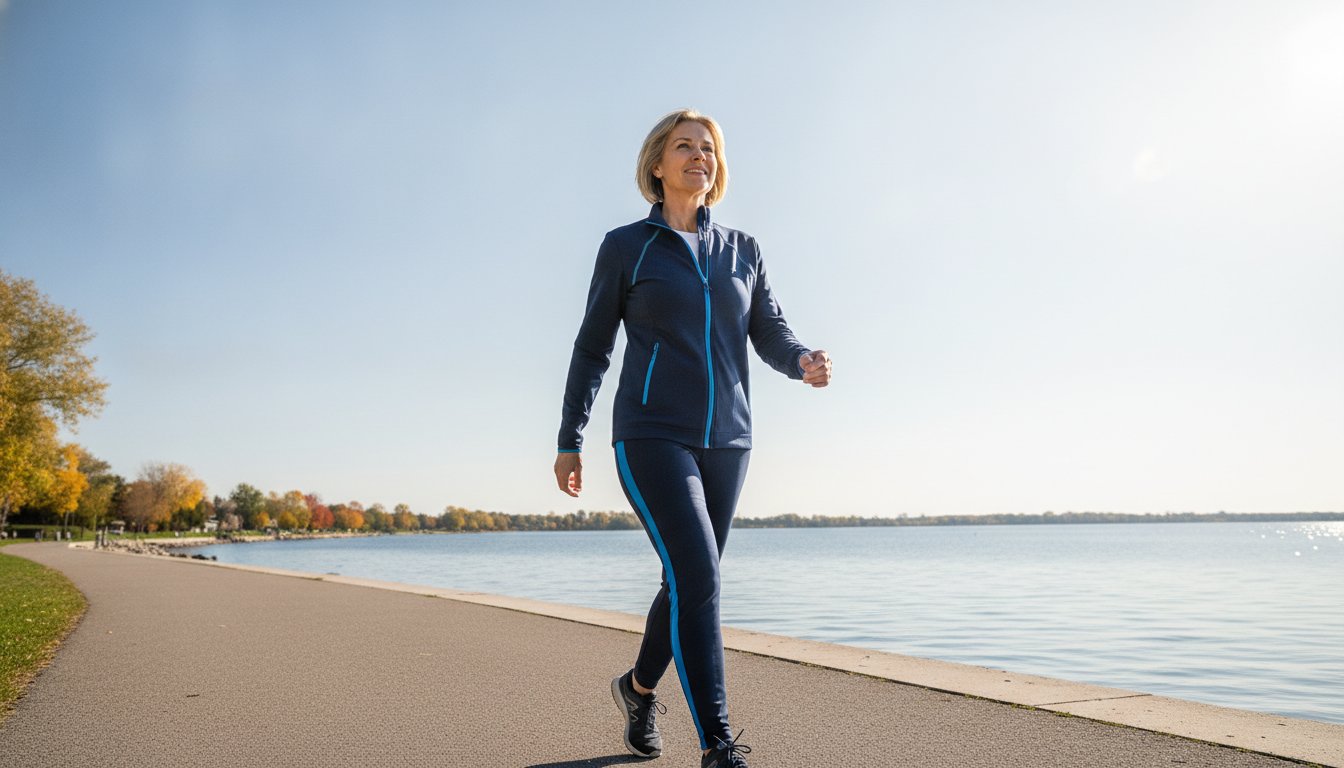
The secret to resolving your persistent hip pain might not be in your hip at all; instead, it often lies in how your feet meet the pavement. If you’ve been searching for orthotics for hip pain Barrie, you likely understand that generic retail inserts rarely address the complex mechanics of your body. It’s exhausting to deal with morning stiffness or that familiar ache that sets in after a walk along the Barrie waterfront. You deserve a solution that acknowledges your discomfort while offering a clear, professional path forward.
We understand that the frustration of persistent stiffness and the fear of losing your independence can be overwhelming. You want to remain active and enjoy our local trails, but the lack of results from standard shoe inserts can make relief feel out of reach. In this article, you’ll learn how professional gait analysis and custom orthotics identify and correct the biomechanical root causes of your hip pain for long-term relief. We will look at how a clinical, nurse-led assessment can bridge the gap between medical expertise and the daily wellness you need to stay mobile and comfortable in your community.
Key Takeaways
- Discover how misaligned foot posture creates referred pain in the hip joints by disrupting your body’s natural kinetic chain.
- Learn why professional orthotics for hip pain Barrie residents utilize provide the custom engineering necessary to stabilize the pelvis and correct internal leg rotation.
- Understand how a clinical gait analysis identifies specific mechanical failures during your stride that retail, one-size-fits-all inserts often overlook.
- Explore the non-invasive process of translating biomechanical data into a personalized support system designed for your unique mobility goals.
- Gain insight into how re-aligning your foundation can restore the comfort needed to enjoy local trails and maintain your long-term independence.
Orthotics for Hip Pain in Barrie: The Hidden Connection
Many residents in Simcoe County find themselves sidelined by persistent hip discomfort that doesn’t seem to respond to standard rest or stretching. While the pain is felt in the hip, the mechanical trigger is often located much lower. When investigating orthotics for hip pain Barrie patients frequently learn that their symptoms are a form of “referred pain.” This occurs when a structural issue in the feet forces the rest of the body to compensate, leading to stress in the joints above.
Understanding this connection requires looking at the body through a clinical lens. It isn’t just about the spot that hurts; it’s about how the entire lower limb functions during movement. Professional orthotics serve as a corrective tool to address these imbalances before they lead to long-term mobility issues or a loss of independence. Choosing specialized orthotics for hip pain Barrie ensures that the unique geometry of your gait is respected rather than ignored.
What is the Kinetic Chain?
The human body operates as an interconnected system known as the kinetic chain. This concept describes how movement at one joint affects the others in the sequence. Your feet are the foundation of this chain. When you walk, the force of the ground travels upward through your ankles and knees to your hips and pelvis. The pelvis serves as the mechanical centre of your body, balancing the weight of your torso over your legs. If your feet don’t provide a stable base, the entire chain shifts out of alignment, causing the pelvis to tilt and the hip joints to absorb unnecessary shock.
Why Your Feet Might Be the Culprit
Foot posture dictates how your legs move. Common issues, such as flat feet or high arches, change the way your weight is distributed during each step. For example, if your arches collapse, your lower leg rotates inward. This rotation travels up the femur and twists the hip socket out of its optimal position. This creates a ripple effect of strain:
- Your hip muscles must work twice as hard to stabilize an uneven pelvis.
- Ligaments become strained as they try to limit excessive internal rotation.
- Morning stiffness often results from the body trying to protect these overworked tissues.
Biomechanical misalignment is the primary driver of non-traumatic hip pain. Relying on a clinical assessment rather than a retail shoe insert ensures that these subtle rotations are identified and corrected at the source. This professional approach moves beyond temporary relief and focuses on restoring your natural, pain-free stride through the parks and trails of Barrie.
The Biomechanics of Hip Pain: How Your Stride Impacts Your Joints
Walking is a complex sequence of movements divided into three primary phases: contact, mid-stance, and propulsion. During the contact phase, your heel hits the ground and your foot begins to absorb the force of your body weight. In mid-stance, your foot must transition from a flexible structure to a stable platform. Finally, propulsion allows you to push off into the next step. A key player in this process is the Windlass Mechanism, where the tightening of the plantar fascia naturally arches the foot to provide stability. When these phases are disrupted, the resulting instability is a common reason patients seek orthotics for hip pain Barrie.
If your foot mechanics are flawed, the hip must compensate for every step you take. High arches, or supination, often result in a foot that is too rigid, failing to dampen the impact of the pavement. Conversely, flat feet lead to overpronation, where the arch collapses excessively. Research into hip biomechanics and pain highlights how even minor changes in foot alignment can drastically alter the load placed on the hip joint. Understanding these mechanical failures is the first step toward reclaiming your mobility.
Overpronation and Femoral Rotation
When your arch collapses during the mid-stance phase, it triggers a predictable chain reaction. As the foot rolls inward, it forces the tibia (shin bone) to rotate. This motion continues upward, causing the femur (thigh bone) to rotate internally as well. This “twisting” motion puts immense stress on the hip socket and the surrounding bursae. Over time, this repetitive internal rotation can lead to Greater Trochanteric Pain Syndrome (GTPS), characterized by deep aching on the outer side of the hip. The same overpronation pattern that strains the hip also places significant stress on the knee joint, which is why many patients dealing with hip discomfort also benefit from orthotics for knee pain Barrie clinicians recommend as part of a comprehensive lower limb treatment plan. By utilizing orthotics for hip pain Barrie residents can effectively limit this harmful rotation and stabilize the pelvis.
The Role of Shock Absorption
Your feet are designed to act as your body’s natural shock absorbers. When you walk on the hard surfaces found throughout Barrie, your feet should ideally dissipate the energy of each strike. If your feet are poorly aligned, that energy isn’t absorbed; instead, it travels directly up the leg to the hip joint. Without the “dampening” effect of a healthy arch, the hip joint absorbs a jarring force with every step. Custom orthotics are engineered to restore this essential protective function by providing the specific support your unique foot structure requires. If you’re tired of feeling every step in your joints, consider how a professional biomechanical assessment could identify the source of your discomfort.
Why Retail Insoles Often Fail to Resolve Chronic Hip Pain
Many people start their journey toward relief at a local pharmacy or big-box store. It’s an understandable first step, but these mass-produced products are designed for a “universal” foot that rarely exists in a clinical reality. While retail inserts might provide a brief window of temporary comfort, they lack the specific engineering required to address the complex biomechanical root causes of persistent joint stress. For those seeking orthotics for hip pain Barrie, relying on a generic template often leads to frustration when the pain returns after only a few days of use.
The primary flaw in retail options is their focus on arch height while ignoring arch flexibility. A rigid retail insert might support a high arch but fail to allow the foot to move through its natural gait cycle. Conversely, a soft, foam-based insert might collapse under your weight, offering no real support to the pelvis. Without a professional assessment, these inserts are merely guessing at what your hips need to stay aligned. A nurse-led clinical approach ensures that your unique foot structure is supported in a way that actually reduces the load on your hip joints.
Cushioning vs. Correction
Soft, gel-based inserts feel pleasant when you first slip them into your shoes. However, there’s a significant clinical difference between comfort and correction. Cushioning merely masks symptoms by dampening the feel of the ground; it doesn’t fix the underlying mechanical failures. In fact, a “mushy” foundation can often worsen hip strain because your stabilizing muscles must work harder to find balance on an unstable surface. Biomechanical correction focuses on structural integrity, ensuring that the pelvis remains level and the hip joint is protected from the harmful rotational forces that occur when the foot is poorly supported.
The Importance of a Professional Prescription
To truly realize long-term relief, you need a solution based on precise data rather than a shelf-stable template. A professional assessment in Barrie moves beyond the shoe to look at your medical history and specific mobility goals. Unlike retail foam that compresses and loses its shape within weeks, custom-engineered orthotics utilize medical-grade materials designed for both durability and precise support. These aren’t just shoe accessories; they are medical devices tailored to your body’s specific requirements. This professional approach ensures that you aren’t just treating the ache in your hip, but rather stabilizing the foundation that supports your entire quality of life. By choosing orthotics for hip pain Barrie residents can transition from temporary fixes to a sustainable, non-invasive health strategy.
What to Expect During a Professional Gait Analysis in Barrie
A professional gait analysis is a methodical and reassuring process designed to uncover the mechanical truths behind your discomfort. When seeking orthotics for hip pain Barrie residents often find that a clinical setting provides the clarity that self-diagnosis lacks. Your appointment begins with a thorough consultation where we discuss your health history and the specific activities that trigger your pain. This initial dialogue is essential for establishing a patient-centred care plan that respects your lifestyle and mobility goals.
The clinical evaluation is divided into two primary stages: the static assessment and the dynamic analysis. During the static assessment, we analyze your posture and foot structure while you are standing still. We look for signs of pelvic tilt or leg length discrepancies that might be contributing to your hip strain. Following this, we move to the footwear evaluation. Your most-worn shoes tell a story through their wear patterns, revealing where you place the most pressure and how your feet have been compensating for misalignment over months or years of use.
The Dynamic Assessment Process
The dynamic portion of the analysis involves observing your movement patterns in real-time. As you walk, we look for subtle mechanical flaws that only appear when you are in motion. We focus on the relationship between your foot strike and the rotation of your knees and hips. Often, we identify “hidden” compensations where one part of your body is working harder to protect another. This clinical observation is the key to designing orthotics for hip pain Barrie that provide genuine, long-term correction rather than just temporary relief.
Preparing for Your Appointment at Feet & Life / Health for Life
To get the most out of your visit, we recommend wearing comfortable clothing that allows us to see your knees clearly, such as shorts or athletic leggings. Please bring your “favourite” or most-worn daily shoes, as these provide invaluable data about your gait. This is also a perfect time to ask questions about the mechanical link between your feet and your hip pain. Understanding how your foundation affects your overall wellness is a vital part of the healing journey. If you are ready to find the root cause of your discomfort, you can book a clinical gait analysis to start your path toward better mobility.
Personalized Custom Orthotics: Your Path to Pain-Free Living
The transition from diagnostic data to a physical solution is a specialized engineering process. Once your gait analysis is complete, the resulting data is used to create a precise prescription for your footwear. By utilizing orthotics for hip pain Barrie residents can finally address the structural imbalances that have been placing stress on their joints. These custom-engineered devices do more than just support the arch; they serve as a corrective tool to re-align the pelvis and stabilize the entire lower limb system. This professional intervention ensures that your hip joints are no longer forced to absorb the jarring forces of an uneven stride.
Our nurse-led approach at Feet & Life / Health for Life focuses on the intersection of clinical expertise and patient-centred care. We recognize that every client has unique mobility goals, whether it is maintaining independence in their senior years or returning to a favourite hobby. By providing a stable foundation, custom orthotics help distribute your body weight more effectively, which reduces the chronic inflammation often associated with referred hip pain. This holistic strategy focuses on long-term wellness rather than the temporary relief offered by retail alternatives.
The Engineering of Relief
Creating a truly effective orthotic requires selecting the right medical-grade materials for your specific needs. Depending on your assessment, we might use firmer materials to provide structural correction or specialized cushioning to dampen impact in high-pressure areas. It is natural to experience a brief “break-in” period as your body adjusts to its new, healthy alignment. Most clients find that their muscles and joints begin to settle into this improved posture within two weeks. We prioritize follow-up care to ensure your orthotics for hip pain Barrie continue to provide optimal comfort as your activity levels increase.
Maintaining an Active Lifestyle in Simcoe County
Regaining your mobility means more than just walking without pain; it means returning to the local activities that make life in Simcoe County enjoyable. Whether you look forward to golfing at a local course or enjoying a morning stroll along the Barrie waterfront, proper foot support is the key to staying active. Regular foot health checks are a vital part of preventing future hip, knee, or back issues before they become debilitating. We are dedicated to helping you maintain your quality of life through non-invasive, specialized care that respects your body’s natural mechanics. If you are ready to reclaim your stride, Book your biomechanical assessment at Feet & Life / Health for Life in Barrie today and take the first step toward a more comfortable, active future.
Reclaiming Your Mobility and Independence
Addressing hip pain requires looking beyond the joint itself to understand the mechanical foundation of your body. We have explored how the kinetic chain connects your foot strike directly to pelvic alignment and joint health. By identifying subtle mechanical failures through professional gait analysis, you can move away from temporary fixes and toward a sustainable solution. Choosing specialized orthotics for hip pain Barrie residents trust ensures that your treatment is based on clinical data rather than guesswork. A stable foundation is the first step in preventing the compensatory strain that leads to chronic stiffness and referred pain.
At Feet & Life / Health for Life, our nurse-led clinical expertise provides a caring, non-invasive approach to lower limb health. We are proud to serve the Barrie, Innisfil, and Simcoe County community, helping our neighbours regain the ability to walk comfortably through our local parks and trails. You don’t have to accept persistent discomfort as a permanent part of your life. Take the first step toward restoring your natural stride and protecting your long-term quality of life. Schedule Your Biomechanical Assessment at Feet & Life / Health for Life in Barrie today. We look forward to helping you move with confidence again.
Frequently Asked Questions
Can custom orthotics really help with hip pain if my feet don’t hurt?
Yes, custom orthotics are highly effective for hip pain even when the feet are asymptomatic. Your feet are the foundation of your body’s kinetic chain; if they don’t provide a stable base, your hips must compensate for the misalignment. This compensation often leads to referred pain and joint strain. By utilizing orthotics for hip pain Barrie residents can correct these underlying mechanical issues at the source, regardless of whether they feel direct foot discomfort.
How long does a professional gait analysis take at your Barrie clinic?
A comprehensive gait analysis typically takes between 45 and 60 minutes to complete. This time allows our clinical team to conduct a thorough review of your health history, perform a static postural assessment, and observe your movement patterns during a dynamic walking evaluation. We ensure the process is thorough and unhurried so that every subtle mechanical flaw in your stride is identified and documented for your personalized care plan.
Will I need to buy special shoes to wear my custom orthotics?
You usually don’t need to purchase specialized medical footwear to accommodate your new inserts. Most custom orthotics are designed to fit into high-quality athletic shoes, casual walking shoes, or boots that feature a removable factory insole. During your assessment, we encourage you to bring your most-worn footwear so we can evaluate the fit and ensure the orthotics provide optimal support across your daily activities.
Are custom orthotics for hip pain covered by OHIP or private insurance in Ontario?
The Ontario Health Insurance Plan (OHIP) does not provide coverage for custom orthotic devices for the majority of patients. However, most private or employer-sponsored extended health insurance plans in Ontario do offer reimbursement for these medical devices. These plans typically require a prescription from a qualified healthcare professional and a detailed invoice that includes proof of a biomechanical assessment and gait analysis.
How long do custom orthotic inserts typically last?
Custom orthotics generally last between two and five years depending on your activity levels and the specific materials used in their construction. While the structural shell of the orthotic is highly durable, the top covers may require occasional maintenance. We recommend regular clinical check-ups to monitor the integrity of the support and ensure the device is still providing the corrective force necessary for your hip comfort.
What is the difference between a gait analysis and the foot scans I see in pharmacies?
Retail pharmacy scans are usually static, pressure-based assessments that offer a “one-size-fits-all” suggestion from a limited inventory. A professional gait analysis is a dynamic, clinical observation of your body in motion. We look beyond the foot to see how your ankles, knees, and hips interact while you walk. This allows us to identify complex compensations and mechanical failures that a simple retail machine cannot detect.
Can gait analysis help prevent the need for hip surgery?
Correcting biomechanical misalignments early can significantly reduce the wear and tear on your joints that often leads to osteoarthritis. By stabilizing the pelvis and improving shock absorption through orthotics for hip pain Barrie patients can often manage their symptoms non-invasively. While every case is unique, improving your gait mechanics is a proactive way to protect your joints and potentially delay or avoid the need for invasive surgical interventions.
How soon will I notice an improvement in my hip pain after getting orthotics?
Most patients begin to notice a positive change in their comfort levels within two to four weeks of consistent use. Your body requires a brief “break-in” period to adjust to the corrected alignment as your muscles and joints settle into a healthier posture. We provide specific guidance on how to gradually increase your wear time to ensure a comfortable and successful transition to pain-free mobility.