
Have you spent months hiding your feet in closed shoes, hoping that a drugstore lacquer or home remedy would finally clear the yellowing and thickening of your nails? It’s a frustrating cycle; you want to feel confident at the local community centre or poolside, but the confusion between conflicting online advice and painful pressure in your footwear makes progress feel impossible. If you’ve been searching for a professional fungal nail removal treatment, you’ve likely realized that stubborn pathogens require more than just surface level care.
We agree that dealing with persistent nail fungus is both an emotional and physical burden that deserves a specialized clinical solution. This guide will help you discover the most effective medical pathways to remove stubborn toenail fungus and restore your foot health with expert clinical guidance. We’ll provide a clear overview of modern clinical options and advanced laser solutions available in Barrie, helping you move toward clear, healthy nail regrowth with the support of a dedicated professional team.
Key Takeaways
- Learn why professional fungal nail removal treatment focuses on eliminating the underlying pathogen, Onychomycosis, rather than simply removing the physical nail plate.
- Understand how clinical debridement and specialized urea applications prepare the nail to ensure therapeutic interventions reach the source of the infection.
- Discover the modern advantages of non-invasive laser therapy, which targets deep-seated fungal spores without the need for oral medications or surgery.
- Explore the step-by-step clinical assessment process in Barrie designed to address nail thickness and restore your long-term foot health.
- Realize the critical timeline for healthy nail regrowth and the essential hygiene habits necessary to maintain a clear and healthy appearance.
Understanding Fungal Nail Removal: Pathogen vs. Physical Nail
When patients seek a fungal nail removal treatment, they often arrive with a mix of anxiety and hope. There is a common misconception that “removal” always implies a painful, surgical extraction of the entire toenail. In a modern clinical setting, however, the focus has shifted. We define removal as the systematic elimination of Onychomycosis, the fungal pathogen itself, rather than just the physical nail plate. While the nail plate is the visible victim of the infection, the true target of any successful therapy is the fungal colony residing deep within the nail bed and matrix.
It’s vital to distinguish between managing the diseased nail structure and eradicating the underlying infection. Clinical removal often involves professional debridement, which is the careful thinning and trimming of the affected nail. This process is a clinical necessity for nails that have become so thick they cause pain when you wear shoes or walk. By reducing the physical mass of the diseased nail, we don’t just provide immediate comfort; we also remove the protective layers that fungus uses to hide from treatment. This non-invasive standard of care is what we prioritize in Barrie, focusing on preserving your natural nail while aggressively targeting the spores.
Signs You Need Professional Fungal Treatment
- Subungual hyperkeratosis: This is the accumulation of scaly, chalky debris under the nail plate. It often causes the nail to lift, creating a gap where more fungus can thrive.
- Deep discolouration: When you notice streaks of white, yellow, or brown that don’t grow out with the nail, it indicates a deep-seated infection that surface level creams can’t reach.
- Brittle or crumbling textures: If your nails fall apart or “dust” when you trim them, the fungal pathogen has compromised the keratin structure. This requires specialized tools to manage safely without causing further trauma to the nail bed.
The Risks of Ignoring Fungal Infections
Ignoring a fungal infection isn’t just a cosmetic choice; it’s a health risk. Over time, the fungus can create microscopic breaks in the skin, opening the door for secondary bacterial infections like cellulitis. This is particularly dangerous for individuals living with diabetes or poor circulation, as minor foot issues can quickly escalate into serious complications. Beyond the physical risks, the social and emotional impact of chronic nail fungus can be significant. Many people find themselves withdrawing from social activities or avoiding the beach due to embarrassment. Choosing a professional fungal nail removal treatment is a proactive step toward reclaiming your health and your lifestyle.
Non-Surgical and Chemical Nail Removal Methods
For patients seeking a gentle approach, chemical debridement serves as a highly effective pillar of modern foot care. This process involves using high-concentration urea to selectively soften the diseased nail tissue. Unlike home-store kits, which often lack the potency required for deep infections, clinical-grade applications ensure the underlying fungal load is properly addressed. A clinical review of onychomycosis treatments highlights how thinning the nail plate significantly enhances the penetration of topical medications. Essentially, by removing the physical barrier of thickened keratin, we allow therapeutic agents to reach the nail bed more efficiently.
Professional medical pedicures go far beyond the cosmetic experience of a standard salon. These sessions focus on “de-bulking” the nail, which reduces the pressure on the toe and physically removes millions of fungal spores. This meticulous approach is a vital component of any comprehensive fungal nail removal treatment plan. It allows for a more targeted intervention while providing immediate relief from the discomfort caused by thickened nail plates. If you’re concerned about the thickness of your nails, scheduling a professional medical foot care assessment is a sensible first step toward recovery.
The Chemical Debridement Process
The procedure begins with the application of a specialized clinical ointment, typically containing urea at a 40 percent concentration. This is significantly stronger than over-the-counter versions, which often only reach 10 or 20 percent. The ointment is applied directly to the infected nail and covered with a waterproof dressing for several days. During this period, the diseased portion of the nail softens into a jelly-like consistency. A foot care professional then carefully and painlessly removes the non-viable tissue. Throughout this process, we use protective barriers to ensure the surrounding healthy skin remains unaffected and comfortable.
When Chemical Removal is the Right Choice
Chemical removal is particularly beneficial for patients who cannot tolerate the potential side effects of oral antifungal medications, such as those with liver concerns. It’s also an excellent preparatory step for laser therapy; it clears away the debris that might otherwise block the laser’s energy from reaching the pathogen. Patients dealing with extremely thick nails that cause significant shoe pressure often find immediate physical relief through this method. It’s a non-invasive way to manage symptoms while simultaneously working toward a long-term resolution of the infection. This dual-action approach is a hallmark of our fungal nail removal treatment standards in Barrie.
Laser Fungal Therapy: The Modern Standard for Removal
While chemical and physical debridement manage the nail’s structure, laser technology represents a significant advancement in addressing the root cause of the infection. This sophisticated fungal nail removal treatment doesn’t rely on blades or caustic chemicals to extract the pathogen. Instead, it uses focused light energy to penetrate the hard keratin of the nail plate. The goal is to reach the fungal colony living in the nail bed, where the laser energy disrupts the life cycle of the spores. By neutralizing the pathogen at its source, we create a sterile environment that allows a healthy, clear nail to begin its slow journey of regrowth.
Choosing laser therapy offers a distinct advantage for those who want to avoid the systemic risks of traditional medications. It’s a non-invasive approach that requires no surgery and involves zero downtime. You can literally walk into our Barrie clinic for a session and return to your daily activities immediately afterward. At Feet & Life, we view laser therapy as a removal of the biological threat itself. It’s a precise, targeted intervention that aligns with a Dermatologist-recommended nail fungus treatment framework, ensuring high clinical standards without the complications of invasive procedures.
How Laser Treatment Works on Toenail Fungus
Modern laser systems generally fall into two categories: thermal and cold. Thermal lasers use controlled heat to reach a temperature that is lethal to fungal cells but safe for human tissue. In contrast, cold lasers use specific wavelengths of light to trigger a photochemical reaction that destroys the pathogen. A typical cycle involves several sessions spaced out over a few months to ensure all spores are addressed. During a session, you’ll feel a mild warming sensation or a slight tingling as the light passes over the nail. Most treatments for a single foot take approximately 15 to 20 minutes, making it a convenient option for busy individuals.
Laser vs. Oral Antifungals: A Comparison
The primary concern with oral antifungal drugs is their potential for liver toxicity, which often necessitates regular blood tests to monitor organ function. Laser therapy bypasses the bloodstream entirely, making it an ideal fungal nail removal treatment for seniors or patients already managing multiple medications for other health conditions. Clinical compliance is also simpler with laser; you don’t have to remember a daily pill for three months. While success rates vary depending on the severity of the infection, the lack of systemic side effects makes laser a preferred choice for those prioritizing holistic wellness alongside clinical efficacy.
The Clinical Process in Barrie: What to Expect
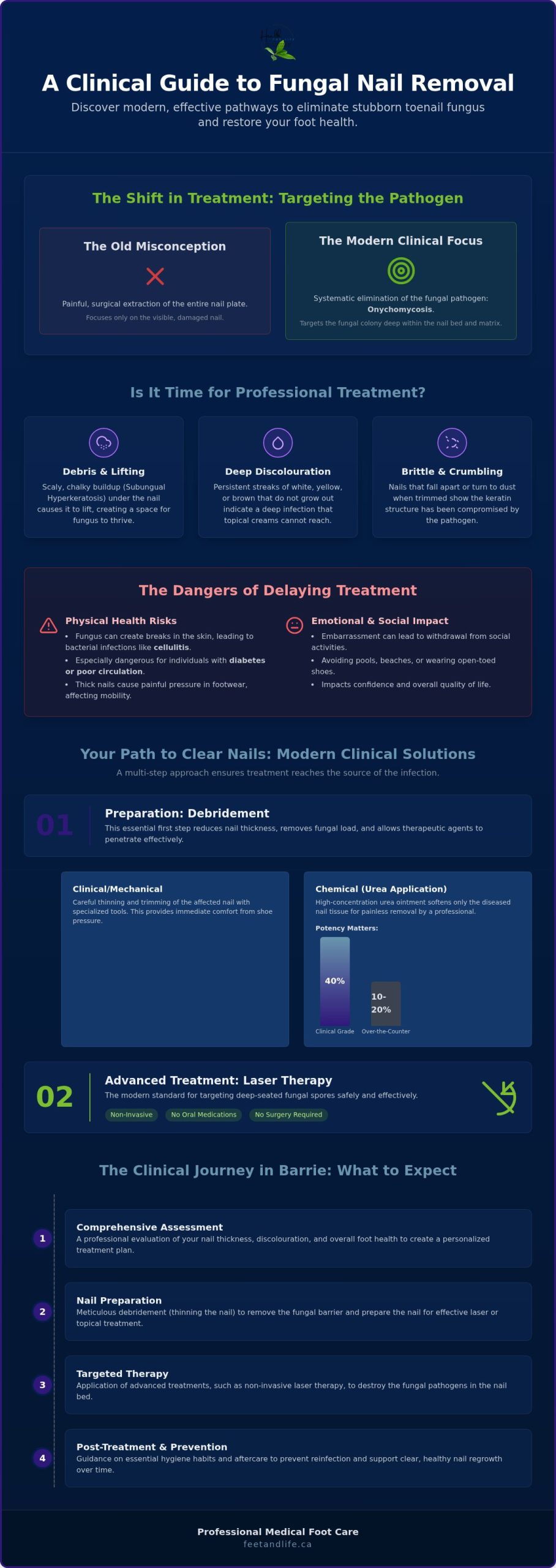
Entering a clinical environment for foot health is a significant step toward long term recovery. Unlike a standard pedicure, a professional consultation focuses on the biological and structural health of your lower limbs. The journey begins with a methodical four step approach designed to ensure your safety and the success of your chosen treatment path. Each stage of the process is handled with meticulous care, ensuring that the intervention is both effective and comfortable.
- Step 1: Assessment. We evaluate your nail health and lower limb circulation to ensure your body can support the healing process.
- Step 2: Debridement. A practitioner reduces the nail thickness using sterile instruments, providing immediate relief from shoe pressure.
- Step 3: Targeted Therapy. We apply specialized laser energy or clinical grade topicals to address the pathogen.
- Step 4: Education. You receive a clear plan for home care to prevent the fungus from returning to your footwear or skin.
The first stage of any fungal nail removal treatment is the most critical. By assessing your vascular health and checking for signs of neuropathy, we ensure that the treatment plan is tailored to your specific needs. This is especially important for individuals with underlying health concerns who require a more cautious and specialized approach to foot care.
Your First Visit to Feet & Life
During your initial appointment, you’ll experience a practitioner led assessment that bridges the gap between medical expertise and patient centered wellness. We take the time to review your full medical history, including any medications or conditions like diabetes that might affect your healing rate. This nursing approach ensures that your plan is safe for your unique physiology. We then create a personalized “clear nail” roadmap, setting realistic expectations for the months ahead as your healthy nail slowly replaces the damaged tissue.
Co-managing Foot Health and Wound Care
Our clinic is uniquely equipped to handle complex cases where fungal infections exist alongside chronic foot wounds or compromised skin integrity. We prioritize professional sterilization and a controlled clinical environment to prevent cross contamination at every stage. Ensuring the nail bed remains healthy during the regrowth phase is essential, especially for patients requiring specialized medical foot care or wound management. This holistic view of health ensures that we aren’t just treating a symptom, but protecting your overall mobility and quality of life. If you are ready to begin your journey toward healthier feet, we invite you to book a consultation for a professional fungal nail removal treatment today.
Sustaining Clear Nails: Post-Treatment Care and Prevention
Completing your initial fungal nail removal treatment is a major milestone, but the journey to fully restored nails requires significant patience and diligence. Because toenails grow slowly, at a rate of approximately 3mm per month, it can take nine to twelve months to see the full effect as the old, affected nail grows out. During this transitional phase, your commitment to a strict home care protocol is what secures the clinical results achieved in the office. We often schedule follow-up maintenance appointments in Barrie to monitor this progress, provide professional trimming, and ensure no new spores have taken hold in the newly growing nail plate.
The success of clinical intervention depends heavily on the environment you provide for your feet during the regrowth period. It’s not enough to simply treat the nail; you must also address the microscopic spores that linger in your environment. This holistic approach to wellness ensures that the pathogen is truly eliminated and doesn’t find a way back into the weakened nail structure. By following a methodical prevention plan, you can enjoy the confidence of healthy feet for years to come.
Essential Footwear and Sock Hygiene
Fungal spores are resilient and can survive for long periods inside the dark, damp environment of your shoes. To prevent reinfection, you should treat all your footwear with medical grade anti-fungal sprays or UV shoe sanitizers. We recommend choosing socks made from moisture-wicking materials, such as bamboo or specialized synthetic blends, to keep your feet dry throughout the day. Rotating your shoes is equally important; giving each pair at least 24 hours to air out ensures that moisture doesn’t provide a breeding ground for pathogens. If a pair of shoes is particularly old or heavily contaminated, replacing them might be the safest clinical choice.
Long-term Prevention Strategies
Vigilance in public spaces is your best defence against a recurring infection. Always wear protective footwear in communal areas like gym showers, swimming pools, and local change rooms. Managing your overall skin health is also vital, as Athletes Foot (Tinea Pedis) can easily spread to the nail bed if left untreated. Keep the skin between your toes dry and use a dedicated foot towel to prevent the spread of moisture. By maintaining a clean, dry environment for your feet, you protect the investment you’ve made in your lower limb health and ensure your nails remain clear for the long term. If you are ready for clearer nails, it is time to book your clinical assessment at Feet & Life and begin a professional fungal nail removal treatment tailored to your needs.
Reclaiming Your Foot Health and Confidence
Moving toward clear, healthy nails is a journey that requires both clinical expertise and personal commitment. You now understand that effective care involves more than surface level remedies; it requires a systematic approach to eliminate the underlying fungal pathogen while preserving your natural nail. Whether you opt for chemical debridement or advanced laser therapy, the goal remains the same: a return to pain free movement and the confidence to show your feet in any setting.
At Feet & Life, we pride ourselves on practitioner led clinical excellence. Our specialized laser therapy offers a modern solution for stubborn fungus, providing a safe alternative to systemic medications for residents across Barrie and Simcoe County. By combining professional debridement with meticulous post treatment hygiene, you can finally break the cycle of recurring infections and support the long term growth of healthy tissue.
Don’t let the embarrassment or discomfort of thickened nails hold you back any longer. Your path to wellness starts with a personalized fungal nail removal treatment plan designed for your unique needs. Schedule your professional fungal nail assessment in Barrie today and take the first step toward lasting foot health. We are here to guide you through every stage of your recovery with the care and expertise you deserve.
Frequently Asked Questions
Is fungal nail removal treatment painful?
Modern fungal nail removal treatment is designed to be a non-invasive and comfortable experience for the patient. During professional debridement, you won’t feel pain because the practitioner only removes non-viable, diseased tissue that has no nerve endings. Laser therapy typically involves a mild warming sensation or a slight tingling as the light energy targets the spores. Most people find the process quite relaxing and can return to their daily routine immediately after their session without any downtime.
How long does it take for the nail to look normal again?
It typically takes between nine and twelve months for a toenail to grow out fully and appear completely clear. Because toenails grow at a slow rate of roughly 3mm per month, you won’t see instant cosmetic changes. The clinical treatment stops the pathogen’s growth, but you must wait for the healthy nail to physically replace the damaged portion. Consistency with your post-treatment care is vital during this year-long regrowth phase to ensure the new nail remains protected.
Does OHIP cover laser fungal nail therapy in Ontario?
OHIP does not currently cover laser fungal nail therapy or most specialized medical foot care services provided in private clinics. These treatments are generally categorized as elective or specialized services. However, many extended health benefit plans through private employers do offer coverage for chiropody or nursing foot care services. It’s a good idea to check with your specific insurance provider to see if you have a health spending account or coverage for therapeutic foot treatments.
Can I wear nail polish during fungal treatment?
We strongly recommend avoiding traditional nail polish while you’re undergoing active treatment. Polish creates an occlusive, waterproof barrier that traps moisture and prevents laser energy or topical medications from reaching the nail bed effectively. If you have a special event, you might use a breathable, antifungal-infused polish for a short period, but it should be removed immediately afterward. Keeping the nail plate clear allows your practitioner to monitor your progress and ensures the treatment can penetrate the keratin.
What is the difference between a medical pedicure and a salon pedicure?
A medical pedicure is a health-focused procedure performed by a trained professional using sterile, clinical-grade instruments in a controlled environment. Unlike a salon pedicure, which focuses on aesthetics and often uses shared foot baths that can spread infection, a medical pedicure prioritizes safety and the treatment of clinical issues. We address the root cause of concerns like Onychomycosis and thickened nails, ensuring that your foot health is the primary goal rather than just a cosmetic finish.
Is it better to remove the whole nail if it has fungus?
Removing the entire nail plate is rarely the first choice in modern clinical practice because it can be invasive and leave the nail bed vulnerable. We prefer non-surgical methods like laser therapy and professional debridement because they preserve the nail’s protective function while destroying the underlying pathogen. Surgical removal is usually reserved for cases of severe trauma or when a nail is causing recurring bacterial infections. Our priority is always to restore your natural nail through targeted, conservative care.
How many laser sessions are typically needed for clear results?
Most patients require between three and four laser sessions to achieve optimal results, though the exact number depends on the severity of the infection. These appointments are usually spaced several weeks apart to ensure the laser targets the fungus during different stages of its growth cycle. During your initial assessment in Barrie, we’ll evaluate the thickness of your nails and the extent of the fungal colony to determine a personalized schedule that gives you the best chance for clear regrowth.
Can toenail fungus come back after it has been removed?
Toenail fungus can return if proper footwear hygiene and long-term prevention strategies aren’t maintained after your fungal nail removal treatment. Fungal spores are incredibly resilient and can survive in your shoes, socks, or in damp communal areas like gym showers. Maintaining dry feet and using antifungal sprays in your footwear are essential steps to prevent reinfection. We provide every patient with comprehensive education to help you protect your investment and keep your nails healthy and clear for years to come.