
What if the key to healing a stubborn lower limb wound isn’t found in a stronger bandage, but in a specialized clinical perspective? Many residents in North Simcoe struggle for weeks with ulcers that refuse to close, often feeling caught between the frustration of home care and the exhaustion of travelling to major centres for treatment. At Feet & Life / Health for Life, we realize that a chronic wound is more than a medical concern; it’s a barrier to your daily independence. Accessing a dedicated wound care clinic Midland is the first step toward moving past the “wait and see” approach and toward a professional, nurse-led solution.
In the following sections, we will explore how specialized nursing assessments and clinical standards can finally help you see progress in your recovery. You will learn the critical differences between home management and professional intervention, alongside a preview of our comprehensive foot exam process. Our goal is to provide a clear path toward pain reduction and the prevention of serious diabetic complications. By choosing a local, authoritative partner in lower limb health, you can focus on long-term wellness and reclaiming your quality of life.
Key Takeaways
- Learn why localized lower limb care is essential for Midland residents and how clinical wound management differs from standard home first aid.
- Discover how a specialized wound care clinic Midland uses advanced bioburden control and wound bed preparation to promote faster healing of chronic ulcers.
- Identify the critical red flags that signal when home care is no longer sufficient and professional nursing intervention is required to prevent complications.
- Understand the step-by-step process of a comprehensive clinical foot assessment, including the specific items you should bring to your first appointment.
- Explore the “Health for Life” philosophy that combines high-level medical expertise with a compassionate, non-invasive nursing approach to long-term wellness.
Specialized Wound Care Clinic Services for Midland and North Simcoe
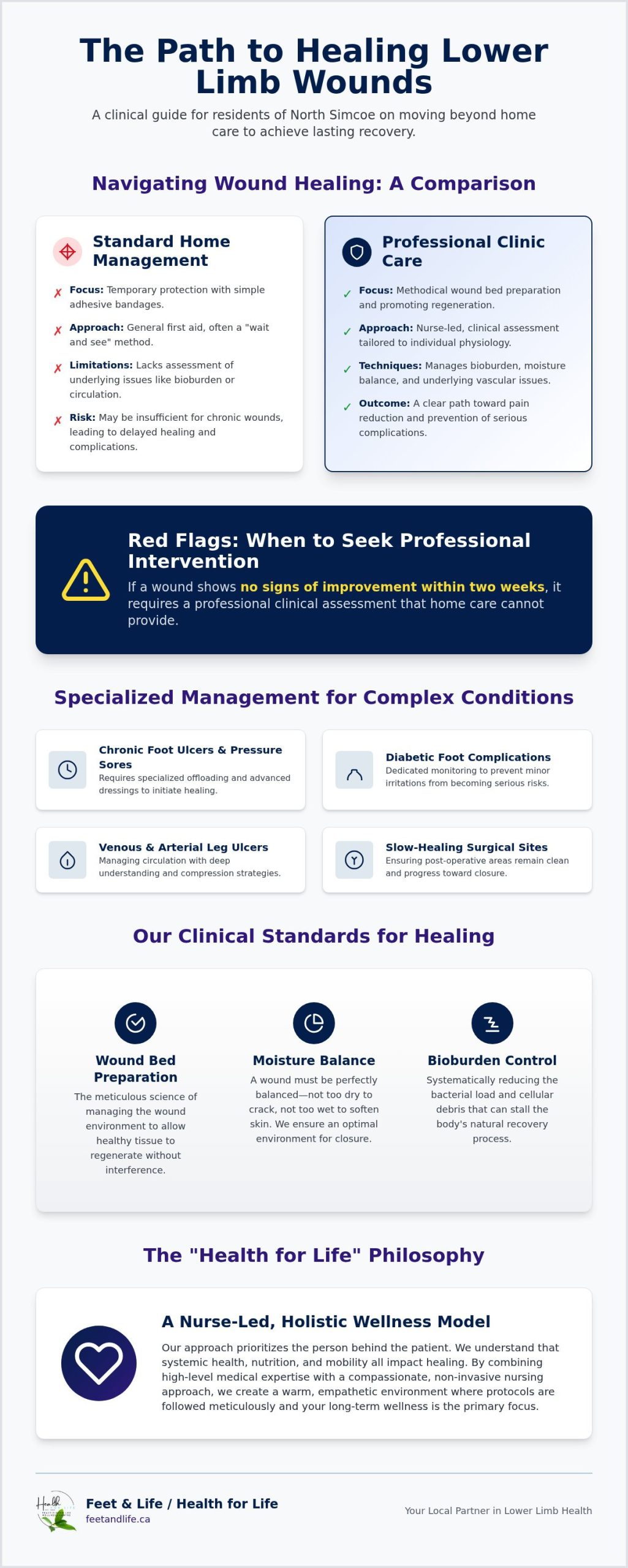
Accessing specialized medical attention shouldn’t require a stressful trek down the Highway 400 corridor. For many in North Simcoe, finding a reliable wound care clinic Midland is about more than just convenience; it’s about ensuring that time-sensitive injuries get the professional eyes they need without the exhaustion of long-distance travel. When a wound doesn’t show signs of improvement within two weeks, it requires a level of assessment that goes beyond what typical home care can provide.
While a simple adhesive bandage might suffice for a minor scrape, the process of wound healing for chronic lower limb injuries is far more complex. General first aid focuses on temporary protection, but clinical wound management involves a methodical approach to bioburden control, tissue health, and underlying vascular issues. Our nurse-led approach ensures that every patient receives a plan tailored to their specific physiology, focusing on non-invasive medical foot care that supports the body’s natural recovery cycles.
Serving Midland, Port Severn, and Huronia
We’ve designed our services to be a local pillar for the Georgian Bay area. Residents in Midland, Port Severn, and the surrounding Huronia region often face challenges when trying to coordinate care between different providers. By offering a regional centre for specialized lower limb management, we help reduce the physical and emotional stress associated with limited mobility. It’s our goal to connect seamlessly with your existing healthcare team in North Simcoe, providing a stable and trustworthy environment where your healing is the primary focus. You don’t have to navigate the complexities of chronic care alone when professional support is available right in your community.
Conditions We Manage at Our Clinic
Our clinical standards are built around the management of complex, slow-healing injuries that require meticulous attention. We focus on the intersection of wellness and specialized clinical intervention to improve your overall quality of life. Common conditions managed at our wound care clinic Midland include:
- Chronic foot ulcers and pressure sores: These often require specialized offloading techniques and advanced dressing selections to initiate healing.
- Diabetic foot complications: We provide dedicated monitoring to prevent minor irritations from escalating into serious health risks.
- Venous and arterial leg ulcers: Managing these requires a deep understanding of circulation and specialized compression strategies.
- Slow-healing surgical sites: Ensuring that post-operative areas on the lower limbs remain clean and progress toward closure.
By addressing these concerns with a dedicated nursing sensibility, we help patients realize better outcomes and avoid the frustration of wounds that simply won’t close on their own.
Advanced Wound Management: Our Clinical Standards for Healing
Professional healing is a precise science that requires more than just keeping an injury covered. At our wound care clinic Midland, the focus shifts toward meticulous wound bed preparation. This involves managing the bioburden, which refers to the bacterial load and cellular debris that can stall the body’s natural recovery. By maintaining a clean, controlled environment, we allow healthy tissue to regenerate without the interference of harmful microorganisms.
Moisture balance plays a pivotal role in this process. A wound that is too dry will crack and fail to close; however, one that is too wet can lead to maceration, where the surrounding skin softens and breaks down. Our clinical standards ensure that the wound environment remains optimal for cellular migration and closure. Clinical debridement is a non-invasive tool used to remove non-viable tissue and promote the natural recovery of healthy skin.
The Nurse-Led Approach to Wound Care
A nurse-led perspective prioritizes the person behind the patient. While the clinical focus remains on the lower limb, we realize that systemic health, nutrition, and mobility all impact how quickly you heal. This holistic wellness model ensures that protocols are followed meticulously while maintaining a warm, empathetic environment. By looking at the whole patient, our nursing team can identify subtle changes in health that might otherwise be overlooked. This dedicated approach fosters a sense of stability and trust, which is essential for long-term health outcomes.
Specialized Tools for Lower Limb Recovery
Managing wounds on the feet and legs requires a deep understanding of biomechanics. Unlike other areas of the body, the feet must bear weight, which can complicate the healing of ulcers or sores. At our wound care clinic Midland, we utilize advanced dressing selections tailored to specific exudate levels and tissue types. These tools are not one-size-fits-all; they are selected based on the unique needs of your skin and circulatory health. We also consider how pressure and friction impact the site, often recommending non-invasive adjustments to help protect the area during the recovery phase.
Our infection control protocols involve constant monitoring for signs of heat, redness, or unusual drainage. By catching these indicators early, we can adjust the plan of care before minor issues escalate. If you are struggling with a persistent injury, exploring professional wound management can provide the clinical oversight needed to prevent further complications and restore your quality of life.
Navigating Wound Healing: Professional Clinic Care vs. Home Management
Many patients begin their recovery journey by managing minor cuts or scrapes at home. It’s a practical first step, but it’s vital to recognize when an injury has moved beyond the scope of a standard first-aid kit. A wound is generally considered chronic or non-healing if it hasn’t shown significant progress, such as a 30 percent reduction in size, after four weeks of standard care. At our wound care clinic Midland, we often see residents who have spent months “waiting and seeing” while their condition remains stagnant or slowly worsens.
Specific red flags should prompt an immediate shift from home care to professional assessment. If you notice spreading redness, localized heat, a foul odour, or a sudden increase in fluid drainage, the wound may be infected. For those living with diabetes, the risks of delayed treatment are even higher. Because neuropathy can dull the sensation of pain, a seemingly small scrape can evolve into a deep ulcer without the patient realizing the severity. Addressing these concerns with clinical facts rather than hope is the safest way to protect your long-term mobility.
Comparison: Home Care vs. Specialized Clinic Care
The primary difference between home management and professional intervention lies in the technology and expertise applied to the injury. Retail bandages are often designed for simple protection rather than active healing. In contrast, a specialized clinic utilizes medical-grade dressings, such as silver-impregnated foams or calcium alginates, which are selected based on the wound’s specific tissue type and moisture levels. Professional monitoring also replaces subjective “self-checks” with objective clinical measurements, ensuring that every change in the wound bed is documented and addressed by a nurse who specializes in lower limb health.
The Dangers of Improper Wound Care
Improperly managed wounds carry a high risk of developing cellulitis, a bacterial infection that can spread deep into the skin and eventually the bloodstream. Without professional intervention at a wound care clinic Midland, a chronic ulcer can progress toward the need for invasive surgical procedures or, in extreme cases, amputation. Beyond the physical risks, there’s a clear economic benefit to seeking early clinical care. Healing a wound quickly through specialized nursing protocols is far more cost-effective than managing the long-term disability and healthcare costs associated with systemic infections or permanent limb loss. Professional care isn’t just about closure; it’s about preserving your independence and quality of life.
Your First Visit: Comprehensive Wound Assessment in the Midland Area
Accessing care at a wound care clinic Midland begins with a methodical intake process designed to uncover the root cause of non-healing tissue. To ensure your first visit is as productive as possible, we ask that you bring a current list of medications and any previous records related to your injury. It is also helpful to bring the footwear you wear most frequently; this allows our team to analyze wear patterns and identify potential pressure points that may be contributing to the problem. The process is thorough and patient, ensuring you never feel rushed during your clinical evaluation.
The exam itself involves a precise physical evaluation of the lower limb. We measure the wound’s dimensions with clinical accuracy and document the status of the wound bed. We look for healthy granulation tissue and identify any areas that require specialized intervention to restart the healing cycle. This methodical documentation provides a baseline that helps us realize exactly how your body is responding to treatment over time. Once the assessment is complete, we coordinate with your primary care physician or family doctor to ensure your entire healthcare team remains informed about your progress.
Evaluating Circulation and Sensation
A significant portion of your first visit focuses on vascular health and neurological function. We check for neuropathy and assess blood flow because oxygen is the primary fuel for tissue repair. If circulation is compromised, even the most advanced dressings will struggle to close a wound. We utilize non-invasive testing methods to check the pulses in your feet and evaluate your level of sensation. This is a critical step for patients with diabetic complications, as it helps us identify risks that may not be visible to the naked eye. Understanding these systemic factors allows us to create a more stable environment for recovery.
Education for Ongoing Wound Management
Healing continues long after you leave the clinic. We provide dedicated education on how to protect the wound site between visits, including specific techniques for keeping the area clean and dry. Nutrition and lifestyle factors also influence how quickly your body can rebuild tissue; therefore, we discuss the role of protein and hydration in your recovery plan. If you rely on a family member for assistance, we offer training for caregivers so they feel confident in providing the necessary support at home. This collaborative approach ensures that you are an active participant in your own wellness journey. If you are ready to take the next step in your recovery, you can book your initial wound assessment to receive a professional, nurse-led evaluation.
Why Midland Patients Trust Feet & Life / Health for Life for Professional Wound Care
Choosing a wound care clinic Midland is a decision that impacts your long-term mobility and independence. At Feet & Life / Health for Life, we’ve built our practice on a commitment to non-invasive, high-standard medical foot care that respects the body’s natural healing capacity. Our “Health for Life” philosophy is the cornerstone of everything we do. It means we look past the clinical presentation of a wound to see the person behind the patient. We realize that a non-healing ulcer isn’t just a medical concern; it’s a barrier to enjoying life in North Simcoe, whether that’s walking along the Georgian Bay shore or staying active in your own home.
Our nurse-led approach provides a stable, reassuring environment where your recovery is managed with meticulous attention to detail. We coordinate care for residents across Simcoe County, acting as a local alternative to over-burdened hospital environments for non-emergency chronic care. By focusing specifically on lower limb health, we provide a level of specialization that general family medicine often cannot match. This dedicated focus allows us to help you realize better outcomes and a higher quality of life through steady, methodical management.
Expertise in Diabetic Foot Management
Diabetic patients require a higher standard of vigilance because the risk of complications is significantly elevated. We focus on preventative strategies designed to avoid future ulcerations and protect the integrity of the skin. This often involves the integration of Custom Orthotics, which are essential for wound offloading. By redistributing pressure away from sensitive areas or active wound sites, these specialized tools provide the protection necessary for tissue to close and remain stable. Our Diabetic Foot Care protocols are thorough, ensuring that even the smallest changes in sensation or circulation are addressed before they become serious health risks.
Booking Your Appointment Near Midland
We’ve made it easy for residents in Midland, Penetanguishene, and Port Severn to access the specialized care they deserve. You don’t have to navigate the stress of travelling to major urban centres like Toronto to find professional nursing expertise. Starting your recovery journey begins with a professional consultation where we listen to your concerns and develop a clear, actionable plan. We are proud to be a reliable community pillar, providing the North Simcoe region with trustworthy, expert care that focuses on long-term wellness rather than quick fixes.
Ready to start healing? Book your wound assessment with Feet & Life / Health for Life today and take the first step toward reclaiming your mobility and peace of mind.
Reclaiming Your Mobility Through Specialized Care
Recovery from a chronic lower limb injury requires more than patience; it requires a methodical, specialized approach that addresses the root cause of non-healing tissue. By choosing a professional wound care clinic Midland, you gain access to advanced bioburden control and expert nursing assessments that standard home care simply cannot provide. This transition is essential for preventing diabetic complications and ensuring that your recovery remains on a stable, predictable path toward wellness.
Our nurse-led team is dedicated to providing compassionate clinical care that prioritizes your long-term mobility and quality of life. We focus on the person behind the patient, ensuring that every treatment plan is as unique as the individual receiving it. If you’re ready to move past the “wait and see” phase and start a proactive healing journey, we’re here to guide you. Schedule a professional wound assessment at our clinic today to receive the specialized attention your health deserves. You don’t have to navigate the complexities of wound management alone; professional support is available right here in North Simcoe to help you reclaim your active lifestyle.
Frequently Asked Questions
What should I look for in a wound care clinic in Midland?
You should prioritize a facility that offers specialized nursing expertise and a dedicated focus on lower limb health. A high-quality clinic will emphasize methodical wound bed preparation and use medical-grade dressings tailored to your specific tissue type. It’s also important to find a practitioner who coordinates care with your primary physician to ensure a stable, holistic approach to your recovery.
How do I know if my foot wound is infected and needs professional care?
Signs of infection include spreading redness, localized heat, increased swelling, or a foul odour emanating from the wound site. If you notice pus-like drainage or if the area becomes increasingly painful, you should visit a wound care clinic Midland for an immediate assessment. Catching these red flags early can prevent the infection from spreading to the bone or bloodstream.
Do I need a doctor’s referral to visit your wound care clinic?
You don’t typically require a formal referral to access our private nursing services, though we always suggest verifying this with your insurance provider. We operate as a practitioner-led wellness centre that welcomes residents looking for specialized lower limb management. Our team maintains open communication with your family doctor to ensure your healing plan aligns with your broader medical history and health goals.
How long does it typically take for a chronic foot ulcer to heal?
Healing timelines depend on your circulation, nutritional status, and the severity of the wound, but many patients see significant progress within four to twelve weeks of professional care. Consistency is the most important factor in this process. By following a structured clinical protocol at a wound care clinic Midland, you can realize faster closure and reduce the risk of the injury reopening.
Is specialized wound care covered by OHIP or private insurance in Ontario?
Wound care provided through Ontario Health atHome community clinics is covered by OHIP for eligible patients. Private specialized nursing services, such as those focusing on medical foot care and wound management, are often covered under extended health insurance benefits. It’s best to check your specific policy details to understand your coverage for practitioner-led clinical services.
What is the difference between a podiatrist and a medical foot care nurse for wounds?
Podiatrists often focus on structural diagnoses and invasive surgical solutions, while medical foot care nurses specialize in the clinical management of skin and soft tissue. Our nursing approach emphasizes the “Health for Life” philosophy, focusing on non-invasive wound bed preparation and empathetic, patient-centered care. We prioritize the body’s natural healing cycles and long-term wellness through meticulous, step-by-step protocols.
Can custom orthotics help my foot wound heal faster?
Custom Orthotics are a vital tool for healing because they provide essential “offloading” for wounds on the bottom of the foot. By redistributing your body weight away from the injury, these devices prevent constant mechanical pressure from damaging new, fragile tissue. This protection allows the wound bed to remain stable, which significantly accelerates the closure of chronic ulcers and prevents new sores from forming.
What happens if a foot wound is left untreated?
An untreated wound can quickly escalate into cellulitis, a deep-tissue infection, or even osteomyelitis, which is an infection of the bone. For individuals with diabetes, a minor scrape can lead to serious complications that may eventually require invasive surgical intervention. Seeking professional care early is the most effective way to preserve your mobility and prevent a localized issue from becoming a systemic health crisis.