
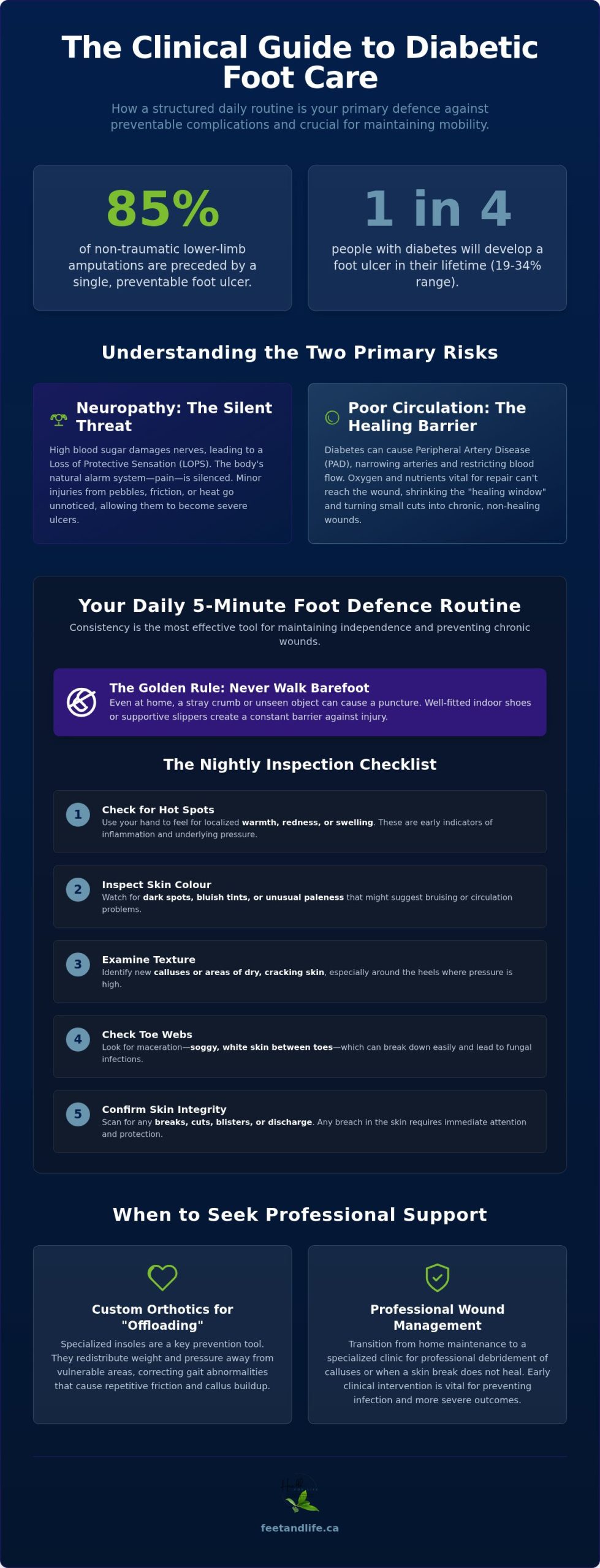
Approximately 85% of non-traumatic lower-limb amputations are preceded by a single, preventable foot ulcer. For the 19% to 34% of people living with diabetes who will face a foot ulcer in their lifetime, these statistics can feel daunting. It is understandable if you feel a sense of anxiety regarding your long-term mobility, especially if limited flexibility makes it difficult to perform thorough self-examinations or if you have been frustrated by conflicting medical advice.
Establishing a consistent daily foot care routine for diabetics is your most effective tool for maintaining independence and preventing chronic wounds. This guide simplifies the process by bridging the gap between high-level clinical expertise and practical, at-home wellness. You will learn the specific steps required to protect your skin’s integrity, how custom orthotics can proactively manage high-pressure areas, and the clinical signs that indicate you should visit our Barrie centre for professional wound care. By combining meticulous daily rituals with specialized medical support, you can navigate your health journey with confidence and stability.
Key Takeaways
- Learn how a structured daily foot care routine for diabetics, including a meticulous five-minute inspection, acts as your primary defence against silent complications.
- Understand why professional medical foot care is essential for managing calluses and how specialized clinical debridement differs from a standard cosmetic pedicure.
- Discover the importance of “offloading” through custom orthotics to redistribute weight and correct gait abnormalities that cause repetitive friction.
- Recognize the clinical signs of neuropathy and why the “golden rule” of never walking barefoot is vital for preventing unnoticed skin breaks.
- Gain clarity on when to transition from home maintenance to professional wound management at our specialized clinic in Barrie.
The Clinical Reality of Diabetic Foot Ulcers
A diabetic foot ulcer is a clinical breakdown of the skin and underlying tissues, typically occurring on the soles of the feet or over bony prominences. These wounds are uniquely dangerous because they often refuse to close through the body’s natural repair mechanisms. For residents in Barrie managing diabetes, understanding this clinical reality is the first step toward limb preservation. High blood sugar levels can damage both the nerves and the blood vessels, creating a “perfect storm” where injuries occur easily but heal slowly. A consistent daily foot care routine for diabetics is not just a suggestion; it is a clinical necessity for anyone hoping to avoid the progression toward chronic wound management and the fear of amputation.
How Neuropathy Masks Early Warning Signs
Many patients describe a frustrating paradox: their feet may feel numb, yet they can also experience tingling or “electric” sensations. This condition is peripheral neuropathy. It often leads to a Loss of Protective Sensation (LOPS), which means the body no longer registers pain from pressure, heat, or sharp objects. A small pebble inside a shoe or a blister from a new pair of boots can go unnoticed for an entire day of walking. Without the signal of pain to prompt a change in behaviour, the repetitive stress of every step turns a minor skin break into a deep, infected cavity. Peripheral neuropathy effectively silences the body’s alarm system, allowing minor irritations to escalate into deep ulcers because the patient lacks the pain response needed to stop the activity.
The Connection Between Circulation and Healing
While neuropathy prevents you from feeling the injury, poor circulation prevents your body from fixing it. Diabetes often leads to Peripheral Artery Disease (PAD), a condition where the arteries in the legs become narrow and less flexible. Oxygen-rich blood is the primary fuel for tissue repair; it carries the nutrients and white blood cells needed to fight infection and rebuild skin. When blood flow is restricted, the “healing window” shrinks significantly. Minor tears that would normally close in forty-eight hours may remain open for weeks, providing a gateway for bacteria to enter the deeper tissues. This lack of blood flow is a primary barrier to natural recovery. It’s why our nurse-led clinic emphasizes non-invasive interventions and professional monitoring to support the body’s limited healing capacity. By following a daily foot care routine for diabetics and seeking professional checks, you can identify these issues before they become life-altering. Prevention remains the most reliable way to maintain your mobility and long-term quality of life.
A Daily Routine for Diabetic Foot Ulcer Prevention
Maintaining a consistent daily foot care routine for diabetics is your primary defence against the complications discussed in the previous section. The most fundamental rule for limb safety is to never walk barefoot, even within the sanctuary of your own home. A stray crumb, a loose carpet staple, or a small object on the floor can cause a puncture that goes unnoticed due to neuropathy. Protecting your feet with well-fitted indoor shoes or supportive slippers ensures a constant barrier against mechanical trauma and accidental injury.
Establish a methodical inspection ritual every night before bed. This five-minute commitment allows you to catch minor changes before they evolve into clinical concerns. Consistent with daily foot care tips from the CDC, you should inspect every surface of your feet, including the heels and the spaces between your toes. Early detection of a “hot spot” can be the difference between a simple adjustment in footwear and a months-long healing process.
The 5-Point Daily Inspection Checklist
If limited flexibility makes it difficult to see your soles, use a magnifying mirror placed on the floor or ask a family member for assistance. Your checklist should include looking for these specific clinical markers:
- Hot Spots: Use your hand to feel for areas of localized warmth, redness, or swelling. These are early indicators of inflammation and underlying pressure.
- Skin Colour: Watch for dark spots, bluish tints, or unusual paleness that might suggest bruising or circulation issues.
- Texture: Identify new calluses or areas of dry, cracking skin, especially around the heels.
- Toe Webs: Check for maceration, which is soggy, white skin between toes that can lead to fungal infections.
- Integrity: Look for any breaks, blisters, or discharge that require immediate attention.
Hygiene and Skin Integrity Standards
Hygiene involves more than just cleanliness; it requires careful thermal management. Always test bath water with your elbow or a thermometer to ensure it is lukewarm. Neuropathy can prevent you from feeling a scald, leading to severe thermal burns. After washing, dry your feet thoroughly by patting rather than rubbing. While applying a specialized cream can keep the rest of your foot supple and prevent cracks, never apply lotion between the toes as this promotes bacterial growth.
Avoid “bathroom surgery” at all costs. Attempting to trim your own calluses or corns with scissors or razors is incredibly dangerous and often leads to infection. Specialized diabetic foot care provides a safer alternative through clinical debridement performed by a nurse. Finally, choose moisture-wicking socks with non-binding seams to support circulation and reduce shear forces against the skin. This combination of home vigilance and professional oversight creates a stable environment for long-term foot health.
Professional Diabetic Foot Checks: What to Expect
While your daily foot care routine for diabetics provides the first line of defence, a professional medical foot care appointment offers a level of clinical scrutiny that a home mirror simply cannot match. It’s essential to distinguish these visits from a standard aesthetic pedicure found in a spa. While a pedicure focuses on the appearance of the nails and skin, medical foot care is a specialized intervention designed to identify and treat pathology. At our nurse-led clinic, we provide a rigorous medical assessment within a reassuring, patient-centered environment. This empathetic approach ensures you feel supported while we use our clinical training to look for subtle signs of complications that might otherwise go unnoticed.
The Biomechanical and Neurological Exam
During your visit, we perform several specialized tests to map the current state of your foot health. The 10g monofilament test is a cornerstone of this neurological exam. By applying a small, flexible filament to specific points on the sole, we can determine exactly where sensory perception has diminished. This helps us quantify the degree of neuropathy and identify areas at the highest risk for injury. We also conduct a thorough vascular assessment by checking the pedal pulses and monitoring skin temperature in the feet and ankles. These clinical markers provide vital information about your circulation and your body’s ability to heal minor skin breaks. Additionally, we evaluate joint mobility and identify structural changes, such as bunions or hammertoes, which often shift weight in ways that create dangerous friction points.
Clinical Management of Calluses and Corns
For a patient with diabetes, a callus is much more than a cosmetic concern; it effectively acts like a stone trapped inside your shoe. Because calloused skin is thickened and inelastic, it does not give when you walk. Instead, it concentrates mechanical pressure on the soft, vulnerable tissue underneath. This can lead to “silent” tissue breakdown, where an ulcer forms beneath the callus before any external wound is visible. We prevent these pre-ulcerative lesions through professional clinical debridement. This process involves the safe, sterile reduction of thickened skin using specialized medical instruments. High-risk patients typically require these professional reviews on a quarterly basis. By combining your daily foot care routine for diabetics with regular clinical maintenance at our Barrie centre, you create a comprehensive safety net that protects your long-term mobility.
Custom Orthotics as a Prevention Tool
While a meticulous daily foot care routine for diabetics allows you to monitor your skin’s health, custom orthotics provide the mechanical intervention needed to prevent damage in the first place. For many patients, the primary cause of skin breakdown is not a single injury, but rather repetitive mechanical stress. Offloading is the clinical practice of redistributing this weight away from high-pressure areas to more resilient parts of the foot. By providing a stable foundation, medically engineered orthotics act as a proactive shield, ensuring that your daily activities do not inadvertently lead to tissue trauma. In Barrie, our approach focuses on using these tools to preserve long-term mobility before a wound ever has the chance to develop.
There is a significant difference between over-the-counter insoles and medically engineered custom orthotics. Generic retail inserts often provide a sense of comfort through soft cushioning, but they lack the structural integrity required to correct gait abnormalities. For a diabetic patient, an improperly fitted insole can actually increase friction or create new pressure points. Custom orthotics are built from a precise 3D model of your foot, allowing for a level of accuracy that supports your unique anatomy and protects your health. If you are ready to move beyond generic solutions, you can book a biomechanical assessment for custom orthotics at our Barrie clinic.
Identifying High-Pressure Hot Spots
Our biomechanical assessments are designed to locate areas at risk of skin breakdown before the skin actually opens. By using gait analysis, we can observe how your foot moves through each phase of a step, identifying where excessive shear forces or “hot spots” are occurring. This predictive approach is vital because it allows us to intervene while the tissue is still intact. Custom inserts neutralize mechanical stress on the metatarsals by ensuring the entire sole of the foot shares the load of every step, effectively eliminating the friction that leads to calluses and ulcers.
Custom Engineering for Diabetic Safety
The materials used in diabetic-specific orthotics are chosen for their ability to protect sensitive skin. We often utilize soft-tissue supplementation and specialized cushioning materials that maintain their shape under constant pressure. Depending on your needs, we may recommend an accommodative design, which prioritizes cushioning for a rigid foot, or a functional design to correct excessive motion. These devices are carefully integrated with diabetic-friendly footwear to ensure there is no rubbing against the top or sides of the foot. When combined with your daily foot care routine for diabetics, these engineered solutions provide the most robust defence possible against the mechanical causes of diabetic foot ulcers.
Accessing Specialized Care in Barrie and Simcoe County
Feet & Life serves as a dedicated community pillar for residents in Barrie, Innisfil, and Orillia. While a daily foot care routine for diabetics is your first line of defence, having a local clinical partner ensures you aren’t navigating complex health challenges alone. Our nurse-led clinic specializes in non-invasive diabetic foot care and wound management, offering a vital bridge between your home rituals and your broader medical team. We work alongside your General Practitioner and diabetes specialists to ensure your lower-limb health is integrated into your overall wellness strategy. Establishing a clinical baseline today provides the data needed to track changes in your circulation or nerve health over the coming years.
Red Flags Requiring Immediate Clinical Attention
There are moments when home care is no longer sufficient. If you notice a “wait and see” approach is tempting, remember that early intervention is the most significant factor in limb preservation. Approximately 85% of non-traumatic lower-extremity amputations are preceded by a foot ulcer; therefore, timing is critical. You should bypass your standard daily foot care routine for diabetics and seek immediate professional wound management if you observe any of the following clinical red flags:
- An unusual or foul odour coming from the foot.
- New drainage, pus, or moisture appearing on your socks.
- Spreading redness or “streaking” around a minor sore, blister, or callus.
- Localized heat that does not subside after several hours of rest.
These symptoms often indicate an underlying infection that requires sterile, non-invasive wound support. Our Barrie clinic provides the specialized environment needed to debride tissue safely and apply advanced dressings that promote healing while protecting the surrounding skin.
Your Prevention Roadmap at Feet & Life
Your first consultation at our Barrie centre is designed to replace confusion with a clear, actionable plan. We begin with a comprehensive assessment of your skin integrity, vascular health, and neurological status. This initial visit is not just an exam; it is an educational session where we show you exactly what to look for based on your specific foot shape and gait. This baseline allows us to create a personalized foot health plan tailored specifically to your activity level and risk profile. We don’t just treat symptoms; we provide the education and clinical maintenance required to protect your mobility for the long term. By identifying structural changes early, we can recommend custom orthotics or specific footwear adjustments before a pressure point becomes a wound. Taking this step now ensures that your daily habits are supported by professional expertise.
Book your professional diabetic foot check in Barrie today to secure your mobility and gain peace of mind through expert, nurse-led care.
Secure Your Mobility Through Professional Clinical Partnership
Protecting your long-term mobility requires a disciplined dual approach. While a consistent daily foot care routine for diabetics allows you to monitor for early warning signs, professional clinical oversight provides the diagnostic tools and therapeutic interventions necessary for true prevention. By combining your home rituals with regular medical foot care and specialized biomechanical offloading, you can effectively manage the risks associated with neuropathy and poor circulation. These proactive steps are essential for preventing the progression from a minor irritation to a chronic wound.
At Feet & Life, we are dedicated to providing the specialized care required to keep you moving safely. Our nurse-led clinic offers comprehensive biomechanical assessments for custom orthotics and meticulous diabetic foot care for residents in Barrie, Innisfil, and across Simcoe County. Establishing a clinical baseline today is the most effective way to prevent future complications and secure your independence. We prioritize a patient-centered approach that focuses on your unique needs and overall quality of life.
Schedule your Diabetic Foot Assessment at our Barrie Clinic to take the next step in your wellness journey. You don’t have to navigate these health challenges alone; expert support is available to help you maintain your health and confidence.
Frequently Asked Questions
What is the very first sign of a diabetic foot ulcer?
The earliest clinical signs of a diabetic foot ulcer are typically localized redness, swelling, or a “hot spot” that feels warmer than the surrounding skin. You might also notice a small amount of clear or yellowish fluid staining your socks even before a visible break in the skin appears. These markers indicate that the underlying tissue is under significant stress and requires immediate clinical attention to prevent a full-thickness wound from developing.
Can I treat a small foot sore at home if I have diabetes?
You should avoid self-treating any foot sore at home because minor injuries can escalate into severe infections with alarming speed. While a non-diabetic might use a standard adhesive bandage, a diabetic patient requires a clinical assessment to ensure there is no underlying infection or circulation issue. Seeking professional wound care early is the most effective way to ensure the injury heals correctly and doesn’t lead to long-term mobility complications.
How often should I have a professional diabetic foot check in Ontario?
Most clinical guidelines in Ontario recommend that people with diabetes have a professional foot examination at least once per year. If you have been identified as high-risk due to neuropathy or previous ulcers, your nurse-led team will likely suggest quarterly visits every three months. Integrating these clinical checks with your daily foot care routine for diabetics ensures that calluses are managed before they cause tissue breakdown.
Do custom orthotics really help prevent diabetic ulcers?
Custom orthotics are a primary tool for prevention because they redistribute mechanical pressure away from vulnerable areas of the foot. By correcting gait abnormalities and providing specialized cushioning, these medically engineered inserts eliminate the repetitive friction that causes calluses and skin breakdown. This proactive “offloading” approach significantly reduces the risk of ulcer formation in high-pressure zones like the heels and metatarsals, protecting your skin’s integrity.
Are diabetic foot ulcers always painful?
Diabetic foot ulcers are frequently painless because peripheral neuropathy damages the nerves that transmit pain signals to the brain. This lack of sensation is exactly why they are so dangerous; a patient might walk on a deep wound for days without realizing it exists. Because you cannot rely on pain as an alarm, your daily foot care routine for diabetics must include a visual inspection to catch silent injuries before they become infected.
What should I do if I notice a callus starting to turn red or purple?
If a callus changes colour to red, purple, or dark brown, you should contact a medical foot care specialist immediately for an assessment. This discolouration often indicates that bleeding or tissue breakdown is occurring underneath the thickened skin, a condition known as a pre-ulcerative lesion. Professional debridement is required to remove the callus safely and treat the underlying wound before a serious infection or deep ulcer develops.
Why is walking barefoot so dangerous for people with diabetes?
Walking barefoot is dangerous because it leaves your feet vulnerable to small punctures, splinters, or thermal burns that you may not feel due to nerve damage. Even a minor scratch from a household object can become a gateway for bacteria, leading to a deep-seated infection that is difficult to treat. Wearing supportive indoor shoes provides a constant protective barrier that is essential for maintaining skin health and preventing unnoticed trauma.
Does OHIP cover professional medical foot care or orthotics in Barrie?
As of 2026, the Ontario Health Insurance Plan (OHIP) does not cover the cost of custom orthotics or routine medical foot care services. While OHIP provides partial coverage for visits to a registered podiatrist, covering between $7 and $16 per visit up to an annual maximum of $135, most patients rely on private insurance. Residents of Barrie should check their extended health benefits, as many plans cover a significant portion of specialized foot care costs.