
A small blister after a walk, a crack in a dry heel, or a toenail that catches on a sock can become more serious when diabetes is involved. Diabetic foot care Barrie residents receive should focus on finding these changes early, protecting the skin, and helping people stay mobile with confidence. For many people, foot care is not simply about comfort. It is part of preventing infection, wounds, falls, and avoidable loss of independence.
Diabetes can affect the nerves, circulation, skin, and immune response in the lower limbs. That combination means a problem may develop quietly, without the pain that would normally prompt someone to seek help. Regular attention, safe care, and a clear plan for responding to changes can make a meaningful difference.
Why diabetes changes foot health
High blood glucose over time can damage small nerves in the feet, causing peripheral neuropathy. Some people notice burning, tingling, numbness, or a sensation of walking on something that is not there. Others lose protective sensation almost completely. A pebble in a shoe, a hot bath, a pressure point from footwear, or an ingrown nail may then cause an injury without being felt.
Diabetes may also reduce blood flow, particularly when peripheral arterial disease is present. Circulation delivers oxygen and nutrients that support healing. When blood flow is limited, even a minor cut can take longer to close and may be more vulnerable to infection. Dry skin, calluses, foot deformities, swelling, and reduced mobility can add further pressure to already sensitive areas.
This does not mean every person with diabetes will develop a wound. Risk varies according to sensation, circulation, previous ulcers, foot shape, kidney health, vision, mobility, smoking history, and how well diabetes is managed. It does mean that prevention should be personal rather than one-size-fits-all.
What daily diabetic foot care should include
A brief daily check is one of the most effective habits a person with diabetes can build. Look at the tops, soles, heels, sides, and spaces between the toes. A hand mirror can help, or a family member or caregiver can assist when bending, vision, or balance is difficult.
Look for redness, swelling, new callus buildup, blisters, cracks, cuts, drainage, colour changes, or areas that feel warmer than the surrounding skin. Check your socks for blood or fluid and your shoes for rough seams, stones, or objects before putting them on. A change that seems small is still worth taking seriously when sensation is reduced.
Wash feet in lukewarm water and dry carefully, especially between the toes. Test water with an elbow or thermometer if neuropathy is present, since feet may not accurately detect heat. Apply moisturizer to dry skin on the tops and bottoms of the feet, but avoid placing cream between toes, where excess moisture can encourage skin breakdown or fungal concerns.
Wear clean, well-fitting socks and supportive footwear whenever you are walking, including indoors. Bare feet increase the chance of cuts, burns, splinters, and stubbed toes. Shoes should have enough room in the toe box, stable soles, and no areas that rub. A shoe that feels fine for five minutes can still create pressure after several hours, so comfort during real daily activity matters.
When self-care is not the safest choice
Nail trimming can be risky when a person has numbness, poor circulation, thickened nails, limited flexibility, shaky hands, arthritis, vision changes, or a history of foot wounds. Cutting too close, digging into nail corners, or using sharp tools to remove calluses can create an opening in the skin. Chemical corn removers and medicated callus pads are also not appropriate for many people with diabetes because they can damage healthy tissue.
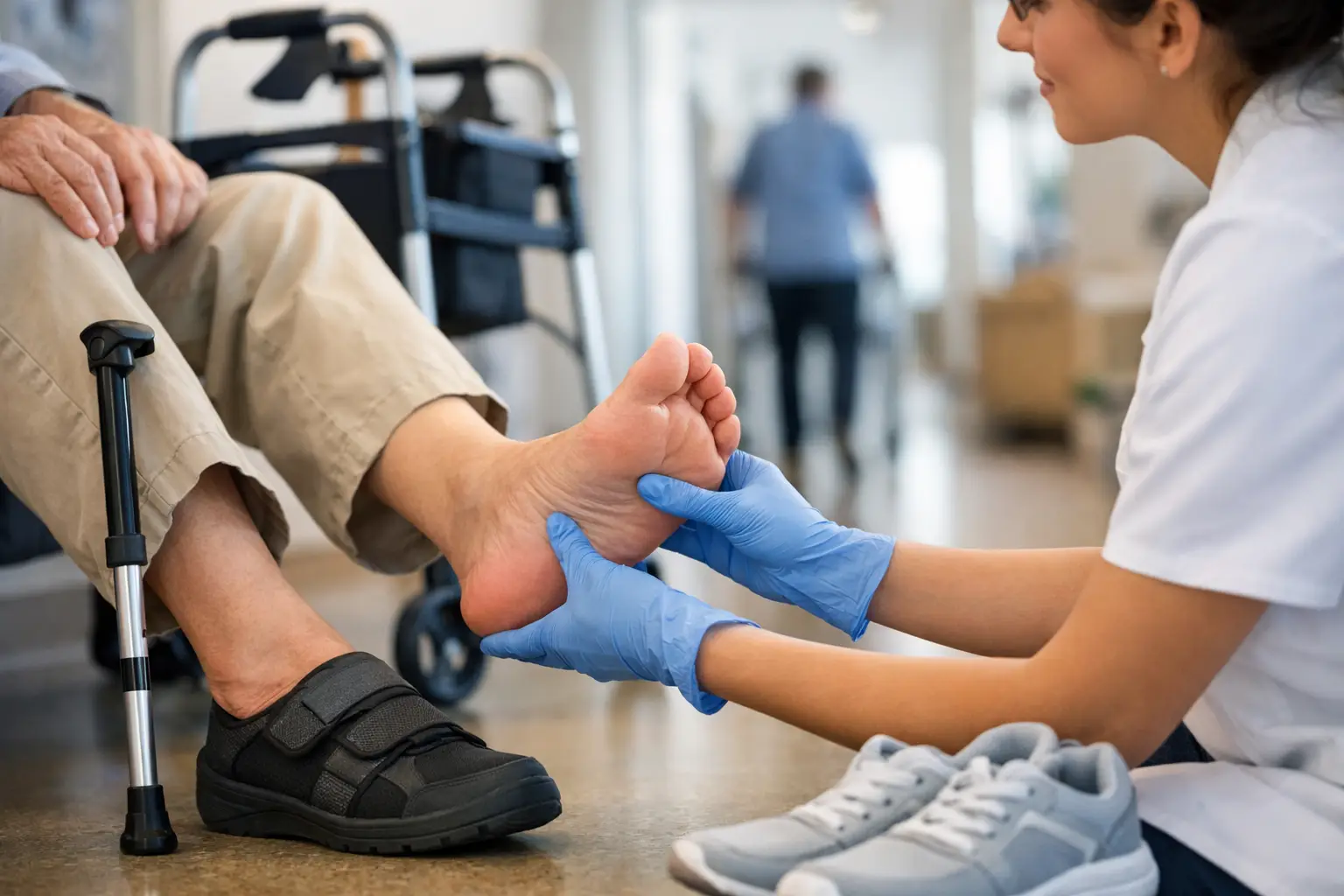
Professional foot care provides a safer option for routine nail and skin maintenance, especially when foot changes are difficult to see or manage. Care may include assessment of skin integrity, circulation concerns, sensation changes, nail thickness, fungal involvement, calluses, pressure areas, and footwear needs. The goal is not merely to make feet look better. It is to reduce avoidable pressure and identify risks before they progress.
At Feet & Life/Health for Life, diabetic foot care is approached through nursing-informed, individualized assessment and treatment. This is particularly valuable for people whose health, mobility, or vision makes regular self-care challenging, as well as for families supporting an older adult or a loved one in long-term care.
Diabetic foot care in Barrie: signs that need prompt attention
Do not wait for a routine appointment if you notice a new wound, blister, puncture, or skin tear. Contact a qualified healthcare provider promptly, particularly if the area is not improving within a day or two, or if you have reduced sensation or poor circulation. Early care can help prevent a minor injury from becoming a deeper ulcer.
Seek urgent medical assessment for spreading redness, warmth, swelling, pus or unusual drainage, foul odour, fever, chills, red streaking, blackened skin, or sudden colour changes in the foot or toes. A foot that becomes unusually hot, swollen, or changes shape without a clear injury also needs prompt attention. In people with neuropathy, this can occasionally signal a serious joint and bone condition that requires immediate protection from weight-bearing.
An infected diabetic foot wound should never be managed only with home remedies. Cover the area with a clean dressing, avoid pressure on it where possible, and follow medical direction. The right pathway may involve wound care, infection management, circulation assessment, offloading pressure with appropriate footwear or devices, and closer follow-up. What is needed depends on the wound, your health history, and how well the tissue is healing.
Footwear, pressure, and mobility are connected
Pressure is a common reason wounds form under the ball of the foot, on the heel, or beside a toe. It can come from footwear, prominent bones, hammertoes, bunions, limited ankle movement, or changes in the way someone walks. Neuropathy can make those pressure points painless, allowing skin to thicken into callus and eventually break down beneath it.
This is where a lower-limb assessment can be useful. Looking at gait, balance, swelling, foot shape, joint movement, and shoe wear patterns helps identify why one area keeps becoming sore or callused. Custom orthotics, accommodative footwear advice, compression therapy when clinically appropriate, or treatment for pain and mobility restrictions may be recommended as part of a wider plan.
Not every person with diabetes needs custom orthotics or compression. Compression requires careful consideration when arterial circulation is reduced, and orthotic support should match the person’s footwear, activity, and pressure pattern. A personalized assessment helps ensure that treatment supports rather than creates new concerns.
A practical routine for ongoing protection
Foot health works best when it is built into normal diabetes care. Daily checks and suitable footwear handle the day-to-day side of prevention. Regular clinical review adds another layer by monitoring changes that may be difficult to feel or see yourself.
If you have had an ulcer, amputation, neuropathy, circulation concerns, or recurrent calluses, your feet may need more frequent professional attention. If your risk is lower and you can safely inspect and care for your feet, appointments may be less frequent. Your primary care provider, diabetes team, and foot-care professional can help determine the schedule that fits your needs.
Bring your usual shoes and a list of medications to appointments when possible. Mention new numbness, cramping when walking, balance changes, swelling, or pain that disturbs sleep. These details can point to nerve, circulation, or mechanical issues that deserve attention beyond the toenails.
Your feet carry you through work, family life, errands, exercise, and the everyday moments that support independence. If something has changed, booking an assessment early is a practical act of care – one that can protect comfort, mobility, and confidence for the road ahead.