
Aching legs at the end of a workday, ankle swelling that worsens by evening, or raised blue veins that seem more noticeable over time can all point to venous circulation concerns. Compression for varicose veins can be a practical part of care for many people, helping reduce discomfort and support day-to-day mobility. It is not a one-size-fits-all treatment, however. The right garment, pressure level, fit, and timing matter – especially when diabetes, arterial disease, neuropathy, wounds, or significant swelling are part of the picture.
Why varicose veins can make legs feel heavy
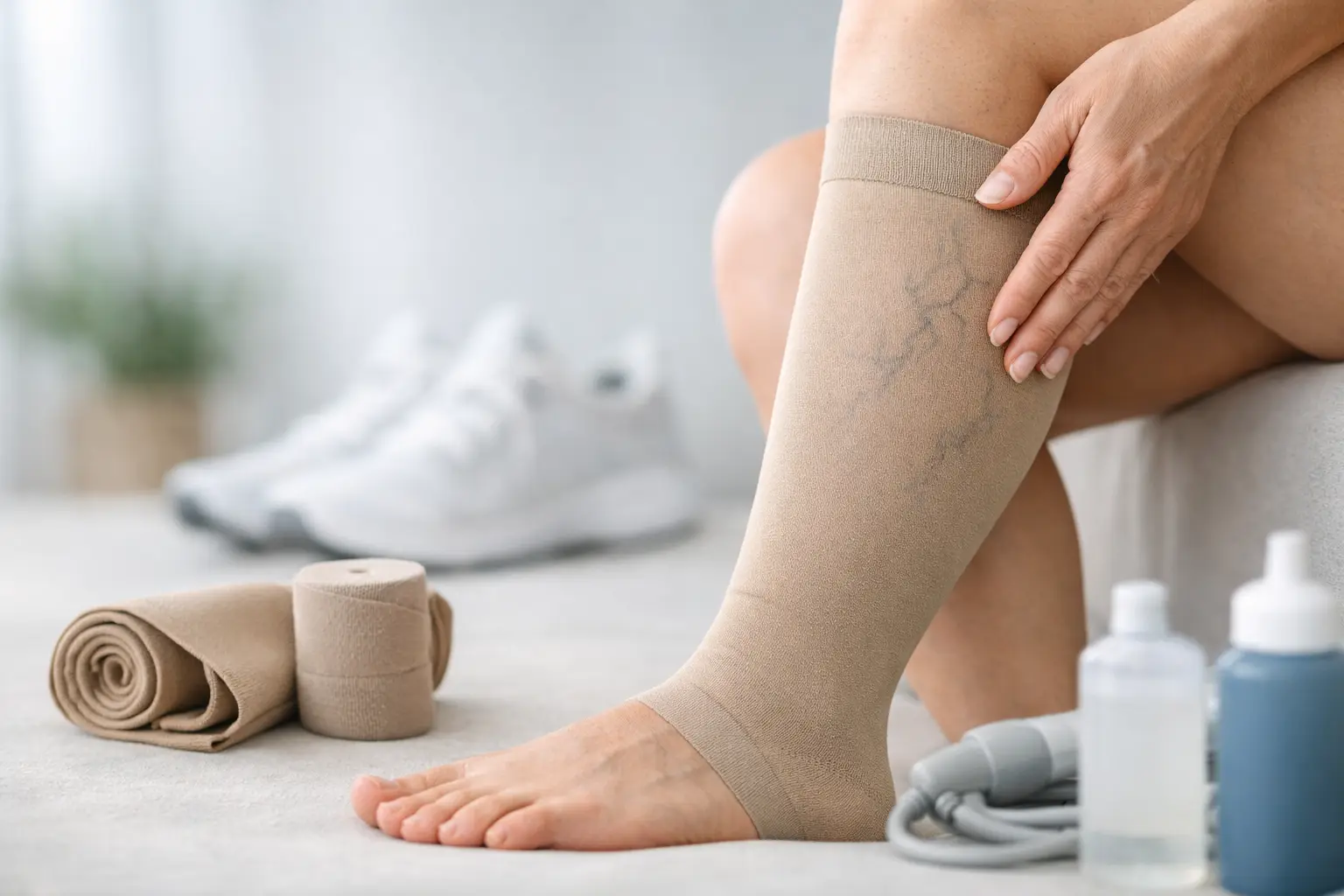
Veins in the legs must move blood upward against gravity. Small valves inside the veins help keep blood travelling in the right direction. When those valves weaken or do not close effectively, blood can pool in the lower legs. This is known as venous insufficiency, and it can contribute to varicose veins: enlarged, twisted veins visible beneath the skin.
Some people are bothered mostly by appearance. For others, the symptoms are far more disruptive. Legs may feel tired, tight, restless, itchy, sore, or heavy, particularly after long periods of standing or sitting. Swelling around the ankles, skin discolouration, dry or fragile skin, and a feeling that socks leave deep marks can also develop over time.
Varicose veins are common, and risk can increase with age, family history, pregnancy, excess body weight, reduced activity, or work that requires long hours on your feet. They are not simply a cosmetic issue when symptoms are progressing or skin health is changing. Persistent pooling can place added stress on the skin and tissues of the lower leg, making early support worthwhile.
How compression for varicose veins works
Medical compression garments apply controlled pressure to the legs. Most are graduated, meaning pressure is firmer at the ankle and gradually decreases farther up the leg. This encourages blood and fluid to move upward rather than collecting around the ankles and calves.
For the right person, compression may reduce swelling, aching, heaviness, and fatigue. It can also support the calf muscle pump – the natural action created when walking and moving the ankle. Compression does not remove varicose veins or repair damaged vein valves. It is a management tool that can improve comfort and help protect lower-limb skin health while other care options are considered.
The benefit depends on consistent, correct use. A garment that is too loose may offer little support. One that is too tight, rolled at the top, bunched at the ankle, or poorly suited to the person’s circulation can cause discomfort, pressure areas, and skin injury.
Compression is not the same as any tight sock
Drugstore support socks, athletic socks, and medical compression stockings are not interchangeable. Medical garments are available in measured compression levels and different lengths, fabrics, toe styles, and designs. Some people need knee-high stockings, while others may require thigh-high options, pantyhose styles, or adjustable compression wraps.
The best choice is based on the location of swelling, leg shape, hand strength, mobility, skin condition, and medical history. For someone with arthritis, limited bending, or reduced hand dexterity, a stocking that is difficult to apply may end up unused. An easier-to-manage garment or a donning aid can make regular wear much more realistic.
When compression needs a professional assessment
Compression is often helpful for venous concerns, but it is not automatically safe for every swollen or painful leg. Arterial circulation brings oxygen-rich blood down to the feet. If arterial blood flow is significantly reduced, firm compression can further compromise an already vulnerable limb.
A clinical assessment is particularly important for people with diabetes, peripheral arterial disease, neuropathy, a history of ulcers, heart or kidney conditions associated with fluid retention, or limited sensation in their feet and legs. These conditions do not always rule out compression, but they can change the type and level that is appropriate.
New symptoms should also be taken seriously. Seek prompt medical attention for a leg that becomes suddenly swollen, red, warm, painful, or unusually tender, particularly if this occurs on one side. Shortness of breath, chest pain, coughing blood, or fainting with leg symptoms requires emergency care. Compression stockings are not a substitute for assessment when a blood clot or infection may be possible.
It is also wise to arrange assessment if you notice skin darkening around the ankles, weeping fluid, a rash that will not settle, an open area, or a wound that is slow to heal. These changes can signal advancing venous disease and need more than an off-the-shelf solution.
Getting the fit and routine right
Measurements are usually most accurate early in the day, before swelling has built up. A clinician may measure the ankle, calf, leg length, and sometimes additional points depending on the style of garment. Proper sizing matters because bodies are not standard shapes, particularly where swelling, arthritis, past injury, or changes in weight affect the legs.
In many cases, stockings are put on in the morning and removed before bed. Smooth the fabric evenly over the foot and leg rather than pulling it hard from the top edge. The heel should sit in the correct position, and there should be no folds or wrinkles. Avoid rolling or folding the top band down, as this can create a tight tourniquet-like area.
Check your skin each day, especially if sensation is reduced. Look for redness that does not fade, pressure marks, blisters, rubbing, numbness, cool toes, or a change in toe colour. A garment should feel supportive, not painful. If it causes new pain or unusual symptoms, remove it and contact your healthcare provider for guidance.
Make compression easier to use
A reliable routine is more valuable than a garment that stays in a drawer. Applying stockings before getting fully dressed often helps. Rubber gloves can improve grip and reduce the risk of snagging the fabric, while a stocking donner can assist people with back pain, arthritis, reduced balance, or limited reach.
Garments also need regular washing according to their care instructions. Clean pairs help maintain skin hygiene and restore the fabric after wear. Having two pairs allows one to be washed while the other is in use. Over time, elastic fibres lose their effectiveness, so garments should be reviewed and replaced as recommended by the prescribing professional or manufacturer.
Compression works best alongside movement and skin care
Compression can support circulation, but it works most effectively as part of a broader lower-limb care plan. Short walks, ankle pumps, calf raises, and changing position through the day help activate the calf muscles. For people who sit for long periods, even a few minutes of movement each hour can be useful. For people who stand at work, planned movement breaks and periods of leg elevation may ease end-of-day heaviness.
Skin care is equally important. Moisturize dry lower-leg skin with a suitable product, but avoid applying lotion immediately before putting on compression if it makes the garment difficult to manage. Keep an eye on cuts, cracks between the toes, fungal changes, and areas irritated by footwear. When swelling is present, a small skin injury can become harder to heal than expected.
Healthy movement, hydration, weight management where appropriate, and well-fitting footwear all play a role. Still, lifestyle measures do not replace medical review when varicose vein symptoms are increasing, skin changes are appearing, or mobility is declining.
Personalized support protects comfort and independence
The goal of compression is not to make people tolerate discomfort. It is to help them keep walking, working, exercising, and participating in daily life with less heaviness and swelling. For some, that means a lower level of compression used consistently. For others, it means a more structured plan after a circulation assessment or alongside treatment from a vascular specialist.
At Feet & Life, compression therapy is approached as part of the larger picture: circulation, skin integrity, footwear, mobility, and the health conditions that affect the legs and feet. A properly fitted garment can be a simple, meaningful layer of prevention, but the safest choice begins with understanding what your legs need. If varicose veins are changing how your legs feel or how confidently you move, an individualized assessment can help you take the next step with greater comfort and clarity.