

Imagine reaching for your favourite pair of shoes after a long day in downtown Barrie, only to find they no longer fit comfortably. It isn’t just the tightness that bothers you; it’s the heavy, aching sensation and the way your skin feels stretched and itchy by the evening. You might worry if this is a temporary annoyance or a sign of something more serious. It’s frustrating when your body feels like it’s working against you, making every step feel laboured and tiring.
We understand how much these symptoms can impact your quality of life and limit your independence. This article will help you identify the common causes behind leg circulation problems Barrie residents often experience and show you how to find professional, non-invasive relief. We’ll walk you through the clinical reasons for lower limb swelling, the benefits of specialized medical foot care, and how biomechanical tools like custom orthotics provide the support your body needs. By the end, you’ll have a clear path toward reducing fluid retention and getting back to the activities you love with confidence and ease.
Key Takeaways
- Understand how peripheral edema accumulates and how the Barrie climate, from summer humidity to winter inactivity, can impact your circulation.
- Learn how chronic venous insufficiency and poor foot alignment contribute to leg circulation problems Barrie residents face, affecting the body’s natural calf muscle pump.
- Discover how non-invasive solutions like medical-grade compression stockings and custom orthotics work together to support vein function and correct gait.
- Identify effective at-home strategies, including proper elevation techniques and movement routines, to encourage fluid drainage and daily comfort.
- Recognize the importance of a professional clinical assessment by a nurse-led team to establish a personalized, long-term plan for lower limb wellness.
Understanding Lower Leg Edema and Swelling in Barrie
Peripheral edema is a clinical term describing the accumulation of fluid within the interstitial tissues of the lower limbs. While many people experience occasional puffiness after a long flight or a salty meal, persistent swelling in the feet and ankles often indicates underlying leg circulation problems Barrie residents should not overlook. This fluid buildup occurs when the balance of pressure within your blood vessels is disrupted, causing liquid to leak into the surrounding areas. It’s a signal from your body that the circulatory system is struggling to fight gravity and return blood to your heart efficiently.
Living in Simcoe County brings unique environmental factors that influence vascular health. During our humid summer months, blood vessels naturally dilate to help the body cool down, which can lead to increased fluid pooling. Conversely, the long, cold winters often result in decreased physical activity. Without the regular “muscle pump” action of walking, fluid tends to settle in the lower extremities. Distinguishing between this seasonal discomfort and a chronic medical condition is the first step toward effective management. A professional medical foot care assessment provides the clinical clarity needed to determine if your swelling is a temporary issue or requires a structured treatment plan.
The Impact of Swelling on Your Daily Mobility
When your legs feel heavy and wooden, every step requires more effort. This physical burden often leads to a sedentary lifestyle, as the discomfort makes even short walks around the neighbourhood less appealing. Unfortunately, this inactivity creates a cycle where lack of movement further weakens circulation, worsening the initial swelling. For seniors in our community, swollen ankles can significantly alter gait patterns and balance, which increases the risk of falls on uneven surfaces or stairs. If left unmanaged, chronic swelling causes the skin to stretch and thin, making it vulnerable to tears and infections. For those with underlying health concerns, this can escalate into a need for specialized diabetic wound care Barrie services to prevent serious complications.
Common Symptoms to Monitor
Recognizing the specific characteristics of your swelling helps our clinical team establish an accurate baseline for your care. We encourage you to look for these key indicators during your daily routine:
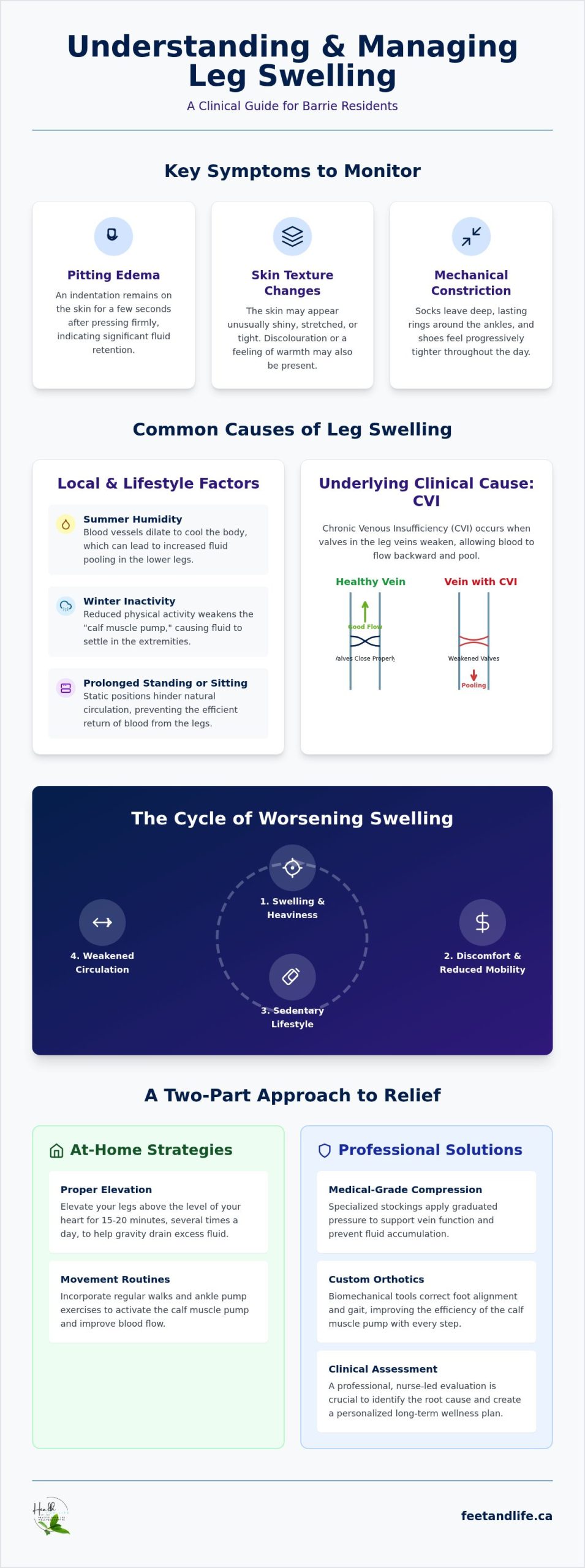
- Pitting Edema: If you press your thumb into the swollen area for a few seconds and a visible indentation remains after you let go, this is a hallmark sign of significant fluid retention.
- Skin Texture Changes: The skin may appear unusually shiny, stretched, or tight. You might also notice discolouration or a feeling of localized warmth.
- Mechanical Constriction: Pay attention if your socks leave deep, lasting rings around your ankles or if your shoes feel progressively tighter as the day continues.
Addressing these leg circulation problems Barrie residents experience requires more than just resting. It demands a methodical approach to identifying the root cause. Whether the issue is biomechanical or related to vascular health, early intervention is the most effective way to protect your long-term mobility and skin integrity.
Common Causes of Swollen Legs: Beyond Just Fluid Retention
While many people associate swelling with simple fluid buildup, the clinical reality often involves systemic or structural issues that hinder vascular efficiency. Chronic Venous Insufficiency (CVI) is a primary driver of these concerns. In a healthy system, one-way valves in the leg veins prevent blood from flowing backward as it moves toward the heart. When these valves weaken, blood pools in the lower extremities, increasing pressure and forcing fluid into the surrounding tissues. This condition is a leading contributor to the persistent leg circulation problems Barrie residents experience, particularly those who spend long hours on their feet.
Lifestyle factors and medical triggers also play a significant role. Residents working in Barrie’s manufacturing or retail sectors often face prolonged static standing, while office-based professionals may deal with long periods of sitting. Both scenarios prevent the natural movement required to stimulate blood flow. Additionally, certain common causes of leg swelling include high dietary salt intake, reactions to blood pressure medications, or underlying inflammatory conditions. Understanding these triggers is essential for moving beyond temporary fixes and toward a sustainable management plan.
The Link Between Foot Alignment and Swelling
Many patients are surprised to learn that the structural shape of their feet directly impacts their circulatory health. If you have flat feet or high arches, your gait-the way you walk-is often compromised. This misalignment prevents your calf muscles from contracting fully and effectively. Since the calf muscle pump is responsible for assisting blood flow against gravity, an inefficient pump leads to localized fluid accumulation around the ankles. Identifying these structural issues through a foot pain assessment Barrie is a crucial step in resolving chronic edema. Correcting your alignment can often restore the “pump” action needed to keep fluid moving.
Age-Related Changes and Circulation
As we age, the body’s vascular system naturally undergoes physiological changes. Seniors are more prone to edema because vein valves lose elasticity over time, and a general reduction in daily activity can slow down the circulatory process. Furthermore, conditions such as arthritis can cause localized inflammation in the joints of the feet, further complicating fluid drainage. Specialized foot care for seniors Barrie focuses on managing these chronic changes to maintain mobility and protect skin integrity. If you’ve noticed your ankles becoming increasingly puffy by the evening, it may be time to book a clinical consultation to explore the root cause and find lasting relief.
Comparing Relief Strategies: Compression Therapy and Biomechanical Support
Effective management of leg circulation problems Barrie residents face often requires a dual approach that addresses both vascular function and structural alignment. While many people view swelling as a standalone issue, it’s actually the result of a complex interaction between your veins and your gait. Relying on a single intervention may provide temporary comfort, but lasting relief comes from understanding how these systems work together. Our clinical team focuses on identifying the specific combination of therapies that will restore your mobility and reduce long-term fluid retention.
Medical-Grade Compression vs. Retail Socks
There is a significant difference between standard socks and medical-grade graduated compression. Retail options often provide uniform pressure, which can sometimes act like a tourniquet and worsen swelling. In contrast, medical-grade stockings are engineered with a specific pressure gradient, measured in mmHg, that is strongest at the ankle and gradually decreases up the leg. This precise “squeeze” assists weakened valves in moving blood back toward the heart. Beyond fluid management, these specialized garments are also effective for arthritis foot pain relief Barrie, as they stabilize the soft tissues and reduce inflammatory pressure around sensitive joints. A professional fitting is essential to ensure the level of compression is safe for your specific circulatory needs.
Biomechanical Support with Custom Orthotics
Correcting your foot’s structural alignment is just as vital as supporting your veins. When you overpronate or have collapsed arches, your calf muscles cannot contract efficiently. This mechanical failure directly hampers the circulatory “pump” mentioned earlier. By using custom orthotics, we can realign the foot to ensure every step you take actively promotes blood flow. Interestingly, orthotics for plantar fasciitis Barrie residents use for heel pain often provide the added benefit of reducing overall foot fatigue and swelling. Stabilizing the foundation of your body prevents the uneven pressure that leads to localized edema and chronic discomfort.
Choosing the right path for your health involves more than just picking a product off a shelf. One-size-fits-all solutions found in drugstores rarely account for individual vascular health or biomechanical needs. It’s also important to know when to see a doctor for leg swelling, especially if the puffiness is sudden, painful, or accompanied by other systemic symptoms. A professional clinical assessment ensures that your treatment plan is both safe and effective, providing the methodical care necessary for long-term lower limb wellness.
At-Home Relief and When to Seek Professional Medical Foot Care
While clinical interventions like compression and orthotics provide the foundation for recovery, your daily habits at home play a critical role in managing leg circulation problems Barrie patients often face. Consistency is the key to preventing fluid from re-accumulating once you leave the clinic. By integrating simple, methodical routines into your lifestyle, you can support your vascular health and maintain the mobility gains achieved through professional care.
Simple Daily Habits for Fluid Management
Elevation is one of the most effective ways to assist your body in fluid drainage. To follow the “feet above heart” rule, lie down and prop your legs up on pillows so they are roughly 15 to 30 centimetres above the level of your heart. Aim for 20 minutes, three to four times a day. This position uses gravity to encourage stagnant blood and lymph to move toward your torso. Alongside elevation, gentle movement is essential. Simple ankle pumps, where you flex and point your feet while sitting or lying down, activate the calf muscles. For those able to walk, short strolls along the Barrie waterfront or through local parks provide the rhythmic muscle contractions needed to boost your circulatory pump. Interestingly, staying hydrated is also vital. When you don’t drink enough water, your body actually holds onto fluid more aggressively, which can worsen edema.
When to Book a Clinical Consultation
Home care is a powerful tool, but it has its limits. It’s vital to recognize when leg circulation problems Barrie residents experience transition from a manageable nuisance to a clinical priority. You should seek a professional nurse-led evaluation if you notice any of the following red flags:
- Swelling that only occurs in one leg, which can indicate a more serious vascular blockage.
- Persistent puffiness that does not improve after a night of sleep or elevation.
- Skin that feels hot to the touch or shows signs of redness and inflammation.
- The presence of non-healing sores, ulcers, or “weeping” skin where fluid leaks through the surface.
Residents in Barrie, Innisfil, and Orillia shouldn’t wait for symptoms to become debilitating. If home remedies are failing to provide relief, a comprehensive assessment can identify the root cause before complications arise. To start your journey toward better mobility and comfort, book a clinical foot care appointment with our specialized team today.
Professional Swollen Leg Management at Feet & Life Barrie
At Feet & Life, we believe that managing the leg circulation problems Barrie residents face requires more than just clinical skill; it requires a deep sense of empathy. Our clinic is led by practitioners who bring a “nurses’ caring approach” to every consultation. This means we don’t just treat symptoms in isolation. We look at the person behind the condition, ensuring that every interaction is grounded in respect and a commitment to your long-term wellness. Our focus remains strictly on non-invasive, gentle interventions that prioritize your comfort and dignity while striving for superior clinical outcomes.
Our clinical team is specialized in Podortho™ Foot & Lower Limb Care, providing a level of expertise that bridges the gap between general wellness and specialized medical foot care. We understand that chronic swelling can be a sensitive issue that affects your confidence and your independence. Because of this, we’ve designed our Barrie clinic to be a stable, trustworthy environment where you can feel heard. Whether you’re dealing with the early stages of fluid retention or more complex vascular concerns, our goal is to provide a clear, methodical path toward relief.
A Holistic Approach to Lower Limb Health
We recognize that lower limb health is often a complex puzzle. For many of our patients, swelling isn’t a standalone issue; it often coexists with other concerns such as skin integrity changes or biomechanical misalignments. Our practitioner-led model allows us to integrate medical foot care with advanced wound care and healing for those with more challenging clinical needs. This holistic perspective is especially vital for the seniors and diabetic patients we serve in the Barrie, Innisfil, and Orillia areas. By addressing the root causes of leg circulation problems Barrie patients experience, we help prevent the skin breakdown and mobility loss that can occur when edema is left unmanaged.
Your First Visit: What to Expect
Your journey toward relief begins with a comprehensive 15-minute initial assessment. During this time, we conduct a thorough review of your medical history and current symptoms to understand the full context of your health. We don’t rush this process; it’s the foundation of your personalized care plan. Our clinical examination includes a detailed look at several key factors:
- Vascular Health: We assess the current state of your circulation and check for signs of chronic venous insufficiency.
- Skin Integrity: Our nurses examine the skin for thinness, discolouration, or any early signs of ulceration that require specialized wound care.
- Biomechanical Alignment: We evaluate your foot structure and gait to see if custom orthotics could improve your calf muscle pump efficiency.
By the end of your first visit, you’ll have a clear, actionable plan tailored to your specific needs. This might include a combination of medical foot care, guidance on compression therapy, or a biomechanical strategy involving custom orthotics. We’re here to guide you through every step of the process, ensuring you feel empowered to take control of your circulatory health and return to an active, comfortable life.
Take the Next Step Toward Lighter, Healthier Legs
Addressing persistent swelling is about more than just finding temporary comfort; it’s about protecting your long-term mobility and skin health. We’ve explored how identifying the root cause of your symptoms, whether it’s chronic venous insufficiency or biomechanical misalignment, is the first step toward a successful recovery. By combining professional strategies like medical-grade compression and custom orthotics with consistent at-home elevation and movement, you can effectively manage the leg circulation problems Barrie residents often encounter during our humid summers and sedentary winters.
Our nurse-led team is dedicated to providing specialized, non-invasive care that respects your unique health journey. We serve the Barrie and Simcoe County community with a focus on holistic wellness and specialized foot care. Don’t let the sensation of heavy, aching legs limit your daily activities or independence any longer. Professional support is available right here in your neighbourhood to help you understand your symptoms and establish a clear, clinical path forward.
Book your clinical foot health assessment in Barrie today and rediscover the joy of walking with ease and confidence. We look forward to supporting your journey to better lower limb health.
Frequently Asked Questions
Is leg swelling just a normal sign of aging?
While age-related changes like weakened vein valves make edema more frequent, persistent swelling is not a natural part of aging. It’s often a sign of leg circulation problems Barrie seniors should address to maintain their independence. Ignoring these symptoms can lead to skin breakdown or significant mobility loss over time. A clinical assessment helps determine if the swelling is related to vascular health, medication side effects, or structural changes in the feet.
Can custom orthotics really help with swollen ankles?
Custom orthotics assist by correcting biomechanical misalignments like overpronation or fallen arches. When your foot is properly aligned, your calf muscles can contract more efficiently during every step you take. This action powers the “muscle pump” that pushes blood and fluid back up toward the heart. By stabilizing your foundation, orthotics reduce the mechanical stress that often contributes to localized fluid accumulation around the ankles and lower legs.
How do I know if my leg swelling is a medical emergency?
You should seek immediate medical attention if swelling is sudden, painful, or occurs in only one leg. These can be signs of a deep vein thrombosis. Other emergency indicators include shortness of breath, chest pain, or if the swollen area is red and hot to the touch. While our clinic manages chronic leg circulation problems Barrie residents face, acute or systemic symptoms require an urgent evaluation at a hospital.
What is the difference between edema and lymphedema?
Edema is a general term for fluid accumulation in the body’s tissues, often caused by venous insufficiency or high salt intake. Lymphedema is a specific, chronic condition involving a blockage or damage within the lymphatic system. It usually results in the accumulation of protein-rich fluid that feels quite firm. While both cause swelling, lymphedema often requires specialized manual drainage and different compression strategies compared to standard venous edema management.
How long do I need to wear compression stockings for relief?
For most patients, compression stockings should be worn from the moment you get out of bed until you go to sleep at night. They are most effective when used consistently during your active hours to prevent fluid from pooling. The duration of therapy depends on the underlying cause of your swelling. Some individuals use them during high-risk times, like long shifts or travel, while others require them as a daily habit.
Can I treat swollen legs at home with elevation alone?
Elevation is a helpful tool for temporary relief, but it rarely addresses the root cause of chronic swelling. While propping your feet above your heart for 20 minutes can encourage drainage, the fluid will likely return once you stand up if the underlying vascular or biomechanical issues aren’t treated. Effective management usually requires a combination of elevation, movement, and professional interventions like medical-grade compression or custom-fitted orthotics.
Are there specific shoes that help with lower limb swelling?
The best shoes for swelling are those that offer adjustable features, such as laces or Velcro straps, to accommodate changes in foot volume throughout the day. Look for footwear with a wide toe box and a firm heel counter to provide stability. Avoid restrictive or slip-on shoes that might pinch the skin or restrict blood flow. Proper footwear works in tandem with custom orthotics to support your gait and improve circulatory efficiency.
Why is only one of my legs swelling while the other is fine?
Asymmetrical swelling is often a sign of a localized issue rather than a systemic one. It can be caused by a previous injury, a localized infection, or a vascular blockage. Discovering why only one leg is affected requires a professional clinical examination to rule out serious conditions. If you notice sudden swelling in just one limb, it’s important to seek an assessment immediately to check for issues like deep vein thrombosis or localized venous reflux.