
What if the stockings you’re wearing to manage leg pain are actually hindering your recovery because they don’t fit your unique anatomy? Many people struggle with chronic leg heaviness and persistent swelling, yet they often settle for over-the-counter options that pinch, roll down, or irritate the skin. If you’ve ever spent a morning wrestling with tight fabric only to feel no relief by evening, you know that not all compression is created equal. Finding a professional compression hosiery fitting Barrie clinic is the first step toward reclaiming your mobility and daily comfort.
We understand that managing edema or venous insufficiency requires more than just a pair of socks; it requires a clinical solution tailored to your specific needs. You deserve a fit that lasts all day without causing skin irritation or unnecessary struggle. This guide explores how a nurse-led fitting ensures your medical-grade hosiery provides the exact pressure gradient your body requires for therapeutic success. We’ll preview the benefits of specialized measurements, explain how to navigate insurance reimbursement requirements, and show you why a clinical approach is essential for protecting your skin while improving your overall quality of life.
Key Takeaways
- Learn why a clinical assessment is necessary to distinguish between retail support socks and medical-grade compression for safe circulation.
- Discover how a professional compression hosiery fitting Barrie session ensures your stockings deliver the precise gradient pressure needed to reduce leg pain.
- Understand why morning appointments and vascular health assessments are vital for achieving an accurate, therapeutic fit.
- Gain expert advice on preserving the life of your medical equipment through proper washing techniques and skin care routines to protect your investment.
- Explore how nurse-led care integrates compression therapy with wound prevention to support your long-term mobility and wellness.
The Importance of Professional Compression Hosiery Fitting in Barrie
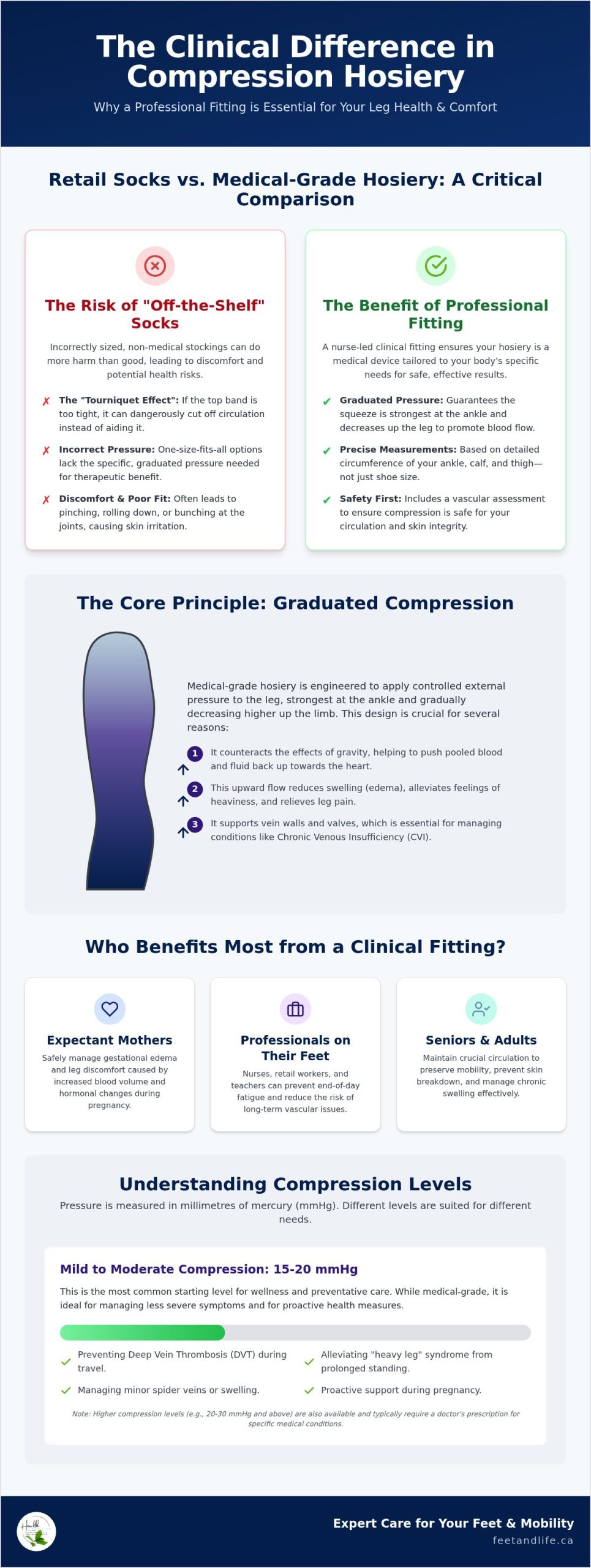
Many residents in Simcoe County mistake standard athletic socks for therapeutic equipment. While retail support socks offer mild pressure, Compression stockings are specialized medical devices designed to manage Chronic Venous Insufficiency (CVI) and other circulatory disorders. CVI occurs when the valves in your leg veins don’t function efficiently, making it difficult for blood to return to the heart from the limbs. This often results in “pooling,” which causes the heaviness and swelling many of our clients describe. A professional compression hosiery fitting Barrie ensures that the pressure applied is graduated. This means the squeeze is strongest at the ankle and decreases as it moves up the leg to encourage upward blood flow.
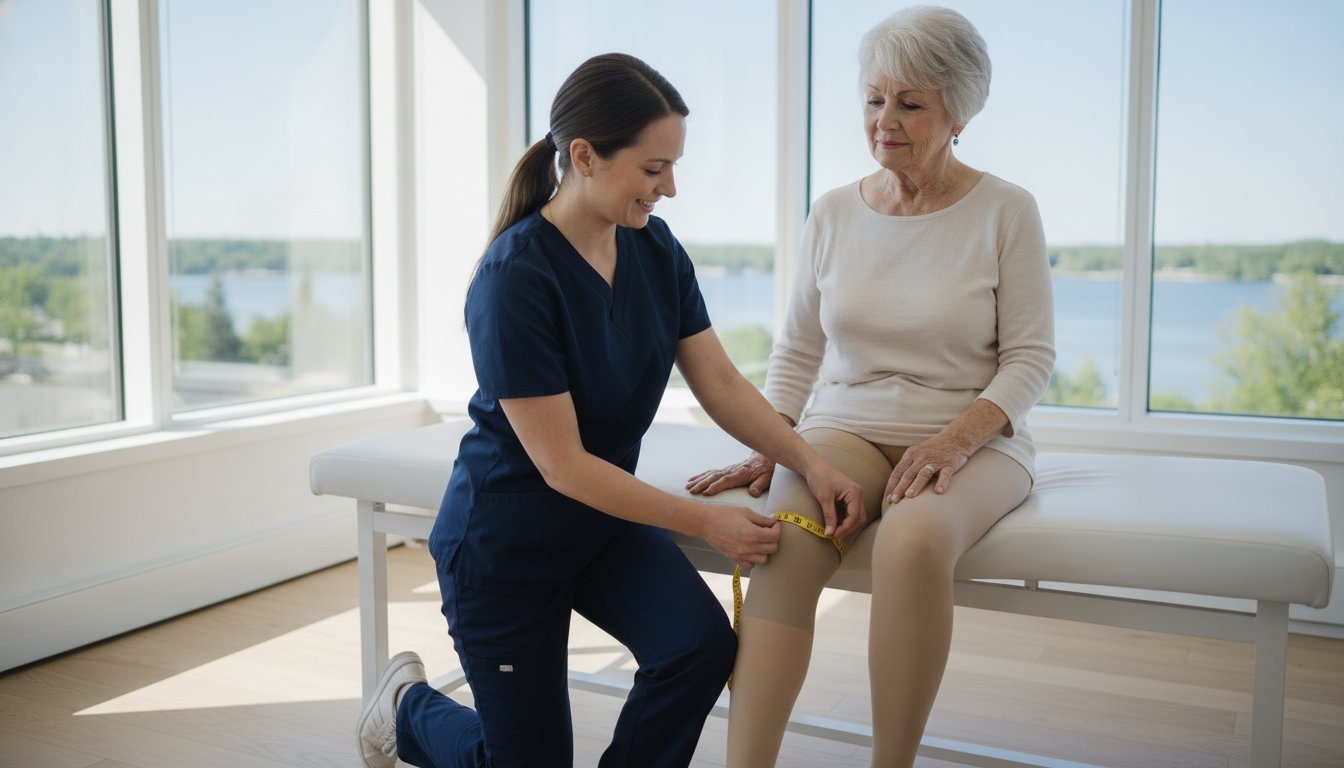
Clinical measurements are far more precise than standard shoe or sock sizing. We don’t just look at your foot length. We take detailed circumference measurements at the narrowest part of the ankle, the widest part of the calf, and sometimes the thigh. This methodical approach ensures the hosiery matches your limb’s unique contours. It provides a custom fit that remains comfortable throughout the day rather than sliding down or bunching painfully at the joints.
Who Benefits Most from Clinical Fitting?
Our nurse-led clinic frequently assists diverse groups of people who require specific pressure levels for their daily health. Expectant mothers in Barrie often experience gestational edema as their bodies manage increased blood volume and hormonal changes. Specialized fitting helps reduce this swelling safely. We also work with professionals like nurses, retail workers, and teachers who spend ten to twelve hours on their feet. For these individuals, proper hosiery prevents the end-of-day fatigue that can lead to long-term vascular issues. Seniors also find great value in clinical fittings. Maintaining circulation is vital for preserving mobility and preventing the skin breakdown associated with chronic swelling.
The Risk of “Off-the-Shelf” Solutions
Selecting “one-size-fits-all” stockings from a pharmacy can lead to what clinicians call the “tourniquet effect,” which is why a professional compression hosiery fitting Barrie is so critical. If the top band is too tight or the sizing is incorrect, the garment can actually cut off circulation rather than aiding it. This is particularly dangerous for individuals with undiagnosed arterial conditions. Excessive pressure might restrict oxygen-rich blood from reaching the feet in these cases. At Feet & Life, we perform a thorough assessment of your skin integrity and vascular status before any fitting. We check for fragile skin, existing wounds, or signs of poor arterial flow. This safety-first approach ensures your hosiery supports your wellness without introducing new risks to your lower limb health.
Understanding Compression Levels and Medical Necessity
Pressure in medical garments is measured in millimetres of mercury, or mmHg. This numerical value indicates the precise amount of force the fabric exerts on your limbs. To effectively combat gravity, hosiery follows the gradient principle. This means the material applies the most significant pressure at your ankle, gradually loosening as it moves toward the knee or thigh. This specific design encourages blood to travel upward, preventing the fluid accumulation that causes daily discomfort and swelling. Without this gradient, a stocking might simply act as a band, trapping fluid in the foot rather than moving it toward the heart.
For individuals managing chronic conditions, this mechanism is a cornerstone of diabetic wound care Barrie. When blood pools in the lower legs, it increases the risk of skin breakdown and venous ulcers. By maintaining consistent, controlled pressure, we help prevent the initial swelling that often precedes a complex wound. Our nurse-led team views a professional compression hosiery fitting Barrie as a preventative clinical intervention. It’s a proactive step in a broader health strategy designed to keep your skin intact and your circulation stable.
Mild to Moderate Compression (15-20 mmHg)
This range is often considered wellness wear, but it still serves a vital clinical purpose. It’s an ideal choice for frequent travellers who wish to prevent Deep Vein Thrombosis (DVT) during long flights or car rides. People with minor spider veins or those experiencing “heavy leg” syndrome at the end of a long shift also find significant relief at this level. Starting a lower limb wellness programme with 15-20 mmHg can often prevent the progression of varicose veins before they require more intensive medical intervention.
Medical-Grade Compression (20-30 mmHg and Higher)
Higher pressure levels are reserved for treating more complex vascular issues. We typically prescribe 20-30 mmHg or higher for patients with moderate to severe edema, lymphedema, or active venous ulcers. Because this level of force can impact arterial flow, a clinical assessment is mandatory before use. We ensure the garment provides enough pressure to reduce swelling without compromising the health of the surrounding tissue. Patients often need guidance on how to wear and care for compression stockings to ensure the medical-grade elastic remains effective for the duration of its six-month lifespan.
Selecting the wrong level can be ineffective or even harmful to your vascular health. If you’re unsure which pressure gradient is right for your specific symptoms, consulting with our clinical team provides the clarity you need for safe, therapeutic results.
What to Expect During Your Barrie Fitting Appointment
A professional compression hosiery fitting Barrie session at our clinic is a structured clinical consultation designed to ensure your long-term success. We generally recommend scheduling these appointments for the morning. During the early hours, your legs are at their least swollen state, providing the most accurate anatomical baseline. If we measure a limb that is already significantly swollen, the resulting garment will be too loose once the compression begins to work. This would render the treatment ineffective, as the fabric won’t provide the necessary resistance to move fluid out of the limb.
Step 1: Clinical Assessment and History
We begin by discussing your daily symptoms and medical history to understand the root cause of your discomfort. This often involves reviewing any previous foot pain assessment Barrie results to see how your vascular health interacts with your gait or foot structure. Our nursing team carefully screens for contraindications, such as advanced peripheral neuropathy or severe arterial disease. Because medical-grade stockings exert significant force, we must ensure your skin and nerves can safely tolerate the pressure without risk of injury or restricted blood flow.
Step 2: Precision Measurements
Accuracy is the difference between a therapeutic aid and a source of frustration. We use a clinical tape measure to record the circumference of your ankle at its narrowest point, your calf at its widest, and, if necessary, your thigh. We also measure the length of your leg from the floor to the crease of the knee or the gluteal fold. This prevents the common problem of fabric bunching behind the knee, which can cause skin irritation or a painful tourniquet effect. Based on these precise numbers, we help you select the most appropriate style, whether that’s a knee-high, thigh-high, or full pantyhose, to match your lifestyle and therapeutic goals.
Step 3: Education and Donning Techniques
Many clients worry they won’t be able to put the stockings on by themselves due to the tight fabric. We address this by evaluating your manual dexterity and teaching you specialized application methods. We demonstrate the “heel-out” technique, which simplifies the process of getting the fabric over the foot. If you have limited hand strength, we’ll introduce you to “donning gloves” for better grip or “slippies” that allow the fabric to glide over the skin. Our goal is to ensure you leave the clinic feeling confident that you can manage your hosiery independently at home every morning.
Daily Life with Compression: Maintenance and Comfort
Living in Barrie means navigating significant seasonal shifts that impact how your skin and hosiery interact. During our humid Ontario summers, the breathable nature of your fabric selection becomes paramount. In contrast, the dry indoor heat of our winters can lead to increased skin desquamation (flaking) and itching. A professional compression hosiery fitting Barrie includes guidance on managing these environmental factors to ensure your therapy remains a comfortable part of your routine rather than a seasonal burden. Consistency is the key to preventing the recurrence of edema and protecting your vascular health.
Washing and Care Instructions
The medical-grade elastic fibres in your garments are sensitive to chemicals and heat. To maintain the precise mmHg gradient, you should wash your stockings after every wear. This isn’t just for hygiene; it helps the elastic “reset” to its original shape. Avoid fabric softeners and bleach; these break down the synthetic fibres and ruin the compression levels. We recommend hand washing or using a delicate cycle in a mesh bag with cool water. Never use a dryer. High heat destroys the elasticity immediately. Having at least two pairs is a practical necessity. This “wear one, wash one” rotation extends the lifespan of the garments and ensures you never skip a day of treatment while waiting for a pair to air dry.
Even with meticulous care, medical-grade compression has an expiry date. Most manufacturers guarantee the pressure gradient for approximately six months of daily wear. After this point, the fibres lose their “snap,” and the therapeutic benefit diminishes. If your stockings suddenly feel easier to put on, it’s usually a sign they’re no longer providing the required pressure. We suggest marking the purchase date on your calendar to ensure you replace them before your symptoms return.
Overcoming Common Challenges
It’s common for new wearers to experience skin dryness. We recommend applying a high-quality moisturizer in the evening after removing your stockings. Never apply oily lotions immediately before donning your hosiery, as the oils can degrade the silicone top-bands or the fabric itself. For those managing complex lower limb issues, integrating your hosiery with custom orthotics Barrie can provide a total support system. While the hosiery manages vascular flow, orthotics stabilize the foot structure, reducing the overall mechanical stress on your legs. This combined approach often yields the best results for long-term mobility. If you notice changes in how your garments fit or if your symptoms return, you should consult with our nurse-led team for a maintenance review.
Why Choose Feet & Life for Your Fitting in Barrie?
Feet & Life stands apart because our organization is built on a foundation of clinical nursing expertise. While many retail outlets in Simcoe County sell stockings, we provide a specialized compression hosiery fitting Barrie service that prioritizes your physiological health over a simple transaction. Our practitioners understand that lower limb health is a complex indicator of overall systemic wellness. We treat every fitting as a medical consultation. We assess your circulation, skin integrity, and mobility to ensure the intervention supports your long-term health goals rather than just providing a temporary fix.
The Nursing Difference in Foot Care
Choosing a nurse-led clinic means your care is guided by a professional who is trained to recognize subtle clinical changes in your lower limbs. This background allows us to offer a safer, more thorough assessment than a standard retail environment. We use a “caring approach” that is particularly beneficial for clients with complex health needs or those who feel anxious about their vascular health. Our team takes the time to listen to your concerns and explain the science behind every measurement. This methodical, patient-centered focus ensures you feel empowered and informed throughout your treatment journey. We believe that education is just as important as the equipment itself.
Comprehensive Lower Limb Support
Our services are not siloed. We recognize that compression therapy works best when it’s part of a holistic care plan. For example, we frequently coordinate hosiery with foot care for seniors Barrie to help our older clients maintain their independence and prevent falls. If you’re managing chronic conditions, we ensure your compression plan aligns strictly with diabetic foot safety protocols to prevent pressure-related injuries. This level of clinical oversight is essential for preventing the chronic wounds that our clinic specializes in treating.
We’ve served the Barrie community since our inception, and we understand the unique local healthcare needs of our neighbours. Our goal is to help you stay active and pain-free so you can enjoy everything our region has to offer, from walks along the waterfront to daily errands in the city centre. By choosing Feet & Life for your compression hosiery fitting Barrie, you’re investing in a professional partnership dedicated to your mobility. We don’t just sell medical equipment; we provide the clinical foundation for your daily comfort and long-term wellness.
Prioritize Your Vascular Health and Daily Comfort
Professional compression therapy is more than just a garment; it’s a vital medical intervention designed to restore your mobility and reduce chronic pain. By prioritizing a professional compression hosiery fitting Barrie, you ensure that your stockings provide the exact therapeutic gradient needed to support your unique anatomy. We’ve explored how nurse-led assessments protect your skin integrity and why precise morning measurements are the cornerstone of a successful fit. These clinical details make the difference between a stocking that bunches and one that truly heals.
At Feet & Life, we combine medical expertise with a caring approach to help you manage complex needs like diabetic and senior foot care. We’re proud to serve residents across Barrie, Innisfil, and Simcoe County with clinical solutions that improve your overall quality of life. Don’t let leg heaviness or swelling hold you back from the activities you love. Book your professional compression fitting at our Barrie clinic today and experience the difference that clinical oversight makes. Your journey toward healthier, more comfortable legs begins with a single step.
Frequently Asked Questions
Do I need a doctor’s prescription for compression stockings in Barrie?
You don’t necessarily need a prescription to purchase compression hosiery, but having one is essential for insurance reimbursement. Most private insurance providers in Ontario require a prescription from a licensed medical practitioner to process your claim. This document should specify your diagnosis and the required mmHg pressure level. For a professional compression hosiery fitting Barrie residents should bring their prescription to ensure the garment matches the clinical recommendation exactly.
How long do I need to wear my compression hosiery each day?
You should wear your compression hosiery all day, from the moment you wake up until you prepare for bed. Putting them on first thing in the morning is crucial because it prevents swelling before it begins. If you wait until your legs feel heavy, the stockings will be harder to don and less effective. Consistency is the primary factor in managing chronic venous insufficiency and maintaining lower limb health throughout the day.
Are compression stockings covered by OHIP or private insurance?
OHIP does not cover the cost of compression stockings, even if they’re medically necessary. However, most private insurance plans provide coverage for medical-grade garments, typically those with 20-30 mmHg or higher. Some provincial funding is available through the Assistive Devices Program (ADP), but this is generally restricted to chronic long-term conditions like lymphedema. Always check with your specific provider regarding their requirements for a professional compression hosiery fitting Barrie session.
Can I sleep in my compression socks?
You should generally not sleep in your compression socks unless your healthcare provider has specifically instructed you to do so, such as after a surgical procedure. When you’re lying flat, gravity isn’t pulling blood toward your feet, so the gradient pressure isn’t necessary. Wearing them overnight can restrict circulation unnecessarily and may lead to skin irritation. Always remove your hosiery before bed to allow your skin to breathe and recover overnight.
What is the difference between support socks and medical compression hosiery?
Support socks provide a low, uniform pressure throughout the garment and are often sold in retail stores for general comfort. In contrast, medical-grade hosiery uses a scientifically measured pressure gradient that is highest at the ankle. These therapeutic devices are designed to treat specific circulatory conditions and require a clinical assessment. Medical hosiery is built with specialized elastic fibres that maintain their pressure levels much longer than standard retail options.
How do I know if my compression stockings are too tight?
Your stockings should feel snug and supportive, but they should never cause pain or numbness. If you notice your toes changing colour, feel tingling sensations, or see a deep indentation at the top band, your hosiery might be too tight. This “tourniquet effect” can actually hinder circulation. If you experience these symptoms, remove the stockings immediately and contact your fitter to re-evaluate your measurements and ensure your safety.
Why do my legs still swell even when I wear compression socks?
Persistent swelling while wearing hosiery often indicates an incorrect fit or that the elastic fibres have reached the end of their six-month lifespan. If the garment is too loose, it won’t provide the necessary resistance to move fluid. It’s also possible that your underlying condition has changed, requiring a higher mmHg level. A clinical review can help determine if you need a new size or a different compression strategy for better results.
Can I wear compression hosiery if I have diabetes?
You can certainly wear compression hosiery if you have diabetes, provided you have been cleared by a healthcare professional. In fact, compression is often a key part of diabetic foot care to prevent edema and ulcers. However, extra caution is required to ensure the pressure doesn’t compromise arterial flow or irritate fragile skin. We monitor patients with neuropathy closely to ensure the stockings remain safe and comfortable without causing unnoticed pressure points or skin breakdown.