
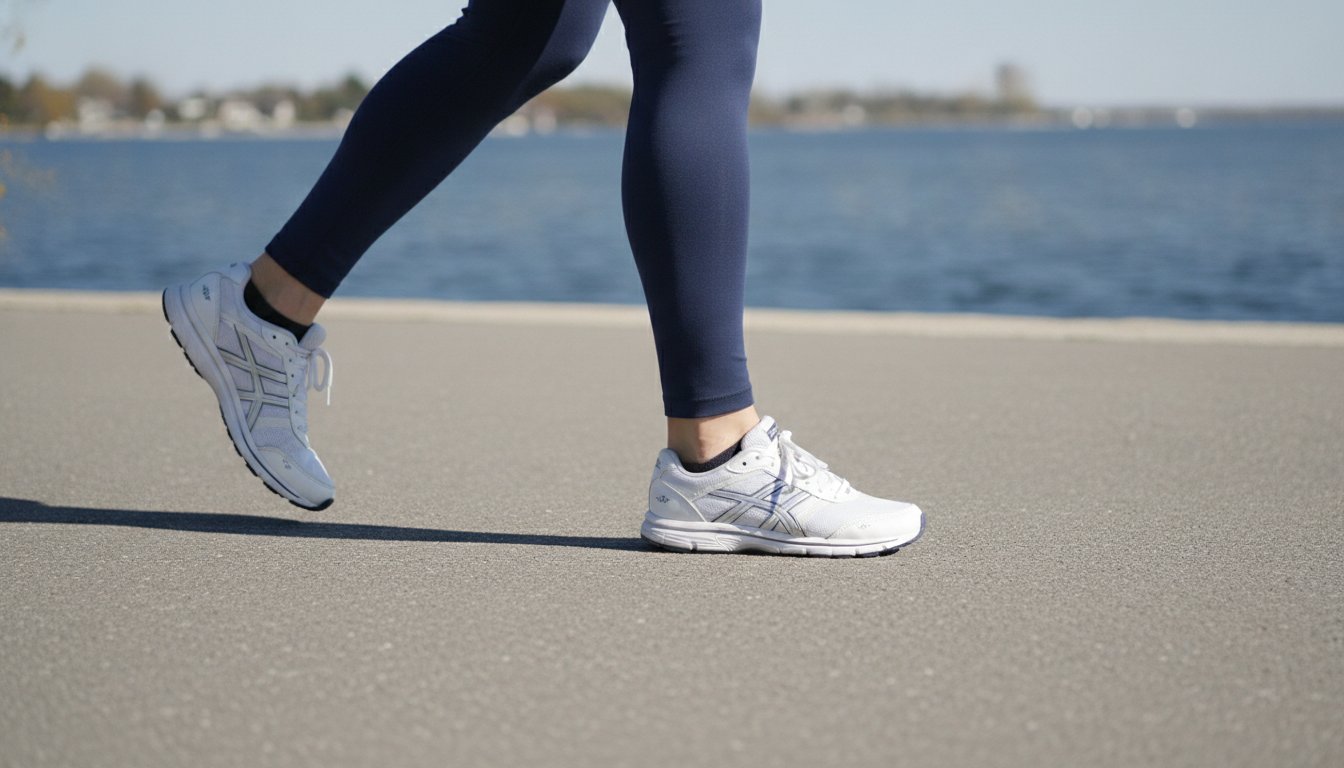
That familiar ache in your arches after a Saturday stroll through Centennial Park isn’t just a sign of a long day. It is often the first warning that your foundation is shifting. When looking for clinical orthotics for overpronation Barrie residents often discover that their persistent knee and hip discomfort stems from a lack of proper structural support. You have likely noticed your favourite walking shoes wearing down unevenly on the inside edges, which is a clear indicator that your gait requires professional attention to prevent further misalignment.
We understand how frustrating it is when physical discomfort limits your active lifestyle in Simcoe County. This guide explains how custom-engineered solutions can correct your gait, eliminate systemic pain, and restore your mobility through professional clinical care. We will explore the vital role of a detailed biomechanical assessment and explain why medical-grade devices offer superior outcomes compared to retail insoles. By the end of this article, you will have a clear understanding of the path toward long-term relief and the stability needed to enjoy every step with confidence.
Key Takeaways
- Understand how excessive inward rolling of the foot creates a chain reaction of misalignment that often leads to chronic knee and lower back pain.
- Discover how custom-engineered orthotics for overpronation in Barrie provide the precise structural support required to stabilize your unique gait and protect your joints.
- Learn why medical-grade devices offer a superior clinical outcome compared to the generic, one-size-fits-all approach of store-bought insoles.
- Explore the steps of a professional biomechanical assessment and how gait analysis helps identify the root cause of your daily discomfort.
- Realize the benefits of a practitioner-led approach to foot health that focuses on restoring your mobility and improving your overall quality of life in Simcoe County.
What Is Overpronation and Why Does It Cause Pain?
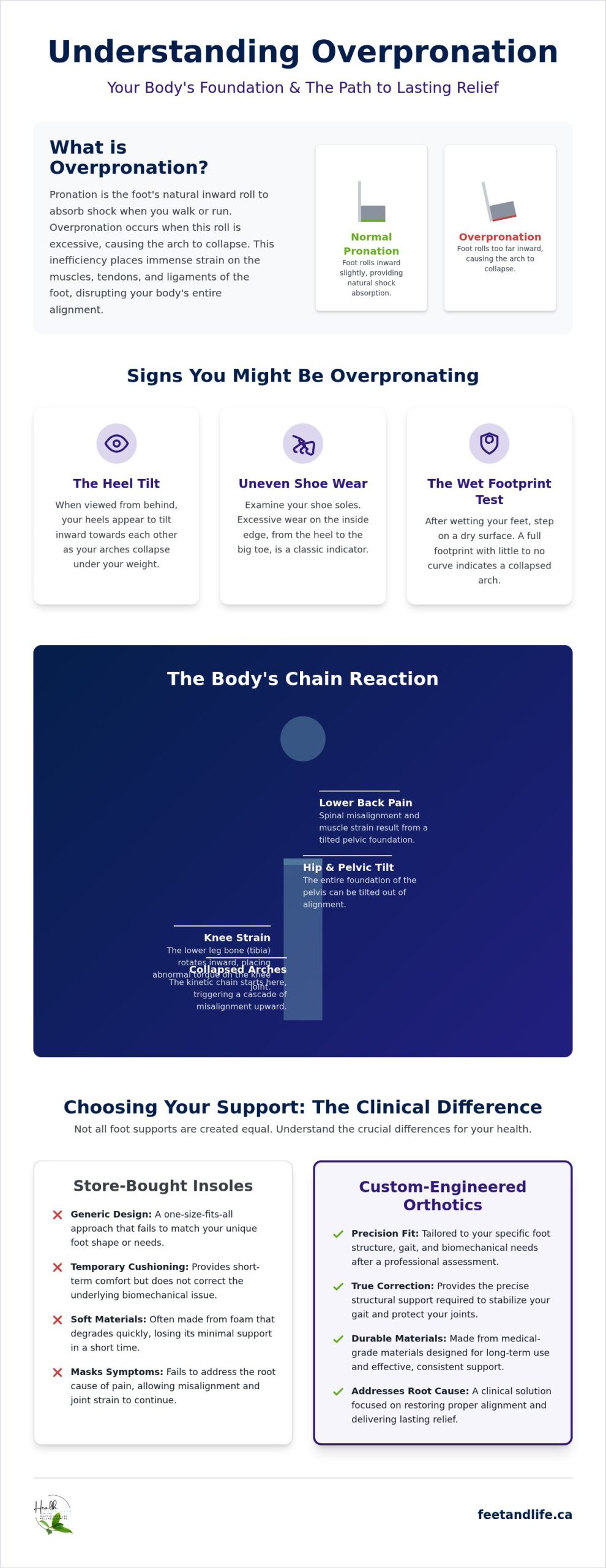
Pronation is a normal part of the gait cycle. It involves the foot rolling slightly inward to distribute the force of impact as you move. However, overpronation occurs when the foot rolls too far inward or stays rolled over for too long during a stride. This mechanical inefficiency forces the inner edge of the foot to bear the brunt of your body weight instead of the ball of the foot. When this happens, the arch of the foot collapses, causing the muscles and tendons to stretch beyond their intended capacity.
Biomechanically, pronation of the foot serves as a natural shock-absorption mechanism. When this movement becomes excessive, it is classified as a biomechanical abnormality. It isn’t just about having flat feet; it’s about the timing and degree of motion. Many patients in Simcoe County find that their discomfort increases after long periods of standing or walking, as the soft tissues fatigue under this constant, uneven strain.
Several factors contribute to this condition. Genetics play a significant role; you might simply have been born with lower arches or more flexible ligaments. Ligament laxity, often a result of age or hormonal changes, can also cause the foot to lose its structural integrity over time. Additionally, wearing unsupportive footwear that lacks a firm heel counter can exacerbate the issue. This is where professional orthotics for overpronation Barrie services become essential for stabilizing the foundation of your body.
The Anatomy of a Collapsed Arch
The posterior tibial tendon is the primary suspension cable of your foot. It runs down the inside of the ankle and attaches to the bones in the middle of the foot. In a healthy foot, this tendon maintains the height of the medial longitudinal arch. When overpronation occurs, this tendon is stretched thin and becomes overworked. Custom-engineered orthotics for overpronation Barrie residents receive are designed to address these specific anatomical stresses by providing the necessary lift and support.
Without proper intervention, the midfoot is forced to absorb shock it isn’t designed to handle. Over time, this leads to structural changes like bunions, hammertoes, or even stress fractures. Clinical care aims to offload this stress, allowing the tendon to rest and the foot to function within its optimal range. We focus on long-term stability rather than temporary relief.
Signs You Might Be Overpronating
You can identify potential issues at home with a few simple observations. These signs often indicate that your foot’s mechanics are out of balance:
- The Heel Tilt: Stand in front of a mirror and look at your heels from behind. If they appear to tilt inward toward each other, your arches are likely collapsing under your weight.
- The Wear Pattern: Examine the soles of your favourite walking shoes. Excessive wear on the inside edge of the heel and near the big toe is a classic sign of overpronation.
- The Wet Footprint Test: Step onto a dry surface with wet feet. A full footprint where the entire sole is visible, rather than a curved line connecting the heel and ball, suggests a low or collapsed arch.
While these tests are helpful indicators, they don’t replace a professional clinical assessment. Identifying these signs is simply the first step toward seeking specialized care that can prevent future complications.
The Kinetic Chain: How Overpronation Affects Your Knees and Back
Your feet are the foundation of your entire skeletal structure. When you experience excessive inward rolling, it triggers a chain reaction known as the kinetic chain. This isn’t just a local foot issue; it’s a structural misalignment that travels upward through your ankles, knees, hips, and spine. For many people seeking Overpronation: Causes & Treatment options, the realization that their back pain originates in their arches is a significant turning point in their care. Utilizing professional orthotics for overpronation Barrie residents can address these systemic issues at their source rather than just managing symptoms.
When the medial arch collapses, the tibia (shin bone) is forced to rotate internally. This inward rotation places abnormal torque on the knee joint, which is primarily designed to move in a single plane. Over time, this constant twisting strains the ligaments and cartilage, often leading to chronic fatigue in the calves as the muscles work overtime to stabilize the limb. The misalignment doesn’t stop there; it forces the femur to rotate, which can tilt the pelvis and increase the curvature of the lower spine. This often results in persistent back discomfort that doesn’t respond to traditional massage or stretching because the root cause remains in the feet.
Overpronation and Knee Pain
This mechanical imbalance often manifests as a “knock-knee” posture, where the knees lean toward each other during movement. This position prevents the patella (kneecap) from tracking correctly within its groove, causing inflammation and joint wear. By using clinical orthotics for overpronation Barrie patients can effectively realign the foot, which in turn stabilizes the knee and reduces joint friction. Many individuals find that orthotics for knee and back pain are the missing link in their recovery. These devices provide the foundational support necessary for systemic relief and long-term joint health.
Secondary Conditions Caused by Poor Alignment
The strain of overpronation often leads to localized foot issues as well. The constant stretching of the connective tissue under the foot is a leading cause of plantar fasciitis in Barrie, where patients experience sharp heel pain during their first steps in the morning. Excessive rolling also encourages the development of bunions and hammertoes as the toes attempt to grip the ground for stability. Proper alignment organizes the body from the ground up, ensuring every joint functions as intended. If you’ve noticed these changes, a thorough assessment at Feet & Life can help determine if custom orthotic intervention is right for you.
Custom Orthotics vs. Store-Bought Insoles: The Clinical Difference
Many people try to solve their discomfort by visiting a local pharmacy and picking up a pair of mass-produced insoles. While the lower price point is appealing, these products are designed for an “average” foot that rarely exists in reality. When seeking orthotics for overpronation Barrie patients need to understand that a generic arch support is essentially a cushion, not a corrective medical device. A retail insole cannot change your biomechanics; it merely provides a temporary layer of soft material between your foot and the ground.
One of the most significant flaws in retail options is their symmetry. Your left and right feet are rarely identical. In most cases of overpronation, one arch collapses further than the other. Custom-engineered devices account for these asymmetrical differences, providing specific correction where it is needed most. Without this precision, you might over-correct one foot while under-supporting the other. This imbalance can lead to new alignment issues in the hips or back, potentially complicating the very pain you intended to fix.
The materials used in clinical settings also differ vastly from those found on store shelves. Medical-grade materials like polypropylene or high-density carbon fibre offer structural integrity that lasts for years. In contrast, the foam and gel found in retail stores often compress within three to six months. Once that material loses its shape, your foot returns to its misaligned state. This often happens so gradually that you don’t realize the support is gone until your chronic pain resurfaces.
Why Generic Insoles Often Fail
Retail insoles are built on a generic template. This means the peak of the arch support is often placed too far forward or too far back for your specific bone structure. If the arch height doesn’t align with your midfoot, the device can actually cause more harm than good by putting pressure on the wrong joints. Most importantly, retail products lack rear-foot posting. This is the structural wedge required to stop the heel from rolling inward. Without this firm posting, a generic insole simply squishes under the weight of an overpronating foot rather than redirecting the gait.
The Engineering of a Custom Orthotic
The process of creating orthotics for overpronation Barrie residents begins by capturing a precise three-dimensional map of the foot. We use 3D digital scans or traditional plaster moulds to document your foot in its corrected, non-weight-bearing position. This allows us to see exactly where the structural collapse occurs. We then prescribe specific degrees of tilt to neutralize the inward roll and realign your foundation. Because we understand the local climate, these devices are engineered to fit your specific footwear, whether you are wearing professional shoes for the office or sturdy boots for a snowy walk in Simcoe County.
The Biomechanical Assessment: Your Professional Path to Alignment
A clinical assessment is far more comprehensive than simply standing on a pressure pad at a retail store. To provide effective orthotics for overpronation Barrie practitioners must conduct a detailed investigation into how your unique skeletal structure responds to gravity and movement. This process begins with a professional foot pain assessment in Barrie, where we examine the relationship between your foot’s anatomy and the discomfort you feel in your knees or back. By gathering precise data on your joint range of motion and muscle strength, we can identify exactly where the mechanical breakdown occurs.
Gait analysis is the cornerstone of this evaluation. While standing still reveals your foot’s shape, observing you in motion reveals its function. We look for the subtle inward rotation of the ankle and the timing of your arch’s collapse during the mid-stance phase of your stride. This dynamic data allows us to realize the exact degree of correction required to neutralize your gait. Every millimeter of adjustment is calculated to ensure that your orthotics for overpronation Barrie provide the stability needed to protect your kinetic chain from further wear and tear.
What to Expect During Your Consultation
Your journey toward better mobility starts with a thorough review of your medical history and daily activity levels. We don’t just look at your feet; we consider your lifestyle, whether you’re a regular hiker on Simcoe County trails or someone who spends eight hours a day on hard office floors. During the standing and walking assessment, we identify overpronation in real-time and discuss how your current footwear choices might be helping or hindering your progress. This collaborative approach ensures that your treatment plan is both clinically sound and practical for your everyday life.
From Casting to Fabrication
Once we have established your clinical needs, we capture a non-weight-bearing impression of your feet. This is a critical step because it allows us to document your foot in its “neutral” alignment, rather than the collapsed position it takes when you stand. We use these impressions to engineer a device that supports your arch at its optimal height. We also customize the top cover and padding materials based on your sensitivity and the types of shoes you wear most often.
The process concludes with a final fitting and adjustment session. We ensure the device sits perfectly in the centre of your shoe and provides the corrective force intended. This meticulous attention to detail is why practitioner-led care produces such reliable long-term results. If you are ready to address the root cause of your discomfort, we invite you to schedule a biomechanical assessment with our dedicated team today.
Clinical Orthotics for Overpronation in Barrie and Simcoe County
Feet & Life stands as a dedicated provider of medical foot care, specializing in the realignment of the lower limbs through a practitioner-led model. While many clinics offer technical solutions, our nursing-led approach prioritizes empathy and patient-centred outcomes. This perspective is particularly beneficial when prescribing orthotics for overpronation Barrie patients need, as it allows us to consider the patient’s entire health profile. We believe that clinical excellence should always be delivered with a reassuring and gentle touch, ensuring you feel supported throughout your treatment journey.
Effective treatment doesn’t end when you receive your custom devices. Your feet and gait can change over time due to age, weight fluctuations, or changes in activity levels. This makes ongoing clinical support a cornerstone of our philosophy. We schedule regular follow-up appointments to monitor your progress and perform any necessary adjustments to the posting or padding. This commitment to long-term health ensures that your investment in orthotics for overpronation Barrie continues to provide the precise correction your body requires for years to come.
A Compassionate Approach to Mobility
Specialized care is especially critical for our aging population and those managing complex health challenges. We have a deep understanding of the unique requirements involved in foot care for seniors in Barrie, where maintaining mobility is the key to independence. By focusing on non-invasive realignment, we help our clients avoid the systemic complications that often arise from untreated biomechanical abnormalities. Our clinical environment is designed to be a stable and trustworthy pillar for the community, providing a space where your concerns are heard and addressed with meticulous care.
Your Local Foundation for Foot Health
Our clinic serves as a central hub for residents across Simcoe County, providing convenient access for those in Innisfil, Orillia, and the surrounding areas. We realize that taking the first step toward professional care can feel like a significant decision. To support you, we maintain a methodical and thorough assessment process that removes the guesswork from your recovery. Our goal is to restore your foundation so you can return to the activities you love without the shadow of chronic pain. You can easily Schedule your clinical assessment at Feet & Life today to meet with our expert team and begin your journey toward restored mobility and improved quality of life.
Restoring Your Foundation for Pain-Free Mobility
Addressing the inward roll of your feet is about more than just foot comfort; it’s about protecting your knees, hips, and back from the long-term effects of misalignment. You have learned how the kinetic chain connects your foundation to your overall posture and why custom engineering is the only way to provide the precise correction your body needs. By choosing professional orthotics for overpronation Barrie residents can ensure their devices are built with medical-grade durability and personalized precision that retail insoles simply cannot match.
At Feet & Life, we combine practitioner-led clinical expertise with a compassionate nursing-led approach to help you realize your wellness goals. We’re proud to serve Barrie and Simcoe County with high standards of patient-centred care. Don’t let chronic gait pain limit your active lifestyle any longer. We invite you to Book Your Professional Biomechanical Assessment in Barrie and begin the journey toward a more stable, comfortable future. Taking this first step toward alignment is a commitment to your long-term health and your overall quality of life.
Frequently Asked Questions
How do I know if I have overpronation or just flat feet?
Flat feet refer to a static structural shape where the arch is low or absent while standing. Overpronation is a dynamic movement where the foot rolls excessively inward during your stride. It’s possible to have a visible arch that collapses only when you move. A professional assessment is the best way to differentiate between your foot’s shape and its functional mechanics during a gait cycle.
Can overpronation be corrected without custom orthotics?
Targeted exercises and supportive footwear can manage mild symptoms, but they don’t usually correct a structural biomechanical abnormality. Strengthening the muscles around the ankle helps with stability; however, it cannot replace the constant realignment provided by medical-grade devices. Most patients require the structural support of orthotics for overpronation Barrie services to prevent the progressive misalignment of their knees, hips, and lower back over time.
Do custom orthotics for overpronation feel uncomfortable at first?
It is common to feel a sense of “fullness” under your arch during the first two weeks of use. Your skeletal structure is adjusting to a corrected position that engages muscles in a new way. We suggest a gradual break-in period, wearing them for two hours on the first day and increasing daily. If you feel persistent discomfort after this phase, we provide clinical follow-up to ensure the fit is perfect.
How long do medical-grade orthotics typically last?
Most custom devices remain structurally sound for three to five years, though this depends on your activity levels and body weight. While the shell is durable, the top covers and soft padding may require refurbishment every twelve to eighteen months to maintain comfort. We recommend an annual clinical review to ensure the device is still providing the exact degree of correction needed to stabilize your unique gait effectively.
Will my insurance in Ontario cover the cost of custom orthotics?
While OHIP does not cover these devices, many private extended health plans in Ontario offer coverage typically ranging from C$300 to C$500 per pair. You usually need a prescription and a biomechanical assessment report to submit a successful claim. We provide all the specialized clinical documentation required by insurance providers to help you navigate the reimbursement process and maximize your available health benefits for foot care.
Can overpronation cause lower back and hip pain?
Yes, the internal rotation triggered by a collapsing arch travels up the kinetic chain to affect your entire posture. This inward twist forces the pelvis to tilt, which creates uneven stress on the muscles and discs in your lower spine. Utilizing professional orthotics for overpronation Barrie can often resolve chronic back pain by stabilizing your foundation. Realigning the feet organizes the body’s structure and reduces the need for muscular compensation.
What is the best type of shoe to wear with orthotics for overpronation?
We recommend neutral shoes that feature a removable insole and a firm heel counter. A firm heel counter is essential because it provides the lateral stability required to keep the orthotic in its correct position. You should avoid shoes with aggressive built-in arch supports, as these can conflict with your custom prescription. Bringing your most frequently used footwear to your assessment helps us ensure the device fits seamlessly into your daily life.
Is overpronation permanent or can it be cured?
Overpronation is generally a permanent structural characteristic of your feet, but it is a condition that can be managed successfully. You cannot change the fundamental shape of your bones or the flexibility of your ligaments. However, you can neutralize the harmful effects on your joints with consistent clinical intervention. Custom-engineered support prevents the condition from causing long-term damage and allows you to maintain an active, pain-free lifestyle in Simcoe County.