
A stroke can change far more than strength in an arm or leg. It can make a once-simple task, such as noticing a sore toe, trimming a nail, putting on a shoe, or feeling a pebble underfoot, difficult or unsafe. Thoughtful foot care after stroke helps protect skin, support safer mobility, and preserve the independence that rehabilitation is working to rebuild.
The affected foot may feel numb, painful, stiff, swollen, unusually cold, or simply unfamiliar. Some people have reduced sensation; others experience muscle tightness, weakness, altered balance, or difficulty seeing and reaching their feet. These changes can allow a small pressure area, blister, ingrown nail, or crack in the skin to progress before it is noticed. Prevention is not cosmetic care. It is part of protecting comfort, confidence, and day-to-day function.
Why Foot Care After Stroke Needs Extra Attention
After a stroke, the brain may have more difficulty receiving or interpreting sensory signals from one side of the body. A person may not feel rubbing from a tight shoe, heat from a heating pad, or pain from a developing wound. They may also have visual changes or spatial neglect, where they are less aware of one side of their body. The foot can be missed during bathing, dressing, or daily skin checks.
Mobility changes also alter how pressure is distributed through the feet. Weakness, foot drop, spasticity, or a changed walking pattern can make a person drag the toes, roll the ankle, or place repeated pressure on the heel, ball of the foot, or outside edge. A shoe that fit well before the stroke may now rub in the wrong place. Over time, this can lead to calluses, corns, skin breakdown, pain, and a higher risk of falls.
Swelling is another common concern, particularly when activity is reduced or the leg spends long periods in a dependent position. Swelling can make footwear tight, stretch fragile skin, and contribute to discomfort. It can have several causes, so it should not automatically be treated with compression. A qualified clinician should assess circulation, medical history, medications, heart and kidney health, and any risk of blood clot before compression therapy is considered.
The risk is higher for people who also live with diabetes, peripheral neuropathy, poor circulation, arthritis, kidney disease, or a history of ulcers. In these situations, professional monitoring is especially valuable because healing may be delayed and infection can become serious quickly.
A Daily Foot Routine That Is Safe and Realistic
The best routine is one that the individual or caregiver can complete consistently. Choose a regular time, such as after bathing or before bed, and make it part of the daily schedule. If bending, balance, vision, or hand function is limited, use a hand mirror, sit in a stable chair, or ask a family member or caregiver for help.
Start by looking at the tops, soles, heels, sides, and spaces between the toes. Check for redness, darkened areas, swelling, blisters, cracks, peeling skin, cuts, drainage, bruising, or changes in nail colour. Compare one foot with the other. A new warm or red area may be caused by friction or pressure, while a pale, blue, or cold foot can signal a circulation concern that needs prompt attention.
Wash feet in comfortably warm water and dry them carefully, particularly between the toes. If sensation is reduced, test water with an unaffected hand or use a thermometer rather than relying on the foot to judge temperature. Avoid soaking feet for long periods, as this can soften the skin and make it more vulnerable to breakdown.
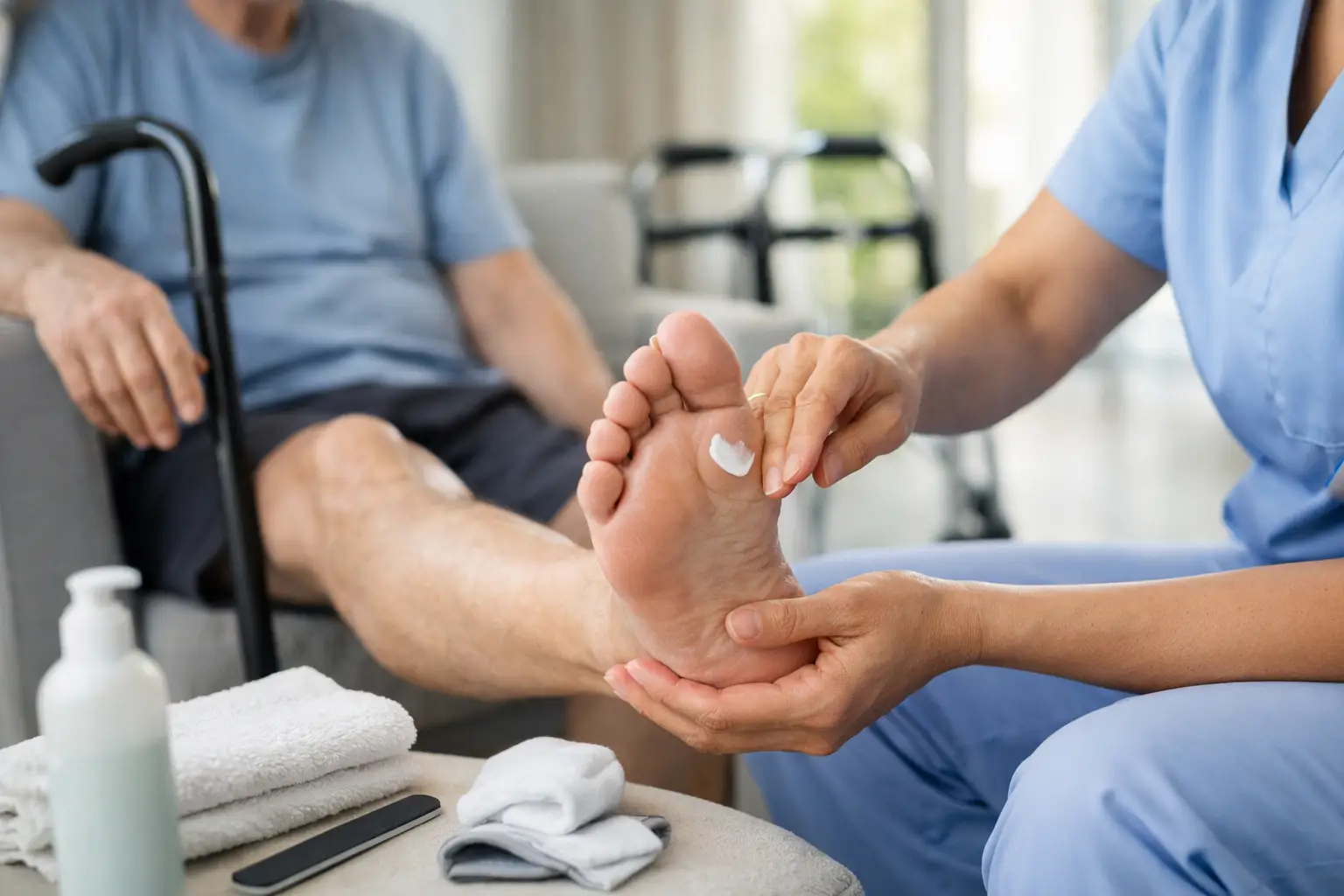
A fragrance-free moisturizer can help prevent dry, cracked skin on the heels and soles. Do not apply cream between the toes, where excess moisture can encourage fungal growth. Never use heating pads, hot water bottles, or chemical corn removers on numb or fragile feet. A burn or skin injury may occur without being felt.
Nail and Skin Care: Know When Not to Do It Yourself
Toenails can become difficult to manage after stroke because of limited reach, one-handed function, tremor, vision changes, or fear of losing balance. Thickened, curved, fungal, or ingrown nails add another layer of risk. Cutting too close to the skin can create a small wound, and trying to dig out an ingrown corner can lead to infection.
If nails are healthy and easy to reach safely, trim them straight across and smooth sharp edges with a file. If that is not realistic, it is safer to leave the task to a trained foot-care professional. The same applies to corns and calluses. They may look minor, but they often indicate repeated pressure from footwear or altered gait. Cutting them with a blade or using medicated pads can damage healthy skin, especially when sensation or circulation is impaired.
Professional foot care can address nail thickness, fungal concerns, callus management, skin integrity, and pressure points while also identifying changes that should be referred to a physician or other member of the rehabilitation team. For many people, regular appointments provide both preventive care and reassurance.
Footwear Is Part of Fall Prevention
After stroke, footwear should provide stability rather than merely feel soft. Choose shoes with a secure fastening, a supportive heel counter, enough depth for the toes, and a sole that is stable without being overly thick or slippery. The shoe should accommodate swelling and any brace or ankle-foot orthosis prescribed for foot drop.
Avoid loose slippers, flip-flops, worn-out shoes, and backless footwear for walking. They can slide, catch on the floor, or require toe gripping to stay on. Check inside each shoe before putting it on. A folded sock, rough seam, small stone, or loose insole can cause pressure damage when sensation is reduced.
Fit can change through the day if swelling is present, so assess shoes later in the day as well as in the morning. There is a balance to strike: shoes should not squeeze the foot, but an overly loose shoe creates friction and instability. If one foot is turning in, dragging, or developing pressure areas, an assessment of gait, footwear, bracing, or custom orthotics may be appropriate.
Watch for Changes That Need Prompt Care
Do not wait for a scheduled foot-care visit if there is an open area, drainage, spreading redness, increasing warmth, new swelling, a foul odour, or pain that is getting worse. Contact a healthcare provider promptly, particularly if the person has diabetes or poor circulation. Fever, chills, red streaking, sudden severe pain, or rapidly changing skin colour require urgent medical assessment.
Sudden one-sided leg swelling, warmth, tenderness, or shortness of breath should also be treated as urgent. These symptoms can have causes beyond routine foot concerns and need immediate medical guidance. Similarly, a foot that becomes cold, pale, blue, or markedly numb should not be managed at home.
New weakness, worsening balance, facial droop, speech difficulty, confusion, or a sudden change in vision may indicate another stroke or transient ischemic attack. Call 911 immediately. Even when the change seems to involve only a foot or leg, rapid action matters.
Make Foot Care Part of Stroke Recovery
Foot health should be discussed with the broader care team, including the family physician, rehabilitation professionals, and caregivers. A physiotherapist may help address gait and balance. An occupational therapist can recommend tools or routines that make foot checks safer. A foot-care clinician can monitor nails, skin, circulation concerns, and pressure areas that may affect walking.
At Feet & Life in Barrie, foot care is approached with the understanding that the condition of the feet can influence confidence, mobility, and quality of life. Care is individualized, because a person who walks independently with mild weakness has different needs from someone managing spasticity, neuropathy, diabetes, or limited ability to inspect their feet.
Small daily checks can prevent a problem from becoming a setback. When feet are comfortable, protected, and professionally monitored when needed, there is more room to focus on the meaningful work of recovery: moving with greater safety, participating in everyday life, and maintaining as much independence as possible.