
What if the greatest threat to your parent’s ability to walk isn’t their age, but a simple lack of specialized foot care? It’s heartbreaking to watch a loved one lose their independence while knowing that busy facility staff often lack the time for the professional foot care for long term care that seniors require. You likely worry about the hidden risks of untreated diabetic foot ulcers or the sudden falls that frequently begin with localized foot pain. We understand that seeing a parent’s mobility decline is a source of significant stress for families in Barrie.
This clinical guide explains how professional nursing intervention serves as a vital medical pillar, preventing dangerous infections and ensuring your family member stays mobile and comfortable. We will examine the specialized nursing techniques used to manage complex conditions like neuropathy and explore how dedicated lower-limb wellness directly improves the safety and dignity of seniors living in long-term care environments. By the end, you’ll realize how a proactive clinical approach transforms daily life for your loved one.
Key Takeaways
- Understand why specialized medical foot care is a clinical necessity for seniors, moving beyond basic hygiene to prevent complex health complications.
- Learn how to identify common risks like onychomycosis and ingrown nails that frequently arise in communal living environments.
- Discover the critical safety differences between aesthetic pedicures and professional foot care for long term care, specifically regarding medical-grade sterilization and nursing expertise.
- Explore the direct link between lower-limb health and fall prevention, including how biomechanical changes and loss of cushioning affect a senior’s gait.
- Gain practical advice on advocating for external nursing care within Barrie facilities to ensure your loved one receives the highest standard of clinical wellness.
The Critical Role of Medical Foot Care for Long-Term Care Residents
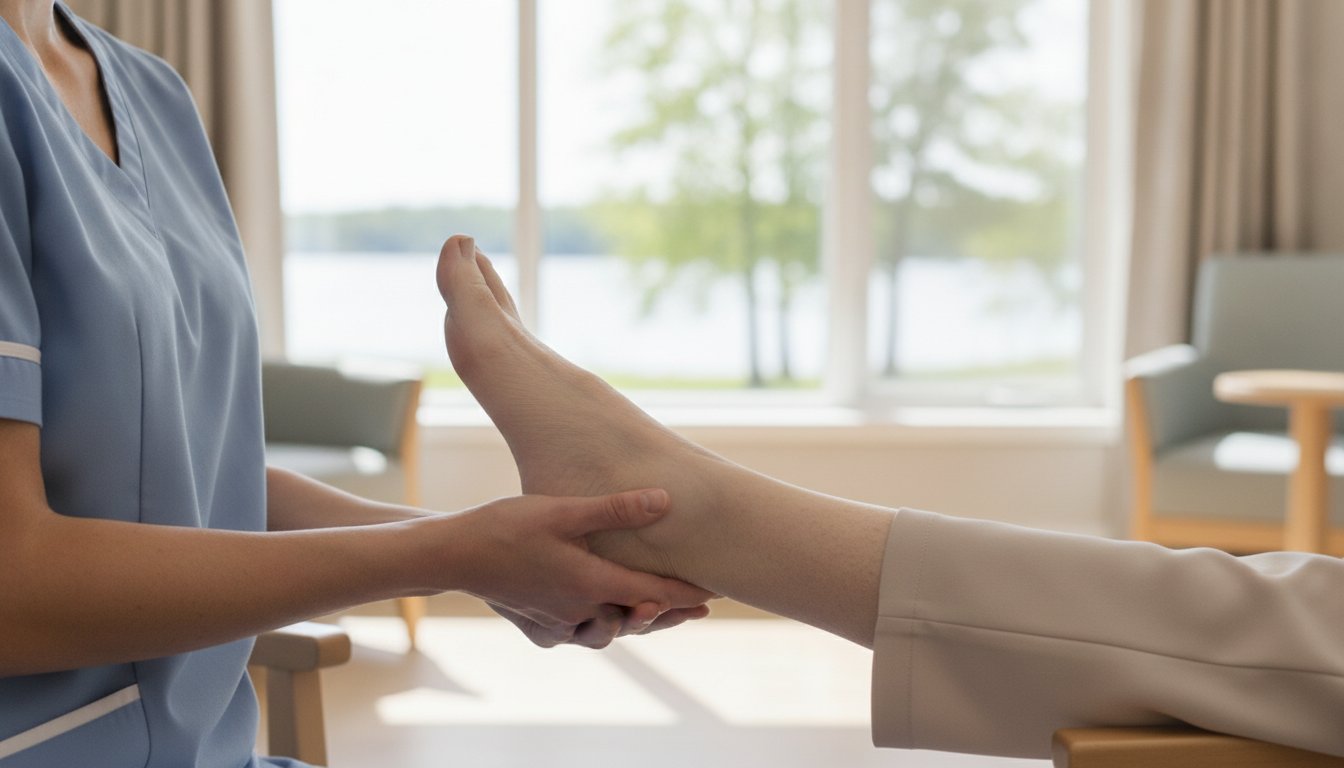
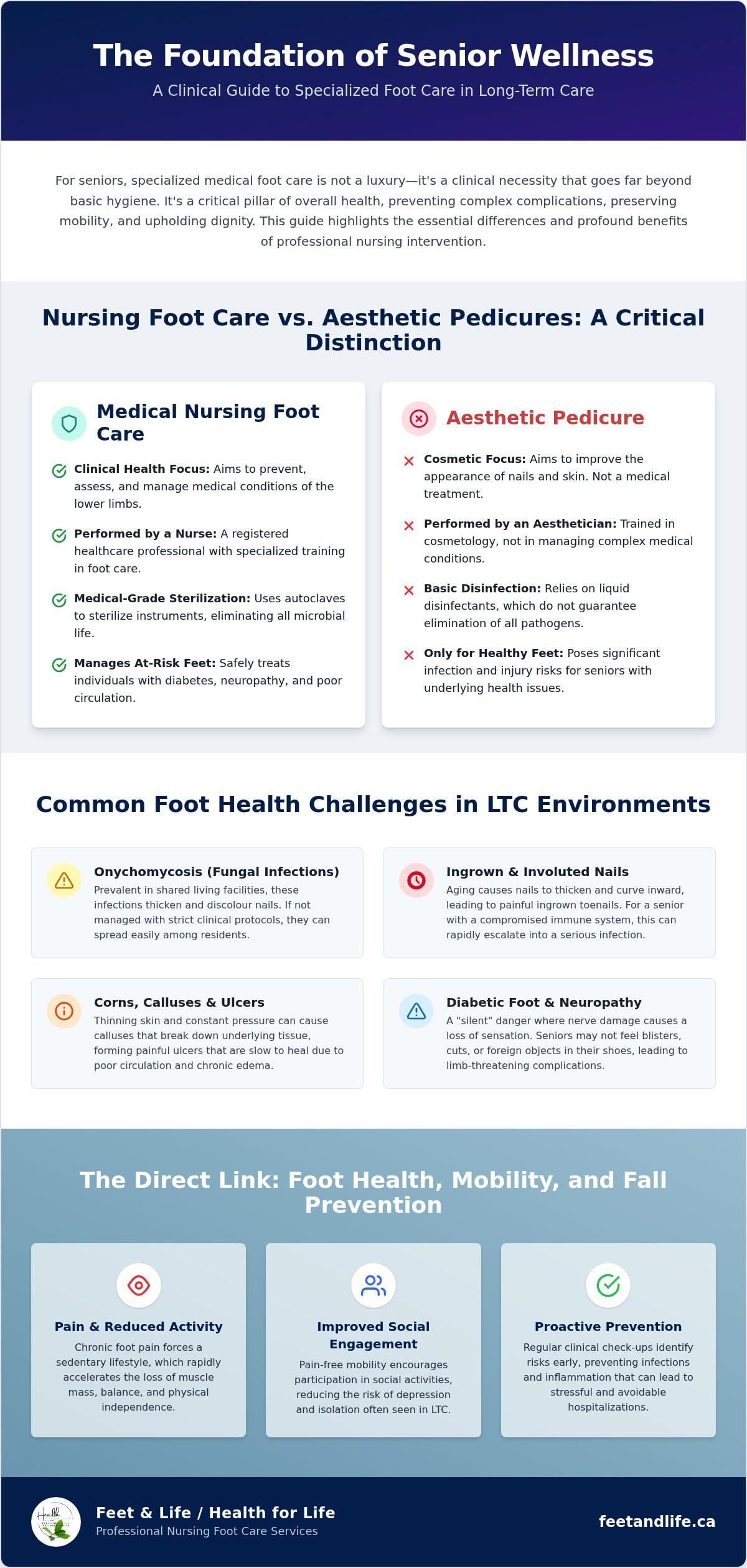
Clinical foot care is a specialized nursing service, distinct from aesthetic pedicures or basic hygiene. It involves a comprehensive medical assessment of the lower limbs, focusing on skin integrity, peripheral circulation, and nerve function. For seniors, these clinical checks are vital because aging feet undergo significant physiological changes. Skin becomes thinner and less elastic, while circulation often diminishes. This makes simple tasks like nail trimming potentially hazardous if not performed by a trained professional who understands the complexities of geriatric health.
Systemic wellness is deeply connected to lower limb health. Chronic conditions such as diabetes and cardiovascular disease often manifest their first symptoms in the feet. Professional foot care for long term care ensures that subtle changes, such as localized coolness, discolouration, or minor skin breaks, are identified before they escalate into non-healing wounds or systemic infections. While Podiatry focuses on the broader medical and surgical management of the foot, nurse-led medical foot care provides the consistent, high-level maintenance required in a residential setting to keep seniors safe.
Why LTC Facilities Often Need External Support
Long-term care facilities in the Barrie area face significant staffing pressures, often leaving personal support workers with limited time for specialized nail care. While facility staff manage daily hygiene, they frequently lack the specialized equipment for medical debridement. This process involves the precision removal of thickened skin or calluses to relieve pressure, which is far more complex than cosmetic clipping. External nursing specialists complement the facility’s existing care plan by providing focused, practitioner-led attention that general staffing levels cannot always sustain. This collaborative approach ensures that high-risk residents receive the meticulous care they deserve without placing additional strain on facility resources.
The Impact of Foot Health on Senior Independence
Chronic foot pain directly forces many seniors into a sedentary lifestyle, which rapidly accelerates the loss of physical independence in long-term care environments. When movement is comfortable, residents are more likely to participate in social activities and daily exercise. This pain-free mobility offers profound psychological benefits, reducing the risk of depression and social isolation that often accompanies a loss of mobility. Regular clinical check-ups serve as a vital preventative measure, identifying risks like infection or inflammation early enough to avoid unnecessary and stressful hospitalizations, ultimately preserving the resident’s quality of life.
Common Foot Health Challenges in the LTC Environment
Residents in long-term care facilities often face a specific set of clinical challenges due to communal living and the natural physiological changes of aging. Onychomycosis, or fungal nail infection, is particularly prevalent in these settings. It spreads easily in shared bathing areas and can quickly affect multiple residents if not managed with strict clinical protocols. Beyond the risk of infection, aging feet often present with thick, involuted nails that curve into the skin. These involuted nails frequently lead to painful ingrown toenails, which, in a senior with a compromised immune system, can rapidly escalate into a serious medical concern.
Identifying the “at-risk” foot is a critical component of foot care for long term care. Many seniors suffer from poor peripheral circulation and chronic edema, which slows the body’s ability to heal even minor abrasions. When combined with the thinning of the skin’s dermal layer, common issues like corns and calluses become more than just minor irritations. If these are not debrided professionally, the pressure they exert can cause the underlying tissue to break down, leading to painful ulcers that are difficult to treat. Professional clinical intervention ensures these risks are managed before they compromise a resident’s comfort.
Diabetic Foot Care and Neuropathy
Residents living with diabetes require high-frequency monitoring to prevent limb-threatening complications. The “silent” danger here is peripheral neuropathy, where the loss of protective sensation means a senior might not feel a blister or a stone in their shoe. Because Healthy Feet Matter! for overall longevity, families should seek a Diabetic Foot Care specialist who can perform regular sensory testing and vascular assessments. This proactive approach is essential for preventing non-healing wounds and preserving the health of the lower limbs.
Managing Thick Fungal Nails and Infections
Fungal nails are often dismissed as a visual concern, but for a senior, they represent a significant health risk. Thickened nails can cause pressure sores against the nail bed and make wearing shoes nearly impossible. While oral medications can interact with other prescriptions common in LTC settings, Fungal Laser Foot Therapy offers a non-invasive, drug-free alternative that targets the infection at its source. This treatment helps restore nail health without the systemic side effects of traditional antifungal drugs. If you notice these changes in your loved one, a professional consultation for medical foot care can provide the specialized attention they need to remain active and pain-free.
Nursing Foot Care vs. Basic Pedicures: Choosing the Right Standard
Choosing between a basic pedicure and professional foot care for long term care involves more than just selecting a service; it is a choice between aesthetic grooming and clinical safety. While a salon focus remains on the visual appearance of the nail, nursing foot care prioritizes health outcomes, wound prevention, and the management of underlying pathologies. Registered Nurses (RNs) and Registered Practical Nurses (RPNs) possess the clinical training to recognize signs of infection, vascular insufficiency, and neurological deficit that an aesthetician is not qualified to assess. This medical oversight ensures that every intervention supports the resident’s overall systemic wellness.
Clinical Standards and Sterilization
The risk of cross-contamination in communal living environments is exceptionally high when instruments aren’t subjected to medical-grade sterilization protocols. Unlike salon-style sanitization, which often relies on chemical soaks, a nurse-led clinic utilizes autoclaving. This process uses high-pressure steam to eliminate all microbial life, ensuring that every tool used for medical debridement is completely sterile. This standard is non-negotiable for seniors with compromised immune systems or circulatory issues. Furthermore, traditional tub soaking is often contraindicated for diabetic seniors because it can lead to skin maceration, where the tissue becomes overly soft and prone to tearing. It also presents a significant burn risk for those with reduced sensation.
The Role of a Professional Foot Health Consultation
A Medical Foot Health Consultation in Barrie begins with a thorough review of the resident’s medical history. This integration is vital because medications like blood thinners or conditions such as congestive heart failure directly impact how care is safely delivered. During the assessment, the nurse performs vascular and sensory checks, documenting everything from skin temperature to the presence of pedal pulses. Effective foot care for long term care relies on this methodical documentation. It allows families to track their loved one’s progress and provides facility physicians with clinical data that supports the broader care plan. These records ensure that any changes in foot health are caught early and managed before they become crises.
Fall Prevention and Mobility: The Biomechanical Connection
Foot pain is a primary driver of instability in the geriatric population. When a resident experiences discomfort from a corn, callus, or improperly trimmed nail, they subconsciously alter their gait to avoid pressure. This compensatory movement, often referred to as an antalgic gait, significantly increases the risk of trips and falls within the facility. In the context of foot care for long term care, addressing these biomechanical shifts is just as important as managing skin and nail health. Proper alignment ensures that the senior’s centre of gravity remains stable during daily activities.
A significant physiological change in aging feet is the atrophy of the plantar fat pads. These natural cushions on the soles of the feet provide essential shock absorption. As this padding thins, walking on the hard, non-resilient flooring common in many Barrie facilities becomes painful. This lack of cushioning doesn’t just cause foot pain; it sends shockwaves up the kinetic chain, impacting the stability of the knees, hips, and lower back. Without intervention, this mechanical stress can lead to chronic joint pain and a further reduction in mobility.
Custom Orthotics for LTC Residents
Custom-made inserts are a highly effective tool for stabilizing a senior’s balance. Unlike generic over-the-counter insoles, Custom Orthotics for Plantar Fasciitis in Barrie are designed based on the specific anatomical needs of the individual. They provide targeted support to the arches and redistribute pressure away from sensitive areas. For residents dealing with chronic conditions like plantar fasciitis, these devices offer the structural support necessary to maintain a steady, confident stride. By correcting overpronation or supination, orthotics help align the entire lower limb, reducing the muscular fatigue that often contributes to late-day falls.
Biomechanical Assessments: A Foundation for Safety
A professional biomechanical assessment is the first step in creating a safer environment for a resident. During this evaluation, a practitioner examines the foot’s range of motion and analyzes the resident’s walking pattern. This data is used to ensure that any prescribed orthotics fit seamlessly into senior-appropriate footwear, which should feature firm heel counters and non-slip soles. Improved alignment through professional foot care for long term care doesn’t just prevent injury; it restores the confidence seniors need to navigate their living space safely. If you are concerned about your loved one’s balance, you can book a biomechanical assessment in Barrie to begin a proactive safety plan.
Arranging Professional Foot Care in Barrie and Simcoe County
Families in Simcoe County often wonder how to effectively advocate for supplemental clinical services within the provincial long-term care system. While the County of Simcoe manages several facilities serving hundreds of residents, the high demand for support means that specialized nursing attention is often best arranged externally. You have the right to seek professional foot care for long term care to ensure your loved one’s needs don’t go unmet. When evaluating a local Barrie clinic, look for practitioner-led organizations that specialize in diabetic wellness and biomechanical assessments. These credentials ensure the provider can manage complex cases that go beyond basic hygiene.
Transitioning from a crisis mindset to a preventative maintenance schedule is the most effective way to preserve a senior’s independence. Too often, specialists are only called when a non-healing wound or a severe fungal infection has already taken hold. Consistent, scheduled visits allow for the early detection of vascular changes and the professional management of thick or fungal nails. This methodical approach reduces the risk of infection and hospitalizations, providing a stable foundation for the resident’s daily comfort and mobility.
The Feet & Life Difference: A Caring Nursing Approach
Feet & Life bridges the gap between high-level medical expertise and empathetic, patient-centered care. Our clinic focuses on non-invasive, gentle treatments that prioritize the dignity of the senior. We coordinate meticulously with facility staff and family members in Barrie to ensure every treatment is documented and integrated into the resident’s care plan. This collaborative spirit is essential for managing chronic conditions like neuropathy, where a caring nursing approach makes all the difference in the resident’s experience. We are committed to improving quality of life through superior lower limb health and clinical meticulousness.
Next Steps: Booking a Consultation
Initiating a professional consultation is a simple but vital step for any family worried about a parent’s mobility. A proactive plan ensures that small issues are addressed before they become barriers to walking or social participation. The long-term benefits include reduced fall risks and improved systemic health. You don’t have to wait for a complication to arise before securing specialized foot care for long term care. Book a professional foot care assessment for your loved one to start their journey toward better lower limb wellness today.
Securing Your Loved One’s Path to Pain-Free Mobility
Choosing professional foot care for long term care is one of the most impactful decisions you can make for a parent’s daily comfort and safety. We’ve explored how nurse-led clinical expertise prevents the progression of silent risks like neuropathy and ensures that communal living doesn’t lead to persistent fungal infections. By prioritizing medical-grade sterilization and thorough biomechanical assessments, you’re investing in a foundation of stability that preserves your loved one’s independence.
Proactive maintenance replaces the stress of crisis management with the peace of mind that comes from regular, professional oversight. Feet & Life is proud to be a dedicated resource for advanced wound management and specialized nursing care across Barrie, Innisfil, and Simcoe County. Our caring approach ensures that every resident receives the meticulous attention their health requires. This steady, clinical focus is what separates medical intervention from basic grooming.
Book a Professional Foot Care Assessment in Barrie Today to begin a proactive wellness plan that truly makes a difference. Your parent deserves the dignity of comfortable movement and the safety of expert clinical care. We are here to guide your family toward better health outcomes with patience and expertise.
Frequently Asked Questions
Is medical foot care for seniors covered by OHIP in Ontario?
Routine medical foot care is typically not covered by OHIP for most seniors, though exceptions exist for high-risk individuals through specific community health programs like the Barrie and Community Family Health Team. Many residents utilize private health insurance, extended health benefits, or Veterans Affairs Canada (VAC) funding to cover these essential services. It is best to check with your insurance provider to see if “nursing foot care” is a recognized benefit under your current plan.
How often should a resident in long-term care receive professional foot care?
Most residents should receive professional foot care for long term care every six to eight weeks to maintain optimal health. This frequency allows a nurse to manage nail growth and skin integrity before complications like ingrown nails or painful calluses arise. For seniors with diabetes or severe circulatory issues, a more frequent four-week schedule may be recommended to ensure any minor skin breaks are identified and treated immediately.
Can a foot care nurse help with a non-healing wound or ulcer?
Yes, a foot care nurse specializing in wound care and healing is trained to manage complex, non-healing ulcers. These practitioners use advanced dressing techniques and debridement to promote tissue recovery and prevent systemic infection. Early intervention is critical; if you notice a wound that hasn’t improved within two weeks, a professional nursing assessment is necessary to prevent further tissue breakdown or the risk of serious infection.
What is the difference between a medical pedicure and a regular pedicure?
A medical pedicure is a clinical procedure performed by a healthcare professional, whereas a regular pedicure is an aesthetic treatment focused on appearance. Medical treatments involve the use of sterile, autoclaved instruments and a comprehensive assessment of vascular and neurological health. Unlike a salon, a clinical setting avoids tub soaking and chemical irritants, which are often dangerous for seniors with thin skin or compromised circulation.
Are custom orthotics appropriate for seniors who use a walker or wheelchair?
Custom orthotics are highly appropriate for seniors using mobility aids because they provide structural alignment and pressure redistribution. Even for those who aren’t walking long distances, orthotics can prevent foot deformities and alleviate pain caused by improper joint positioning. For wheelchair users, specialized inserts help manage pressure points on the soles of the feet, reducing the risk of skin breakdown and improving overall comfort during seated transfers.
How do I arrange for a foot care specialist to see my parent in their facility?
To arrange a visit, you should first contact the facility’s Director of Care or the wellness coordinator to discuss bringing in an external provider. Most Barrie facilities allow families to hire private nursing foot care for long term care as a supplemental service. Once you have the facility’s approval, you can coordinate directly with a specialist to schedule regular assessments that align with the resident’s existing care plan.
What are the signs that my loved one needs a professional foot check-up?
You should book a professional check-up if you notice discolouration, unusual odours, or if your loved one expresses pain while walking. Other warning signs include nails that have become too thick to cut with standard clippers or the presence of persistent redness around the nail folds. Any sudden change in skin temperature or the appearance of a “hot spot” on the foot requires immediate clinical attention to rule out underlying infection.
Can laser therapy help with my parent’s thick, yellow toenails?
Laser therapy is an effective, non-invasive treatment for thick, yellow nails caused by fungal infections. This technology uses targeted light energy to penetrate the nail plate and eliminate the underlying fungus without the need for oral medications. This is particularly beneficial for seniors in long-term care who may already be taking multiple prescriptions that could negatively interact with traditional antifungal drugs, providing a safer path to healthy nails.