
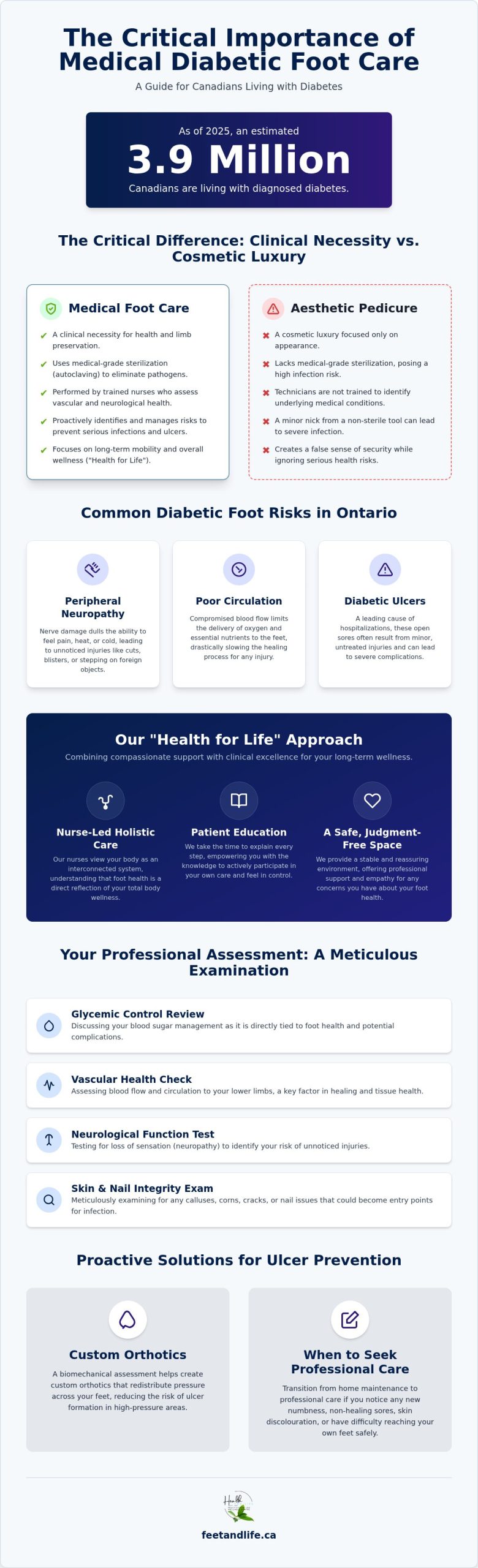
As of 2025, approximately 3.9 million Canadians are living with diagnosed diabetes. This figure highlights a growing need for specialized diabetic foot care Orillia residents can access to prevent life-altering complications. You likely realize that managing your blood sugar is only one piece of the health puzzle; the daily worry over a small nick or a thickened callus becoming a major crisis is a heavy emotional weight. It’s common to feel overwhelmed when you can no longer reach your feet safely. You might also feel confused about whether a standard salon visit provides the clinical protection you actually need.
This article will show you how professional, nurse-led care bridges the gap between simple hygiene and essential medical intervention. We will look at how clinical assessments identify risks early, the specific ways professional nail and callus management prevents infections, and how expert support helps you maintain your mobility and your overall health for life.
Key Takeaways
- Understand why medical foot care is a clinical necessity rather than a cosmetic luxury, prioritizing sterile environments to prevent serious infections.
- Learn how a nurse-led approach combines high-level medical expertise with a compassionate “Health for Life” philosophy to support your overall wellness.
- Discover the components of a professional assessment, including reviews of glycemic control and meticulous examinations of skin integrity and circulation.
- Explore how custom orthotics and biomechanical assessments redistribute pressure across the foot to proactively prevent the formation of diabetic ulcers.
- Identify the specific signs that it is time to transition from home maintenance to the professional diabetic foot care Orillia specialists provide for long-term mobility.
What is Medical Diabetic Foot Care and Why is it Essential?
Medical foot care is a specialized clinical practice designed to monitor and treat the unique complications associated with diabetes. For those living with this condition, foot health is directly tied to blood glucose levels, which can lead to nerve damage and compromised blood flow over time. Seeking professional diabetic foot care Orillia services ensures that your lower limbs are managed by practitioners who understand the systemic nature of your health. This is not a luxury; it’s a proactive strategy for limb preservation and maintaining your independence.
The Difference Between Aesthetic and Medical Care
A standard pedicure at a local spa focuses on aesthetics and relaxation, but for a person with diabetes, these environments can be dangerous. Spas often lack medical-grade sterilization protocols, such as autoclaving; this is the only way to ensure instruments are completely free of pathogens. In a clinical setting, foot care nurses use their specialized training to look beyond the surface of the skin. They perform a detailed assessment of your vascular health and neurological function, whereas a salon technician is trained only in basic grooming. This clinical oversight is essential because even a minor nick from a non-sterile tool can lead to a severe, non-healing infection.
Common Diabetic Foot Risks in Ontario
One of the most significant challenges is peripheral neuropathy, a condition where nerve damage dulls the ability to feel pain, heat, or cold. You might step on a small object or develop a blister and remain completely unaware of the injury. When combined with poor circulation, which limits the body’s ability to deliver oxygen and nutrients to the feet, healing times are drastically slowed. The clinical term Diabetic foot encompasses these complex issues, including structural changes and increased vulnerability to infection.
A diabetic ulcer is a leading cause of hospitalizations in Ontario, often resulting from minor injuries that go unnoticed due to loss of sensation. By integrating regular clinical checks into your routine, you gain a trusted partner who can identify these silent risks before they escalate into life-changing complications. Regular diabetic foot care Orillia appointments provide the clinical rigour needed to ensure that small concerns are addressed before they impact your quality of life.
The Feet & Life Approach: Compassionate Clinical Excellence
At Feet & Life, the philosophy centres on a commitment to “Health for Life.” This principle guides every interaction, moving beyond simple symptomatic relief to focus on the long-term vitality of your lower limbs. When seeking diabetic foot care Orillia residents often look for technical skill, but they also require a practitioner who understands the anxiety that can accompany a chronic health diagnosis. Our approach successfully bridges the gap between high-level clinical standards and a gentle, non-invasive touch. We don’t believe in quick fixes that only address surface-level concerns. Instead, we prioritize the underlying health of the limb to ensure you remain mobile and active within your community.
Nurse-Led Care: Why it Matters for Diabetics
A nurse-led clinical environment offers a unique and valuable perspective on foot health. Nurses are trained to view the body as an interconnected system rather than a collection of isolated symptoms. This holistic view is vital for diabetes management because your foot health is a direct reflection of your total body wellness. We meticulously follow CDC guidelines on foot health, which emphasize the necessity of comprehensive exams and consistent patient education. During your visit, we take the time to explain every step of the assessment. We want you to understand your current health status so you can feel empowered rather than overwhelmed by your diagnosis. This dedication to transparent communication helps build a stable, trustworthy relationship that is essential for effective recurring care.
A Safe Space for Your Concerns
Many of our clients arrive with feelings of shame or significant anxiety regarding the condition of their feet. Whether you’ve struggled to perform self-care due to vision changes or you’re fearful of a potential infection, we provide a stable and reassuring environment. There’s no judgment in our clinic, only professional support and empathy. We realize that high-risk patients need more than just a medical procedure; they need to feel heard and respected by their care provider. Our Orillia-area clients benefit from a personalized care plan that addresses their specific physical requirements while respecting their emotional comfort. This meticulous attention to detail ensures that your treatment is as stress-free as possible. If you’re looking for a dedicated partner in your wellness journey, exploring our specialized medical foot care services is a positive first step toward lasting peace of mind.
Professional Assessment: What Happens During Your Visit?
Your initial consultation begins with a thorough dialogue regarding your medical history and current glycemic control. These factors are at the centre of lower limb health, as they directly influence how your body responds to daily wear and tear. Understanding your A1C levels and any history of foot complications helps us tailor the clinical approach to your specific needs. This methodical review ensures that your session for diabetic foot care Orillia is built on a foundation of medical accuracy rather than just basic hygiene. Following this discussion, we perform a detailed visual examination to look for changes in skin integrity, the presence of calluses, and structural shifts in the foot that could lead to future pressure points.
Vascular and Neurological Screening
A critical component of the visit involves screening your vascular and neurological status to identify risks that may not be visible. We use specialized tools, such as a monofilament, to test for sensation loss in various areas of the foot. This is vital because neuropathy can hide injuries that would otherwise cause pain and alert you to a problem. We also perform pulse checks to evaluate blood flow, ensuring your skin has the capacity to repair itself and fight off potential pathogens. A professional assessment can identify risks months before a wound appears. By adhering to established Diabetic Foot Care Guidelines, we ensure that your screening is both thorough and evidence-based. This proactive monitoring is the most effective way to prevent the development of serious ulcers and maintain your mobility.
Nail and Skin Management
Once the clinical screening is complete, we move to the physical management of your nails and skin. Thickened nails and stubborn calluses are more than just uncomfortable; they can cause internal pressure that leads to tissue breakdown if left unmanaged. We use sterile, medical-grade instruments to safely reduce these areas without damaging the surrounding tissue. During this process, we also identify early signs of fungal infections or ingrown nails that might require specialized attention. To finish the session, we apply therapeutic moisturizers specifically formulated for diabetic skin. This step is essential to prevent cracking and fissures, which are common entry points for bacteria. Regular diabetic foot care Orillia visits provide the consistency required for long-term limb health and peace of mind.
Every visit concludes with a personalized treatment plan and a clear roadmap for future prevention. We don’t just treat your feet; we educate you on exactly what to watch for at home between appointments. This collaborative approach ensures that you leave the clinic with a clear understanding of your current health status and the steps needed to maintain your wellness. By focusing on these clinical details, we help you stay active and confident in your daily life.
Advanced Solutions: Custom Orthotics and Wound Management
Advanced clinical interventions go beyond basic maintenance to address the structural and physiological challenges of the diabetic foot. With Ontario’s diabetes rate reaching 9.3% in 2024, the demand for specialized limb preservation strategies has never been higher. Seeking expert diabetic foot care Orillia services means having access to custom orthotics and advanced wound management techniques that are tailored specifically to your gait and skin integrity. These solutions are designed to address the root causes of foot complications, ensuring that your mobility is preserved for years to come.
Custom Orthotics for the Diabetic Foot
Custom orthotics are a cornerstone of preventative care for high-risk patients. Unlike off-the-shelf insoles, which provide generic cushioning that can sometimes cause more harm than good, custom-engineered devices are designed from a biomechanical assessment of your unique foot structure. This precision is vital because ‘hot spots’ or areas of high pressure can quickly evolve into ulcers if not corrected. By redistributing your weight across the entire surface of the foot, orthotics protect vulnerable boney structures and improve your overall alignment. This not only prevents tissue breakdown but also reduces muscle fatigue, making it easier for you to stay active and mobile.
Wound Care and Healing Excellence
In cases where an injury has already occurred, specialized wound care becomes the immediate priority. Chronic ulcers require a clinical strategy that includes meticulous debridement and advanced dressing selection. A critical part of this process is off-loading, which involves using orthotics or specialized footwear to remove all pressure from the wound site. Without off-loading, even the best medical treatments may fail because the tissue is constantly being re-traumatized by the simple act of walking. Our nurse-led approach ensures that your healing is monitored closely, and we collaborate with your broader healthcare team to achieve the best possible outcomes for your recovery.
We also integrate therapeutic footwear recommendations into your daily routine. The right shoe works in tandem with your custom orthotics to provide a stable, friction-free environment for your feet. We help you choose footwear that accommodates the structural changes often caused by diabetes, such as bunions or hammertoes, to ensure your health goals are met every time you step out your door. If you are concerned about pressure points or have a slow-healing injury, you can book a biomechanical assessment to discover how custom orthotics can protect your health.
Next Steps: Securing Your Foot Health in Orillia
Daily self-inspections are the first line of defence, but professional oversight is what truly secures your long-term mobility. While many people feel confident managing their basic hygiene, the physiological changes caused by diabetes require a level of clinical scrutiny that’s difficult to achieve at home. Professional diabetic foot care Orillia residents can trust provides a second set of expert eyes to identify risks you might miss due to vision changes or reduced flexibility. Prioritizing these checks isn’t just about addressing current problems; it’s a lifestyle choice that supports your overall wellness and independence.
Signs You Need an Immediate Appointment
It’s crucial to recognize when a situation has moved beyond routine maintenance and requires urgent clinical attention. Diabetes can mask the severity of an injury, so you must rely on visual and tactile cues rather than pain alone. Contact a professional if you observe any of these changes:
- Skin Variations: Look for sudden changes in skin colour, such as dark spots, redness, or a pale appearance.
- Temperature and Swelling: Feel for areas that are unusually warm to the touch or notice if one foot is more swollen than the other.
- Skin Integrity: Any break in the skin, including blisters, cracks between the toes, or small cuts, requires immediate assessment.
- Sensory Shifts: Pay attention to new or worsening tingling, numbness, or a burning sensation, as these can signal changes in nerve health.
Early intervention is the most effective way to prevent a minor irritation from becoming a complex medical concern. A quick assessment today can save weeks of intensive treatment later.
Booking Your Consultation
Our clinic is dedicated to serving the Orillia and Barrie regions with a nurse-led approach that prioritizes your comfort and clinical safety. We recommend that high-risk patients schedule a professional foot check every 6 to 8 weeks. This frequency allows us to manage nail health and callus reduction before they create dangerous pressure points. To make the most of your first visit, please bring the footwear you use daily, a list of your current medications, and any specific concerns you’ve noticed during your home checks. We take the time to listen to your history and explain every step of our process, ensuring you leave with a clear plan for your future health.
Your journey toward better limb health starts with a single proactive step. Don’t wait for a small concern to impact your quality of life. Schedule your diabetic foot assessment with Feet & Life today and experience the peace of mind that comes from professional, compassionate care.
Prioritize Your Mobility and Long-Term Health
Maintaining your mobility is a collaborative effort that requires clinical expertise and consistent monitoring. By choosing professional diabetic foot care Orillia residents gain access to specialized wound management expertise and a nurse-led caring approach that prioritizes limb preservation. We’ve explored how medical-grade sterilization and thorough vascular screenings identify risks long before they become clinical emergencies. Whether you need custom orthotics to redistribute pressure or expert care for a slow-healing injury, our team is here to support your wellness journey across Orillia, Barrie, and Simcoe County.
You don’t have to manage these complex health challenges alone. Taking a proactive step today ensures you stay active and independent for years to come. Our methodical and compassionate care is designed to give you the confidence you need to focus on what matters most in your life. Book Your Comprehensive Diabetic Foot Check with Feet & Life today to secure your foot health for the future.
Frequently Asked Questions
How often should a person with diabetes see a foot care specialist in Orillia?
Most individuals living with diabetes should schedule a professional assessment every 6 to 8 weeks to manage nail growth and skin integrity. If you’re considered low risk, an annual comprehensive screening may be sufficient. However, your frequency depends on your specific health status, including circulation quality and the presence of neuropathy. Consistent diabetic foot care Orillia appointments ensure that minor changes are caught before they escalate into serious infections.
Does OHIP cover medical foot care or custom orthotics in Ontario?
In Ontario, OHIP does not typically cover medical foot care or custom orthotics provided in private clinical settings. Most patients utilize their extended health insurance plans to offset these costs. It’s advisable to check with your specific provider to see if “nursing foot care” or “orthotics” are included in your benefits. While out-of-pocket costs are a consideration; the preventative value of these services often outweighs the high cost of treating advanced complications.
What is the difference between a chiropodist and a foot care nurse?
A chiropodist is a primary healthcare professional specialized in the assessment and management of foot conditions, including minor surgeries. A foot care nurse is a Registered Nurse or Registered Practical Nurse with advanced clinical training in lower limb health and wound management. Both roles are vital in the Ontario healthcare system. Nurses often bring a holistic “Health for Life” perspective to treatment, focusing on how foot health integrates with your overall diabetes management.
Can I trim my own toenails if I have diabetic neuropathy?
You should avoid trimming your own toenails if you’ve been diagnosed with diabetic neuropathy. Loss of sensation makes it difficult to feel if you’ve accidentally nicked the skin, which can lead to an infection that goes unnoticed. Professional clinical support ensures that nails are trimmed safely using sterile instruments. This is particularly important for those who also have vision challenges or difficulty reaching their feet, as it eliminates the risk of self-inflicted injury.
Why are calluses dangerous for people with diabetes?
Calluses are dangerous because they act like a stone in your shoe, creating localized pressure on the soft tissue underneath. Over time, this pressure causes the skin to break down, leading to a “silent” ulcer that develops beneath the hardened surface. In a professional setting, these calluses are safely reduced to redistribute weight. This proactive management is a core component of the diabetic foot care Orillia residents receive to prevent deep tissue damage.
What should I look for in diabetic-friendly footwear?
Look for shoes with a wide, deep toe box to prevent friction against bunions or hammertoes. The interior should be seamless to avoid irritating the skin, and the soles should provide adequate cushioning and support. Adjustable closures, such as laces or Velcro, allow for natural swelling throughout the day. Breathable materials like leather or specialized mesh are also essential to help regulate moisture and prevent fungal growth in the damp environment of a shoe.
How do custom orthotics help prevent diabetic foot ulcers?
Custom orthotics prevent ulcers by redistributing weight away from “hot spots” where the skin is most vulnerable to breakdown. These devices are engineered based on a biomechanical assessment to correct gait abnormalities that cause excessive friction. By providing a stable and contoured surface, they protect the boney structures of the foot from repetitive trauma. This structural support is essential for preventing the mechanical stress that leads to chronic, non-healing wounds in high-risk patients.
Is it safe to use over-the-counter corn removers if I am diabetic?
It is not safe to use over-the-counter corn removers if you have diabetes. These products typically contain salicylic acid, which is designed to dissolve the corn but can easily cause a chemical burn on the surrounding healthy skin. For a diabetic patient, such a burn can lead to a serious infection or a non-healing wound. Always have corns or calluses managed by a clinical professional who can safely remove the tissue without using caustic chemicals.