

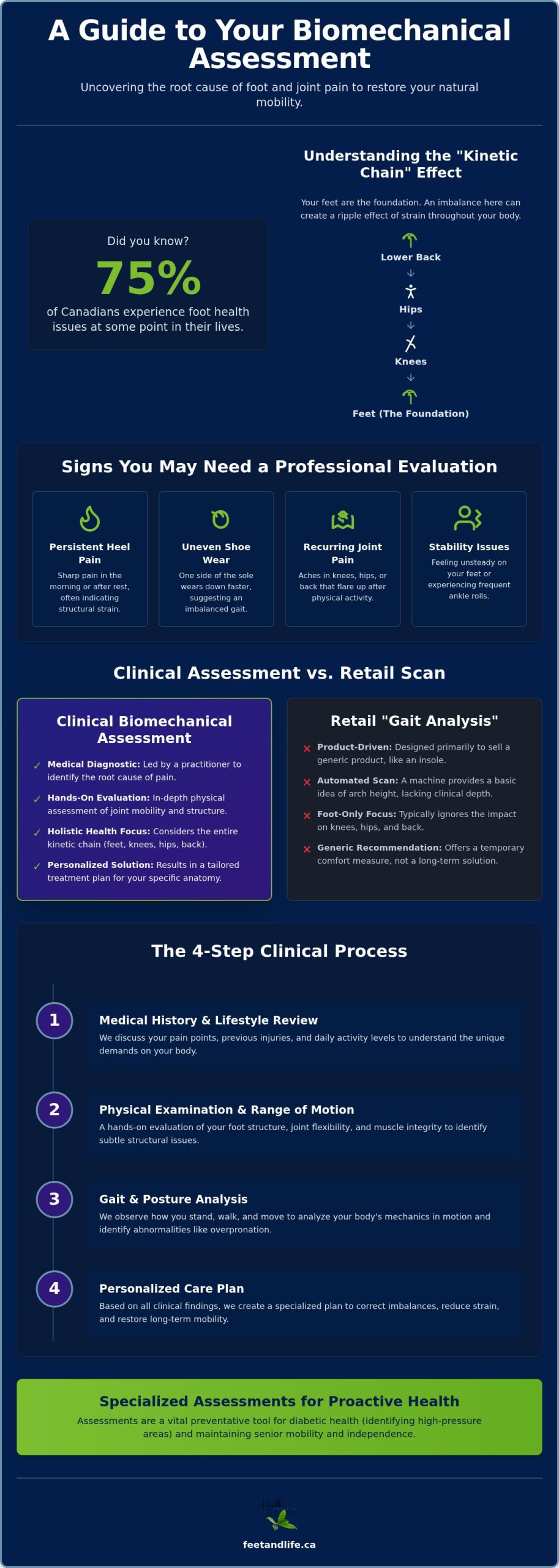
Did you know that approximately 75% of Canadians will struggle with foot health issues at some point in their lives, often leaving them sidelined from the activities they love? It’s exhausting to deal with chronic heel pain that turns a simple morning stroll into a source of stress. You’ve likely felt the confusion of choosing between different types of care, or perhaps you’re worried about how your foot health might impact your long-term independence. We understand that you want more than a temporary fix; you want a medical explanation that makes sense for your body.
By booking a biomechanical assessment in Barrie, you can finally uncover the structural imbalances affecting your gait and posture. We’ll show you how a professional clinical evaluation identifies the source of your pain and provides a clear, personalized path to restore your natural mobility. This guide previews what to expect during your assessment and how care centred on your unique needs can reduce joint strain, helping you stay active and confident in every step you take.
Key Takeaways
- Learn how a clinical examination of your gait and posture identifies the specific structural abnormalities causing your persistent foot and heel pain.
- Discover the “Kinetic Chain” effect and how correcting your foot alignment can alleviate compensatory strain in your knees, hips, and lower back.
- Understand why a professional biomechanical assessment in Barrie is a vital preventative tool for diabetic health, helping to identify high-pressure areas before they lead to complications.
- Gain a clear understanding of the methodical assessment process, from a detailed medical history review to a physical evaluation of your joint mobility.
- Find out how a practitioner-led, nursing-based approach to medical foot care provides a personalized plan to help you maintain long-term mobility and independence.
What is a Biomechanical Assessment and Why Does it Matter?
Your feet are the foundation of your entire body. When that foundation is slightly off, the effects ripple upward, impacting your ankles, knees, hips, and even your lower back. A biomechanical assessment is a clinical examination that looks far beyond the surface of your skin. It involves a detailed study of your feet, legs, and overall body position to understand how your bones, muscles, and joints work together while you’re stationary and in motion. For many residents, a biomechanical assessment Barrie offers the first real answer to why their daily walks or work shifts have become increasingly uncomfortable.
This process isn’t just about looking at where it hurts. The primary goal is to identify the root cause of your discomfort. By analyzing abnormalities in how you stand, walk, or run, a practitioner can pinpoint structural issues like overpronation or high arches that lead to chronic pain. Whether you’re a busy professional spending long hours on your feet or someone managing chronic health conditions, understanding your unique mechanics is the first step toward long-term relief and improved mobility.
Clinical Assessment vs. Retail Gait Analysis
It’s common to see “foot scans” or gait analysis kiosks in retail stores. While these can provide a basic idea of your arch height, they aren’t medical diagnostics. A retail scan is designed to sell a product; a clinical assessment is designed to provide a solution. A practitioner-led exam involves a hands-on physical evaluation that a machine simply cannot replicate. A comprehensive Movement assessment provides the clinical data needed to understand how your skeleton reacts to every step. This medical-grade alignment focuses on your holistic health rather than just offering generic cushioning. It’s the difference between a temporary comfort measure and a specialized intervention tailored to your specific anatomy.
Signs You Need a Professional Evaluation
You don’t need to wait for a major injury to seek help. Often, the body provides subtle cues that your alignment is struggling. If you notice any of the following, a biomechanical assessment Barrie may be necessary to protect your mobility:
- Persistent heel pain: Sharp pain in the morning or after sitting, which often suggests plantar fasciitis or related structural strain.
- Uneven shoe wear: Take a look at the soles of your favourite shoes. If one side is significantly more worn than the other, your gait is likely imbalanced.
- Recurring joint pain: Frequent aches in your knees, hips, or lower back that seem to flare up after walking, even if you haven’t sustained a direct injury to those areas.
- Stability issues: Feeling “unsteady” on your feet or experiencing frequent ankle rolls.
Addressing these signs early can prevent worsening mobility or more serious complications down the road. It’s about taking a proactive approach to your wellness, ensuring your foundation remains stable for years to come.
The Clinical Process: What to Expect During Your Appointment
A professional consultation is far more than a cursory look at your arches. It’s a methodical, practitioner-led investigation into your physical foundation. When you arrive for a biomechanical assessment Barrie, the process begins with a detailed review of your medical history. We take the time to understand your previous injuries, current pain points, and daily activity levels. Whether you’re a healthcare worker spending twelve hours on your feet or a retiree enjoying long walks along the Barrie waterfront, your lifestyle dictates the unique demands placed on your body. This initial conversation ensures that the clinical data we collect is framed within the context of your real-world needs.
Following this consultation, we move into a physical evaluation of your foot structure and joint mobility. This stage is where a practitioner’s expertise becomes invaluable, as we look for the subtle cues that digital scans might overlook. We don’t just look for where it hurts; we look for why the pain started in the first place. This comprehensive approach leads to a personalized treatment plan that may include specialized medical foot care or custom-engineered solutions to restore your comfort.
Physical Examination and Range of Motion
The hands-on portion of your assessment involves testing the flexibility and integrity of the joints in your ankles, midfoot, and toes. We carefully palpate the lower limbs to check for muscle imbalances, tightness in the calves, or areas of tenderness. This physical examination is crucial for identifying areas of high pressure that could eventually lead to skin breakdown or calluses. By assessing your range of motion while you’re seated and standing, we can determine if your joints are moving through their intended paths or if they’re compensating for structural limitations.
Gait Analysis: Seeing Your Movement in Action
Static exams only tell half the story. To understand how your body functions in the real world, we must observe you in motion. Clinical gait analysis allows us to watch exactly how your foot strikes the ground, absorbs shock, and rolls through each phase of a step. We look specifically for patterns like overpronation, where the foot rolls inward excessively, or supination, which involves rolling outward. This dynamic observation reveals how minor misalignments in the feet create hidden strain that radiates through the entire kinetic chain, ultimately impacting the health of your knees, hips, and spine.
Once we’ve gathered this information, we synthesize the findings into a clear medical explanation. You’ll leave the appointment with a thorough understanding of your mechanics and a step-by-step plan to improve your mobility. This dedicated focus on clinical accuracy ensures that every intervention is tailored to your specific anatomy, providing a stable foundation for your long-term wellness.
Beyond the Foot: How Alignment Impacts Your Knees, Hips, and Back
The human body operates as a single, integrated system known as the kinetic chain. In this clinical model, your feet serve as the primary foundation for your entire skeleton. When your feet are misaligned, every joint above them must compensate to keep you upright and moving. This constant adjustment creates a ripple effect of mechanical stress that often manifests as pain in areas far removed from the floor. A biomechanical assessment Barrie provides the clinical insight needed to see how these subtle foot issues are actually the silent drivers behind your recurring knee or hip discomfort.
Addressing structural concerns like flat feet or excessively high arches is about more than just foot comfort; it’s about optimizing your overall body posture. By stabilizing the base, we reduce the abnormal rotational forces that otherwise wear down the cartilage in your larger joints. A professional biomechanical assessment helps practitioners realize where these compensations are occurring. This allows for a treatment plan that supports your body’s long-term health and prevents premature joint degeneration by ensuring weight is distributed as nature intended.
The Link Between Foot Posture and Back Pain
Many patients are surprised to find that their chronic lower back pain may start at their heels. When one foot collapses more than the other, it can cause a functional leg-length discrepancy. This imbalance leads to a pelvic tilt, which forces the spine to curve slightly to maintain a level head position. Over time, this spinal strain results in muscle tightness and increased disc pressure. It’s why specialists often recommend custom orthotics for back pain. By leveling the foundation, we can often resolve the strain at the top of the chain without invasive measures.
Protecting Your Joints as You Age
As we age, maintaining joint health becomes a priority for staying independent and active. Proper weight distribution is essential for those living with arthritis, as it ensures that pressure isn’t concentrated on a single, worn-down area of the knee or hip. A biomechanical assessment Barrie helps identify these high-impact zones before they lead to significant mobility loss. By improving alignment, we help seniors maintain better balance and stability. These are the most effective tools for preventing falls and preserving the cartilage that keeps joints moving smoothly for years to come.
Specialized Assessments for Diabetic Health and Senior Mobility
For individuals living with diabetes, foot health is a primary clinical concern that requires meticulous attention. A biomechanical assessment Barrie serves as a critical preventative tool rather than just a diagnostic one. In Canada, approximately 2.3 million people live with diabetes, and statistics from the research brief indicate that 15% of them will develop a foot ulcer during their lifetime. By identifying high-pressure areas across the sole of the foot, we can proactively manage risks before they escalate into non-healing wounds. This clinical oversight is essential because diabetic neuropathy often masks the pain that would normally alert a person to an injury or a developing callus.
Our practitioner-led approach focuses on identifying these “hot spots” early. We use the data from your assessment to design custom orthotic inserts that protect sensitive feet from friction and trauma. These specialized interventions are not merely about comfort; they are a vital line of defence against complications that can lead to hospitalization. If you or a loved one are managing these chronic risks, you can book a specialized diabetic foot care consultation to ensure your foundation remains secure and healthy.
Preventative Care for Diabetic Patients
Managing the mechanics of the foot is a cornerstone of effective diabetic care. When a patient has lost sensation in their lower limbs, they may not realize their gait is placing excessive stress on a single joint or patch of skin. This constant friction leads to calluses, which can hide underlying infections or tissue breakdown. The relationship between pressure redistribution and wound healing is fundamental; by offloading weight from high-risk zones, we create the necessary environment for the body to maintain skin integrity and prevent the onset of ulcers. We prioritize these non-invasive strategies to keep your feet resilient and infection-free.
Maintaining Mobility for Barrie Seniors
As we age, the structure of our feet undergoes natural changes, such as fat pad atrophy. This thinning of the natural cushioning under the heel and forefoot can make walking on hard surfaces feel like walking on bone. A biomechanical assessment Barrie helps us address these age-related shifts by identifying where extra support is needed to restore comfort. Beyond pain relief, our goal is gait steadying. By improving your foot alignment, we enhance your stability and confidence during daily activities. This methodical approach ensures that seniors in our community maintain their independence, supporting the unique needs of aging joints with gentle, clinical care that respects your long-term wellness.
Choosing Feet & Life for Your Biomechanical Assessment in Barrie
Selecting a clinic for your foot health is a decision that impacts your long-term mobility and quality of life. At Feet & Life / Health for Life, we move beyond the standard retail experience by providing a practitioner-led approach rooted in clinical excellence. We believe that a biomechanical assessment Barrie should be the start of a supportive health partnership, not just a precursor to a sale. Our focus remains on non-invasive treatments that respect your body’s natural healing processes while providing the structural support necessary for a pain-free life.
Our expertise bridges the gap between advanced wound management and the precision of custom-engineered orthotics. This dual specialization is particularly beneficial for those with complex needs, such as diabetic patients or seniors with fragile skin. We don’t just look at the mechanics of your gait; we consider the overall health of your lower limbs. By combining medical foot care with biomechanical insights, we ensure that your treatment plan is both safe and effective for your specific health profile. It’s a holistic way to look at wellness that prioritizes your comfort above all else.
A Nursing Approach to Foot Health
What sets Feet & Life / Health for Life apart is a deeply reassuring “nursing” sensibility. This means our care is compassionate, patient-centred, and grounded in stable clinical standards. We prioritize detailed education, ensuring you leave our office with a complete understanding of your diagnosis. You won’t feel rushed or pressured. Instead, you’ll receive the dedicated time needed to discuss your mobility goals and the steps required to reach them. We provide ongoing support and follow-up appointments to monitor your progress and make adjustments as your activity levels evolve over time.
Ready to Walk Pain-Free?
Preparing for your first biomechanical assessment Barrie is simple. To help us get the most accurate picture of your movement, please bring the footwear you use most often. This might include your work boots, running shoes, or daily walking shoes. We’ll also review any relevant medical notes or previous orthotic prescriptions you may have. Our local clinic is designed to be a warm, inviting space where your wellness is the priority. When you’re ready to address the root cause of your discomfort, we’re here to guide you back to an active and independent lifestyle.
Schedule your biomechanical foot assessment in Barrie today and take the first step toward lasting comfort and improved mobility.
Restore Your Foundation for a Healthier Future
Understanding the mechanics of your gait is the essential first step toward resolving persistent pain and protecting your skeletal health. We’ve examined how a thorough clinical evaluation identifies the root causes of strain throughout your kinetic chain, ensuring that your knees, hips, and back receive the support they require. By choosing a practitioner-led approach, you gain access to nurse-led clinical expertise that prioritizes long-term outcomes over temporary fixes.
A professional biomechanical assessment Barrie is particularly vital for those requiring specialized expertise in diabetic wound prevention, helping to maintain skin integrity and overall mobility. We are dedicated to providing personalized care for residents across Barrie, Innisfil, and Orillia, focusing on non-invasive solutions that respect your body’s natural alignment. You deserve to move with confidence and ease every day. Book Your Clinical Biomechanical Assessment in Barrie today to begin your personalized path toward pain-free movement. We’re here to help you stay active, independent, and comfortable for years to come.
Frequently Asked Questions
What should I wear for a biomechanical assessment?
Wear loose-fitting clothing or shorts that allow our practitioners to clearly see your knees and lower limbs during the evaluation. It’s also essential to bring the shoes you wear most often for work or daily exercise. These wear patterns offer clinical evidence of how your weight is distributed during movement. Having this visual data alongside our physical examination ensures we develop an accurate understanding of your unique gait and structural needs.
How long does a biomechanical assessment take at your Barrie clinic?
A comprehensive biomechanical assessment Barrie typically lasts between 45 and 60 minutes. This duration ensures we’ve enough time for a meticulous review of your medical history and a hands-on physical evaluation of your joint mobility. We don’t rush the process; we prioritize a thorough investigation to identify the root cause of your discomfort. This steady pace allows us to answer your questions and provide a clear, educational explanation of our clinical findings.
Will a biomechanical assessment always result in a prescription for orthotics?
No, an assessment doesn’t always result in a prescription for custom orthotics. Our primary goal is to find the most effective, non-invasive solution for your specific health concern. Depending on our clinical findings, we might suggest specialized medical foot care, specific stretching routines, or advice on selecting more supportive footwear. We only recommend orthotics when the data shows they’re the best tool to restore your mobility and prevent future joint strain.
Is a biomechanical assessment covered by my Ontario health insurance?
While OHIP doesn’t generally cover these clinical services, most private extended health insurance plans in Ontario do provide coverage for assessments. We suggest you contact your insurance provider to confirm the details of your coverage for “chiropody” or “foot care” services. Our administrative team can provide the detailed receipts and documentation you’ll need to submit your claim for reimbursement following your appointment at our local clinic.
Can a biomechanical assessment help with my lower back pain?
Yes, an assessment can be highly effective in identifying the structural imbalances that contribute to chronic lower back pain. When your feet don’t provide a stable foundation, your pelvis and spine must compensate for the misalignment. By correcting issues like overpronation through a biomechanical assessment Barrie, we can often reduce the rotational stress on your spine. This holistic approach helps alleviate back discomfort without the need for invasive medical interventions.
What is the difference between a gait analysis and a biomechanical assessment?
A gait analysis is a specific component of the broader biomechanical assessment process. While gait analysis focuses solely on your body in motion, a full assessment includes a hands-on physical exam of joint flexibility and muscle strength. This comprehensive approach allows us to compare how your feet function while you’re sitting versus how they behave while walking. It provides a much deeper level of clinical insight than movement analysis alone.
Do I need a referral from my doctor for an assessment in Barrie?
You don’t require a referral from a family doctor to book an appointment with our specialists. Many of our patients choose to self-refer because they’re looking for a practitioner-led approach to persistent foot or heel pain. If you have specific medical conditions like diabetes, we’ll work collaboratively with your existing healthcare team. This ensures that our specialized foot care and wound prevention strategies align perfectly with your overall wellness plan.
How often should I have my biomechanics re-evaluated?
We generally recommend a re-evaluation of your biomechanics every 12 to 24 months to ensure your feet remain healthy. Your body changes over time due to aging, shifts in weight, or new activity levels; all of which can alter your gait. If you notice new pain in your joints or uneven wear on your shoes, it’s best to book an appointment sooner. Regular check-ups help us maintain your mobility and prevent minor issues from escalating into chronic problems.