Did you know that as many as 14% of Canadian adults live with the physical discomfort and embarrassment of fungal infections? For many in Barrie, the struggle isn’t just about appearance; it’s the genuine difficulty of trimming plates that have become dense and distorted. You might feel that topical creams never reach the source, yet you’re understandably hesitant about the systemic risks of oral medications. Choosing a professional laser treatment for thick nails offers a clinical, non-invasive solution that addresses these concerns while focusing on long-term foot health.
This article explains how advanced 1064nm light technology safely penetrates the nail plate to eliminate fungus and restore clarity. You’ll learn about the methodical process of medical debridement and how targeted therapy encourages the regrowth of healthy, clear nails. We will also preview what to expect during a typical session, providing the expert perspective you need to make an informed decision about your specialized care.
Key Takeaways
- Understand why nails thicken, whether due to persistent fungal infections or repetitive physical trauma from footwear.
- Learn why laser treatment for thick nails is more effective than topical ointments by penetrating the hard keratin plate to reach the source of the infection.
- Discover the clinical advantages of device-based therapy, which avoids the systemic side effects and blood monitoring required for oral antifungal medications.
- Explore what happens during a clinical session, including the essential role of professional debridement in preparing the nail for light therapy.
- Gain realistic insights into the recovery timeline, as healthy nail regrowth typically takes six to twelve months to fully realize.
Why Do Toenails Become Thick and Discoloured?
Onychomycosis is a fungal infection that alters the nail’s structure, colour, and thickness. While this is the most common cause of changes in the nail plate, understanding the underlying biology is the first step toward effective care. Thickened nails often result from a process called hyperkeratosis, where the body produces an excess of keratin in response to irritation or infection. This can happen because of a persistent fungal presence deep within the nail bed, but it can also stem from physical trauma or repetitive pressure. If you’ve spent years in ill-fitting footwear, your nails may have thickened as a natural protective response to that constant friction.
Aging and circulation also play a significant role in how our feet look and feel. As we get older, blood flow to the extremities often decreases. This slower circulation means nails grow more slowly, allowing keratin to accumulate and harden into a dense, difficult-to-trim layer. Identifying the specific cause is essential before starting any protocol, such as laser treatment for thick nails, to ensure the intervention matches the clinical need.
The Role of Fungal Infections (Onychomycosis)
Fungi are remarkably resilient organisms that thrive in the dark, warm, and moist environments found inside most footwear. They feed on nail keratin, the structural protein that gives nails their strength. As the infection spreads, it invades the space between the nail and the nail bed. This often causes the nail plate to lift, creating a gap where debris and more fungal spores accumulate. This buildup contributes to the characteristic yellow or brown discolouration and the increased thickness that makes trimming so difficult.
It’s a mistake to view these changes as purely cosmetic. When a nail becomes excessively thick, it creates localized pressure within the shoe. This can lead to pain while walking, ingrown toenails, and even secondary bacterial infections in the surrounding skin. Addressing the root cause with a clinical approach helps prevent these complications and restores the nail’s natural function.
Non-Fungal Causes of Nail Thickening
While fungus is a primary suspect, other factors can mimic its appearance. Systemic health conditions, such as psoriasis, frequently manifest in the lower limbs and can cause significant nail distortion. Similarly, “micro-trauma” is a frequent cause of thickening among active individuals in Barrie. This happens when the nail is subjected to repetitive, low-level impact, such as a toe hitting the end of a running shoe or a heavy work boot. Over time, the nail bed thickens to shield the sensitive tissue underneath.
Because the symptoms of trauma and infection often overlap, a professional assessment is vital. Clinical experts use specialized tools and visual examinations to determine if the issue is fungal or mechanical. This diagnostic clarity is what allows for the successful application of laser treatment for thick nails, ensuring the light energy is targeting the correct biological concern for the best possible outcome.
The Science of Laser Therapy for Onychomycosis
Laser therapy works by delivering concentrated light energy directly into the nail bed. Unlike systemic medications that must travel through the bloodstream, this light energy targets the infection at its source. It uses specific wavelengths to identify and destroy fungal spores without affecting the surrounding healthy tissue. Selecting a laser treatment for thick nails provides a modern, non-invasive alternative to oral antifungal drugs. These medications often require consistent blood monitoring to ensure liver health remains uncompromised, a risk many patients prefer to avoid.
Beyond simply killing the fungus, the treatment also triggers the body’s natural healing mechanisms. The light energy increases local blood flow and stimulates a localized immune response. This dual action helps the body clear out the remaining pathogens and prepares the nail bed for new, healthy growth. Since the procedure is non-invasive, you can return to your daily activities immediately after your session without any recovery time.
Thermal vs. Cold Laser Technology
Understanding the difference between laser types is important for setting realistic expectations. “Thermal” or hot lasers use heat to vaporize fungal tissue. While effective, these can sometimes cause a warm or pinching sensation during the procedure. In contrast, “cold” lasers use photo-chemical reactions to achieve results. Systems like the Lunula laser utilize two distinct wavelengths to kill fungus and improve circulation simultaneously. This method is entirely pain-free and requires no downtime. Feet & Life / Health for Life emphasizes a comfortable, clinical experience for every patient, ensuring that high-level medical expertise is delivered with a gentle, caring approach.
How Light Penetrates Thickened Keratin
A primary challenge in treating fungal infections is the “shield” effect of the nail itself. Thickened nails are composed of dense layers of keratin that act as a barrier against most topical treatments. This is exactly where laser treatment for thick nails shows its true value. Laser light reaches pathogens that topical creams simply cannot penetrate, moving through the hard plate to reach the sensitive tissues underneath.
By using specific wavelengths, such as 635nm for tissue regeneration and 405nm for its antimicrobial properties, the laser bypasses the hard keratin plate. This allows the energy to sanitize the entire nail bed, reaching the fungal colonies that have been protected by the nail’s thickness for years. If you’re looking for a path toward healthier feet, exploring Fungal Laser Foot Therapy can provide the clinical results you need without the complications of traditional methods.
Comparing Laser Treatment to Ointments and Oral Medications
Choosing the right intervention for persistent fungal issues often involves weighing the efficacy of a treatment against its potential risks. For many years, the standard approach to onychomycosis involved either daily topical ointments or systemic oral medications. However, clinical trends in Ontario show a distinct shift in patient preference. Many individuals are moving away from traditional “pills” for foot health in favour of a localized laser treatment for thick nails. This transition is driven by a desire for a solution that addresses the infection directly without affecting the rest of the body’s systems.
Laser therapy offers a stable and methodical alternative to these traditional paths. It provides the clinical precision required to clear an infection while maintaining a high standard of patient safety. Because the light energy is focused solely on the affected area, there are no known systemic side effects. This makes it an ideal choice for those who value a professional, specialized approach to their lower limb health.
Why Topicals Often Fail for Thick Nails
The primary complication with topical creams is the physical barrier of the nail itself. Thickened nails are essentially dense shields of hard keratin designed to protect the toe. Clinical observations suggest that a significant majority of topical solutions fail to reach the actual site of infection in the nail bed because they cannot penetrate this barrier. This often leads to the “apply and pray” method, where patients spend years applying expensive lacquers with little to no visible improvement.
This cycle can be incredibly frustrating for patients who want to see clear results. Unlike topicals, which require perfect daily compliance for a year or more, laser therapy provides a definitive end-point to the treatment cycle. It bypasses the nail plate entirely to sanitize the area where the fungus actually lives, offering a much more reliable path toward healthy regrowth.
Safety Profiles: Systemic Drugs vs. Targeted Laser
Systemic oral antifungals are often effective, but they carry a risk of liver toxicity. This necessitates regular blood tests throughout the treatment course to monitor organ function, which can be a significant deterrent. For seniors or individuals already managing multiple medications, adding a systemic drug can increase the risk of complex drug interactions. This is why a laser treatment for thick nails is frequently the preferred choice for those with complex health histories.
A targeted laser protocol requires zero downtime and involves no lifestyle changes. You don’t have to worry about dietary restrictions or scheduling blood work. It’s a gentle yet thorough clinical intervention that fits into a busy life while prioritizing long-term wellness. By choosing a device-based therapy, you can focus on the health of your feet without compromising your overall internal health.
What to Expect During Your Clinical Laser Session in Barrie
Your visit to our clinic follows a specific clinical progression. We start with a thorough biomechanical and clinical assessment of your foot health. This step ensures we understand why your nails have changed before starting the laser treatment for thick nails. By reviewing your gait and footwear, we identify the factors contributing to nail trauma or fungal growth. This methodical approach allows us to tailor the treatment to your specific needs for the best results.
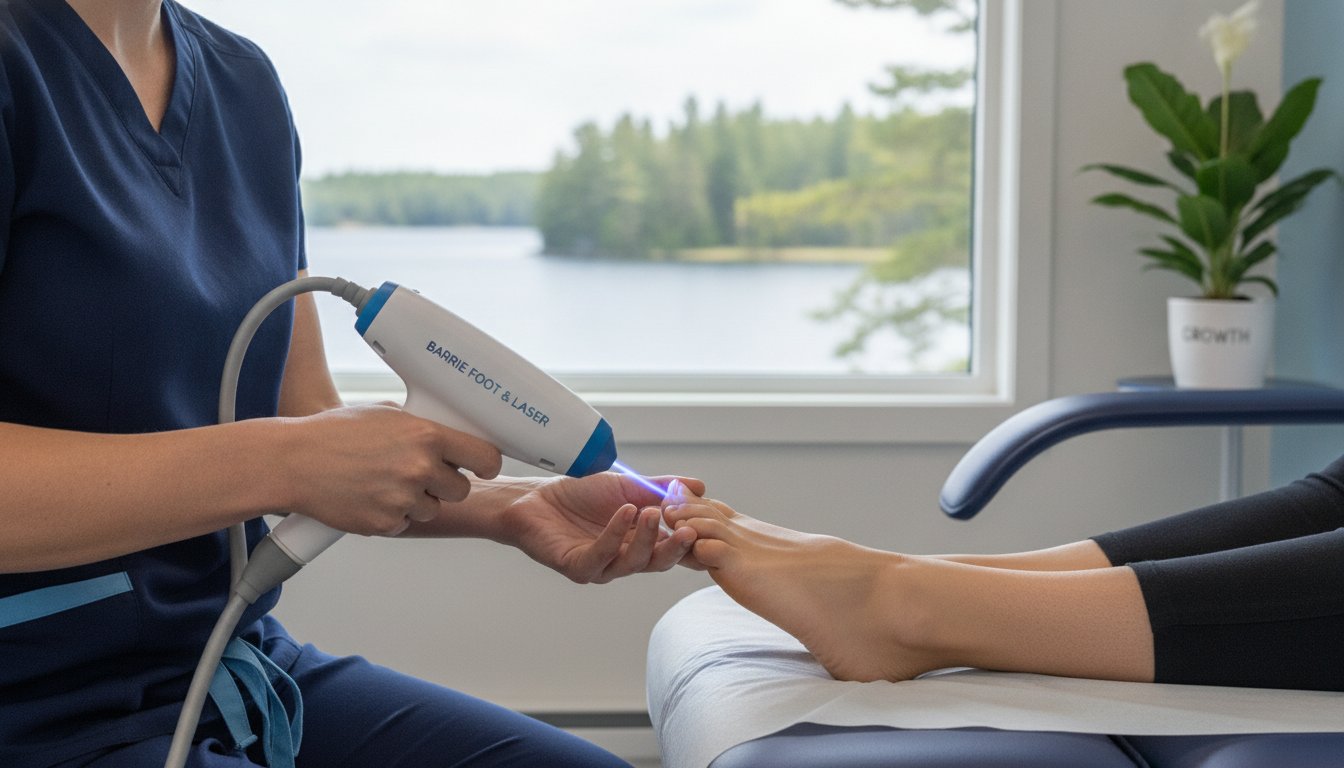
After the assessment, we move into the procedure itself. This involves professional debridement followed by the laser application. The process is designed to be efficient and fits into a standard clinical window. We prioritize your comfort by explaining the purpose of every tool we use. This transparency builds the trust needed for a successful healing journey.
The Importance of Medical Debridement
Thinning the nail plate is a vital step for light penetration. Thickened nails act as a barrier that can reflect laser energy. We use specialized clinical tools to safely reduce this thickness. This is not a salon pedicure; a clinical medical pedicure at Feet & Life / Health for Life focuses on health and safety during a laser treatment for thick nails. We shape the nail to reduce pressure as it regrows, creating the right environment for the laser to work.
The Sensation and Duration of Treatment
The laser application is a structured and painless process. Most patients find the experience lasts between 12 and 20 minutes per foot. You won’t feel sharp pain; instead, you might notice a very slight, localized warming. This makes it an excellent choice if you’re anxious about medical procedures. We organize these sessions to fit into a busy Barrie resident’s schedule.
Consistency ensures a clear outcome. We schedule sessions at 4 to 6 week intervals to target the fungal spores throughout their growth cycle. Most patients require several sessions to fully eradicate the infection. We also provide a plan to prevent reinfection at home. If you’re ready to start, you can book your Fungal Laser Foot Therapy today.
Maintaining Healthy Nails After Your Laser Treatment
The successful completion of a laser treatment for thick nails marks the end of the infection but the beginning of a recovery phase. While the pathogens are neutralized, the existing structure remains as a record of the past infection. It must be physically replaced by the body’s natural processes. This transition requires a disciplined approach to foot hygiene to ensure that the new growth remains protected from environmental spores.
Ongoing wellness is maintained through a combination of clinical oversight and diligent home care. Regular medical foot care at Feet & Life / Health for Life ensures that your nails are monitored during the critical months of regrowth. Our practitioners provide the professional guidance needed to prevent the return of thickness and maintain the clarity achieved through your sessions.
The Regrowth Timeline: Patience for Progress
A healthy toenail grows at a rate of approximately 1.5 to 3 millimetres per month. Because of this slow pace, it can take 6 to 12 months for a completely new nail to grow from the base to the tip. You’ll eventually see a “clear line” of healthy, pinkish nail emerging from the cuticle area. This visual shift is the most rewarding confirmation that the laser treatment for thick nails has worked. Factors like age and circulation can influence this speed, making follow-up checks essential to monitor the success of the therapy.
Footwear and Home Care Protocols
Eliminating fungus from the nail bed is only effective if you also address the spores in your environment. We recommend rotating your shoes daily to allow them to dry completely and using anti-fungal sprays. Switching to moisture-wicking socks, such as those made of bamboo, helps keep your feet dry and less hospitable to fungus. Additionally, cleaning your shower and bathroom floors with a disinfectant eliminates lingering pathogens. Since the same warm, moist environments that harbour nail fungus also promote skin infections, patients who want comprehensive protection should also explore athlete’s foot treatment in Barrie to address any concurrent skin-level fungal concerns. Ready for clearer nails? Book your clinical assessment at Feet & Life / Health for Life today.
Start Your Journey Toward Clearer Nail Growth
Persistent nail thickening is often more than a cosmetic frustration; it’s a sign of a clinical need that requires a specialised response. By opting for laser treatment for thick nails, you’re choosing a targeted, device-based therapy that avoids the systemic risks associated with oral medications. This methodical approach combines advanced light technology with professional medical debridement to create the ideal environment for healthy, clear regrowth.
Feet & Life / Health for Life has been serving Barrie and Simcoe County for years, offering nurse-led clinical care grounded in empathy and medical expertise. Our practitioners ensure that every session is thorough, starting with a precise assessment and including the specialised preparation your nails deserve. You don’t have to manage these concerns on your own. Book a Clinical Assessment in Barrie today to discover a professional path toward lasting foot health. We’re here to guide you every step of the way.
Frequently Asked Questions
Is laser treatment for thick nails painful?
No, the treatment is not painful. Most patients experience either no sensation at all or a very mild, localized warming of the nail plate during the procedure. Because the laser uses specific light wavelengths rather than invasive cutting or heat that damages tissue, there’s no need for local anaesthetics or recovery time after your session.
How many sessions will I need to see results?
Most patients require a series of three to six sessions to achieve optimal results. These appointments are typically spaced four to six weeks apart to ensure we target the fungal spores throughout their entire growth cycle. While the fungus is neutralized quickly, you’ll see the visual results as the new, clear nail grows out over several months.
Does OHIP cover laser fungal nail treatment in Ontario?
No, laser therapy for fungal nails is not covered by the Ontario Health Insurance Plan (OHIP). It is also explicitly excluded from the Canada Revenue Agency’s medical-expense tax credit. However, many patients find that their sessions are eligible for reimbursement through a private Health Spending Account (HSA) or extended third-party insurance benefits.
Can I wear nail polish during or after the treatment?
You must remove all nail polish, gels, and lacquers before your session begins. These products contain pigments and chemicals that can block the laser light or cause localized heat buildup. After your session, we recommend using specialized breathable polishes that contain antifungal agents rather than traditional varieties that trap moisture against the nail.
What is the success rate of laser for severe fungal infections?
Laser therapy is highly effective for severe cases, especially when paired with professional medical debridement. By thinning the nail first, the laser treatment for thick nails can reach the deep-seated pathogens that topical creams simply cannot penetrate. Success depends largely on clinical compliance and following the specific home care protocols we provide during your assessment.
How is a medical pedicure different from a salon pedicure for thick nails?
A medical pedicure is a clinical procedure performed by a healthcare professional using sterilized, medical-grade instruments. Unlike a salon pedicure, which focuses on aesthetics and skin softening, our medical approach prioritizes the safe reduction of hyperkeratotic nail tissue. We focus on the underlying health of the nail bed and the prevention of secondary infections in a controlled environment.
Can thick nails be cured permanently with laser?
Laser therapy effectively eliminates the existing fungal infection, but it doesn’t provide permanent immunity from future exposure. If the environmental factors that caused the initial infection aren’t addressed, a new infection can occur. We provide a comprehensive plan involving footwear hygiene and topical preventatives to ensure your nails remain clear and healthy for the long term.
Is there any downtime after the procedure?
There is absolutely no downtime following the procedure. You can put your socks and shoes back on immediately and return to your regular activities, including exercise, sports, and work. This convenience is one of the primary reasons patients choose device-based therapy over more invasive options or medications that require frequent blood tests and clinical monitoring.